
What Happens During Daily Monitoring Visits, and Why the Equipment Moves
You had water damage a few days ago, and now there's a room full of fans and a dehumidifier humming in the corner, and every time someone comes to check on it, something gets moved, unplugged, plugged back in somewhere else. It can start to feel strange, like nobody has a plan and they're just guessing room to room. If you've caught yourself wondering whether this is normal, or whether the equipment is even doing anything at this point, that question makes complete sense. Drying a structure isn't a "set it and forget it" process, and the daily changes you're seeing are actually the sign that someone is paying attention, not the opposite.
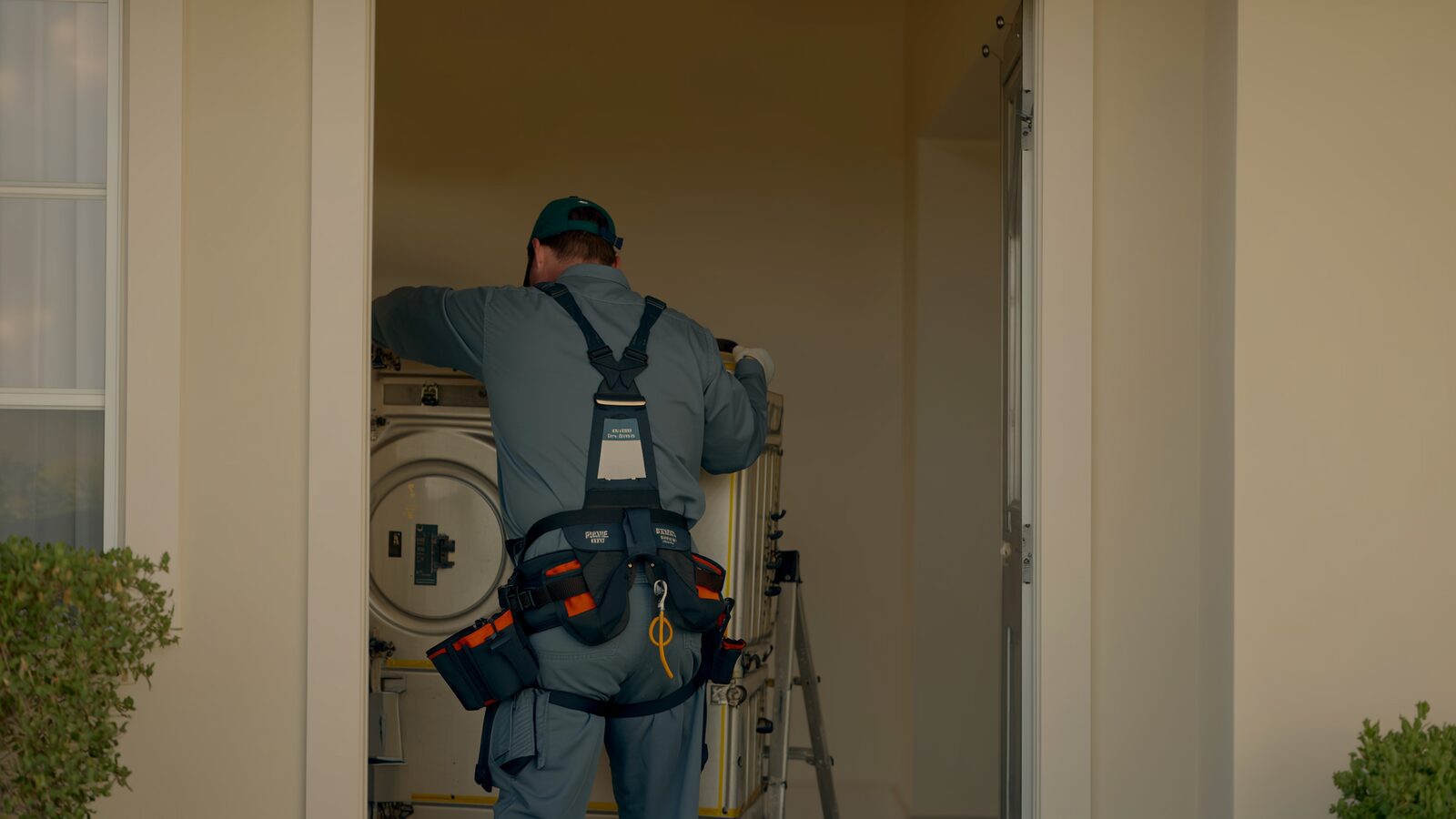
What Happens During Daily Monitoring Visits, and Why the Equipment Moves
What a monitoring visit actually checks
A daily monitoring visit is a short, focused check-in, not a full re-inspection. The technician is measuring how much moisture is left in the materials that got wet: drywall, subfloor, baseboards, framing where it's accessible. They use a moisture meter to compare readings against a dry standard, usually taken from an unaffected part of the same house, and against yesterday's numbers in the same spots. They're also checking the air itself: temperature, relative humidity, and grain depression (how much moisture the air can still absorb before it's saturated). All of that gets logged, because drying is judged by the trend line, not any single reading. A number that's dropping is progress. A number that's flat or climbing means something needs to change.
Why the fans and dehumidifiers get repositioned
Air movers work by breaking up the boundary layer of humid air that clings to a wet surface, so drier air can reach it and pull moisture out faster. That only works if the airflow is actually hitting the wet material at the right angle. As a wall or floor dries unevenly, which is normal, the wettest spots shift, and the equipment needs to shift with them. A room that needed six air movers on day one might only need two by day three, redirected toward a stubborn corner instead of spread evenly across the whole space. Leaving equipment in its original position out of habit would waste energy and could actually slow drying in the areas that still need it most.
Why some equipment disappears while other equipment stays
Once a section of material reads dry and holds that reading, it doesn't need more airflow, and leaving a fan on it does nothing but run up power use. Meanwhile a dehumidifier might stay in place for the full length of the job because it's conditioning the air for the whole room, not just one wall. This is why a space can look like it has less equipment on day four than day two, even though drying isn't finished. Less equipment in fewer spots, aimed more precisely, is usually a sign the process is working, not that anyone lost interest.
What could stall or extend the timeline
Hidden pockets of moisture are the most common reason drying takes longer than expected: water that migrated under flooring, into wall cavities, or behind baseboards where surface readings look fine but the material underneath hasn't caught up. Dense materials like plaster, tile-set concrete, or hardwood also hold and release moisture more slowly than drywall. High humidity in the surrounding air, common in Phoenix during monsoon season, can slow the whole process because there's less capacity in the air to absorb moisture even with equipment running. None of this means the job is going wrong. It usually just means certain materials need more time, and daily monitoring is how that gets caught early instead of discovered weeks later as a mold problem.
Questions people ask us
How long does drying equipment usually stay in a home?
It depends entirely on what materials got wet, how long they were wet before drying started, and ambient humidity. Rather than a fixed number of days, the real marker is moisture readings returning to a dry standard and holding steady, which is exactly what daily monitoring is tracking.
Is it bad if the equipment setup looks different every single day?
No. Daily changes in placement and quantity are expected. As materials dry unevenly, equipment gets redirected toward the areas still holding moisture and removed from areas that have already reached a dry standard.
Can I move the fans or dehumidifier myself between visits?
It's best to leave equipment where it was placed. Positioning is based on moisture readings and airflow patterns specific to that space, and moving it can slow drying in the areas that still need it.
What does a rising or flat moisture reading mean during monitoring?
It usually signals that moisture is trapped somewhere the current airflow isn't reaching, such as under flooring or inside a wall cavity. That's the kind of thing a monitoring visit is designed to catch so the drying plan can be adjusted.
The standard our team works to
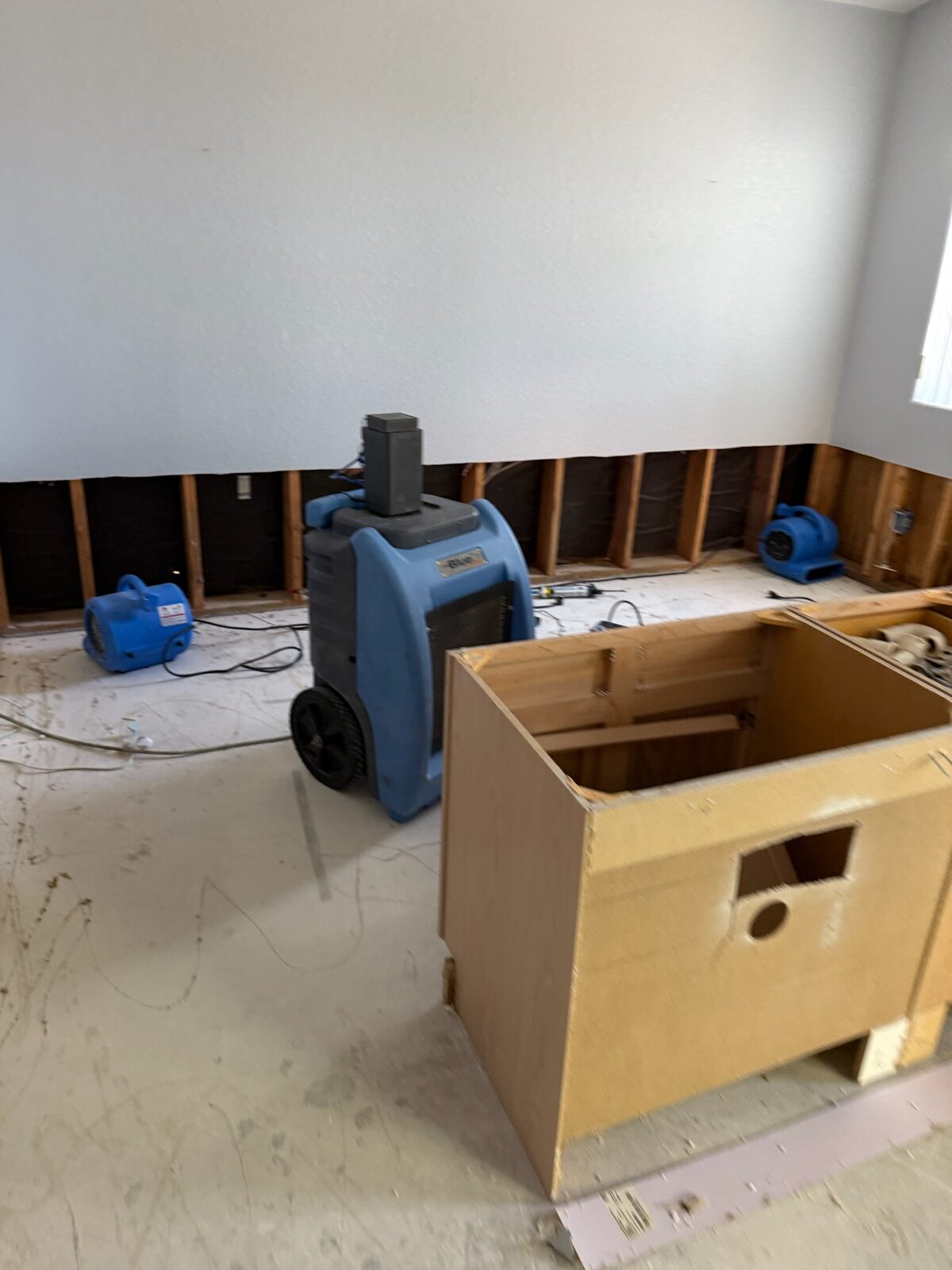
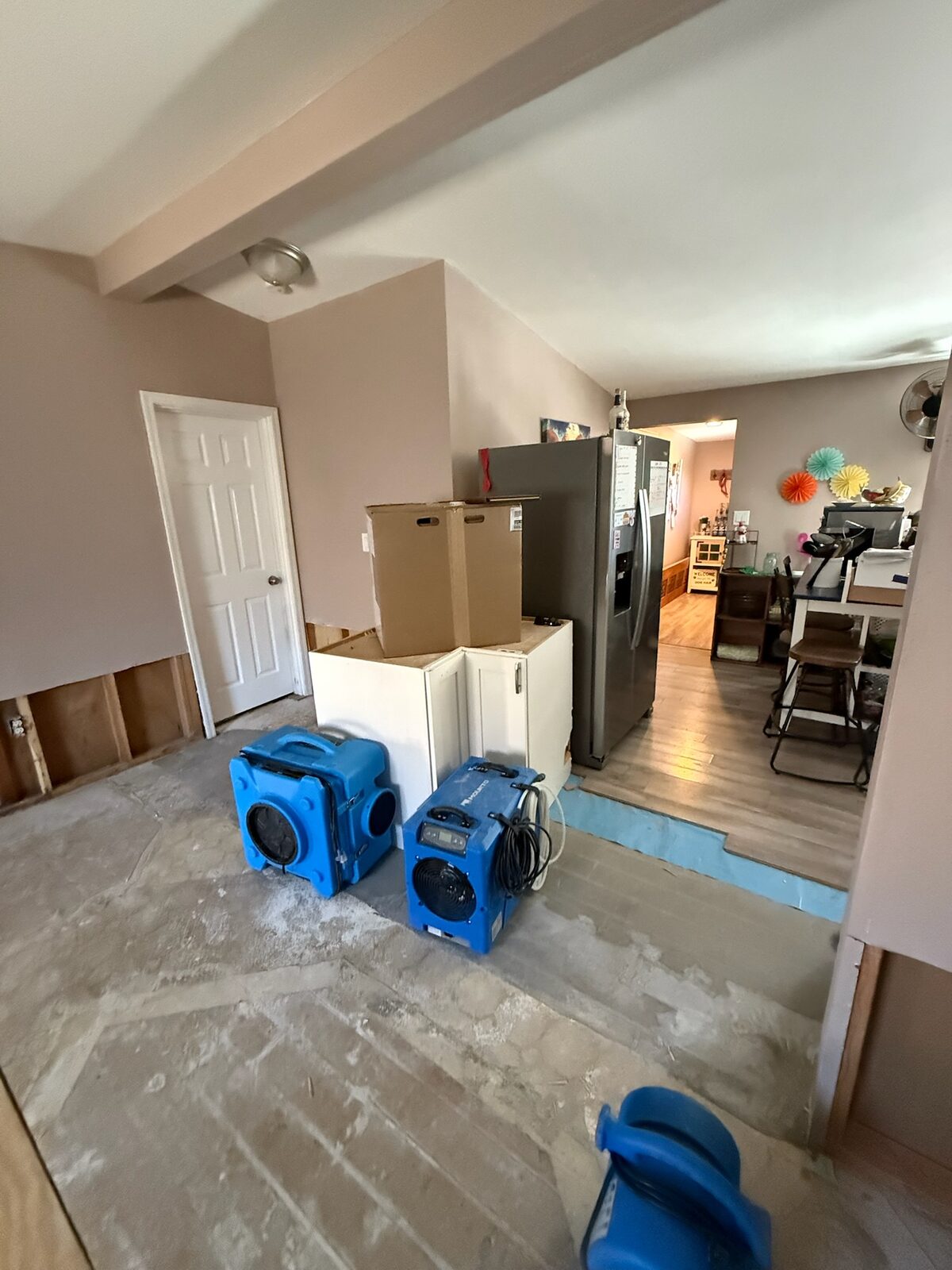
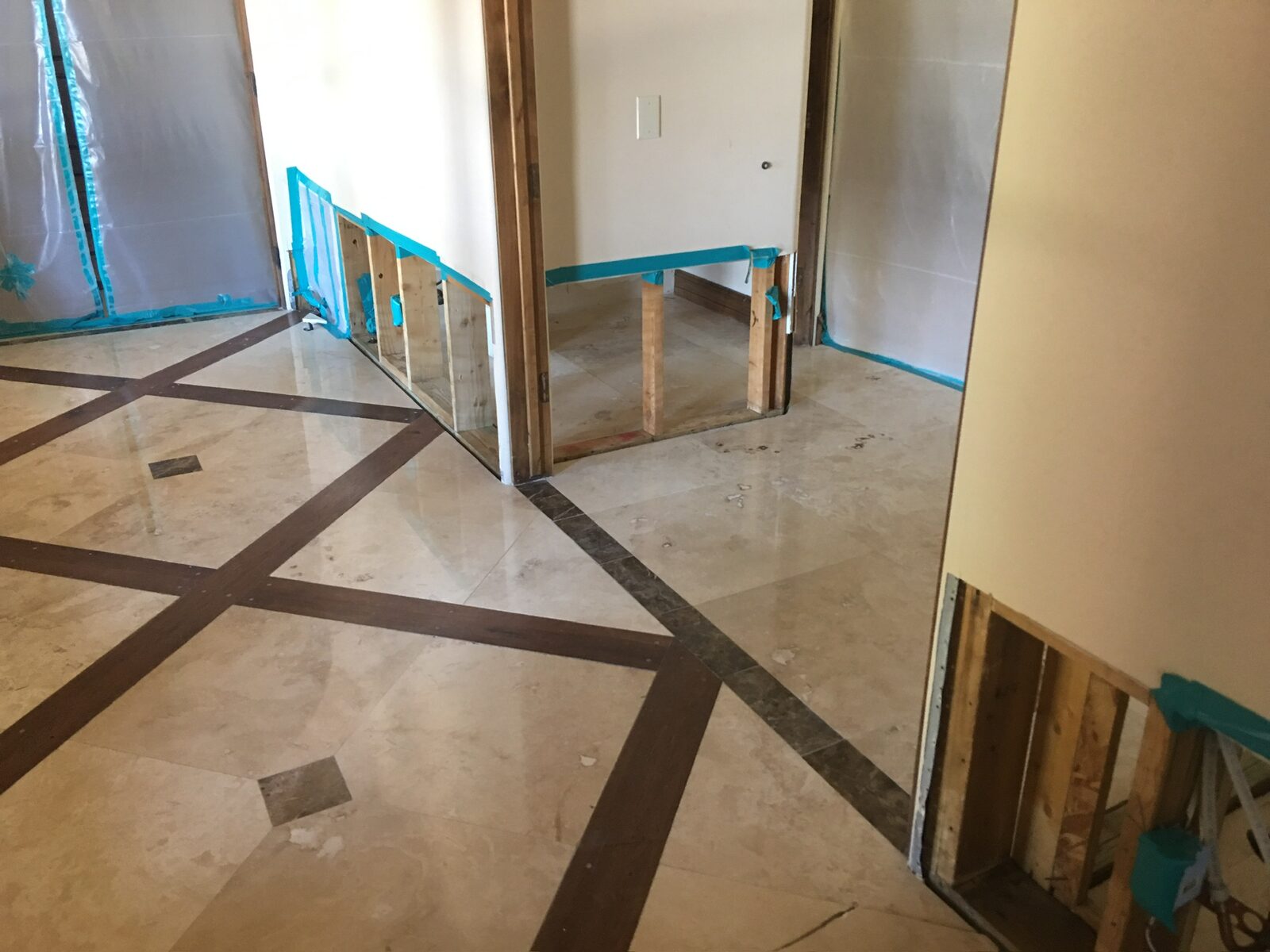
Residential reconstruction work by members of our team. See the full gallery →
More from Gold Water Fire
Abrasive Cleaning Methods for Soot on Framing and Masonry
A look at how abrasive cleaning methods remove soot from wood framing and masonry after a fire, and when each method fits the material.
AC Condensate Line Clogs & the Water Damage They Cause in Phoenix Homes
Why Phoenix AC condensate lines clog every summer, what the water damage looks like, and how to find the source before the ceiling stain spreads again.
Actual Cash Value vs Replacement Cost: Why Your Check Might Not Match the Repair Bill
Confused why your insurance check seems short after fire or water damage? Learn the difference between actual cash value and replacement cost coverage.
Have questions about a drying plan in progress?
If you're in the middle of a water damage dry-out anywhere in the Phoenix metro area and want a clear explanation of what's happening in your home, Gold Water Fire is available to talk it through. Call (480) 999-3339 or reach out through the <a href="/contact.html">contact page</a>.
Call (480) 999-3339Water Damage Restoration · About Gold Water Fire · Contact Us