
How Phoenix Humidity Swings Change a Drying Plan
If you've had water sitting in your home and you're watching a dehumidifier or fans run day after day, wondering why it's taking longer than you expected, or why a drying company keeps adjusting their numbers, you're not imagining things. Arizona's air does something most drying advice doesn't account for. It moves. A lot. And when it moves, everything about how a space dries moves with it.
How Phoenix Humidity Swings Change a Drying Plan
Why Phoenix humidity isn't what people expect
Phoenix has a reputation for dry heat, and most of the year that reputation is earned. Relative humidity can sit in the teens or twenties for long stretches. But the desert Southwest also gets sharp humidity spikes, especially during the summer monsoon season from roughly June through September, when moisture pulled up from the Gulf of California or Gulf of Mexico can push relative humidity from 15% in the morning to 50% or more by afternoon. Outside of monsoon season, weather fronts, overnight temperature drops, and even irrigation-heavy landscaping nearby can cause smaller but still meaningful swings. A drying plan built around 'it's dry here' assumptions can fall apart on the one week it isn't.
How humidity actually changes the physics of drying
Drying wet materials, drywall, subfloor, framing, carpet padding, works on a simple principle: moisture moves from a wetter surface to drier air, as long as the air can hold more moisture than it already has. That's measured by the gap between the air's current humidity and its saturation point. When outdoor or indoor relative humidity climbs, that gap shrinks, and materials give up moisture more slowly no matter how many fans are pointed at them. A room that was drying well at 9am with 20% humidity can stall out by 3pm if humidity climbs to 55%, even though nothing in the room itself has changed. This is why airflow alone isn't a drying plan. Moving air that's already saturated just recirculates the problem.
What a static drying plan misses
A lot of general drying guidance treats humidity as a constant: set up equipment, come back in three days, check moisture levels. In a climate with steady conditions that can work. In Phoenix, a plan set on a dry morning can be undersized by that same afternoon, and a plan sized for a monsoon afternoon can be running unnecessary equipment once the air clears overnight. Materials also respond differently. Drywall and open framing release moisture fairly predictably, but dense materials like solid wood subfloor or older plaster hold onto moisture longer and are more sensitive to swings in ambient humidity, meaning they can appear dry on the surface while still holding moisture underneath if outdoor conditions spiked during the process.
What actually needs to be tracked, not just set once
Because conditions change, the numbers that matter aren't just the ones taken on day one. Relative humidity, temperature, and material moisture content all need to be checked repeatedly through the drying process, not assumed from an initial reading. Dehumidifier capacity that was right for a dry stretch may need to run harder, or a room may need to be sealed off differently, if a humidity spike moves through. This is less about having more equipment and more about adjusting the plan as conditions change, which is exactly the part a one-time inspection can't capture.
Questions people ask us
Does Phoenix humidity really change enough to matter for drying?
Yes. Relative humidity in the Phoenix area can swing by 30 percentage points or more in a single day, particularly during monsoon season from June through September, and that swing directly affects how fast materials release moisture.
Can I just run a dehumidifier and fans and expect steady progress?
Equipment helps, but its effectiveness depends on the humidity of the air around it. If ambient humidity rises, the same equipment setup that was working in the morning may not keep pace by afternoon, so progress isn't always steady day to day.
How do I know if a room is actually dry or just looks dry?
Surface appearance isn't reliable. Materials like subfloor and plaster can look dry while still holding moisture underneath, especially if humidity spiked during the drying window. Moisture content needs to be measured with a meter, not judged by sight or touch.
Does this mean drying takes longer in Phoenix than other places?
Not necessarily longer overall, since low ambient humidity for much of the year works in a home's favor. But it does mean the timeline can be less predictable, with progress that speeds up or slows down as conditions shift, rather than a steady straight line.
The standard our team works to
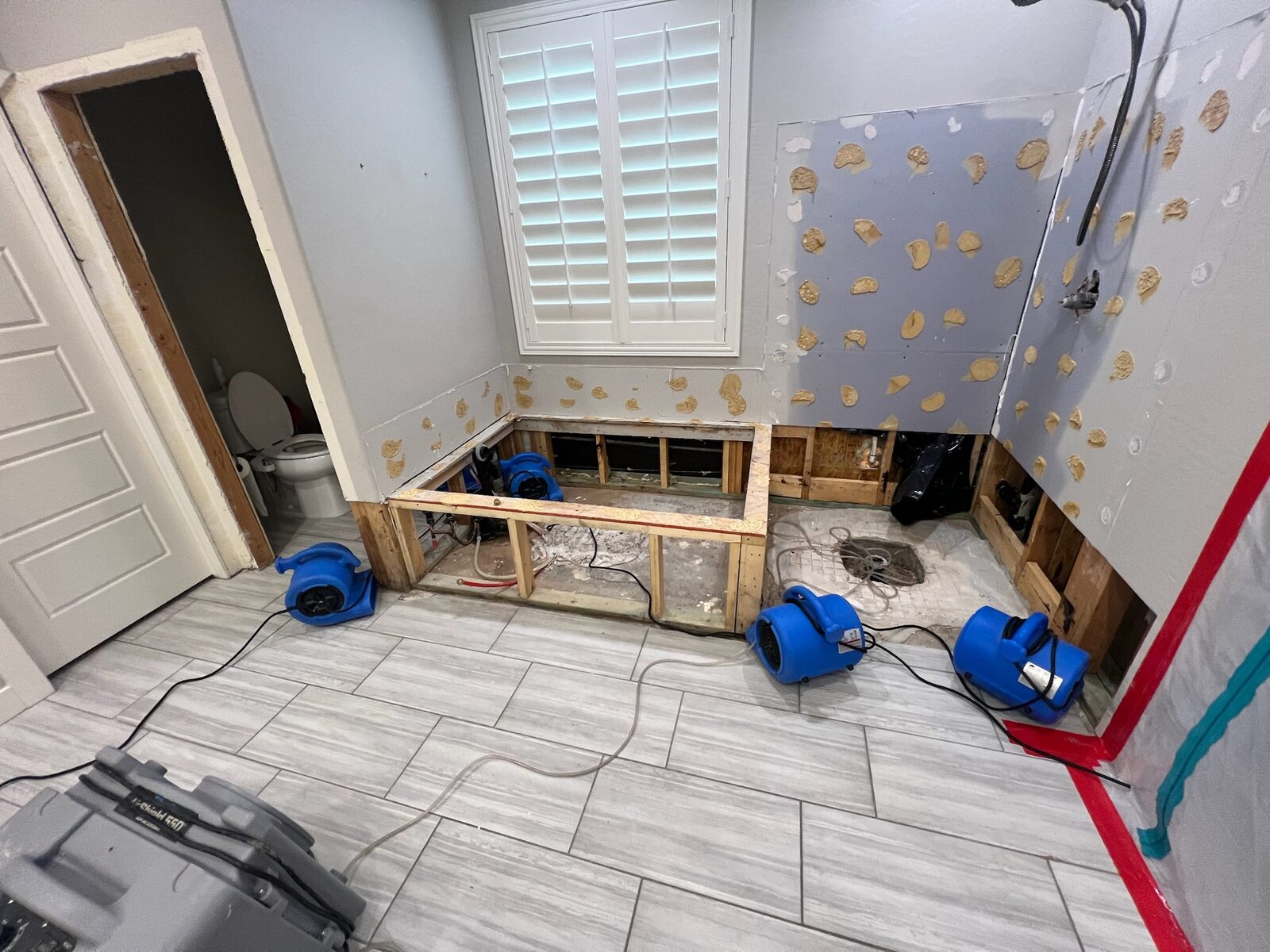
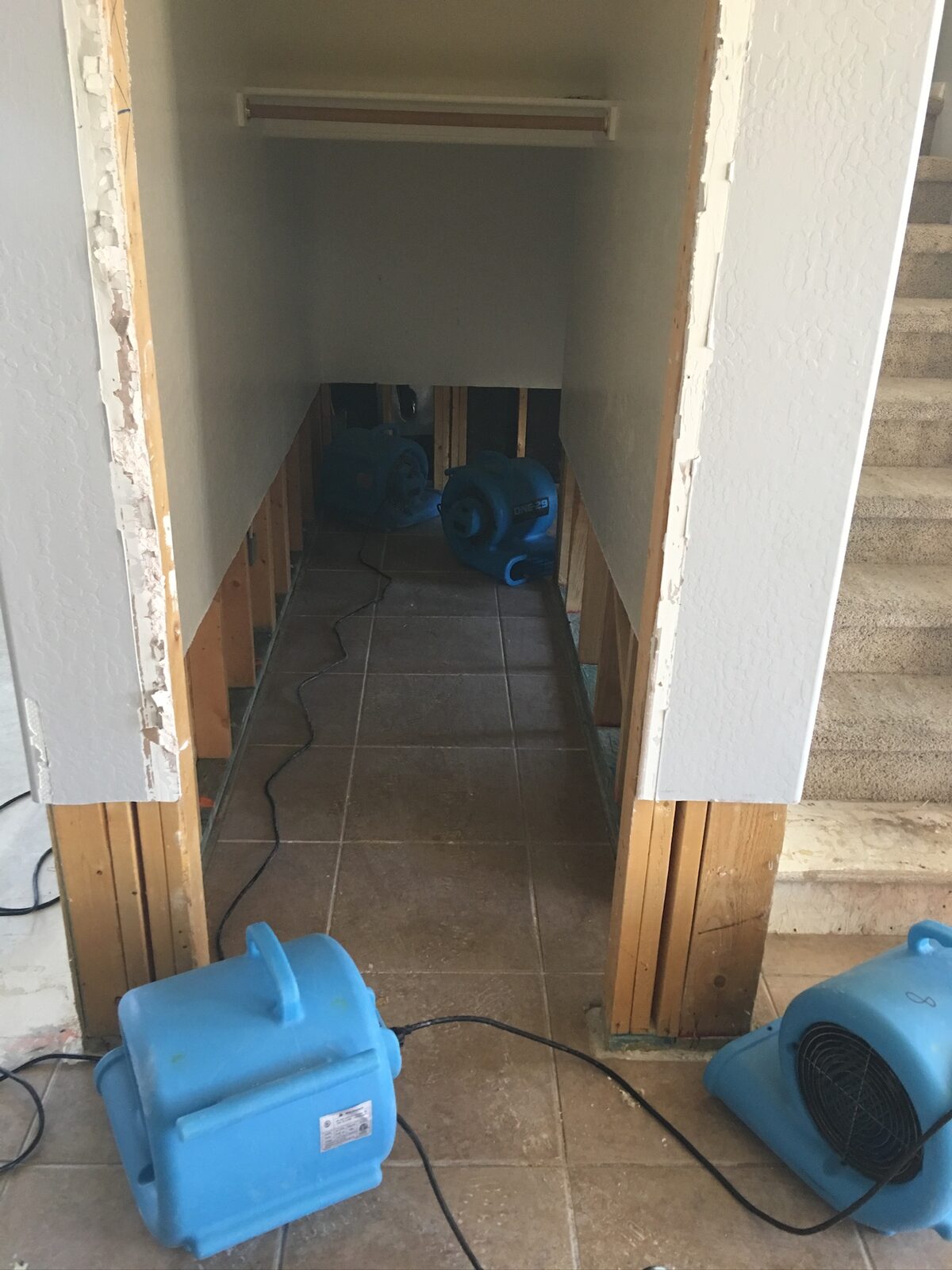
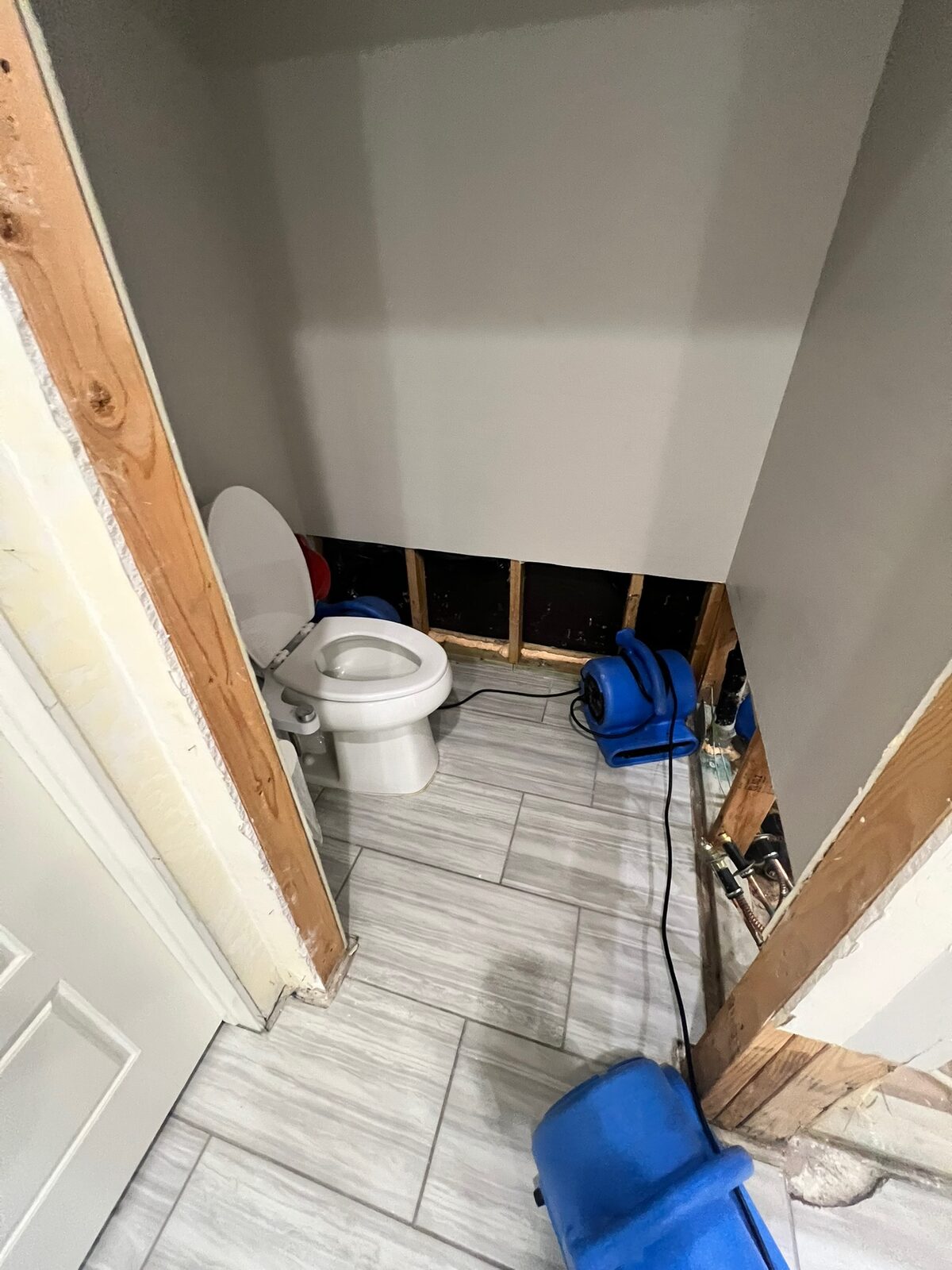
Residential reconstruction work by members of our team. See the full gallery →
More from Gold Water Fire
Abrasive Cleaning Methods for Soot on Framing and Masonry
A look at how abrasive cleaning methods remove soot from wood framing and masonry after a fire, and when each method fits the material.
AC Condensate Line Clogs & the Water Damage They Cause in Phoenix Homes
Why Phoenix AC condensate lines clog every summer, what the water damage looks like, and how to find the source before the ceiling stain spreads again.
Actual Cash Value vs Replacement Cost: Why Your Check Might Not Match the Repair Bill
Confused why your insurance check seems short after fire or water damage? Learn the difference between actual cash value and replacement cost coverage.
Watching a drying plan stall and not sure why
If conditions at your home keep changing faster than the drying plan does, our team can walk through what's actually happening room by room. Reach Gold Water Fire at (480) 999-3339 or Help@goldwaterfire.com, or visit our <a href="/contact.html">contact page</a> to get in touch.
Call (480) 999-3339Water Damage Restoration · About Gold Water Fire · Contact Gold Water Fire