
How to Spot Hidden Water Damage Before It Becomes a Bigger Problem
You noticed something small. A patch of drywall that looks slightly darker than the wall around it. A musty smell in one closet that never quite goes away. A section of tile that feels cool underfoot when the rest of the room doesn't. Nothing is dripping, nothing has flooded, and part of you wants to write it off, but the thought keeps coming back, because in a house, water almost never announces itself the first time. Most homeowners are right to be suspicious of these small signs. Slow leaks tend to be discovered by the little details long before anything visible fails.
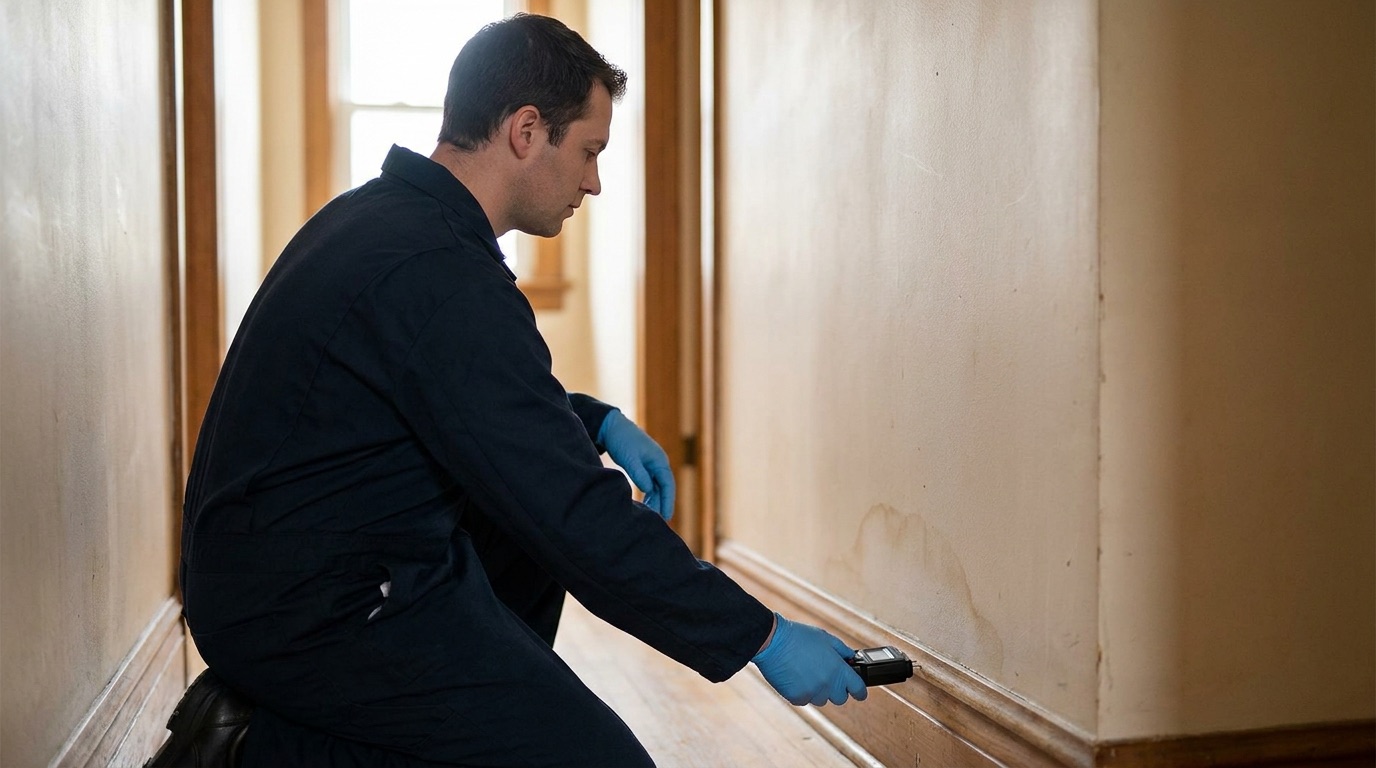
How to Spot Hidden Water Damage Before It Becomes a Bigger Problem
Signs water is moving inside your walls
Wall cavities hide leaks well because drywall absorbs moisture and dries on the surface, so the face of the wall can look normal while the framing and insulation behind it stay wet. Look for these specific things instead of looking for water:
Drywall texture that has changed
Run your hand flat along the wall. Wet-then-dried drywall often feels slightly soft, spongy, or grainy compared to the wall beside it. Paint may look faintly rippled or stippled in a patch, or the wall may show a hairline bubble where the paint film lifted from the paper facing.
Nail pops, seam cracks, and tape lines
Moisture swells wood framing, and as the wood moves, drywall screws push out and taped joints crack in straight lines. A new crack that follows a seam or a row of small round bumps appearing along a stud line is a movement clue, not a cosmetic one.
Baseboards and trim pulling away
Water in a wall cavity runs down and collects at the bottom plate. Baseboard that has swollen at the bottom edge, curled away from the wall, or has paint flaking near the floor is a common first visible sign of a leak that started higher up.
A smell that is stronger in one spot
Musty or earthy odor concentrated at one wall, one closet, or one cabinet is meaningful. Get low. Odor from a wall cavity is usually strongest near the floor, at outlet openings, and behind furniture where air does not move.
Discoloration that has an edge
Water staining usually shows a defined border, sometimes a tea-colored ring, because minerals concentrate at the drying edge. A stain with a distinct outline is more likely water than dirt or shadow.
Sounds and bills that don't match
A faint hiss or trickle inside a wall when all fixtures are off, or a water bill that climbs with no change in how the house is used, points to a supply line leak. Shut off every fixture and watch the water meter dial. If it still moves, water is going somewhere.
Signs water is trapped under your flooring
Flooring is a lid. Water that gets underneath tile, laminate, vinyl plank, or wood has nowhere to evaporate, so it spreads sideways along the slab or subfloor and can travel well past the room where the leak started. Common signs:
Cupping, crowning, or gaps in wood
Hardwood that has absorbed moisture from below cups: edges rise higher than the center of each board. Boards may also lift at the ends or develop gaps as they swell and shrink unevenly.
Laminate edges that swell
Laminate and engineered planks fail at the seams first. Look for slightly raised, roughened, or darkened edges along joints, and for a plank that flexes or clicks when you step on it.
Tile that sounds hollow
Tap across a tile floor with a knuckle or a coin. Water breaking down the bond under tile changes the sound to a hollow tap. Loose grout, cracked grout lines, or one tile sitting slightly proud of the others are related clues.
Vinyl or carpet that shows the shape of the room
Sheet vinyl may bubble or discolor in a pattern; carpet may feel cooler and denser in one area, and the tack strip or carpet pad may smell musty when you lift a corner near a wall.
Corners and thresholds first
Check the perimeter of rooms adjacent to bathrooms, laundry areas, water heaters, and refrigerators. Doorway thresholds and the base of cabinets are low points where trapped water shows first.
Signs water is coming from above
Ceiling damage is often the last stage of a leak that has been running for a while, because water travels along framing, ductwork, and pipes before it drops. What you see below is rarely directly under the source.
Stains that grow, ring, or darken
A brown or yellow ring means water arrived, then dried, more than once. Take a photo with the date and compare in a few days. A stain that grows is an active leak, not an old one.
Sagging, bowing, or a heavy spot
Drywall holding water bows downward and may develop a bulge that feels heavy or soft. This is a safety issue: saturated drywall and insulation can come down in a sheet. Keep people out from under it.
Paint that flakes, blisters, or peels in a patch
Moisture pushing from behind separates paint from the ceiling. Popcorn or textured ceilings may show a rough, crumbling, or stained circle instead.
Light fixtures and vents
Water follows the path of least resistance and often shows first at can lights, ceiling fans, HVAC registers, and bath fan housings. Rust marks on a fixture trim or a light that flickers can indicate water in the box. Treat that as an electrical hazard.
Second-floor and attic clues
In a two-story home, check the room above and the attic if you can do so safely. Look for wet insulation, dark staining on the top of ceiling drywall, condensation on ductwork, or water tracking along a truss.
Where hidden leaks usually start in Arizona homes
Knowing the usual suspects narrows the search fast. Common sources of slow, hidden water damage include: water heater tanks and their connections, especially units in a garage or interior closet nearing the end of their service life; refrigerator ice maker supply lines running through a wall or under a floor; dishwasher supply and drain connections under the cabinet; washing machine hoses and the drain standpipe; toilet supply lines, tank-to-bowl connections, and failed wax rings that leak only when the toilet is used; shower pans and tub surrounds where grout, caulk, or the pan liner has failed; AC condensate drain lines that clog and overflow into a pan, wall, or ceiling; and irrigation, hose bibs, or roof drainage placing water against an exterior wall. Two local factors matter. Hard water leaves mineral deposits that stress valves, angle stops, and fixture connections over time. A chalky white crust on a shutoff valve or supply line is a warning sign worth acting on. And low humidity means water evaporates from surfaces quickly, so a leak can wet framing and insulation repeatedly while the visible drywall or tile keeps looking dry. Monsoon rain adds roof, flashing, and window-flashing leaks that only show up during a storm and then hide again. If you find something, note the location, photograph it, and check the same spot after the next heavy use or the next rain.
What to do when you find a sign, and what not to do
First, stop the water if you can. Know where your main shutoff and your fixture angle stops are, and turn off the supply to any appliance you suspect. Second, do not paint or seal over a stain. Sealing hides the evidence and leaves the wet material behind the surface, where wet drywall, wood framing, insulation, and cabinet particleboard keep breaking down and can begin to grow mold within a couple of days under the right conditions. Third, resist opening up a ceiling that is sagging or wet near a light fixture; that is a weight and electrical risk. Fourth, document everything before anything is removed: photos of the stain, the source, the affected rooms, and any damaged contents help if you file an insurance claim. Finally, understand that surface drying is not the same as drying the structure. Moisture inside a wall cavity or under flooring has to be found with meters and thermal imaging and dried with controlled airflow and dehumidification, which is what professional water damage restoration is for. When materials are past drying, replacing drywall, flooring, cabinets, and trim is reconstruction and rebuild work. If you want a second set of eyes on something you found, call Gold Water Fire at (480) 999-3339 or email Help@goldwaterfire.com.
Questions people ask us
How long does it take for hidden water damage to cause mold?
As a general rule in the restoration industry, mold can begin to grow on damp organic materials such as drywall paper, wood, and insulation within roughly 24 to 48 hours when moisture, warmth, and no airflow are present. That is why finding and drying the source quickly matters more than how large the wet area looks.
Can I just let a wet wall or floor dry on its own?
Sometimes a very small, quickly caught spill dries with airflow alone. Water inside a wall cavity, under tile or laminate, or in insulation usually does not, because there is no path for the moisture to escape. The surface dries and feels fine while the material behind it stays wet, which is how a small leak turns into replaced drywall, flooring, and cabinets.
How do professionals find water they cannot see?
Standard tools are moisture meters (pin meters that read the moisture content of wood and drywall, and non-invasive meters that read through a surface), plus thermal imaging cameras that show temperature differences where evaporation is cooling a wall or floor, and small inspection holes or borescopes in low-visibility spots. Thermal imaging shows a pattern; the meter confirms whether that pattern is actually moisture.
Does a stain that has stopped growing still need attention?
An old, dry stain from a leak that was properly repaired may only need cosmetic work. But a stain confirms water reached that material at least once, so it is worth verifying the source was fixed and checking the surrounding structure for moisture before you paint. If the stain has a fresh edge, darkens, or reappears after rain or heavy fixture use, it is active.
The standard our team works to
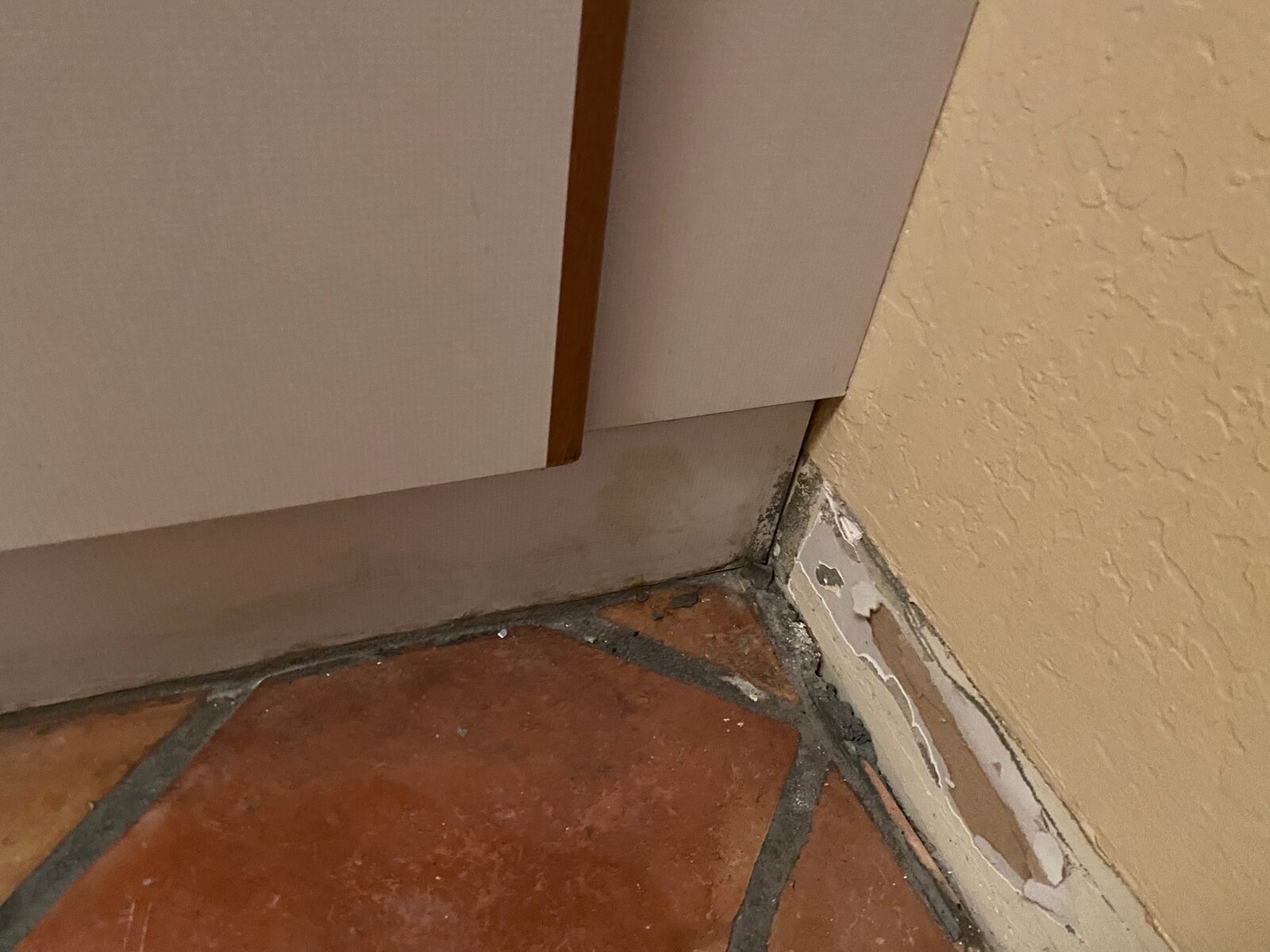
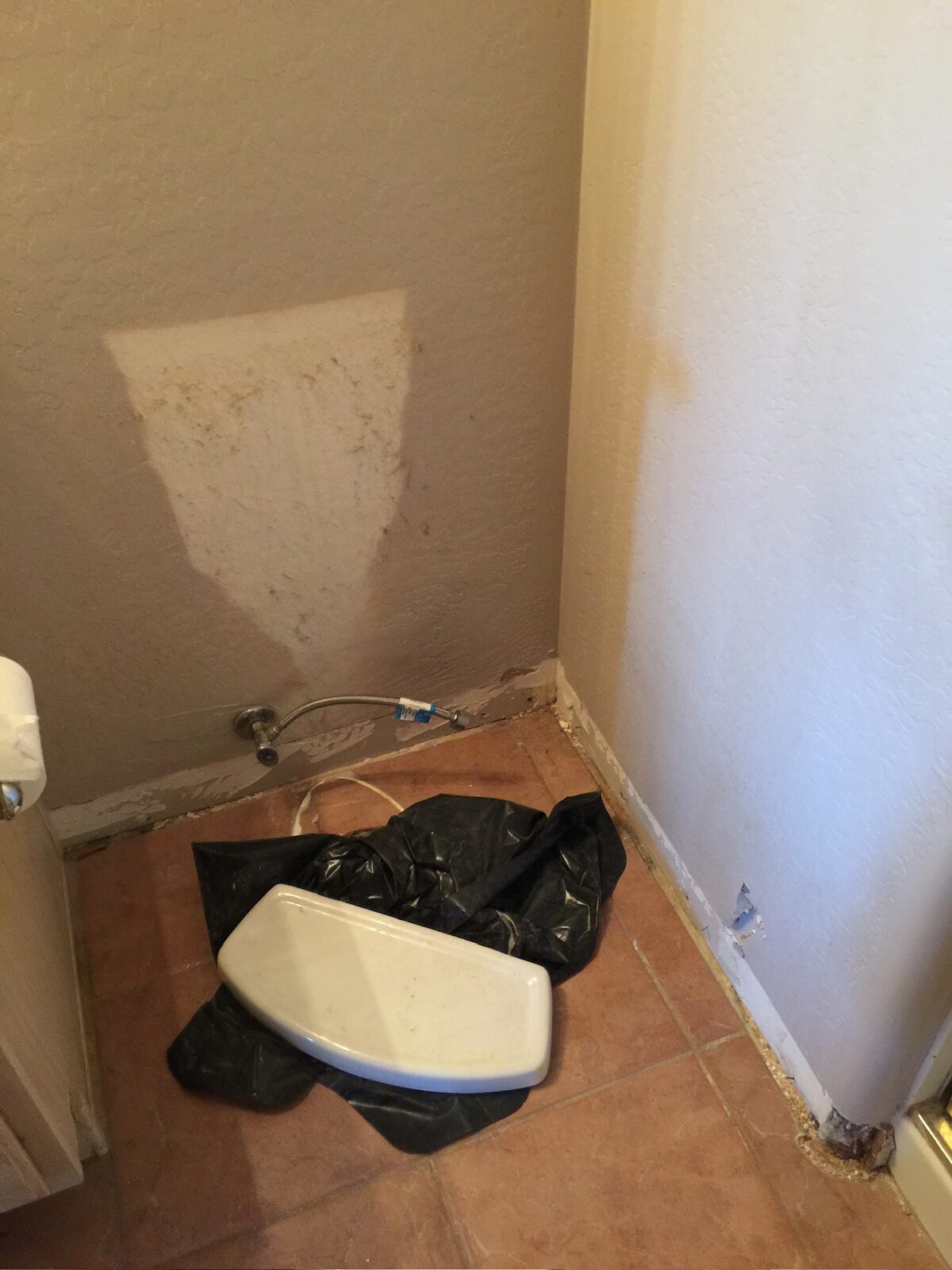
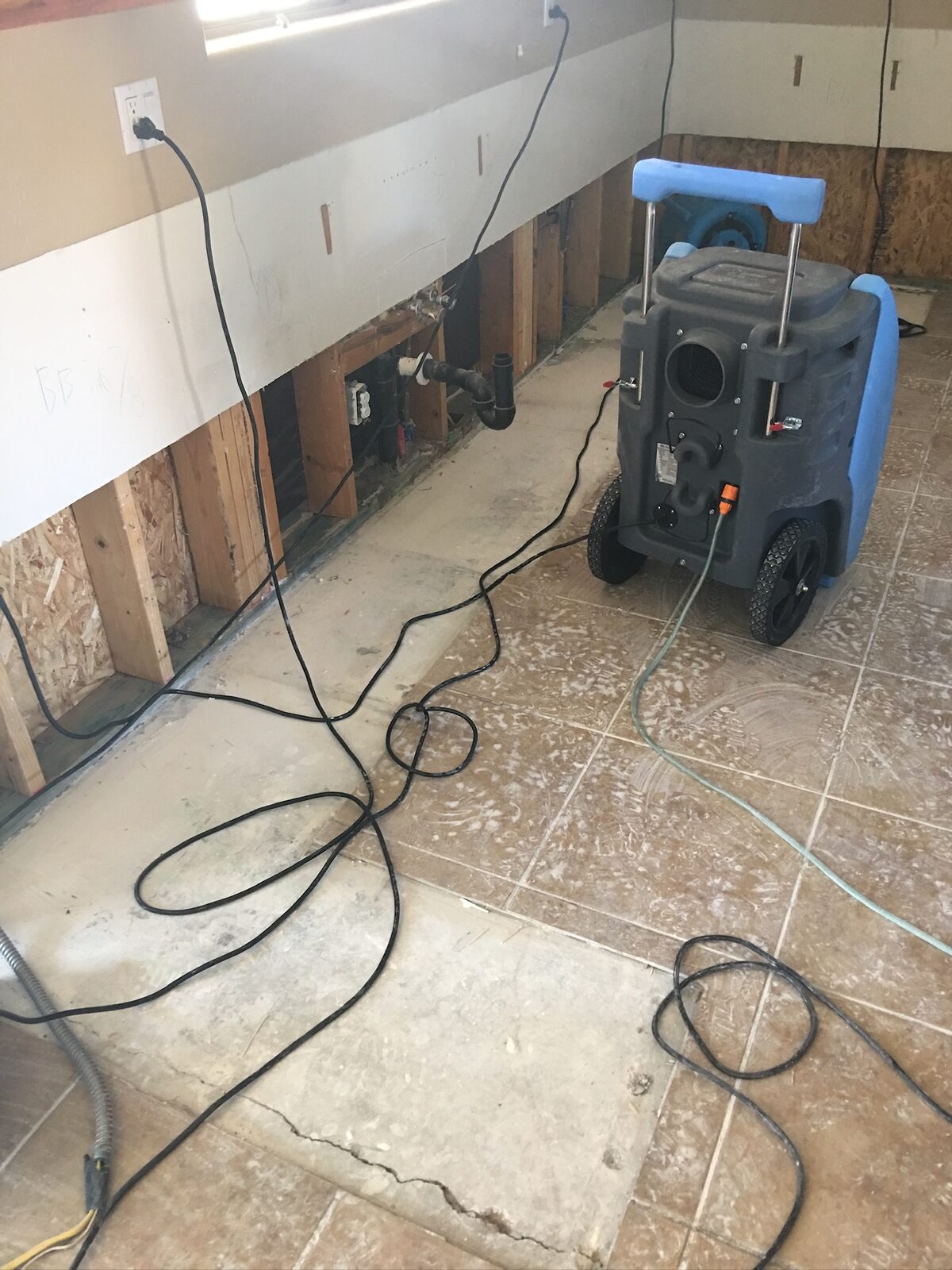
Residential reconstruction work by members of our team. See the full gallery →
More from Gold Water Fire
Abrasive Cleaning Methods for Soot on Framing and Masonry
A look at how abrasive cleaning methods remove soot from wood framing and masonry after a fire, and when each method fits the material.
AC Condensate Line Clogs & the Water Damage They Cause in Phoenix Homes
Why Phoenix AC condensate lines clog every summer, what the water damage looks like, and how to find the source before the ceiling stain spreads again.
Actual Cash Value vs Replacement Cost: Why Your Check Might Not Match the Repair Bill
Confused why your insurance check seems short after fire or water damage? Learn the difference between actual cash value and replacement cost coverage.
Found something you can't explain?
If you have a stain, a smell, or a soft spot and you are not sure how far it goes, Gold Water Fire can look at it. Call (480) 999-3339 or email Help@goldwaterfire.com. We work throughout the Phoenix metro area, including Phoenix, Mesa, Chandler, Scottsdale, Gilbert, Tempe, Glendale, Peoria, Queen Creek, and Apache Junction. AZ ROC #264344 · KB-2.
Call (480) 999-3339Water Damage Restoration · Fire Damage Restoration · Reconstruction & Rebuild