
The Window for Preventing Mold After a Water Loss, and What Closes It
Water is already on your floor, in your walls, or soaking into your carpet, and somewhere in the back of your mind is a clock you can't see counting down. You've probably heard mold shows up fast after a leak or flood, but nobody explains what "fast" actually means or what determines whether you're in trouble. That uncertainty, on top of everything else you're dealing with, is its own kind of exhausting.
The Window for Preventing Mold After a Water Loss, and What Closes It
Why 24 to 48 hours gets mentioned so often
Mold spores are already present in nearly every indoor environment. They don't need much to start growing: organic material to feed on (drywall paper, wood, dust, carpet backing) and sustained moisture. Under warm, humid conditions, many common mold species can begin colonizing materials within roughly a day or two of them staying wet. That window isn't a hard deadline stamped on every water loss, it shifts depending on temperature, humidity, airflow, and what got wet. But it's a useful reference point: the sooner materials are dried out, the less likely growth has had time to take hold.
What actually closes the window early
Several conditions accelerate the timeline and shrink the time you have to act. Heat is one: Arizona homes running air conditioning less aggressively, or a water heater failure that adds warmth to the mix, can push things along faster than a cool, dry climate would. Humidity is another, especially if doors and windows stay closed and moist air has nowhere to go. Porous materials like carpet padding, drywall, and insulation hold water longer than tile or sealed concrete, so a loss involving carpet or wallboard has less margin than one confined to hard flooring. And standing water that isn't extracted, versus water that's already being pulled out, behaves very differently: sitting water keeps feeding the materials around it long after the initial spill or leak has stopped.
What you can do before anyone arrives
If it's safe to do so, remove standing water with towels, a wet/dry vacuum, or buckets. Move furniture, rugs, and anything fabric off wet flooring. Prop up wet upholstery cushions so air can reach both sides. Run air conditioning or fans if you have them, since moving air slows bacterial and mold activity even before real drying equipment shows up. Avoid sealing the room up tight thinking it will contain the problem, that traps humidity instead of releasing it. None of this replaces professional drying, but it buys time while you figure out next steps.
Why drying equipment matters more than it seems
A wet carpet can look and feel dry on the surface within a day, while the pad underneath and the subfloor beneath that stay saturated for much longer. This is the gap that causes hidden mold growth weeks after a homeowner thought the problem was solved. Commercial-grade air movers and dehumidifiers pull moisture out of these hidden layers faster and more completely than open windows or a box fan, which is why professional drying protocols measure moisture content in materials rather than just checking if a surface feels dry to the touch.
Questions people ask us
Is 24 to 48 hours a strict deadline for mold to start growing?
No. It's a commonly cited range based on typical indoor conditions, but actual timing depends on temperature, humidity, material type, and how much water is involved. Some situations move faster, others slower. Treat it as a reason to act quickly, not a hard cutoff.
Can mold grow even if I dry the surface right away?
Yes, if moisture remains trapped underneath, like in carpet padding, behind baseboards, or inside wall cavities. Surface-dry doesn't mean the material underneath has released its moisture, which is why hidden growth can appear later even when things looked fine at first.
Does turning on a fan or the AC really make a difference?
Moving air helps slow the conditions mold needs to establish itself, even though it won't fully dry saturated materials on its own. It's a reasonable first step while you sort out what to do next, not a substitute for pulling moisture out of porous materials.
What water damage situations have the least margin for error?
Ones involving carpet, carpet padding, drywall, or insulation tend to hold moisture longer and give you less time than water confined to tile, sealed concrete, or other hard, nonporous surfaces. Warm indoor temperatures and high humidity also shrink the available window.
The standard our team works to
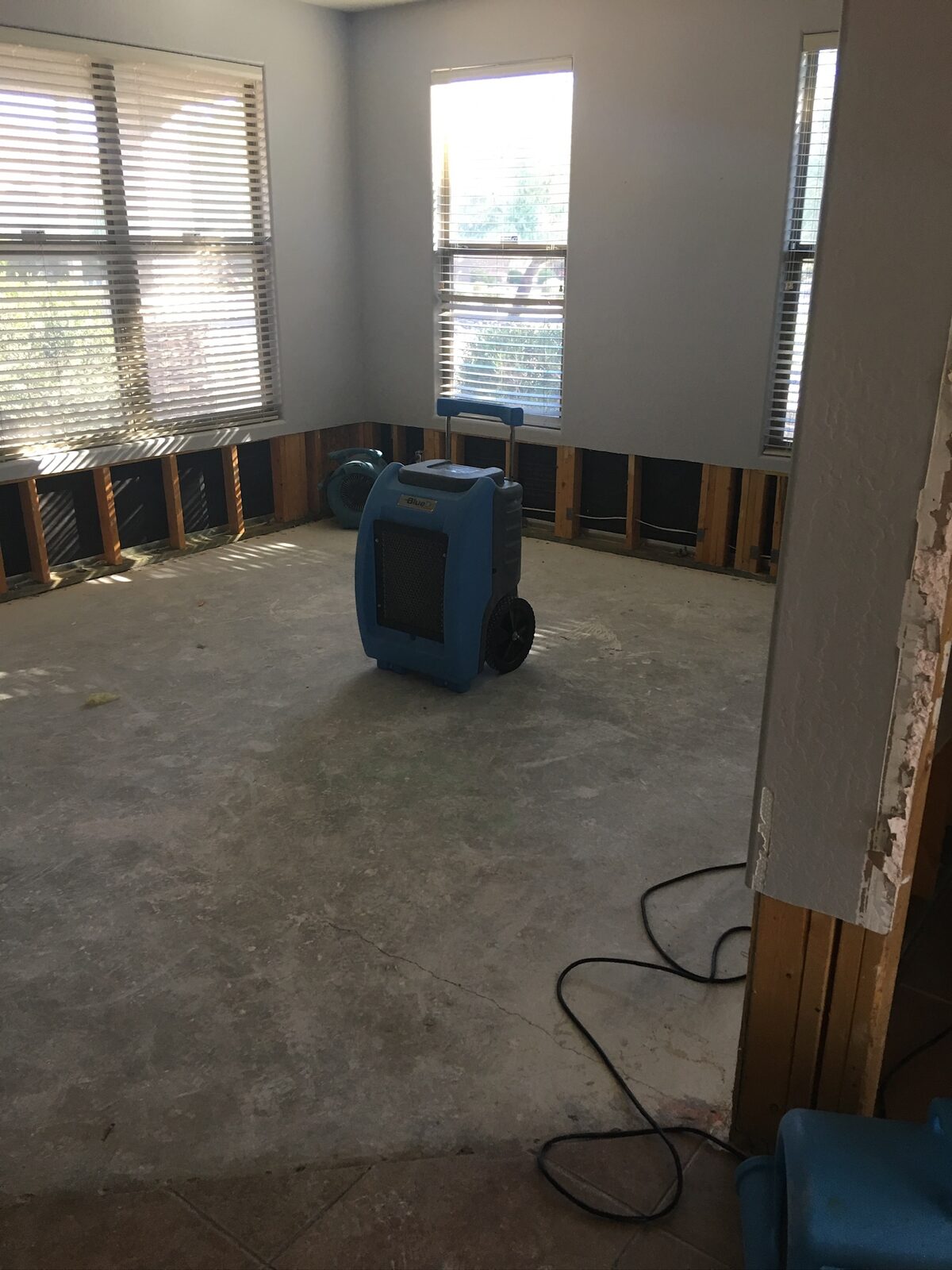
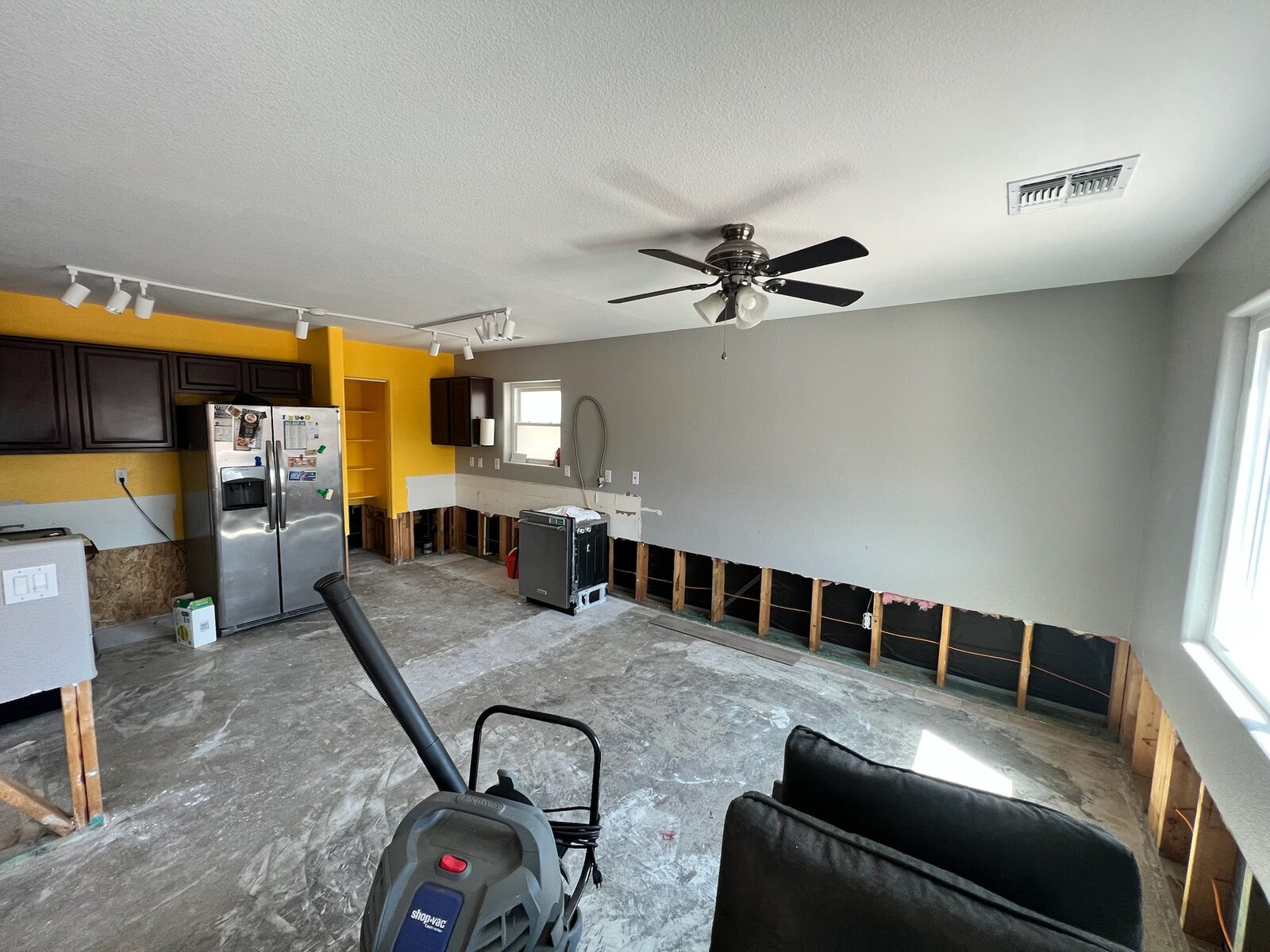
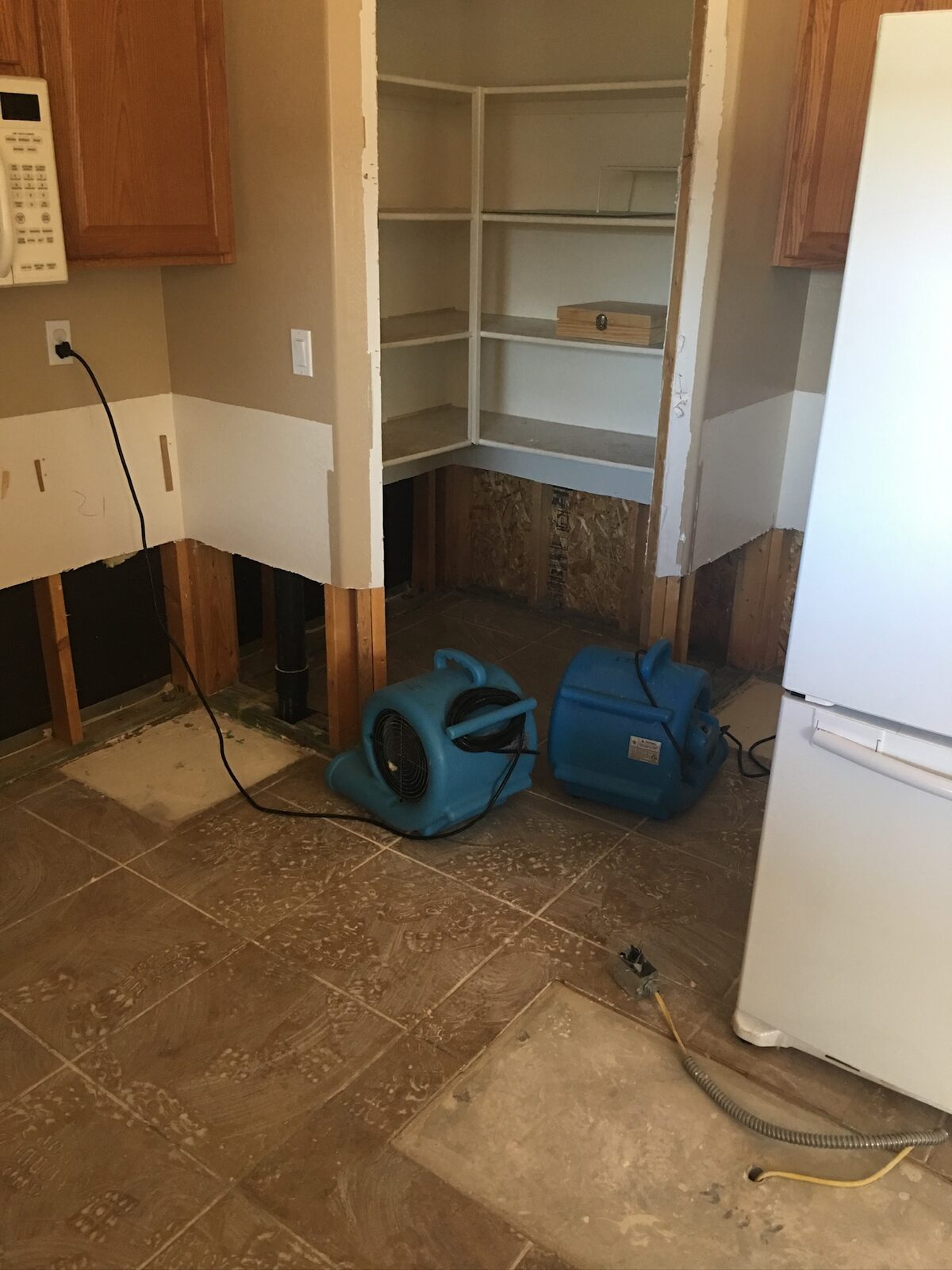
Residential reconstruction work by members of our team. See the full gallery →
More from Gold Water Fire
Abrasive Cleaning Methods for Soot on Framing and Masonry
A look at how abrasive cleaning methods remove soot from wood framing and masonry after a fire, and when each method fits the material.
AC Condensate Line Clogs & the Water Damage They Cause in Phoenix Homes
Why Phoenix AC condensate lines clog every summer, what the water damage looks like, and how to find the source before the ceiling stain spreads again.
Actual Cash Value vs Replacement Cost: Why Your Check Might Not Match the Repair Bill
Confused why your insurance check seems short after fire or water damage? Learn the difference between actual cash value and replacement cost coverage.
Not sure how much time you have left?
If you're dealing with a water loss right now and want a second set of eyes on it, Gold Water Fire serves the Phoenix metro area and can talk through what you're seeing. Reach out at (480) 999-3339 or Help@goldwaterfire.com, or read more about how the drying process works on our <a href="/water-damage-restoration.html">water damage restoration</a> page.
Call (480) 999-3339Water Damage Restoration · Contact Gold Water Fire · About Gold Water Fire