
The Mold Risk Window After Water Damage, and What to Watch For in the First 48 Hours
You cleaned it up. You put down towels, ran the fans, opened the windows, and the floor felt dry by the next morning. And still something is off. A smell in the hallway that comes and goes. A patch of baseboard that looks slightly darker than the rest. A room that feels heavier than the others when you walk into it. You are not imagining it, and you are not being dramatic for noticing. What is hard about this stage is not the water, it is the not knowing: whether the thing you cleaned up is over, or whether it moved somewhere you cannot see and is quietly continuing without you.
The Mold Risk Window After Water Damage, and What to Watch For in the First 48 Hours
Surface dry and structurally dry are two different things
Most of the confusion after a water loss comes from one gap: the surface you can touch dries far faster than the material underneath it. A tile floor wipes dry in an hour. The mortar bed and subfloor under it can hold moisture for days. Drywall feels dry to the back of your hand while the gypsum core two inches up from the floor is still saturated, because drywall wicks water upward against gravity. Carpet dries on top while the pad beneath stays wet like a sponge. This is why so many people feel like the problem came back. It did not come back. It never left the building materials, it just left the parts you could see. Mold does not need standing water. It needs a material that will feed it (paper facing on drywall, wood, cardboard, dust, drywall compound, the organic binder in some insulation), moisture in that material, and a temperature it likes. Common indoor molds begin to establish within roughly a day or two of a material staying wet, which is why the first 48 hours matter more than any other stretch of time. After that window, the conversation changes from drying to removal.
What actually happens in the first two days
Understanding the sequence makes the signs easier to read, because each stage leaves different evidence behind.
Hours 0 to 6: migration
Water travels along the path of least resistance, not the shortest one. It runs under baseboards, follows the seam where drywall meets the slab, tracks along floor joists, and drops into wall cavities through outlet and plumbing penetrations. A spill in a kitchen commonly shows up in an adjacent closet or the far corner of a hallway. What you can see is usually the smallest part of the footprint.
Hours 6 to 24: absorption
Porous materials take the water in. Drywall paper, MDF cabinet toe kicks, particleboard shelving, carpet pad, and wall insulation all hold it. Humidity in the room climbs, and that moisture starts moving into materials that were never touched by the original water: ceilings above, contents in the room, and the backs of furniture pressed against walls.
Hours 24 to 48: colonization begins
Given a wet organic material and normal indoor temperatures, mold spores that are already present in every home begin to germinate and establish. Nothing is visible yet at this stage in most cases. The first sign is usually a smell, not a stain, because the odor comes from compounds released during growth long before there is enough mass to see.
Day 3 and beyond: visible growth
Colonies become visible on drywall paper, baseboards, and the underside of cabinets, often as gray, green, black, or fuzzy white patches. At this point drying alone will not resolve it. Dead mold still triggers reactions and still has to be physically removed, along with the material it is growing on.
What to actually look for and check right now
Go slowly through these. Most of them do not require any tools. Smell first, and trust it. An earthy, musty, damp-basement odor is the most reliable early indicator, and it is often strongest when you first walk into a closed room after being away. If the smell fades while you stand there, that is your nose adapting, not the smell going away. Ask someone who has not been in the house to walk through. Check the bottom four inches of drywall on every wall touching the wet area, including the far side of shared walls. Press with your thumb. Softness, a chalky feel, bubbling paint, or a tide line means moisture got into the wall cavity. Look at baseboards and door casings for swelling, separation from the wall, or a lifted paint edge. Wood and MDF trim swells before it discolors. Pull back a corner of carpet if you can, and feel the pad. A dry carpet face over a wet pad is one of the most common ways a mold problem gets missed entirely. Open the cabinets under sinks and check the toe kick and the back wall, not just the floor of the cabinet. Particleboard darkens and crumbles at the edges when it has been wet. Watch for condensation on windows or a persistent clammy feeling in one room. Elevated indoor humidity after a loss means water is still evaporating out of a material somewhere. Pay attention to symptoms in the house: new nighttime coughing, congestion that clears when you leave for the day, or eye and throat irritation in one particular room. People often notice this before they notice anything on the wall. In Arizona, low outdoor humidity gives a false sense of security. Dry desert air pulls surface moisture fast, which makes materials read as dry on the outside while the core of a wall cavity or the space under a slab-set tile floor stays wet with almost no airflow reaching it. Homes here also tend to have tight, well insulated envelopes and slab construction, so a leak that starts under a slab or behind a wall can hold water for a long time with nothing showing at eye level.
Actions that change the outcome in this window
If the source is still active, stopping it comes first. Nothing else matters while water is still arriving. Know where your main shut off is, and if it is a supply line to a fixture, the local angle stop under the sink or behind the toilet. Remove standing water and get wet contents up off the floor, especially cardboard boxes, which wick moisture and are a favorite growth surface. Take rugs off wet flooring so you are not creating a sealed damp layer. Move air across wet surfaces, not just around the room, and pull humidity out with a dehumidifier if you have one. Air movement alone raises the humidity in the space; without dehumidification you are just relocating the water into the air and then into other materials. Open up what you safely can. Remove cabinet kick plates, pull up carpet at a corner, take switch and outlet covers off wet walls with the power off. Trapped air pockets do not dry. What generally does not help: painting or sealing over a damp wall, spraying bleach on porous material (it does not reach the growth inside the material and it adds more water), waiting to see if the smell goes away, or assuming a fan running for a weekend equals dry. Whether a wall cavity is actually dry is a measurement, not an impression, and it is taken with moisture meters and cavity probes rather than by touch. Also, document everything before you throw anything out. Photos of the source, the water line on the wall, the affected rooms, and any damaged contents matter later, whether or not you file a claim.
If two days have already gone by
Plenty of people find this page on day four, or three weeks later, when the smell finally got loud enough to look into. That is not a failure. Slow leaks behind a shower pan, under a dishwasher, or at a slab supply line can run for months before anything shows, and there was no 48 hour window to catch because there was no visible event. What changes is the approach. Past the drying window, the question is how far the moisture traveled and how much material has to come out. That usually means opening walls to find the boundary of the wet area, removing affected drywall and insulation, addressing the source, and then rebuilding what was taken out. The demolition and the reconstruction are two separate pieces of work, and it is worth knowing up front who is handling each one so the house does not sit open. If you want to read further on the mitigation side, our water damage restoration page walks through the drying process, and the reconstruction and rebuild page covers what putting the house back together involves. If you are working through a fire loss, water from suppression creates the same 48 hour problem on top of the smoke damage, which our fire damage restoration page addresses.
Questions people ask us
How fast can mold actually start growing after water damage?
Under typical indoor conditions, mold on wet organic materials such as drywall paper, wood, and cardboard commonly begins establishing within about 24 to 48 hours. It usually is not visible that early. The first indicator most people notice is a musty smell, because odor compounds are released well before there is enough growth to see.
My floor felt completely dry the next day. Am I fine?
Not necessarily. Surface materials dry much faster than what is behind and beneath them. Drywall wicks water upward inside the wall, carpet pad holds moisture under a dry looking carpet face, and subfloor under tile can stay wet for days. Dryness in a wall cavity is confirmed with a moisture meter, not by touch.
Does Arizona's dry air protect my house from mold?
It helps at the surface and works against you inside assemblies. Low outdoor humidity dries exposed surfaces quickly, which can make a room read as dry while the interior of a wall, the space under a slab-set floor, or a sealed cabinet base is still holding water with almost no airflow. Enclosed spaces do not benefit much from dry outdoor air.
Can I just clean visible mold with bleach and move on?
On a hard, nonporous surface like tile or glass, cleaning is often reasonable. On porous materials such as drywall, insulation, particleboard, or carpet pad, bleach does not reach growth inside the material and adds moisture. Those materials generally need to be removed, and the source of the water has to be corrected or growth returns.
The standard our team works to
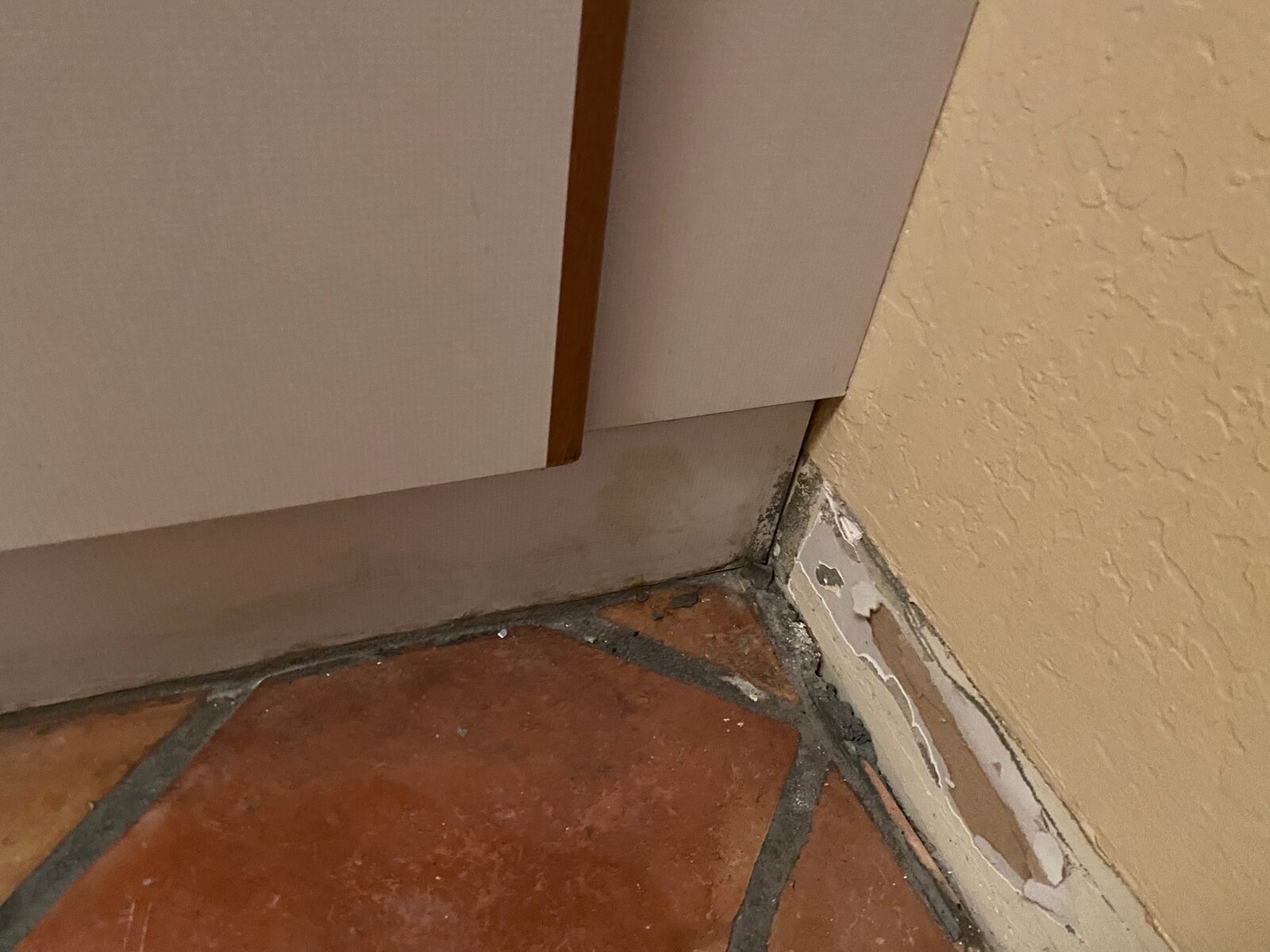
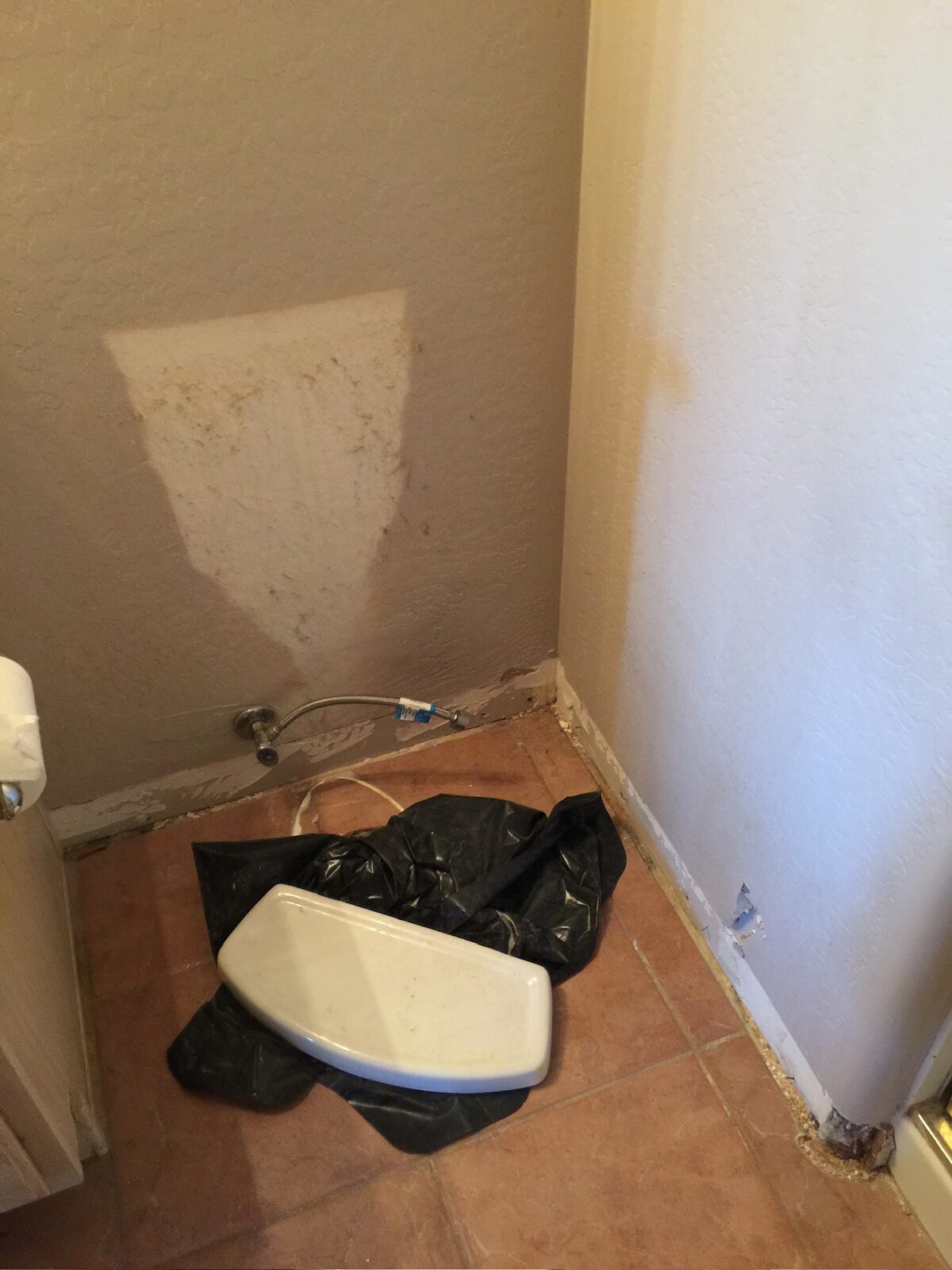
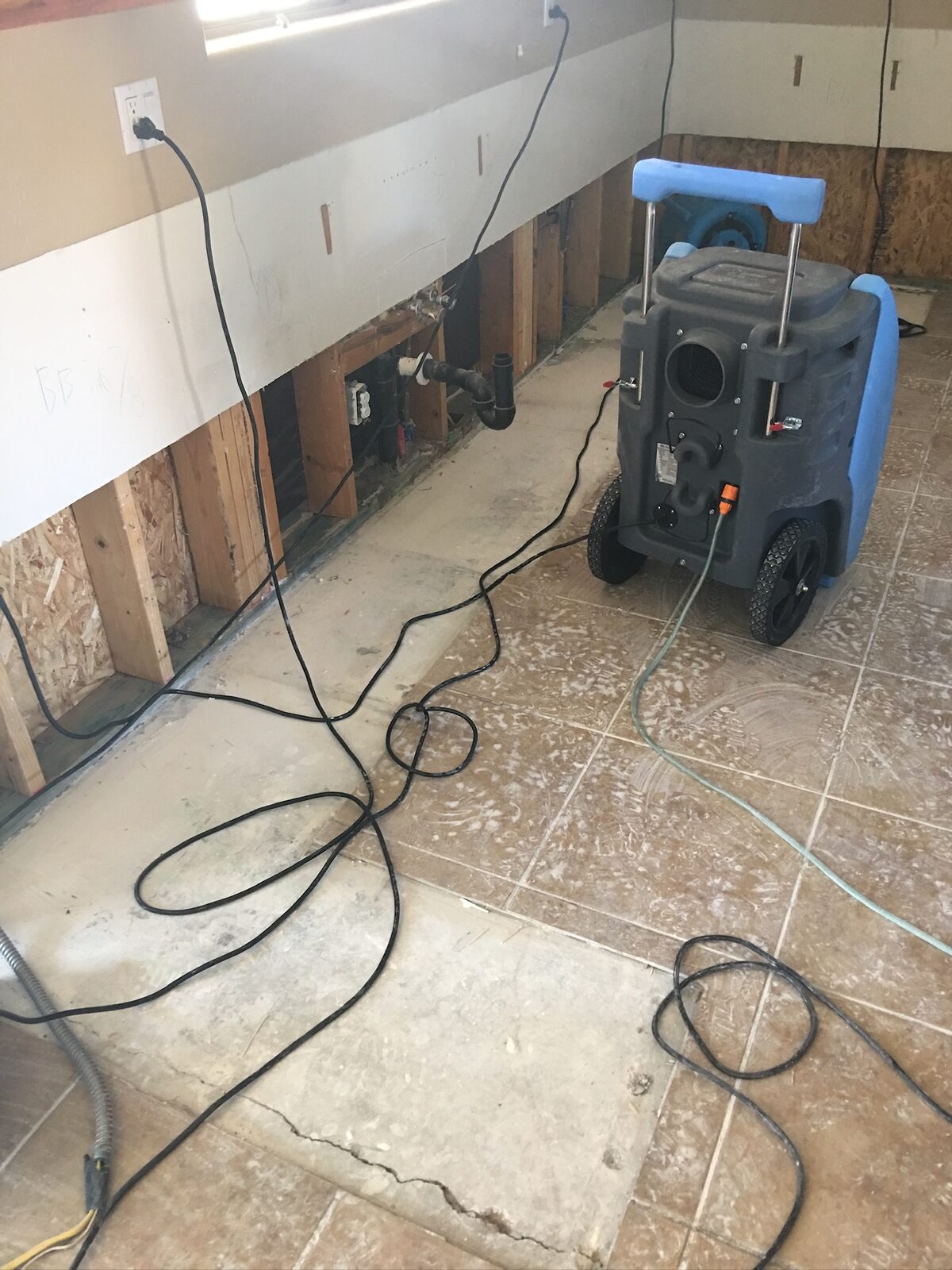
Residential reconstruction work by members of our team. See the full gallery →
More from Gold Water Fire
Abrasive Cleaning Methods for Soot on Framing and Masonry
A look at how abrasive cleaning methods remove soot from wood framing and masonry after a fire, and when each method fits the material.
AC Condensate Line Clogs & the Water Damage They Cause in Phoenix Homes
Why Phoenix AC condensate lines clog every summer, what the water damage looks like, and how to find the source before the ceiling stain spreads again.
Actual Cash Value vs Replacement Cost: Why Your Check Might Not Match the Repair Bill
Confused why your insurance check seems short after fire or water damage? Learn the difference between actual cash value and replacement cost coverage.
Not sure whether it is dry or just dry on top
If you are second guessing a spot in your home, you can talk it through with someone. Gold Water Fire handles water damage restoration, fire damage restoration, and reconstruction across the Phoenix metro area, from Peoria and Avondale to Gilbert, Queen Creek, San Tan Valley, and Apache Junction. Call (480) 999-3339 or email Help@goldwaterfire.com. AZ ROC #264344, KB-2.
Call (480) 999-3339Water Damage Restoration · Fire Damage Restoration · Reconstruction & Rebuild · Contact Gold Water Fire · About Our Team