
What Structural Drying Actually Is & Why It Takes Longer Than It Looks Like It Should
The water is gone. You can walk across the floor in socks and nothing feels wet. The towels are in the wash, the shop vac is back in the garage, and yet there are fans running in your hallway and someone told you it will be a few more days. That gap, between what your eyes and feet are telling you and what the equipment is still doing, is a strange place to sit. It can feel like the process is being stretched out, or like nobody has quite explained what is left to fix. Most people never get a clear answer to the question underneath it: if it looks dry, what exactly is still wet?
What Structural Drying Actually Is & Why It Takes Longer Than It Looks Like It Should
Water does not sit on your house, it goes into it
When water spreads across a floor, only a small part of the problem is the water you can see. The rest has already been absorbed. Drywall pulls water upward through its paper facing and gypsum core. Wood subfloor and framing take it into the cell walls of the fiber itself. Carpet pad acts like a sponge that holds many times its own weight. Insulation in a wall cavity can stay saturated for weeks with no outward sign at all. Concrete slab, which people assume is waterproof, is actually porous and will hold moisture and release it slowly back into the room for days. So when the standing water is extracted, the visible phase of the problem ends and the invisible phase begins. The surface dries first because air moves across it. Everything behind and beneath that surface, the parts with no airflow, dries last. Structural drying is the work of pulling that trapped moisture back out of the building materials themselves and out of the air, in a controlled way, until the materials return to the moisture level they had before the loss.
The three things happening while the equipment runs
A drying setup is not just fans blowing on a wet spot. It is three processes working together, and understanding them explains most of the timeline. Evaporation. Air movers are aimed low and across surfaces at an angle, not straight down, to break up the thin boundary layer of saturated air that clings to any wet material. That boundary layer is why a puddle under a still fan dries so slowly. Moving air strips it away and lets more moisture leave the material. Dehumidification. Everything evaporating out of your floor is now water vapor in your air. If it stays there, it simply lands somewhere else in the house, often somewhere colder and more hidden. A dehumidifier pulls that vapor out and drains it away. This is why running fans alone, or opening windows on a humid day, can move the problem instead of solving it. Temperature control. Warm air holds more moisture and warm materials release moisture faster. A drying environment that is too cold stalls, and one that is too hot can push vapor deeper into cool cavities. The room is being held in a range on purpose. Alongside all of this, moisture is measured. A pin meter reads the moisture content inside wood and drywall. A thermo-hygrometer reads the temperature and humidity of the air going in and coming out. Those readings, taken in the same spots each day, are the only honest way to know whether anything is actually changing.
Why the timeline stretches, and when it is not stretching
Materials do not dry at a steady rate. They dry fast at first, when the free water near the surface leaves, then much more slowly as the remaining moisture has to migrate out from deep inside the material to reach the air. A hardwood floor can drop several points of moisture content on day one and then barely move on day three while it works water out from underneath the boards. That flat stretch is normal and it is often where people lose patience. The other reason is that some assemblies simply have no path for air. Water under a vinyl plank floor, behind a tiled shower wall, inside a wall cavity with a vapor barrier, or between a subfloor and a slab has nowhere to evaporate to. Those areas need to be opened, or dried with specialty equipment that forces air into the cavity through small ports, and that adds days that a wet living room carpet would not. And there are things that legitimately slow a job down that are worth asking about. If the equipment count looks light for the size of the area, if nobody is taking readings, if the same number appears on the log every day, or if a hidden wet area was never found in the first place, the drying is not progressing, it is just waiting. A reasonable contractor will show you the daily moisture readings and tell you which materials are still above target and why. Ask to see them. The numbers, not the calendar, are what should end the drying. One more thing worth knowing: drying is not the same as repair. When the readings hit target, the equipment leaves and what remains is the drywall that was cut, the baseboard that was pulled, the flooring that could not be saved. That is reconstruction and rebuild, a separate phase with its own schedule.
Category matters as much as volume
Clean supply line water is treated differently from water that came through a drain, a toilet, or from outside. Contaminated water often means porous materials like carpet pad and wet drywall are removed rather than dried, because cleaning them in place is not reliable. That decision changes the whole plan on day one.
Arizona air helps, until it does not
Phoenix air is dry for most of the year, and that genuinely helps the first stage. Free surface water leaves quickly and a room can feel dry to the touch within a day. That is also the trap. Once the equipment is running the house is closed up, so what matters is the humidity inside the room rather than the number outside, and in monsoon season the outdoor air can be wetter than what the dehumidifier is putting out. Low outdoor humidity also does nothing for water sitting in a wall cavity or under a floating floor, because it never reaches it.
Trapped moisture becomes a different problem
Given enough time, damp organic material in a dark cavity supports microbial growth, and wet framing in contact with fasteners and connectors starts to corrode. The urgency in drying is not about the water. It is about getting ahead of what happens next if the water stays.
Useful things a homeowner can do while the equipment runs
Leave the air movers and dehumidifiers running, including overnight. Cycling them off resets progress, because the humidity in the room climbs back and materials reabsorb what they released. Keep interior doors positioned the way they were left. Airflow through the house is usually set up deliberately to move drier air toward the wet zone. Resist the urge to open windows unless someone tells you to. Outdoor air is only helpful when it is drier than the air inside, and on a monsoon day it is often not. Do not put furniture back on damp flooring, and do not lay rugs over an area that is still drying. Both block airflow and can leave stains from finishes and dyes. Write down what you notice: a musty smell that comes and goes, a soft spot in the floor, a baseboard that looks swollen, a stain on a ceiling below the affected room. Those observations often point to a wet area that was not on the original map, and they are worth mentioning even if they seem minor. Take photos before anything is moved or removed, and keep them with the daily readings. If there is an insurance claim, a documented drying log is the record of what was done and why.
Questions people ask us
How do I know when the drying is actually finished?
Not by touch, and not by a set number of days. Drying is finished when the moisture content of the affected materials matches an unaffected area of the same material in the same house, and the air in the room is holding a normal amount of moisture. That is why readings are taken from the same marked spots each day. Ask for the log and ask which materials are still above target.
Can I just rent fans and dry it myself?
For a very small, clean-water spill caught immediately, air movement and a dehumidifier can be enough. The risk with a larger loss is what you cannot see: water that has already traveled under flooring, into wall cavities, or along framing. Fans dry surfaces well and cavities poorly, so it is possible to have a floor that feels perfect over material that is still saturated.
Why is drywall being cut out if the plan is to dry everything?
Some assemblies cannot be dried in place in a reasonable time, and some materials do not recover. A cut is often made to give air a path into a wall cavity, or to remove insulation that will hold moisture indefinitely. When water is contaminated, removal is usually the safer call than attempting to clean and dry porous material in place.
Does the drying stop the moment the equipment is picked up?
Picking up equipment means the drying targets were met. What is left is the physical repair of anything cut, pulled, or removed to get there, which is a separate stage of work with its own timeline. It helps to ask early what the rebuild scope will be so the two phases do not come as a surprise one after the other.
The standard our team works to
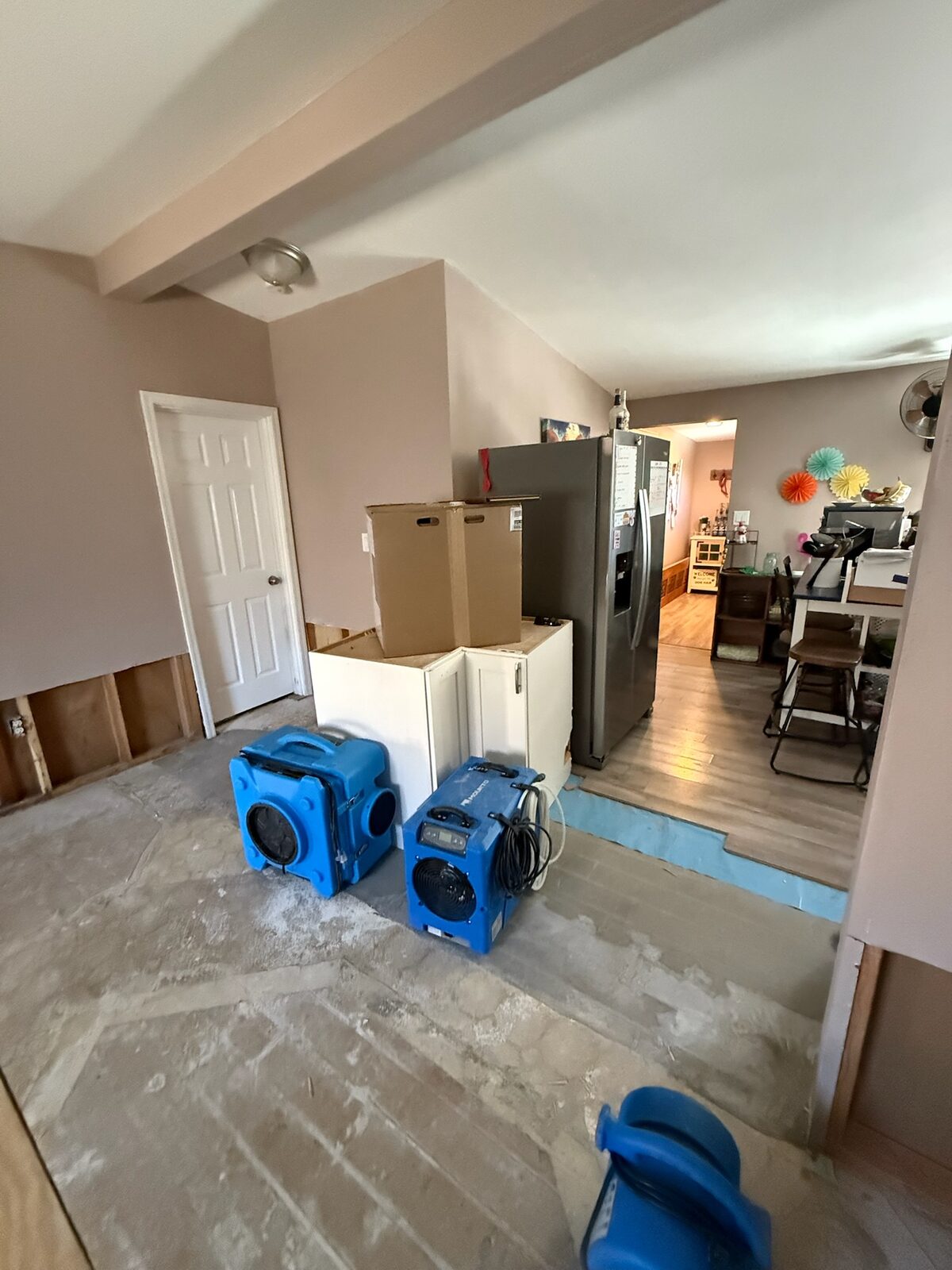
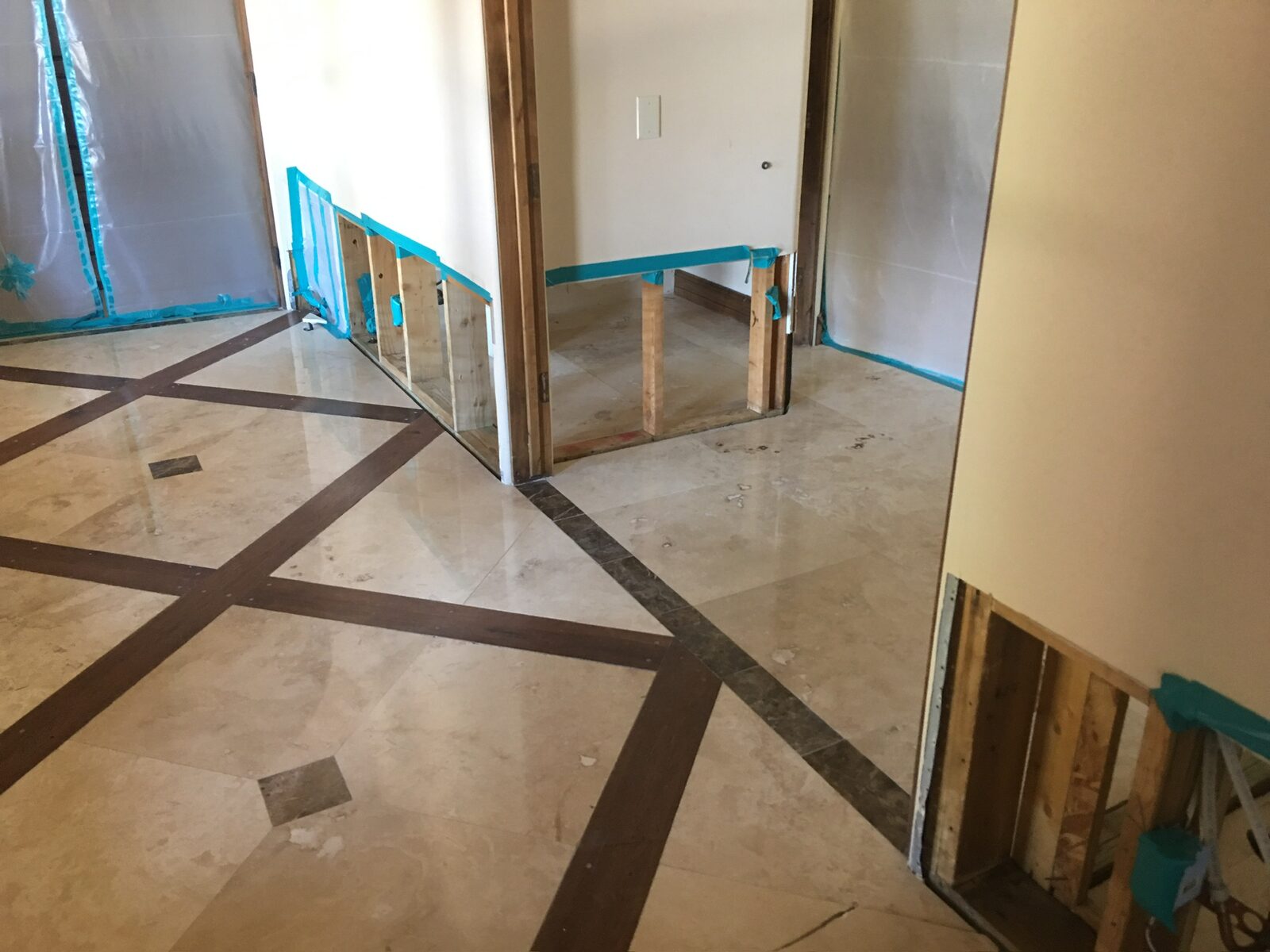
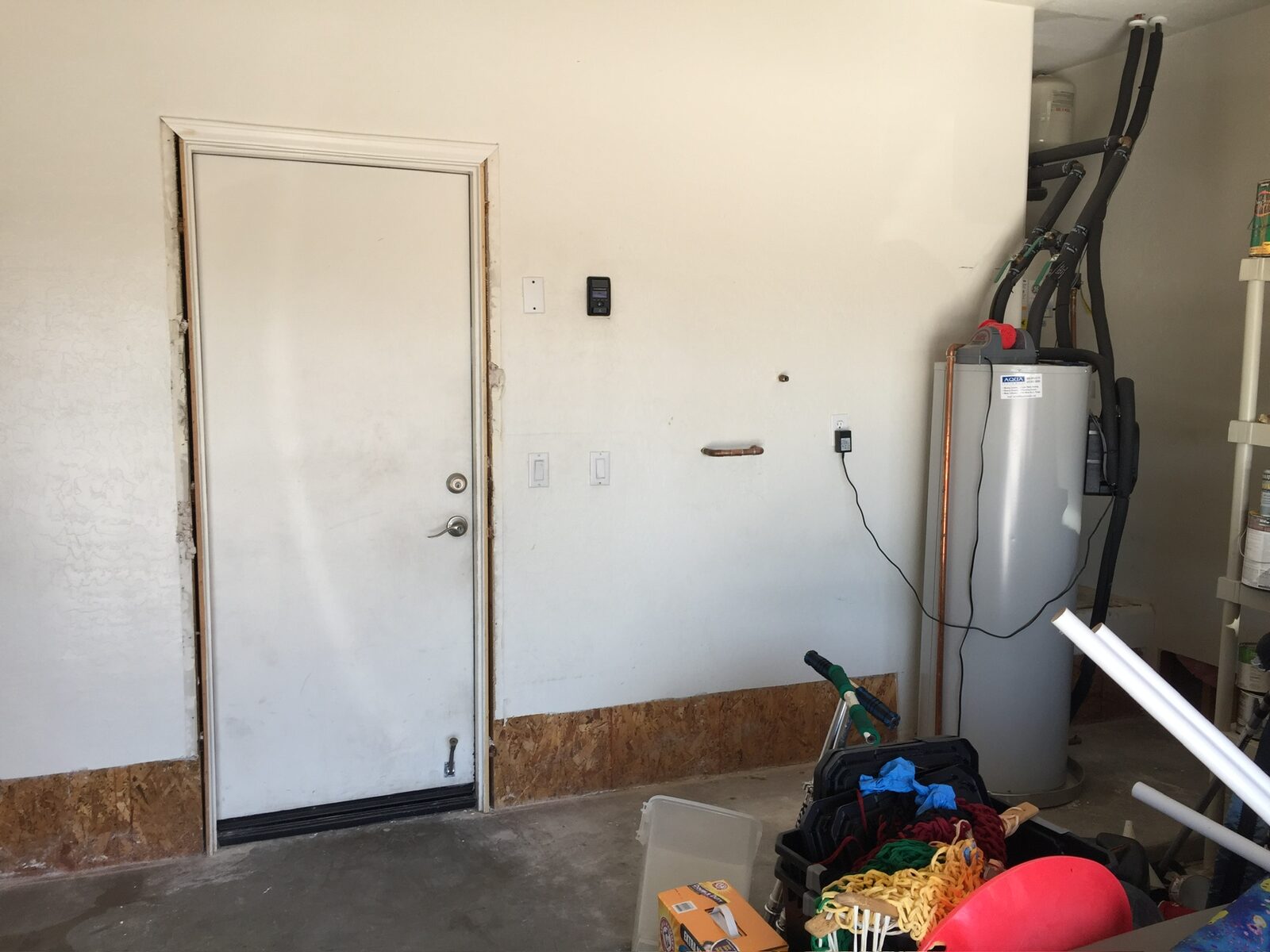
Residential reconstruction work by members of our team. See the full gallery →
More from Gold Water Fire
Abrasive Cleaning Methods for Soot on Framing and Masonry
A look at how abrasive cleaning methods remove soot from wood framing and masonry after a fire, and when each method fits the material.
AC Condensate Line Clogs & the Water Damage They Cause in Phoenix Homes
Why Phoenix AC condensate lines clog every summer, what the water damage looks like, and how to find the source before the ceiling stain spreads again.
Actual Cash Value vs Replacement Cost: Why Your Check Might Not Match the Repair Bill
Confused why your insurance check seems short after fire or water damage? Learn the difference between actual cash value and replacement cost coverage.
If something in your house still does not feel right, it is worth a look
Gold Water Fire handles water damage restoration, fire damage restoration, and the reconstruction that follows, across the Phoenix metro area. If you are not sure whether a spot is still wet or whether the drying is done, call (480) 999-3339 or email Help@goldwaterfire.com and describe what you are seeing.
Call (480) 999-3339Water Damage Restoration · Reconstruction & Rebuild · Fire Damage Restoration · Contact Gold Water Fire · About Our Team