
Why Plastic Sheeting Goes Up Before the Real Drying Starts
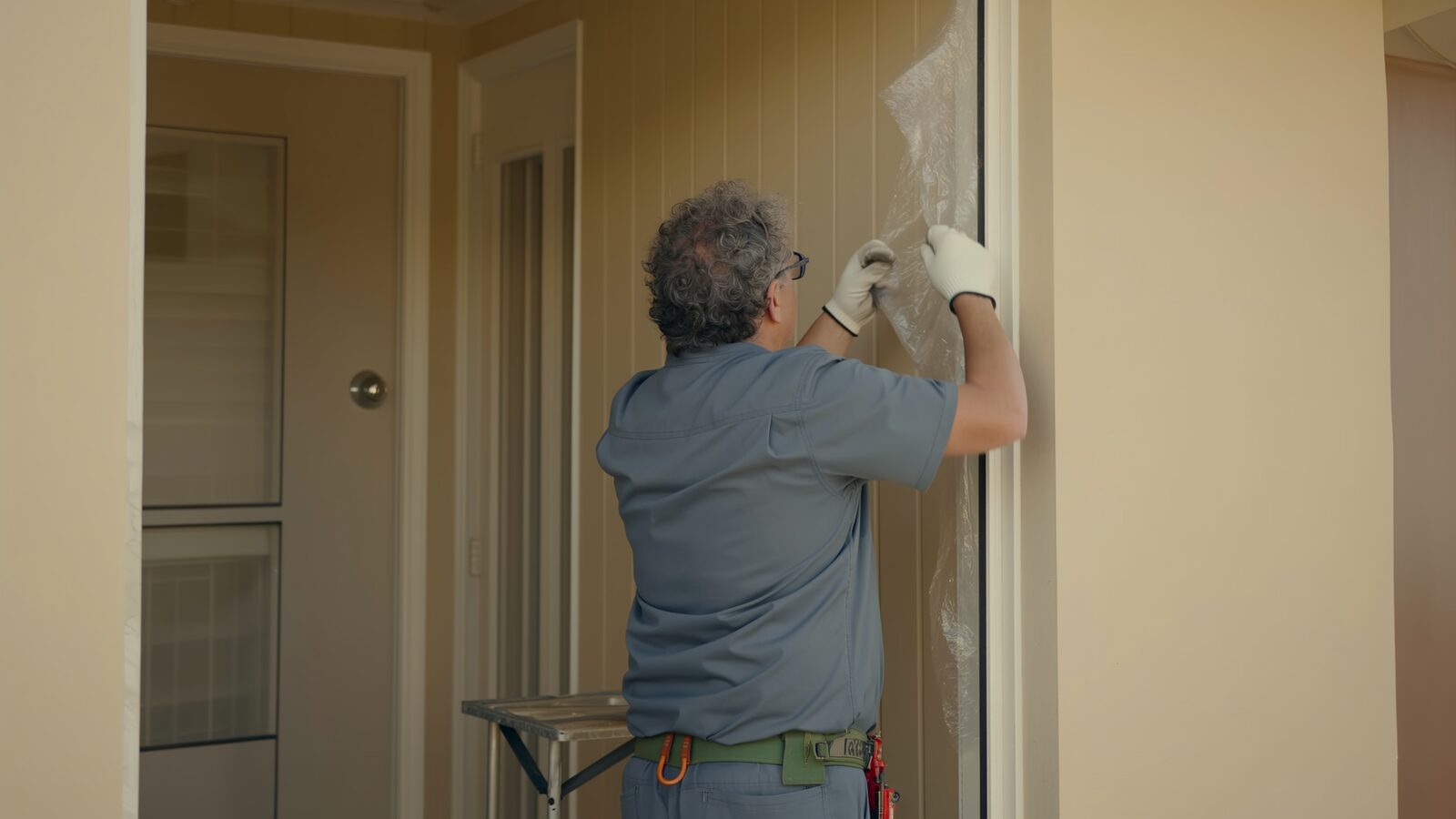
If someone just walked through your home and started hanging plastic sheeting between rooms, it can feel strange, maybe even a little unsettling, especially when you're already trying to process what the water damage means for your house and your week. It looks like they're sealing something off, and you're left wondering what's happening behind that sheet, why it's necessary, and whether it means the damage is worse than you thought. It doesn't. There's a reason for it, and once you understand what it's doing, the whole process makes a lot more sense.
Why Plastic Sheeting Goes Up Before the Real Drying Starts
What a drying chamber actually is
A drying chamber is just a contained space, usually created with plastic sheeting, tape, and sometimes zip poles, that isolates the wet area from the rest of the structure. Instead of trying to dry an entire house at once, the goal is to shrink the space that air movers and dehumidifiers have to work on. Smaller, sealed space means the equipment inside it doesn't have to fight against the humidity of an entire home, and drying conditions can be controlled much more precisely.
Why isolating the space speeds things up
Evaporation depends on the difference between the moisture in wet materials and the moisture already in the surrounding air. If that surrounding air is large and humid, like an entire open floor plan, evaporated moisture just lingers nearby and gets reabsorbed into nearby materials, slowing everything down. Sealing off a chamber lets a dehumidifier pull that moisture out efficiently, keeping the air inside the chamber dry enough that materials keep releasing moisture instead of holding onto it. It's the same principle as why a small closet with a dehumidifier dries out faster than an open living room with the same unit.
Zone drying vs. drying the whole house
Zone drying refers to breaking a job into sections, drying one contained zone fully before moving equipment to the next, rather than spreading air movers thin across every affected room simultaneously. This matters most when only part of a home took on water. Sealing off the affected bedroom or basement section keeps dry, unaffected rooms from being subjected to unnecessary noise, equipment, and airflow, and it keeps the moisture problem from spreading into materials that were never wet in the first place.
What the sheeting is also protecting against
Beyond speeding up drying, the plastic barrier does double duty by containing dust, debris, and airborne particles that get stirred up when flooring or drywall is removed. If mold growth is a concern in the affected area, containment also limits the chance that spores get carried into the rest of the home by airflow or foot traffic. This is part of why chambers are often paired with negative air pressure, where air is pulled out of the sealed zone and filtered before it's released, rather than pushed elsewhere in the house.
How long a chamber typically stays up
There's no fixed answer, since it depends on the materials involved, how much water was absorbed, and the humidity conditions inside the chamber. What matters is that the chamber usually stays sealed until moisture readings in the affected materials return to a normal range, not just until things look dry on the surface. Removing it too early can let the surrounding humidity undo progress that took days to achieve.
Questions people ask us
Does plastic sheeting mean the damage is worse than I thought?
No. Sheeting is a drying technique, not a sign of severity. It gets used on small, contained water losses just as often as larger ones, because the goal is efficient drying, not a reflection of how bad the damage is.
Can I open the sheeting to check on things while it's up?
It's best to leave it sealed. Every time it's opened, humidity from the rest of the house mixes into the chamber and the drying equipment has to work to remove that moisture again, which can add time to the process.
Does zone drying cost more than drying the whole house at once?
It depends on the size and complexity of the job, since the goal of zone drying is actually to use equipment more efficiently, not less. A qualified technician can walk through the specifics of your situation.
Is a drying chamber the same thing as containment for mold remediation?
They overlap but aren't identical. Both use sealed plastic barriers and sometimes negative air pressure, but a drying chamber is focused on moisture removal while mold containment is focused on preventing spore spread during remediation work.
The standard our team works to
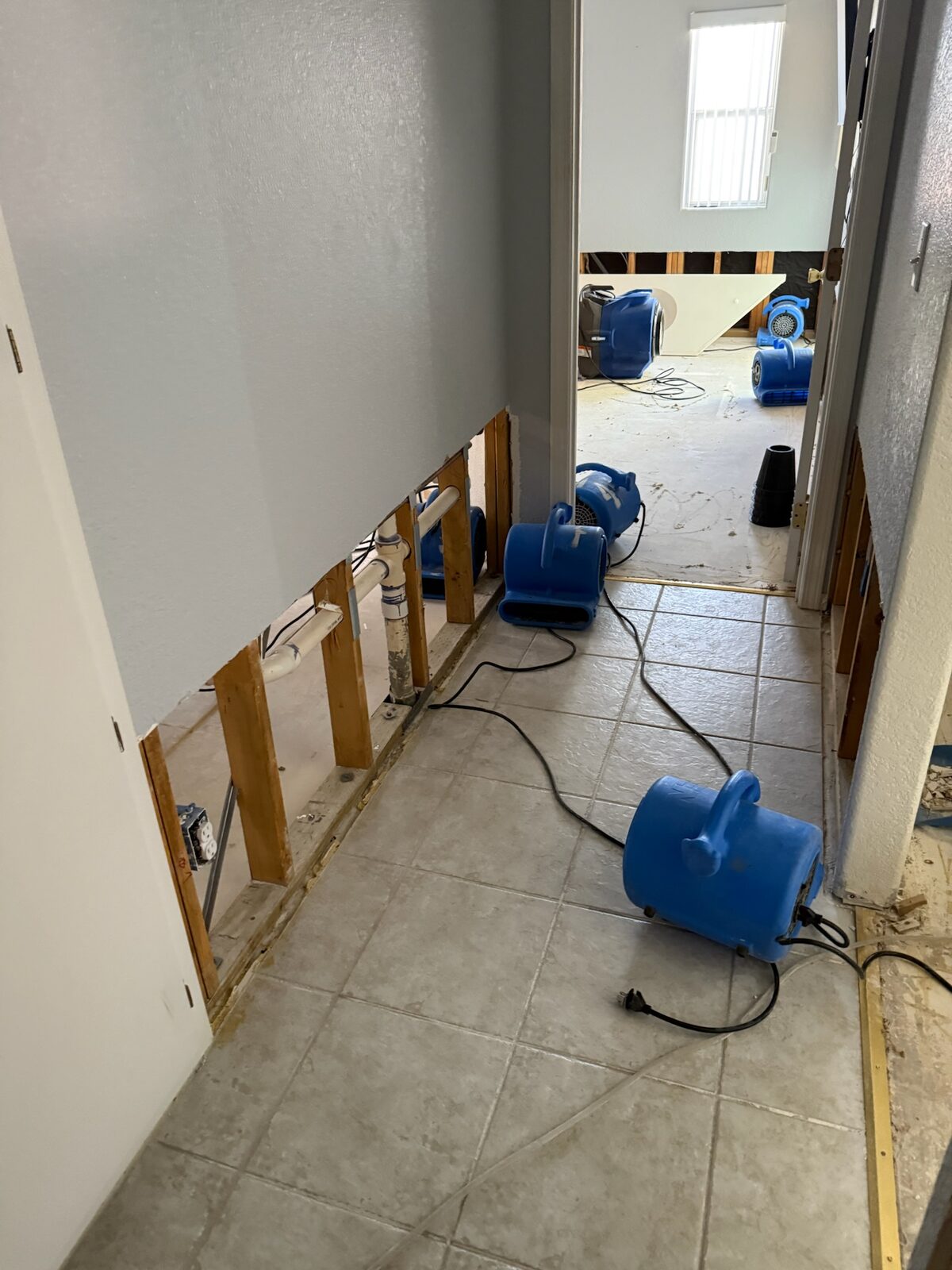
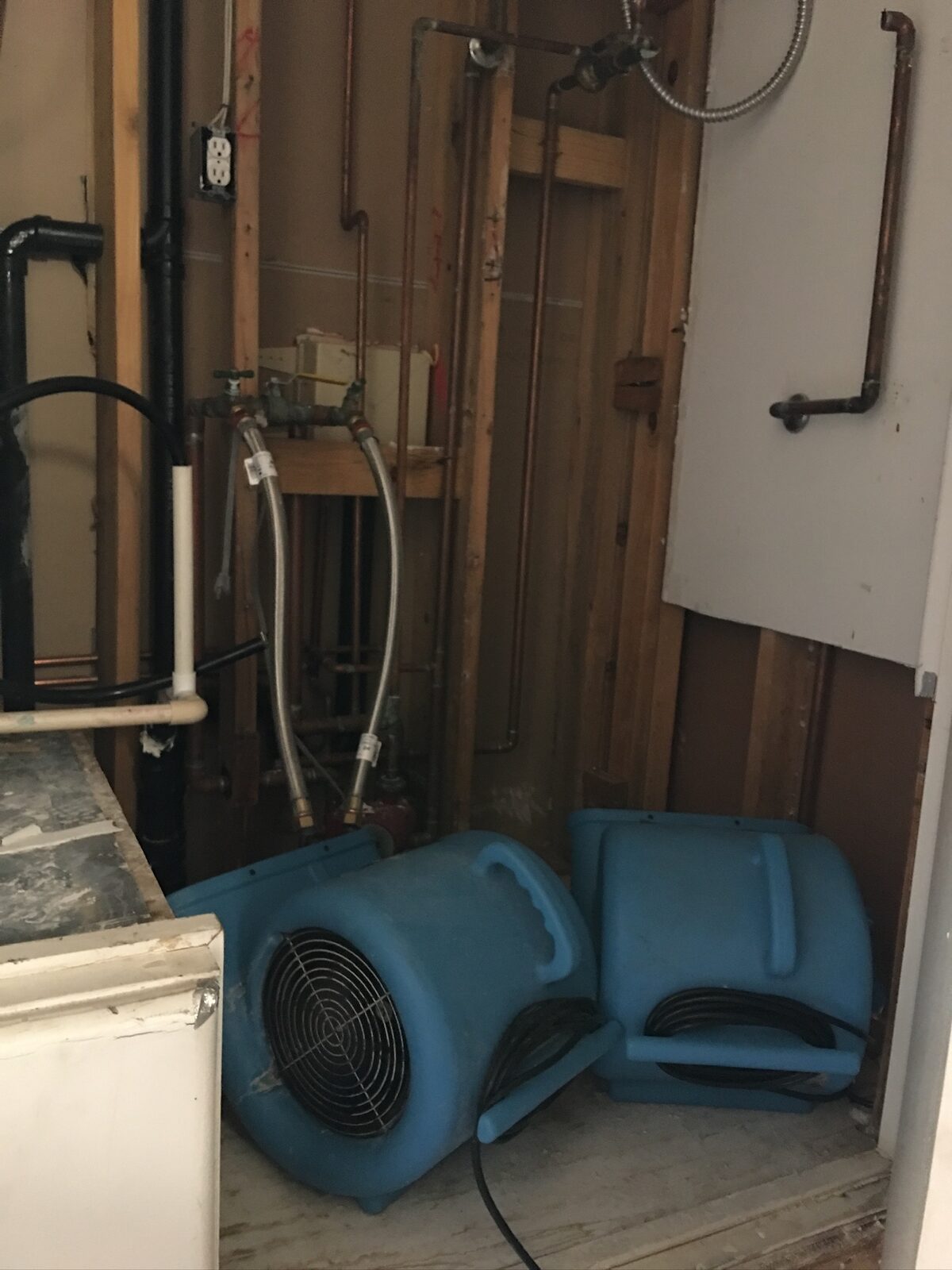
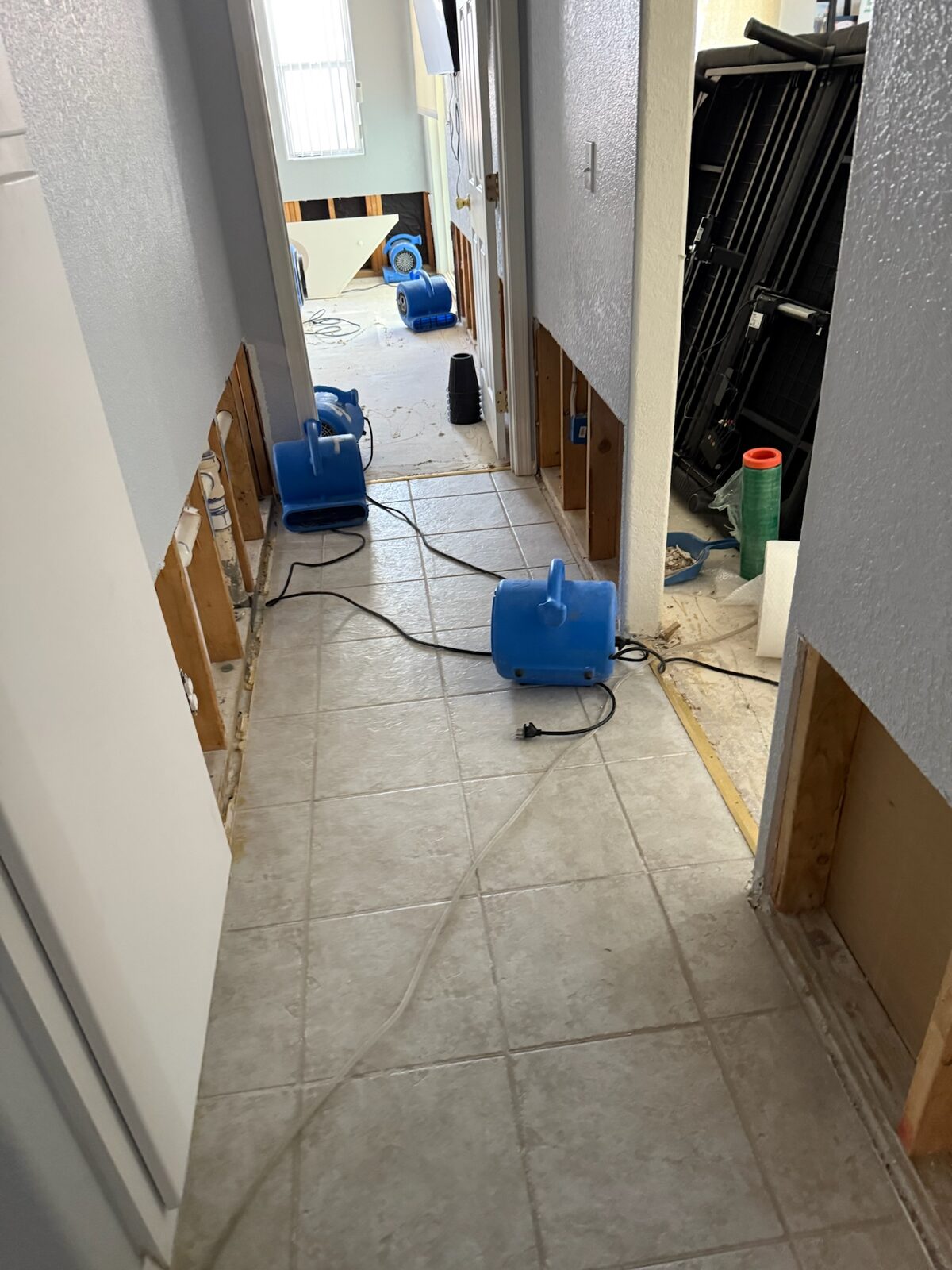
Residential reconstruction work by members of our team. See the full gallery →
More from Gold Water Fire
Abrasive Cleaning Methods for Soot on Framing and Masonry
A look at how abrasive cleaning methods remove soot from wood framing and masonry after a fire, and when each method fits the material.
AC Condensate Line Clogs & the Water Damage They Cause in Phoenix Homes
Why Phoenix AC condensate lines clog every summer, what the water damage looks like, and how to find the source before the ceiling stain spreads again.
Actual Cash Value vs Replacement Cost: Why Your Check Might Not Match the Repair Bill
Confused why your insurance check seems short after fire or water damage? Learn the difference between actual cash value and replacement cost coverage.
Not sure what your space needs?
If you're dealing with water damage in the Phoenix area and want a clear explanation of what your home actually needs, reach out to Gold Water Fire at (480) 999-3339 or Help@goldwaterfire.com.
Call (480) 999-3339Water Damage Restoration · Contact Gold Water Fire · About Gold Water Fire