
What a Moisture Meter Reads, and Why Two Readings on the Same Wall Can Differ
If you've held a moisture meter up to the same wall twice and gotten two different numbers, you're not imagining it and you're not doing it wrong. It's a strange feeling, staring at a small screen that's supposed to give you a clear answer, and instead it gives you a question. You just want to know if the wall is actually wet, or how wet, or whether it's getting better or worse. The confusion isn't a failure on your part. These tools measure something more specific, and more limited, than most people expect.
What a Moisture Meter Reads, and Why Two Readings on the Same Wall Can Differ
What the meter is actually detecting
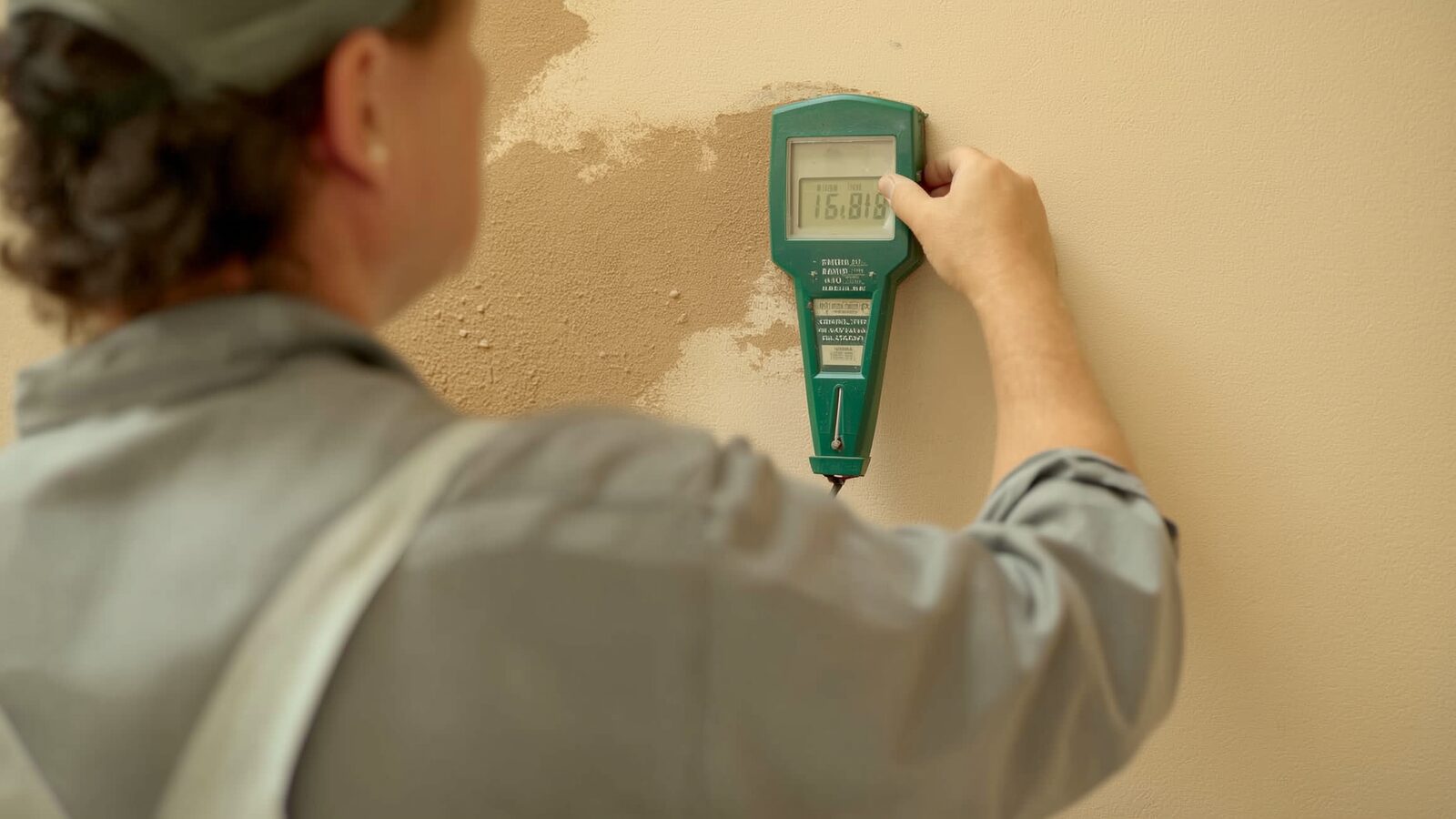
A moisture meter doesn't measure water directly the way a scale measures weight. Most meters used in restoration work fall into two types, and each one is sensing something different. A pin meter pushes two small probes into the material and reads the electrical resistance between them. Wet wood and wet drywall conduct electricity better than dry material, so lower resistance reads as higher moisture. A pinless (non-invasive) meter uses electromagnetic sensing to scan a wider area beneath the surface without puncturing it, giving a relative reading based on the density and moisture of what's underneath the sensor pad. Neither tool tells you 'this wall has X ounces of water in it.' They tell you how the material is behaving electrically or electromagnetically compared to a dry reference point, which is then translated into a percentage or a relative scale specific to that meter and that material.
Why the material itself changes the number
The same moisture content can produce very different readings depending on what you're scanning. Drywall, wood framing, plaster, tile backer, and concrete all have different baseline densities and different relationships between water content and conductivity. Most meters let you select a material setting for this reason. If that setting is wrong, or if the wall has more than one material behind the surface (drywall over furring strips over block, for example), the reading reflects a mix that doesn't match any single calibration curve. Paint, texture, wallpaper, and even the type of joint compound used can also shift a reading slightly, because they sit between the sensor and the material you're actually trying to assess.
Why the exact same spot can read differently minutes apart
Depth is one of the biggest reasons two readings differ. A pinless meter's field extends a certain distance into the wall, but moisture doesn't always sit at a uniform depth. Water that's traveled by gravity or capillary action tends to pool lower and closer to a specific layer, so moving the sensor an inch up, down, or sideways can put it over a wetter or drier pocket of the same cavity. Pressure matters too. Pinless meters need consistent, flat contact with the surface, and a slight tilt or gap changes how much of the field is actually reading the wall versus reading air. Even room temperature and the meter's own calibration drift over a long job can nudge numbers a little from one hour to the next.
Why relative readings matter more than the number itself
Because of all this, a single moisture reading in isolation isn't that meaningful on its own. What matters more is the pattern: comparing a suspect area to a known-dry area of the same material in the same house, and tracking how that comparison changes over several days. A wall that reads noticeably higher than an unaffected wall nearby, using the same meter, same setting, same technique, is telling you something real, even if the raw number would mean something different on a different wall in a different house. This is also why drying progress is usually tracked as a trend line back toward that dry standard, not as a single pass or fail number.
Questions people ask us
Is a lower moisture percentage always better?
Generally yes, but the target number depends on the material and what's considered normal for a dry version of that same material in that home. That's why restoration techs usually take a dry standard reading elsewhere in the house first, so they have a real baseline to compare against instead of relying on a generic number.
Can a moisture meter be wrong?
The meter itself is reading electrical resistance or electromagnetic response accurately, but that reading can be misinterpreted if the material setting is wrong, the surface has interference like foil-backed insulation or metal lath, or the sensor isn't making even contact. This is less about the tool being wrong and more about how much context is needed to read it correctly.
Why do two different meters give two different numbers on the same wall?
Different meter brands and models use different internal calibration curves, sensing depths, and material scales, so their numbers aren't always directly interchangeable. What matters within a single job is using the same meter consistently so the readings can be compared to each other over time.
Does a high reading always mean active water damage?
Not necessarily by itself. Some materials naturally hold more residual moisture than others, and things like humidity, recent cleaning, or nearby plumbing can affect a reading. A high reading is a reason to look closer and compare against a dry area, not a conclusion on its own.
The standard our team works to
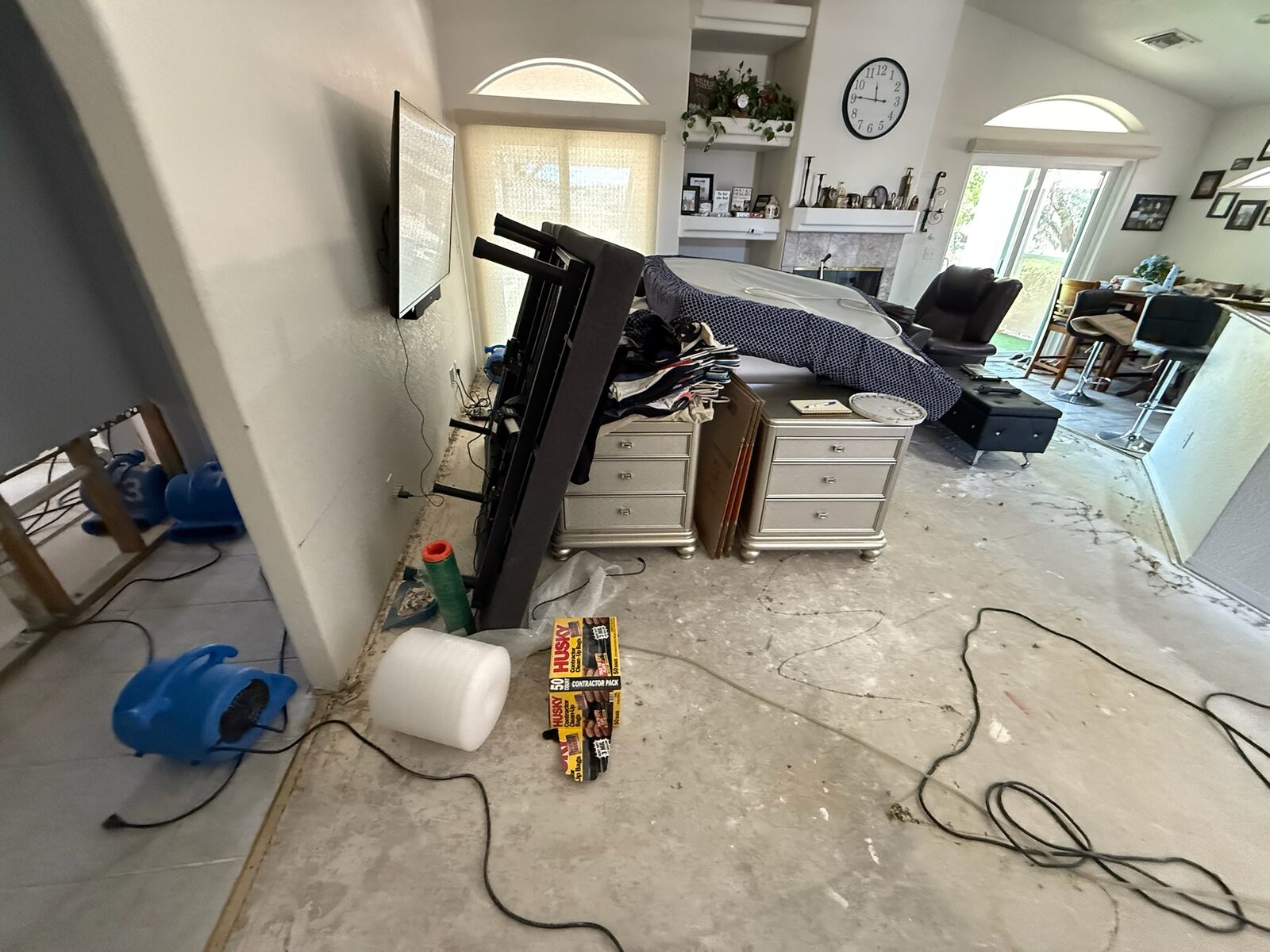
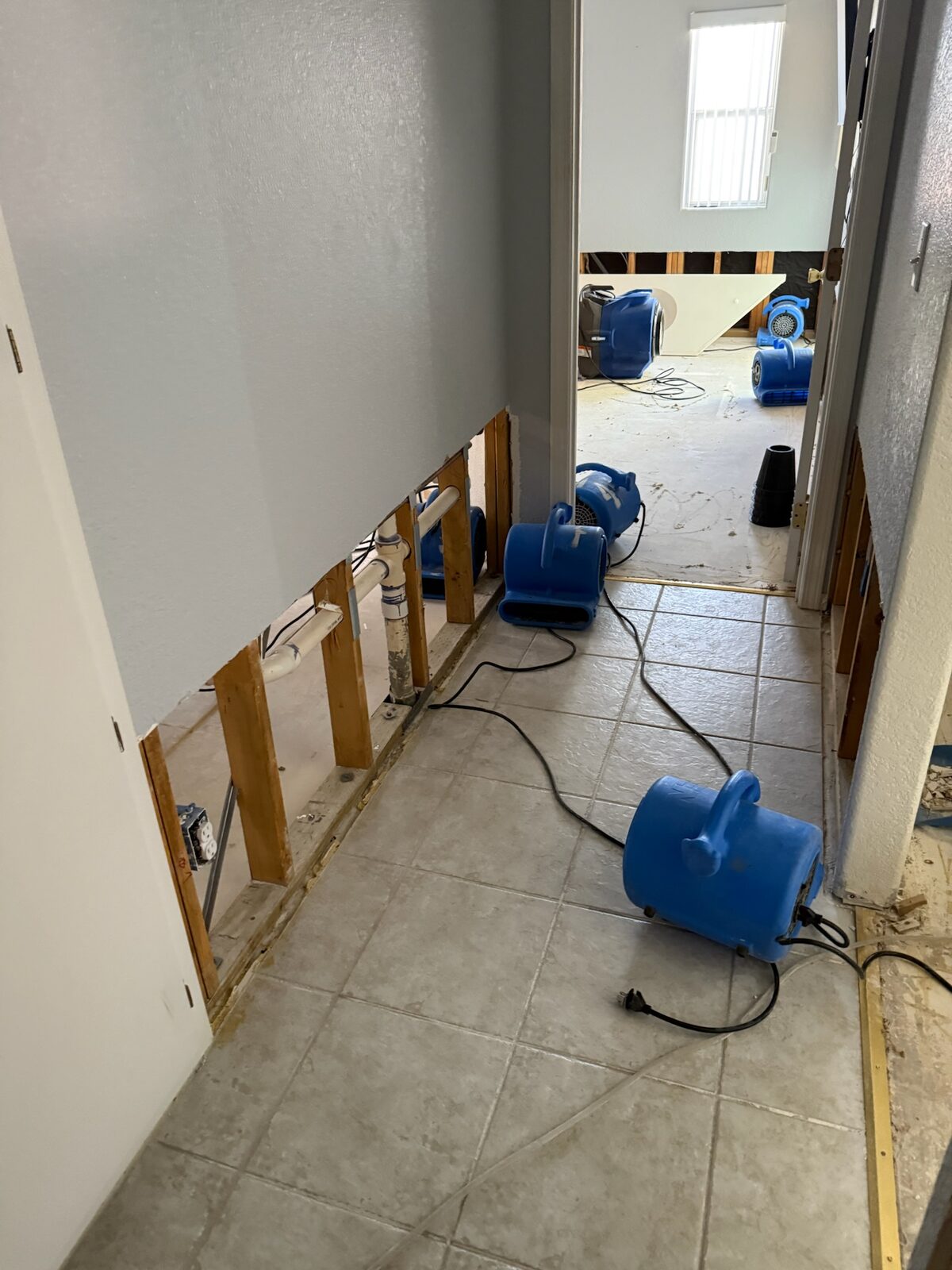
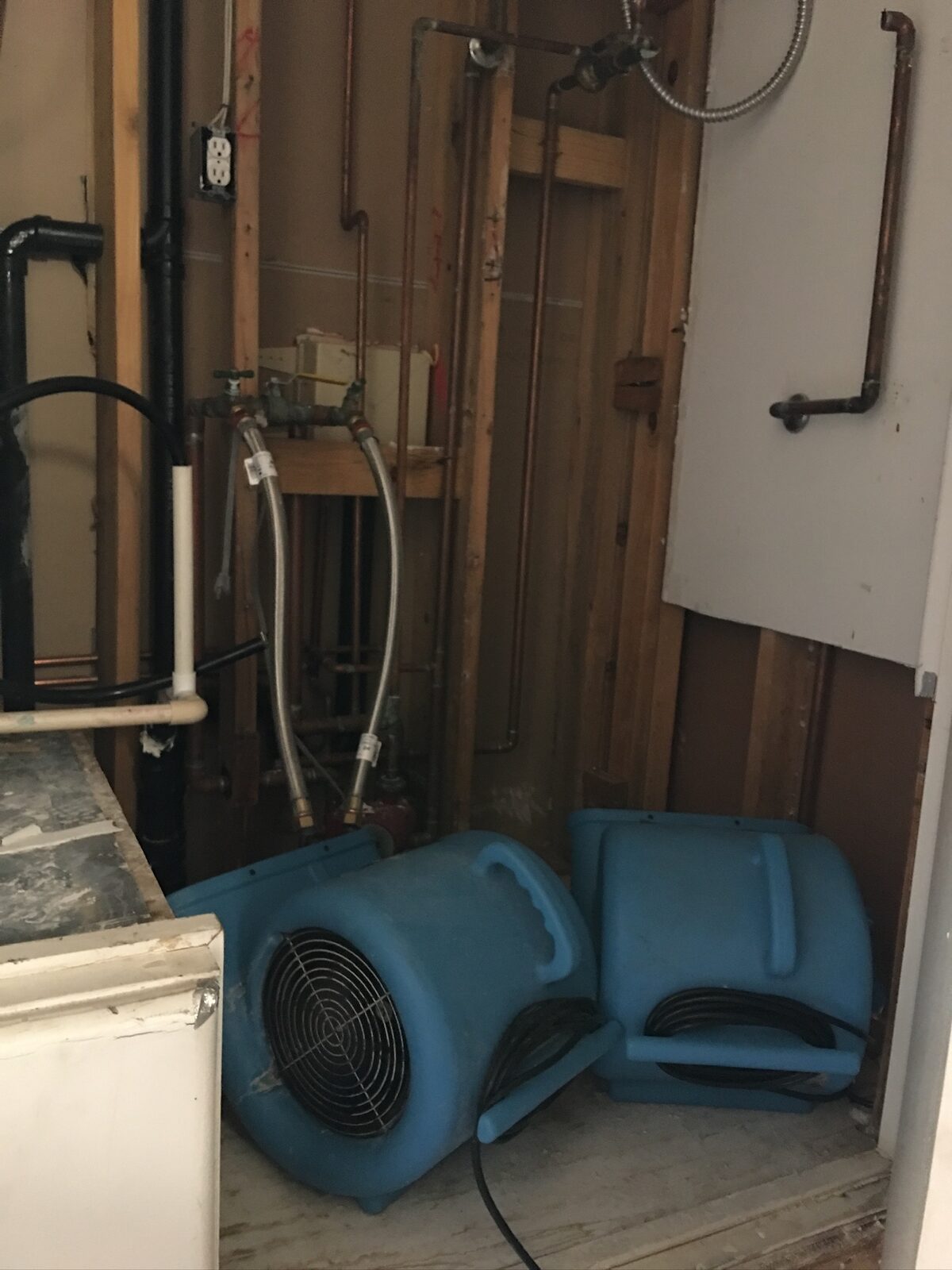
Residential reconstruction work by members of our team. See the full gallery →
More from Gold Water Fire
Abrasive Cleaning Methods for Soot on Framing and Masonry
A look at how abrasive cleaning methods remove soot from wood framing and masonry after a fire, and when each method fits the material.
AC Condensate Line Clogs & the Water Damage They Cause in Phoenix Homes
Why Phoenix AC condensate lines clog every summer, what the water damage looks like, and how to find the source before the ceiling stain spreads again.
Actual Cash Value vs Replacement Cost: Why Your Check Might Not Match the Repair Bill
Confused why your insurance check seems short after fire or water damage? Learn the difference between actual cash value and replacement cost coverage.
Not sure what your own readings mean?
If you're trying to figure out whether a wall, floor, or ceiling in your home is actually still wet, Gold Water Fire can walk through it with you and explain what's really going on. Call (480) 999-3339 or reach out through our contact page.
Call (480) 999-3339Water Damage Restoration · About Gold Water Fire · Contact Gold Water Fire