
Freeze Risk for Hose Bibs & Outdoor Plumbing in the High Desert
You keep finding water where water should not be. A damp strip of stucco along the side yard that never quite dries. A patch of drywall inside the garage that darkens after a cold week and lightens again. A water bill that jumped and then settled and then jumped again. Nobody told you to worry about freezing pipes here, because this is the desert, and the whole reason you moved to a place like this may have been to stop thinking about winter. So the thing that is happening does not have a name yet, and that is the part that wears on a person: not the repair, but the not knowing why it keeps coming back.
Freeze Risk for Hose Bibs & Outdoor Plumbing in the High Desert
The desert freezes in a way that is easy to miss
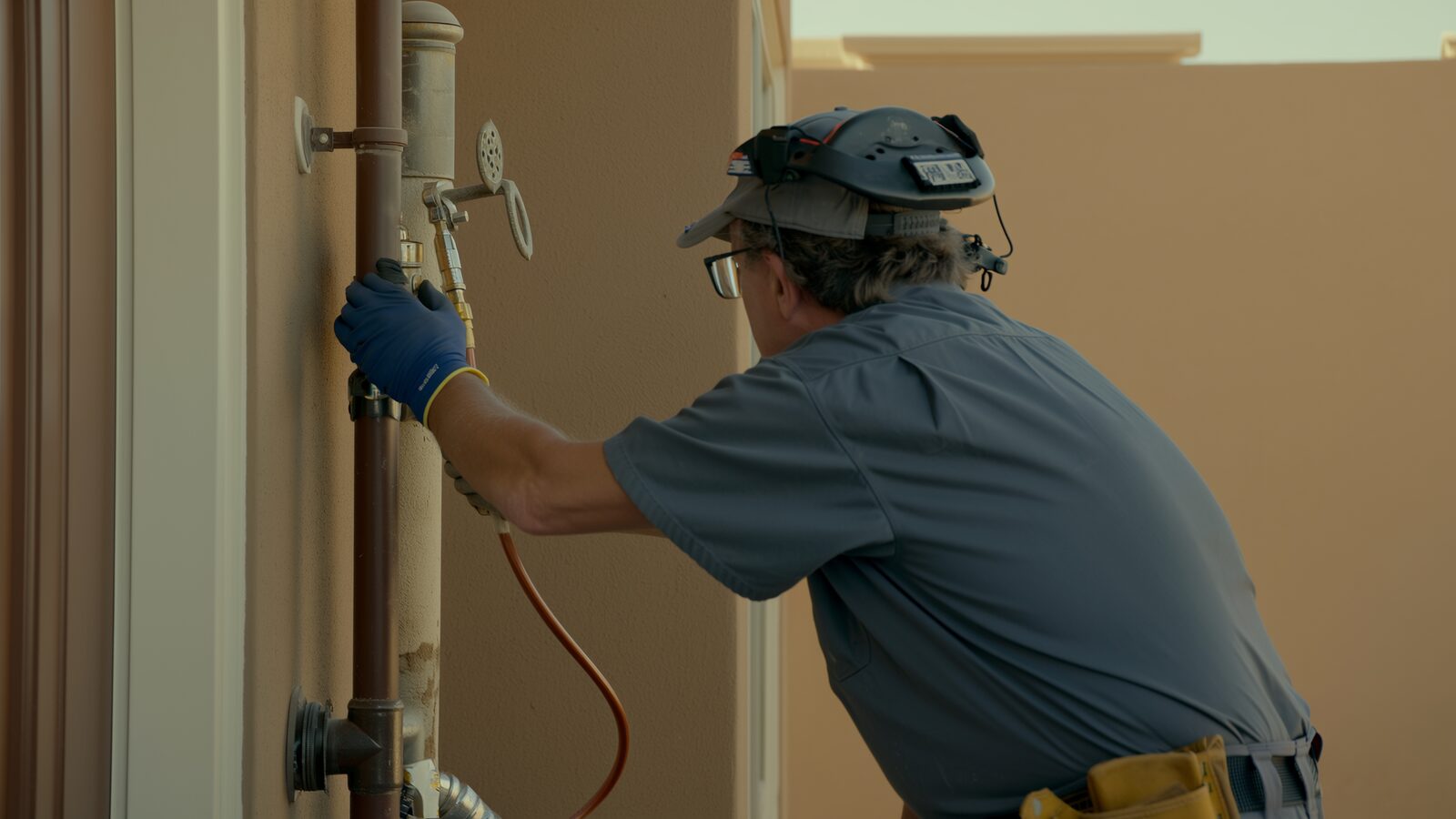
Freeze damage is not about how cold your winter is on average. It is about how far the temperature swings and how unprotected the plumbing is. In much of the Phoenix metro, an afternoon can sit in the 60s or 70s and the same night can drop below freezing for a few hours before sunrise, especially in low-lying areas, near washes, and out toward Queen Creek, San Tan Valley, Apache Junction, Buckeye and the outer edges of the valley where cold air settles. Homes built in mild climates are often built accordingly: hose bibs with no insulation, irrigation manifolds and backflow preventers sitting above grade in open air, pool equipment lines running exposed along a block wall, water softener loops and RV hookups on an outside wall with nothing over them. Add a garden hose left threaded onto the spigot, which traps water against the valve seat, and you have the classic setup for a split. Water expands as it freezes. The ice itself rarely bursts the pipe at the ice; pressure builds between the ice plug and the closed fixture until the weakest point gives, which is usually a threaded joint, a soldered fitting, a plastic backflow body, or the thin brass of the hose bib itself.
Hose bibs and wall hydrants
The most common casualty. A hose left attached keeps water in the valve body where it can freeze solid. Frost-proof designs only work if the hose is off and the valve drains.
Irrigation and backflow
PVC manifolds, anti-siphon valves and above-grade backflow assemblies are thin-walled plastic sitting in open air. They crack quietly and leak into landscaping first.
Pool and spa lines
Exposed suction and return lines, pump housings and filter bodies hold standing water. A cracked pump housing can pump onto a patio slab for hours.
Exterior wall runs
Copper or PEX in an uninsulated exterior wall or an unconditioned garage wall is exposed to the same cold as the outside, then leaks inside the wall cavity.
Why the damage shows up long after the cold night
A pipe can split during a freeze and show almost nothing until it thaws and pressure returns. Even then, a hairline crack often weeps rather than sprays, which is why the timeline feels so strange. That slow weep is what causes the pattern you may be living with: it wets an area, the desert air dries the surface, and the moisture stays in the wall cavity, the slab edge, or under the stucco where you cannot see it. Signs worth trusting include efflorescence (white chalky mineral bloom) on block or stucco near a spigot, a soft or bubbled paint line low on an exterior wall, drywall in the garage that feels cool and slightly spongy at the bottom edge, baseboard that has swelled, a musty smell in a closet on an outside wall, a section of landscaping that stays wet with the irrigation off, or a water meter dial that creeps when every fixture in the house is closed. If the meter moves with the house shut off, water is going somewhere. That single test names the problem faster than anything else.
Check the meter
Shut off every fixture and appliance that uses water. Watch the meter dial or leak indicator for several minutes. Movement means an active leak somewhere on the line.
Look low, not high
Freeze leaks on exterior walls travel down. Inspect the bottom six to twelve inches of drywall, baseboard and stucco rather than eye level.
Follow the mineral trail
White crusty deposits on block, stucco or a slab edge mean water has been moving through masonry repeatedly, not once.
Trust the smell
A persistent earthy or musty odor in one room usually means moisture is still present in a cavity, even if every surface reads dry to the touch.
What actually reduces the risk before the next cold night
None of this requires a contractor. Disconnect and drain every garden hose in the fall and leave it off through winter; this one habit prevents a large share of hose bib failures. Fit insulated foam covers over each spigot, and wrap any exposed pipe stub with pipe insulation rather than a towel, which holds water. If you have a shutoff that isolates outdoor plumbing, close it and open the exterior spigot so the line can drain. On a night with a hard freeze forecast, cover above-grade backflow assemblies and irrigation valves, run the pool pump so water keeps moving, and open the cabinet doors under sinks on exterior walls so household heat reaches the supply lines. Know where your main shutoff is and confirm it turns before you ever need it in the dark. Finally, walk the perimeter of the house after the first warm afternoon that follows a freeze, with the irrigation off, and look for wet ground, dripping fittings, or hissing at a spigot. Damage caught the same day is a plumbing repair. Damage caught in March, after months of quiet wetting, is often a drying and rebuild question involving water damage restoration and sometimes reconstruction and rebuild work to put wall assemblies back together.
When drying matters more than the patch
Once water has been in a wall, a slab edge, or under flooring for more than a day or two, the repair is no longer just the pipe. Gypsum board, insulation, framing bottom plates, baseboard, and the underside of engineered flooring all hold moisture, and desert air alone does not pull it out of a closed cavity. Professional drying uses moisture meters and thermal imaging to map how far water traveled, then places air movers and dehumidifiers to bring materials back to a normal moisture content, documented over several days rather than assumed. Materials that cannot be dried in place get removed. That is the honest fork in the road: some freeze leaks are a fitting and a coat of paint, and some have quietly changed the wall around them. If you want a second set of eyes on what you are seeing, Gold Water Fire works across the Phoenix metro, from Peoria and Avondale out to San Tan Valley and Apache Junction, and you can reach the team through the contact page or read more about the company. If there was any heat source involved, such as a space heater or heat tape used to thaw a line, that becomes a different conversation about fire damage restoration.
Questions people ask us
Does it really get cold enough to freeze pipes in the Phoenix area?
Yes, in the right conditions. Overnight lows can dip below freezing for a few hours, and that is enough for water sitting in an exposed hose bib, an above-grade irrigation valve, or a plastic backflow body to freeze and split it. Outlying and low-lying parts of the valley tend to see those lows more often than central Phoenix.
Why did my leak appear a week after the cold night?
A split usually leaks only after the ice thaws and pressure returns, and a hairline crack often weeps slowly instead of spraying. The moisture then has to travel through wall cavities, stucco or slab edges before it becomes visible, so what you notice can be days or weeks behind the actual failure.
Is leaving a garden hose attached in winter really a problem?
It is one of the most common causes of hose bib failure. The hose holds a column of water against the valve, so the valve cannot drain. Water freezes inside the valve body or just behind it, and pressure splits the weakest point, sometimes inside the wall where you cannot see it.
How do I know whether a wall needs to be opened up?
Surface dryness is not a reliable answer. Moisture meters and thermal imaging show whether water is still held in drywall, insulation and framing behind the paint. If materials read wet, they need controlled drying or removal, because a patch over a wet cavity keeps the problem alive.
The standard our team works to
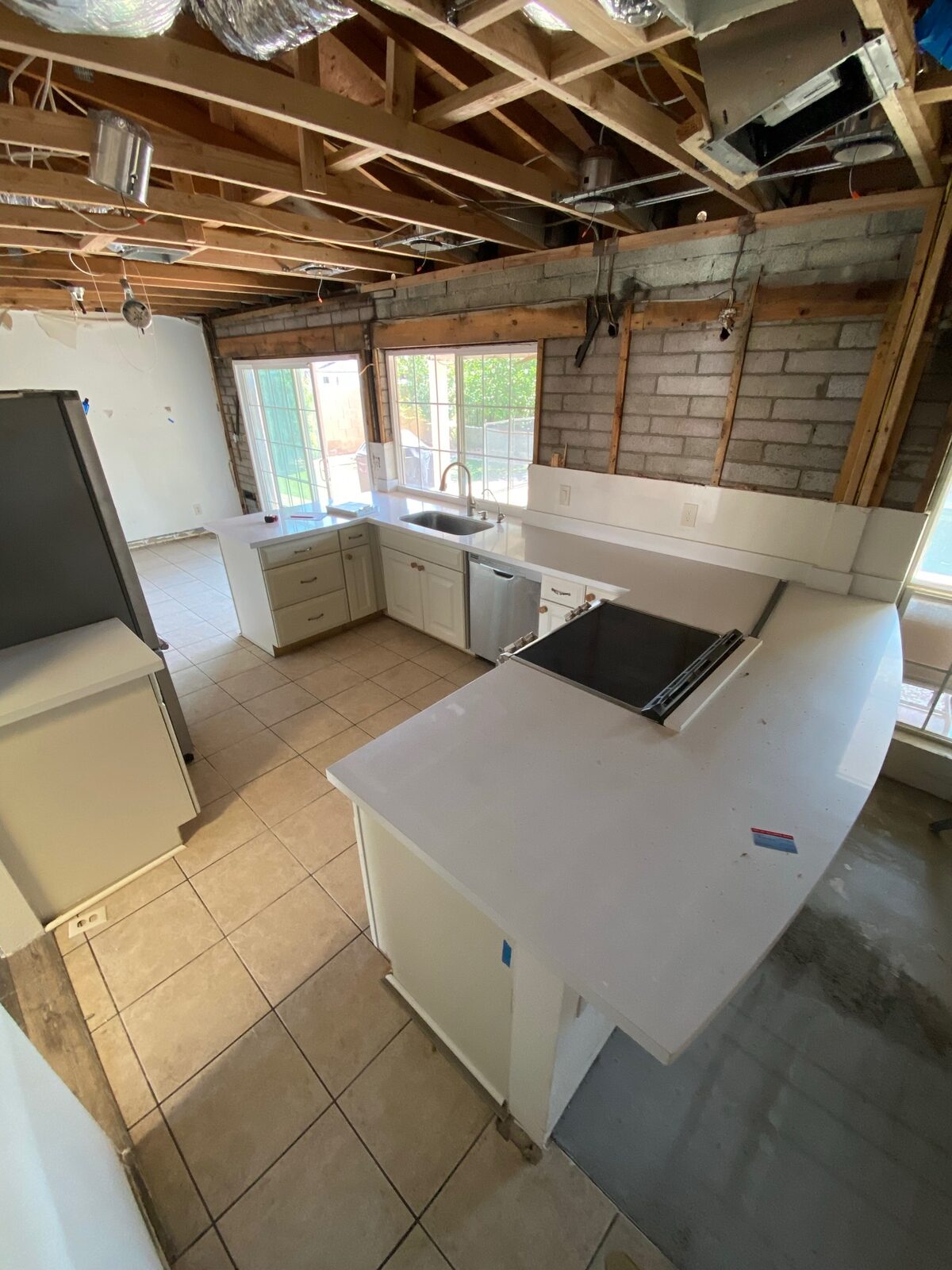
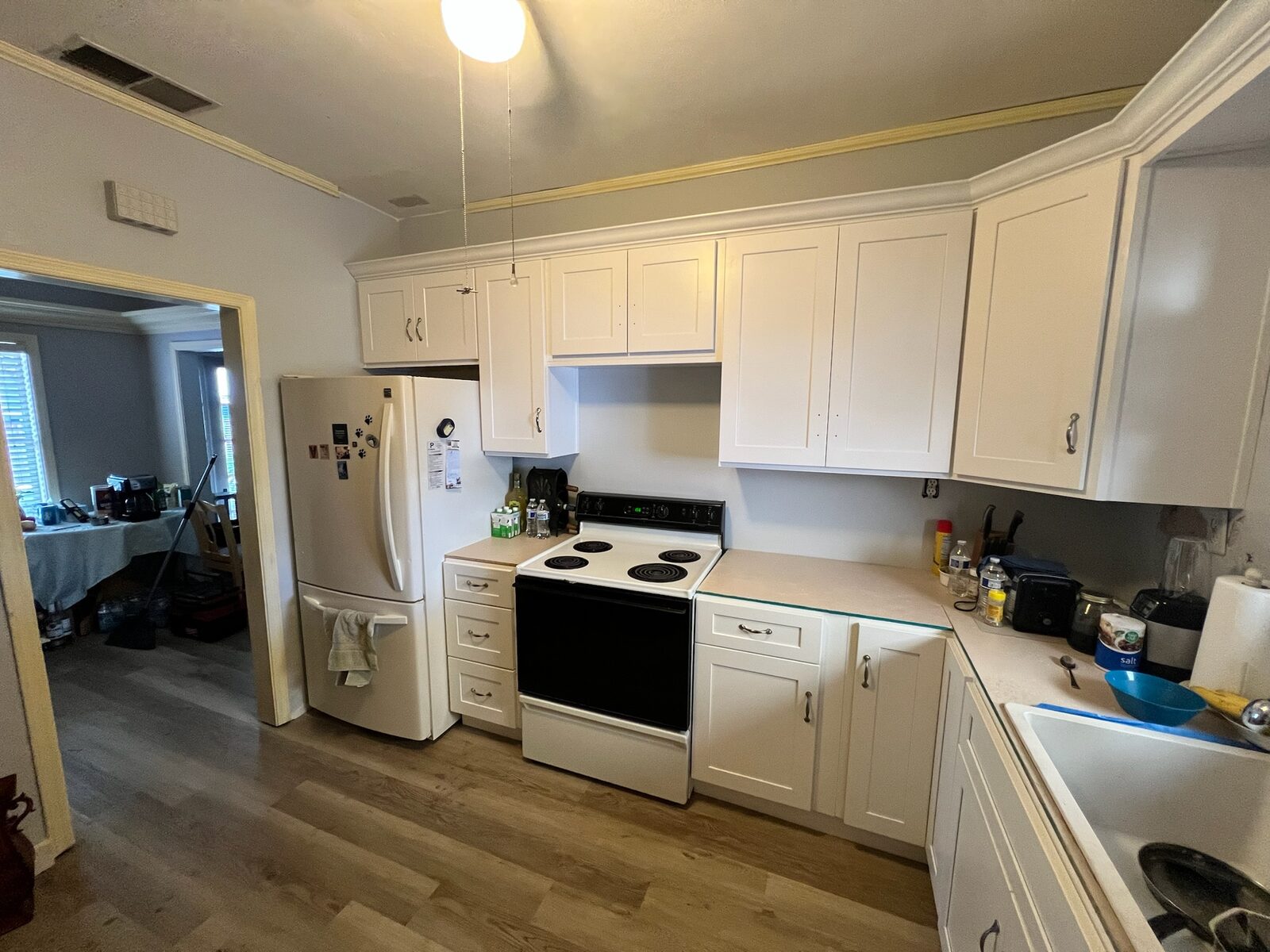
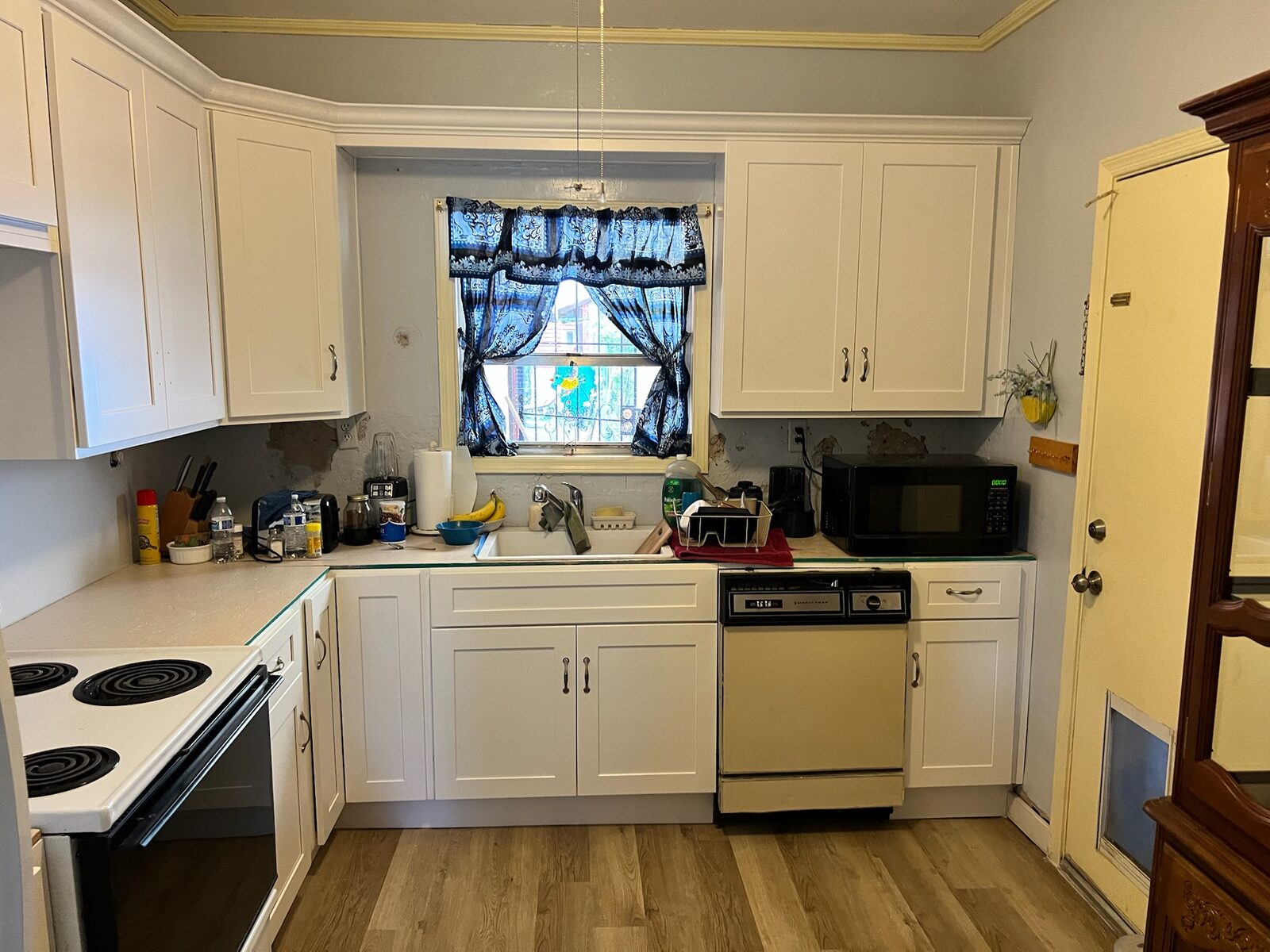
Residential reconstruction work by members of our team. See the full gallery →
More from Gold Water Fire
Abrasive Cleaning Methods for Soot on Framing and Masonry
A look at how abrasive cleaning methods remove soot from wood framing and masonry after a fire, and when each method fits the material.
AC Condensate Line Clogs & the Water Damage They Cause in Phoenix Homes
Why Phoenix AC condensate lines clog every summer, what the water damage looks like, and how to find the source before the ceiling stain spreads again.
Actual Cash Value vs Replacement Cost: Why Your Check Might Not Match the Repair Bill
Confused why your insurance check seems short after fire or water damage? Learn the difference between actual cash value and replacement cost coverage.
Not sure what you are looking at yet
If you have been chasing the same damp spot through more than one winter, it is reasonable to want someone to look at it with instruments instead of guesswork. Call Gold Water Fire at (480) 999-3339 or email Help@goldwaterfire.com, and describe what you have been seeing. AZ ROC #264344 KB-2, serving the Phoenix metro area.
Call (480) 999-3339Water Damage Restoration · Reconstruction & Rebuild · Fire Damage Restoration · Contact Gold Water Fire · About Gold Water Fire