
Refacing Cabinets Versus Replacing Them After Damage
Standing in a kitchen with swollen cabinet doors or soot streaked across the upper cabinets, it's hard to know if this is a fixable problem or the start of a much bigger project. Cabinets are one of the most expensive parts of a kitchen to replace, and damage doesn't always announce how deep it goes. A door that looks fine might hide a box that's already delaminating from moisture. A box that seems solid might just need its face refinished. Not knowing which one you're dealing with, while also trying to figure out insurance, contractors, and how long your kitchen will be unusable, is a genuinely stressful place to be.
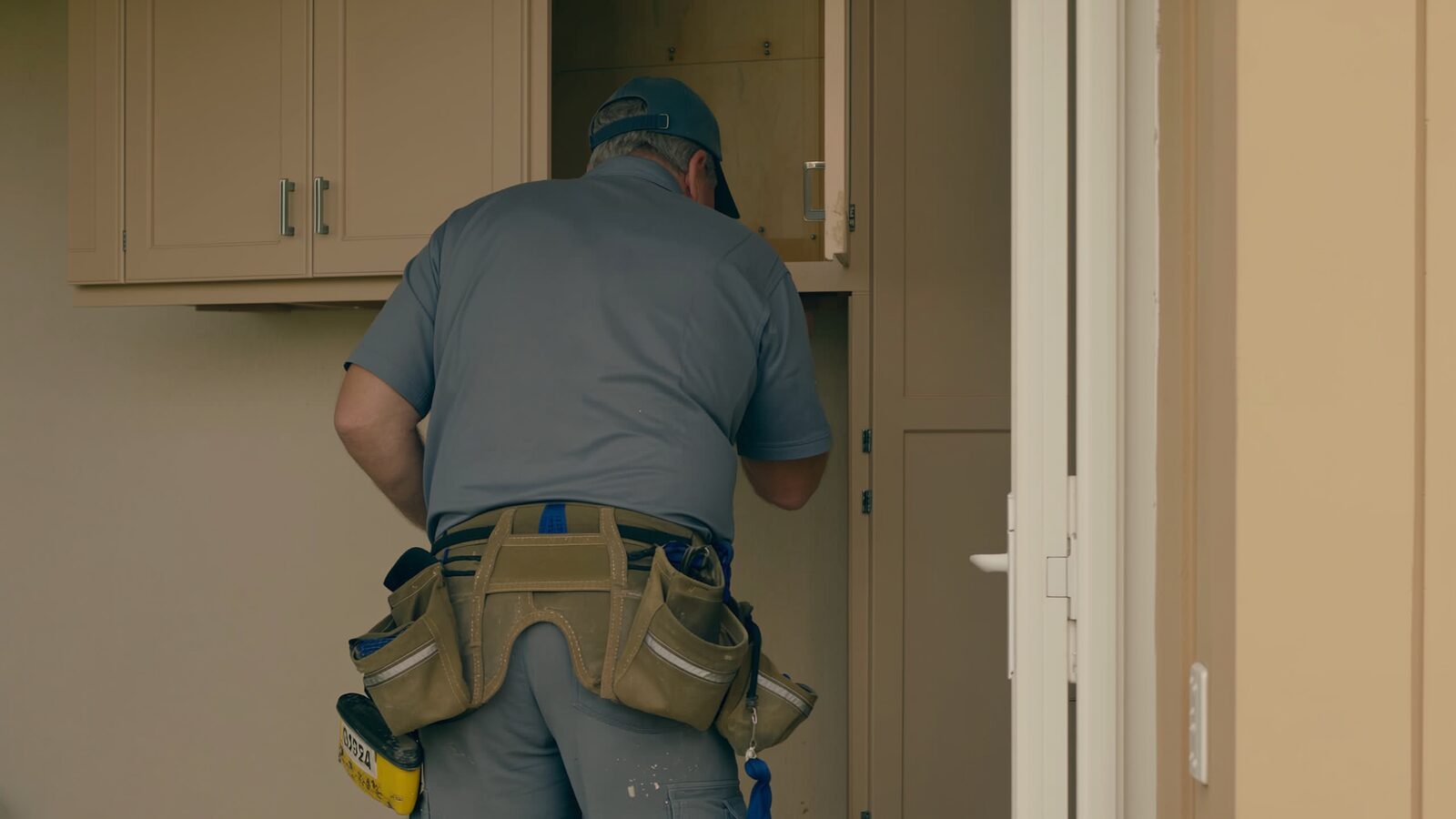
Refacing Cabinets Versus Replacing Them After Damage
What refacing actually fixes, and what it doesn't
Refacing means keeping the existing cabinet boxes (the frames bolted to your wall and floor) and replacing only what you see: doors, drawer fronts, and a thin veneer or laminate applied to exposed box surfaces. It works when the structural wood underneath is dry, solid, and free of mold. It does not work when the particleboard or plywood substrate has absorbed water and started to swell, delaminate, or soften, because refacing puts a new surface on top of a box that will keep failing underneath it. For fire and smoke situations, refacing can also fall short if soot has penetrated porous wood or if heat has warped the box itself, even when the door looks replaceable on its own.
Checking the cabinet boxes before you decide
Open every cabinet and drawer and press on the interior side panels, especially near the floor and around the sink base, where water damage concentrates first. Wood that feels soft, spongy, or crumbles slightly under pressure has already broken down structurally, no matter how solid the door looks. Check for a sour or musty smell, which often shows up before visible mold does. For fire or smoke exposure, look at the underside of upper cabinets and inside drawer boxes, since heat and soot travel and settle in places you won't notice from a quick glance at the room. If boxes pass these checks and only the finish or doors are damaged, refacing is worth considering. If boxes fail, replacement is usually the more honest answer, even though it costs more up front.
Cost, time, and what each option means for your kitchen
Refacing generally costs less and takes less time than a full replacement, because the boxes stay in place, plumbing and electrical rough-ins don't need to move, and there's less demolition and debris to manage. It's a reasonable choice when damage is cosmetic or limited to surfaces. Full replacement costs more and takes longer, but it's the only real option when the structural boxes are compromised, when you want to change the kitchen layout, or when mold has gotten into the wood in a way that cleaning and refinishing won't resolve. Mixing the two, refacing sound boxes while replacing a damaged run of cabinets, is also common and can control cost without leaving compromised material behind a new face.
Documenting damage before any decision is made
Whichever direction you lean, photograph every cabinet, inside and out, before any repair work starts, including drawers pulled out and doors open. Insurance adjusters and contractors both work from what they can see documented, not from a description after the fact. If moisture is involved, a moisture reading at the time of inspection matters more than how the wood looks days later, since wood can dry on the surface while staying damaged underneath. This kind of documentation matters whether the damage came from a plumbing failure, a roof leak, or firefighting water used to put out a kitchen fire. For a closer look at how water and fire damage are typically assessed and addressed, see water damage restoration and fire damage restoration, and for full kitchen rebuilds, reconstruction and rebuild covers what that process involves.
Questions people ask us
Can water damaged cabinets be dried out and saved instead of refaced or replaced?
Sometimes, if the exposure was brief and the wood was dried quickly and thoroughly with proper airflow and dehumidification. Once particleboard or plywood substrate has swollen or delaminated, drying won't reverse that structural change, and refacing or replacement becomes the realistic path.
Does refacing work on cabinets damaged by smoke rather than water?
It can, if the boxes themselves weren't warped by heat and the smoke odor and residue can be fully cleaned from the interior surfaces before new faces go on. Porous wood that has absorbed smoke odor deeply sometimes keeps smelling even after refacing, which is worth testing before committing to that route.
How do I know if mold is involved and not just water staining?
Staining alone is often just discoloration from moisture, but a musty smell, fuzzy or discolored patches, or softness in the wood point to active mold growth. Mold changes the answer toward replacement in most cases, since it can spread through porous cabinet material in ways that are hard to fully clean out.
Is it possible to reface just some cabinets and replace others in the same kitchen?
Yes, this is a common approach when damage is uneven, for example a sink base and adjacent lower cabinets took on water while upper cabinets stayed dry. Matching finishes across refaced and replaced sections takes some planning, but it's a practical way to avoid replacing cabinets that don't need it.
The standard our team works to
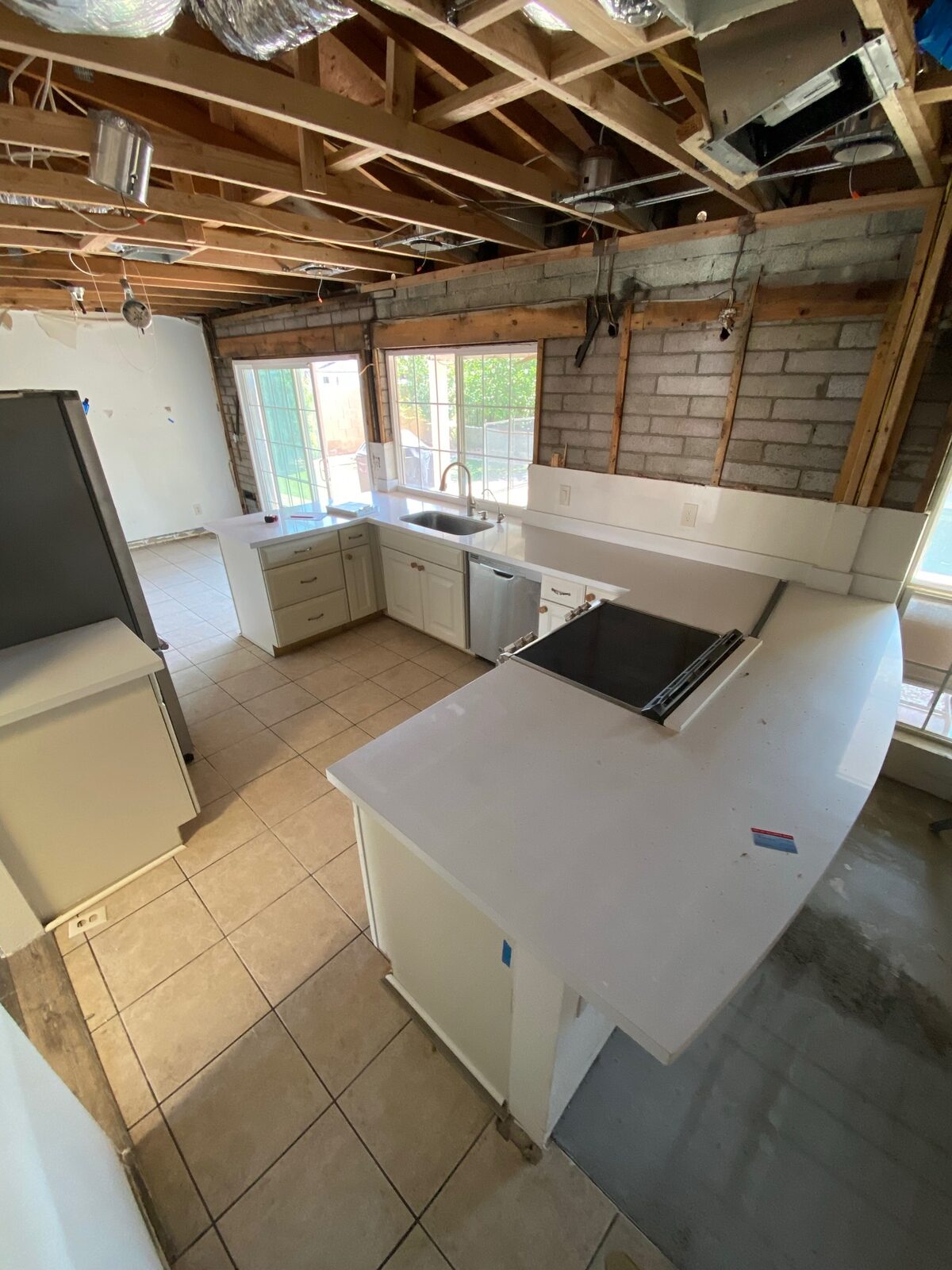
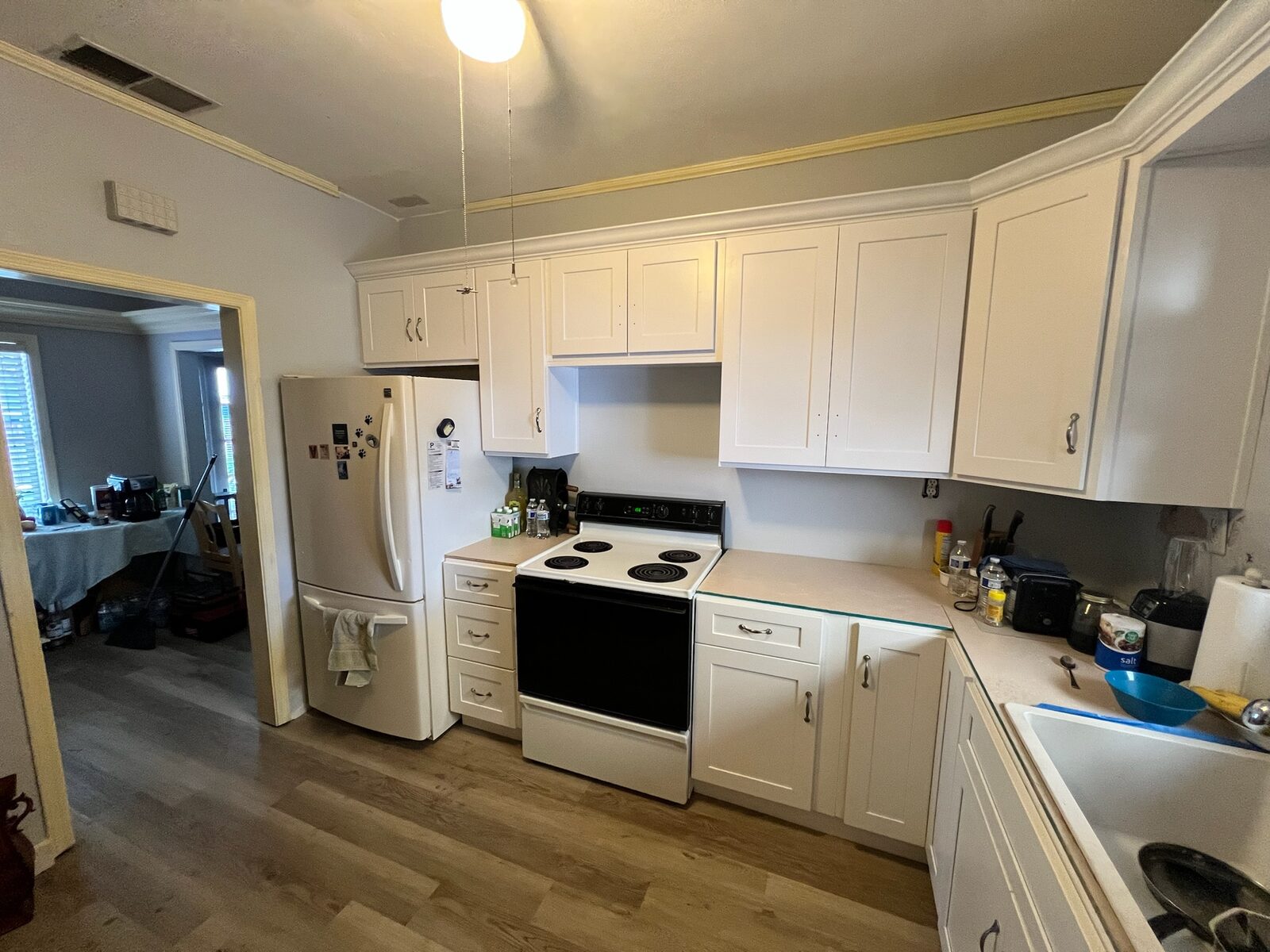
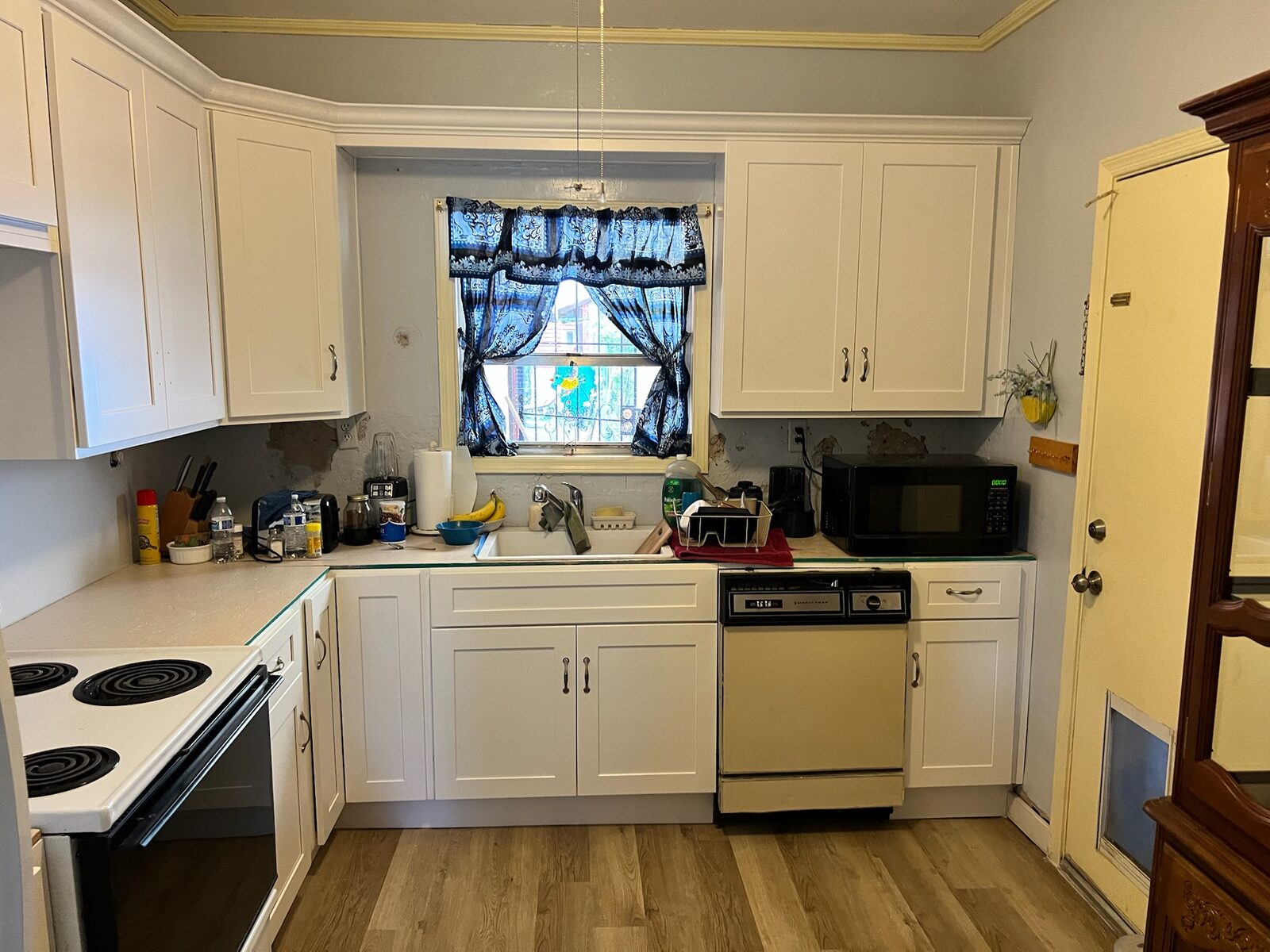
Residential reconstruction work by members of our team. See the full gallery →
More from Gold Water Fire
Abrasive Cleaning Methods for Soot on Framing and Masonry
A look at how abrasive cleaning methods remove soot from wood framing and masonry after a fire, and when each method fits the material.
AC Condensate Line Clogs & the Water Damage They Cause in Phoenix Homes
Why Phoenix AC condensate lines clog every summer, what the water damage looks like, and how to find the source before the ceiling stain spreads again.
Actual Cash Value vs Replacement Cost: Why Your Check Might Not Match the Repair Bill
Confused why your insurance check seems short after fire or water damage? Learn the difference between actual cash value and replacement cost coverage.
Not sure which side of that line your cabinets fall on?
Gold Water Fire can take a look at the damage in person and help you understand what's structural and what's cosmetic before you spend money in the wrong direction. Reach out at (480) 999-3339 or Help@goldwaterfire.com.
Call (480) 999-3339Water Damage Restoration · Fire Damage Restoration · Reconstruction & Rebuild · Contact