
Washer Drain Pans and Floor Drains: What They Can and Cannot Protect
If you've ever found water where it shouldn't be near your washing machine, even though you thought you had a pan or a floor drain in place to catch exactly that, you're not imagining things. These safeguards do real work, but they were never designed to catch every kind of leak, and knowing where their limits sit can save you from a false sense of security.
Washer Drain Pans and Floor Drains: What They Can and Cannot Protect
What a washer drain pan actually does
A washer drain pan is a shallow, raised tray that sits under the washing machine, typically with its own small drain line running to a wall stack, a floor drain, or a condensate line. Its job is narrow: catch water that overflows from the top of the machine, drips from a slow leak underneath, or spills during a drain cycle malfunction, then route that water somewhere other than your floor. It works well for slow, gradual leaks that stay contained within the machine's footprint and drip straight down. It does not work for sudden, high-pressure failures. A burst supply line under household water pressure can spray water sideways, over the lip of the pan, and across the room in seconds. A pan that's already cracked, warped, or filled with lint and debris also loses most of its holding capacity, and if its own drain line is clogged, the pan simply becomes a small pool that eventually overflows anyway.
What it catches
Slow drips, minor overflow during a wash or spin cycle, and small amounts of water that leak straight down from the machine's underside or connections.
What it misses
High-pressure hose bursts, sideways spray, leaks from connections outside the pan's footprint, and any water once the pan itself is full, cracked, or draining poorly.
What a floor drain actually does
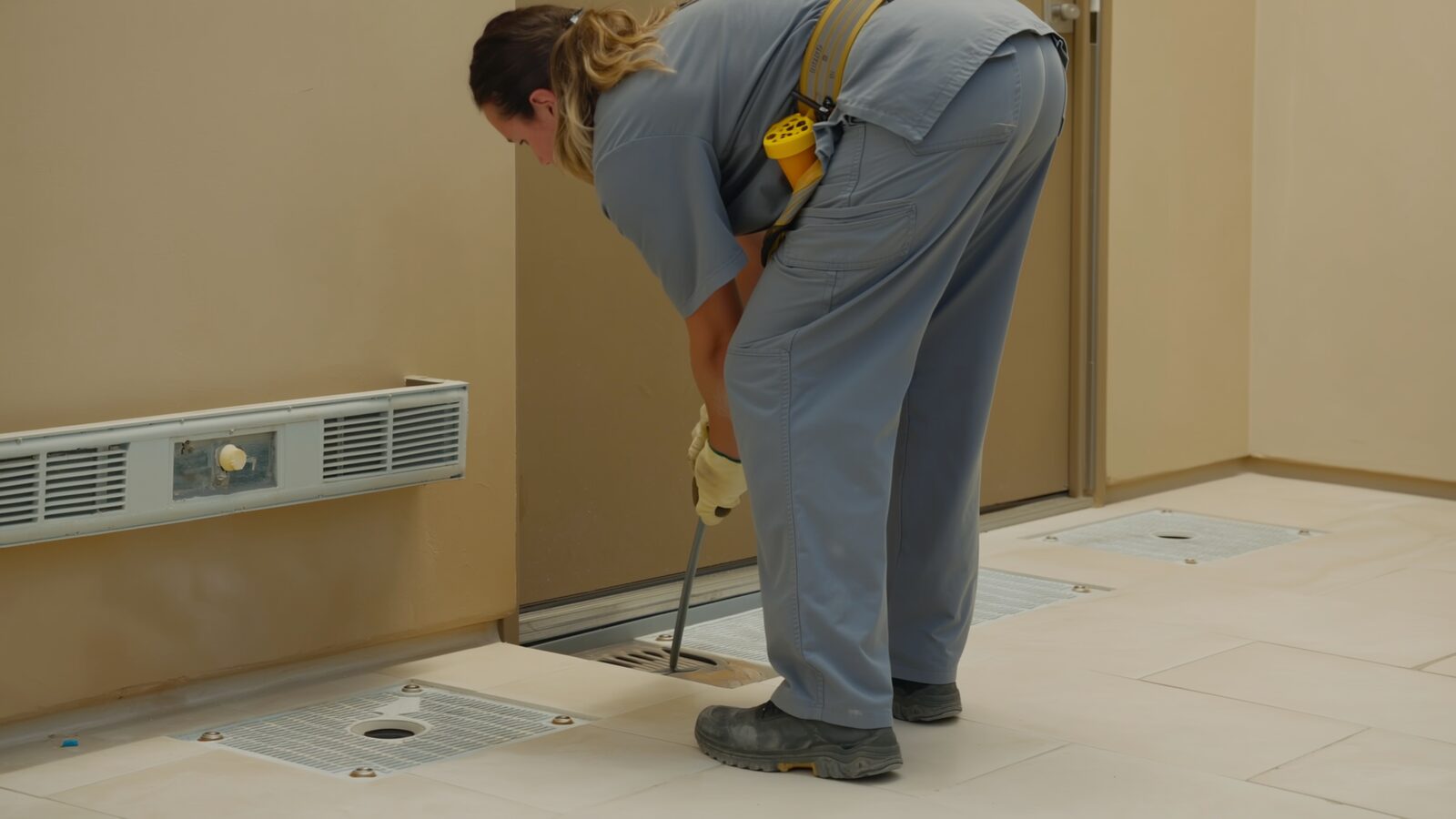
A floor drain is a fixed point in the floor, often in a laundry room, utility closet, or garage, connected to the home's drain or sewer system. It relies on the floor around it being sloped toward the drain and on the drain line itself being clear and able to handle the volume of water arriving. When those conditions are met, a floor drain can handle a genuinely significant leak, redirecting gallons of water before it spreads. But floor drains fail quietly in a few common ways: the drain can be slow or partially clogged with lint, hair, or sediment without anyone noticing until it's tested by a real leak; the surrounding floor may not be sloped correctly, meaning water pools before it ever reaches the drain; and if the leak originates somewhere other than directly above or near the drain, water can travel under flooring, into a wall, or beneath cabinetry before it ever finds its way to that low point.
Good conditions
Properly sloped flooring, a clear drain line, and a leak that occurs at or near the drain's location, giving water a direct path with no obstacles.
Weak spots
Slow or clogged lines, flat or unevenly sloped floors, and leaks that start away from the drain, letting water spread under flooring or into walls first.
The gaps between the two systems
Pans and floor drains are often treated as a complete safety net, but they were designed to address different failure points, and there's a real gap between them. A supply hose failure, for example, can send water spraying in a pattern that clears the pan entirely and lands in an area of the floor that isn't sloped toward the drain. A leak behind the machine, against the wall, can run down inside the wall cavity itself rather than across the floor, bypassing both protections completely. And because most of this happens out of sight, behind or under a large appliance, it's common for a leak to go on for hours or days before anyone notices standing water, by which point moisture has already reached subfloor, baseboards, or drywall.
If you suspect water has already gotten past these protections
Water that travels under flooring or into wall cavities doesn't always announce itself right away. Softness in the floor, a musty smell, discoloration on baseboards, or a laundry room that never quite seems to dry out are all worth paying attention to. If you're seeing any of those signs, it may be worth having someone take a closer look before it becomes a bigger repair. You can read more about how water damage restoration works, or if there's been a larger event like a burst pipe, see how that connects to reconstruction and rebuild work when materials need to be replaced. If you just want to talk through what you're seeing, reach out and we'll help you think it through.
Questions people ask us
Do all washing machines need a drain pan?
Building codes vary by jurisdiction and by where the washer sits in the house. Many local codes require a pan when a washer is installed above a living space or on an upper floor, since a leak there can travel down into ceilings and walls below. Ground-floor installations are sometimes exempt. Check with your local building department or a licensed plumber to know what applies to your home.
Why did I still get water damage even though I have a drain pan?
Pans are shallow and only catch water that spills downward from the top of the machine. Leaks from a burst supply hose, a cracked drain hose, or a failed pump connection can spray sideways or leak from underneath the machine, missing the pan entirely. A pan also does nothing once it's full, cracked, or its own drain line is clogged.
Is a floor drain enough protection on its own?
A floor drain can handle water that reaches the floor and flows toward it, but it depends on the drain being clear, properly sloped, and able to keep up with the volume of water arriving. A slow drain, a clog, or a drain that's slightly uphill from where the leak actually happens won't catch everything.
What should I check periodically to keep these protections working?
Inspect supply hoses for bulges or cracking, confirm the drain hose is properly seated and not kinked, make sure the pan isn't cracked or full of lint and debris, and periodically run water into any nearby floor drain to confirm it's flowing freely and not slow or blocked.
The standard our team works to
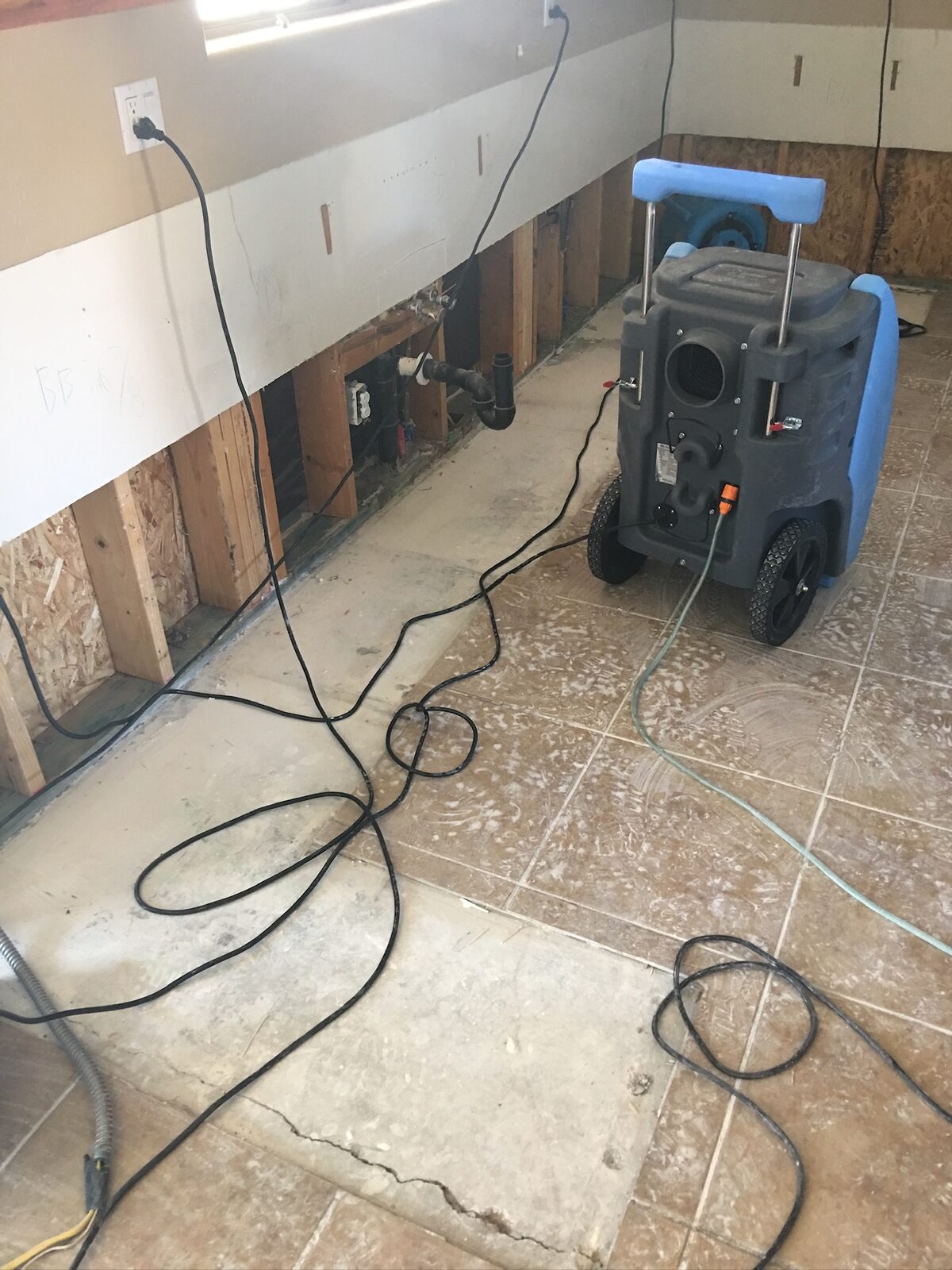
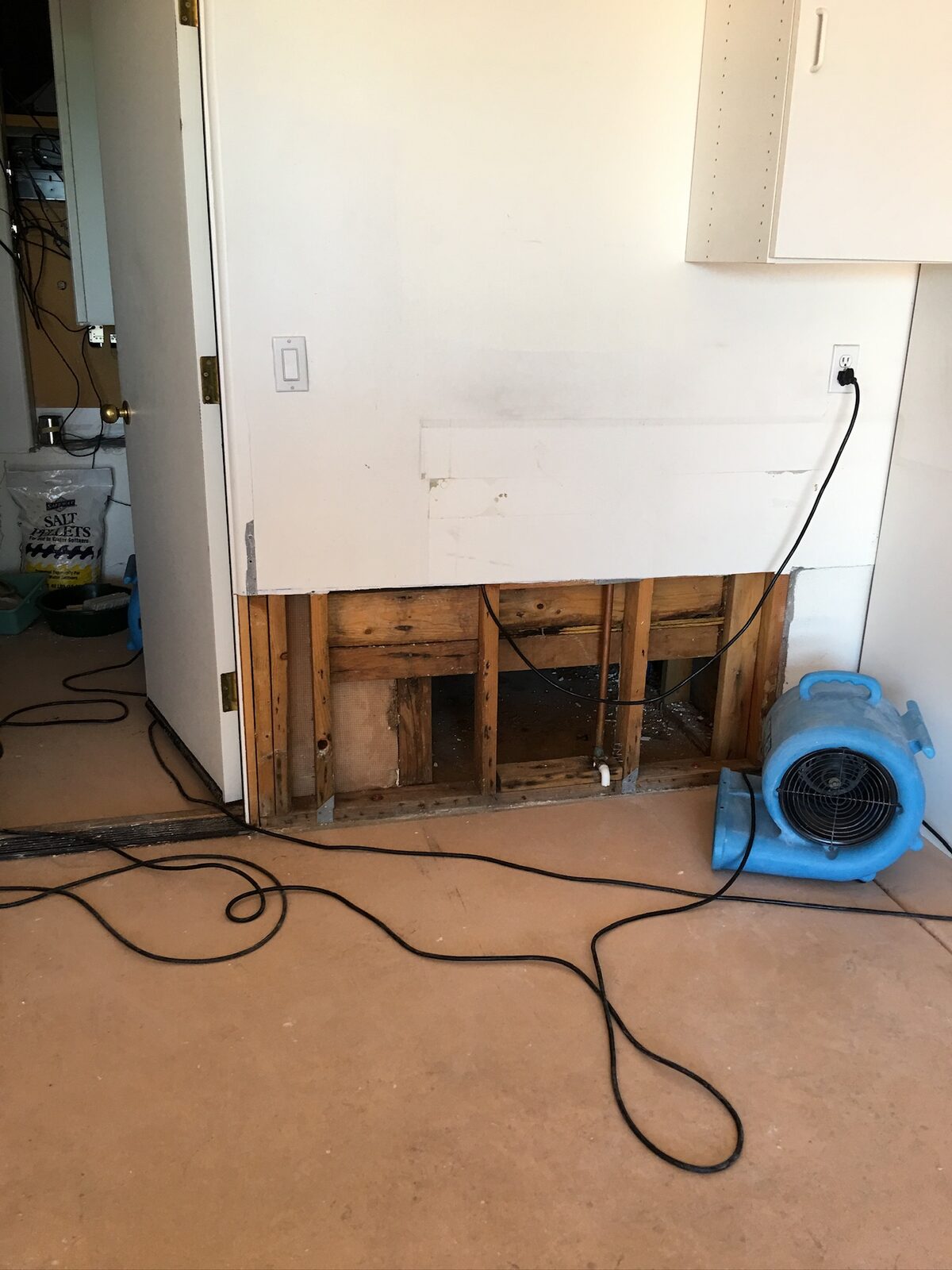
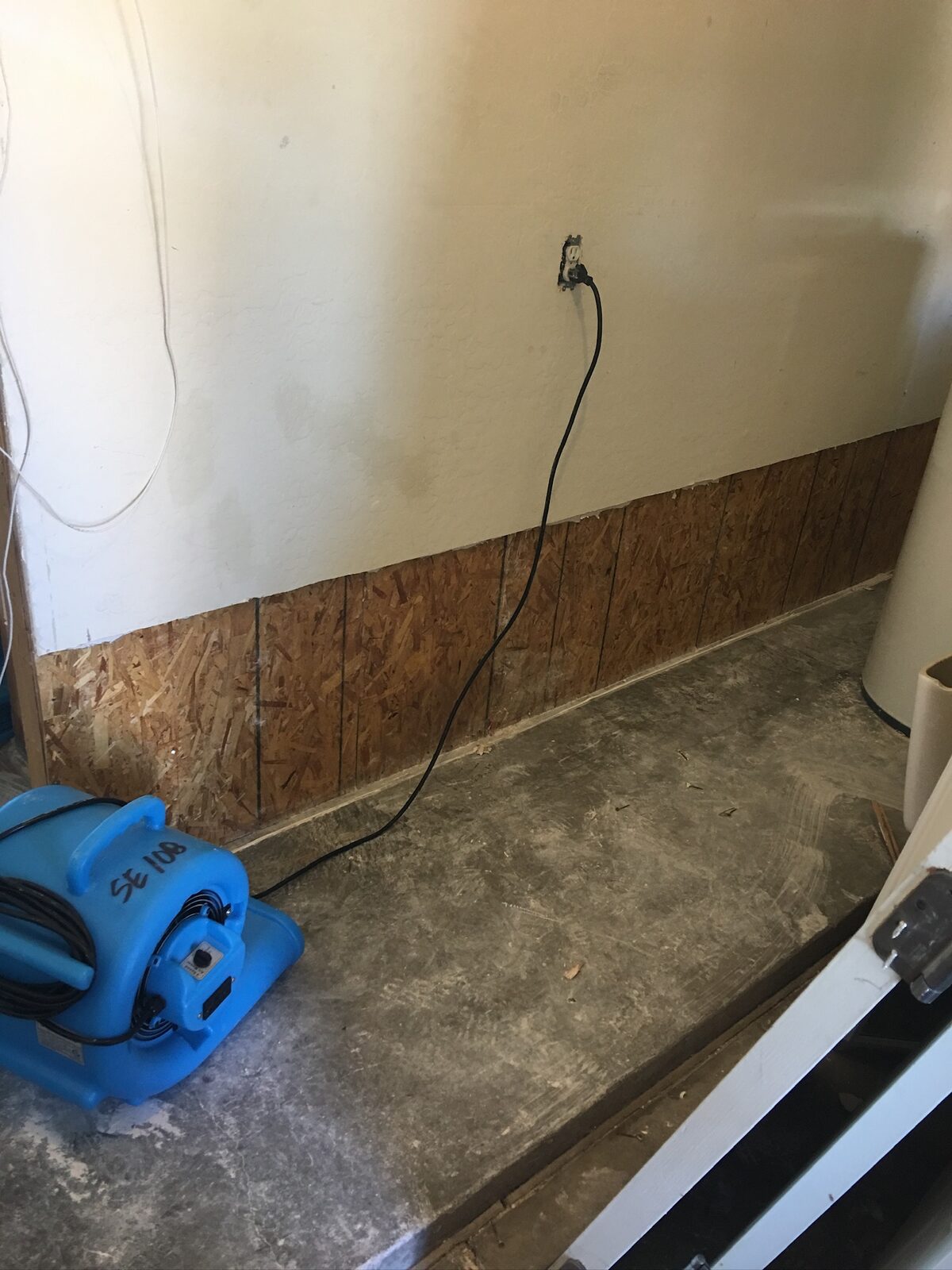
Residential reconstruction work by members of our team. See the full gallery →
More from Gold Water Fire
Abrasive Cleaning Methods for Soot on Framing and Masonry
A look at how abrasive cleaning methods remove soot from wood framing and masonry after a fire, and when each method fits the material.
AC Condensate Line Clogs & the Water Damage They Cause in Phoenix Homes
Why Phoenix AC condensate lines clog every summer, what the water damage looks like, and how to find the source before the ceiling stain spreads again.
Actual Cash Value vs Replacement Cost: Why Your Check Might Not Match the Repair Bill
Confused why your insurance check seems short after fire or water damage? Learn the difference between actual cash value and replacement cost coverage.
If a washer or drain issue has already gotten past the pan
It's worth a second look even if the water seemed minor at first. Reach out to Gold Water Fire at (480) 999-3339 or Help@goldwaterfire.com and we'll help you figure out what's actually going on underneath.
Call (480) 999-3339