
Stucco Patch Matching: Texture, Color Coat, and Why Patches Show
You had the crack or hole in your stucco fixed, and from far away it looks fine. But up close, or when the sun hits the wall at a certain angle in the late afternoon, there it is: a patch that doesn't quite disappear. It's a strange kind of frustrating, because the repair "worked," the wall is structurally sound, and yet something still looks off. If you've found yourself standing in your driveway staring at a section of your house wondering why it doesn't blend in no matter what, you're not imagining it, and you're not alone in noticing it.
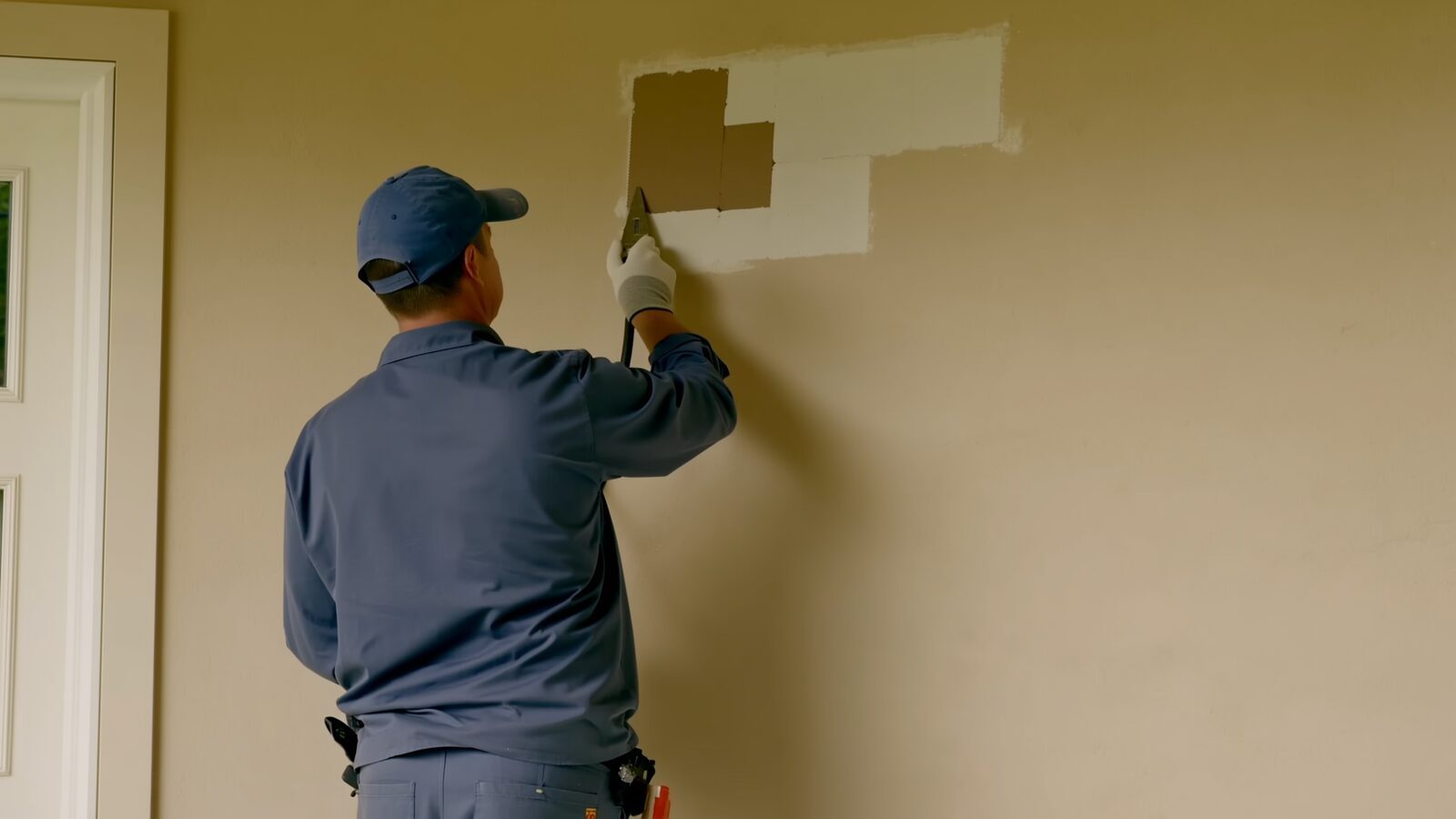
Stucco Patch Matching: Texture, Color Coat, and Why Patches Show
Why stucco patches are hard to hide
Stucco is not one uniform material applied once and forgotten. It's a layered system, typically a scratch coat, a brown coat, and a finish coat, each applied by hand or machine with specific timing, moisture content, and technique. Every one of those variables affects how the final surface catches light. A patch is, by definition, new material meeting old material, and the two were mixed at different times, applied by possibly different hands, and have weathered under different conditions. Even a technically excellent patch is working against physics: new stucco simply reflects light differently than stucco that has spent years exposed to sun, dust, and temperature swings.
Texture: the part everyone notices first
Before color ever comes into play, texture is usually what gives a patch away. Common Arizona stucco textures include lace, sand, dash, and knockdown, and within each of those categories there's a wide range depending on the size of the aggregate, the pressure used to apply it, and how much it was troweled or flattened afterward. Matching texture is part skill and part patience: it often takes test patches on a scrap board or an inconspicuous part of the wall before committing to the visible repair area, because texture that looks close when wet can look noticeably different once fully cured.
Color coat: why paint alone doesn't fix it
Some stucco is integrally colored, meaning the pigment is mixed into the finish coat itself rather than painted on afterward. Other stucco is painted over a plain gray or tan finish coat. If your stucco is integrally colored, matching it later means matching not just a paint color but a mix ratio, and slight variations in that mix, or in how much the surrounding stucco has faded from UV exposure over time, can leave a visible boundary. If your stucco is painted, a fresh coat of paint can sometimes blend a patch more successfully, but only if the surrounding paint hasn't chalked, faded, or changed sheen unevenly, which is common on south and west-facing walls in the Phoenix sun.
Why patches still show even when done correctly
This is the part that trips people up: a patch can be done with the right materials, the right texture technique, and real skill, and still be visible under certain light. That's not necessarily a sign of a bad repair. Shadow lines from slightly different trowel angles, subtle differences in aggregate size, and the simple fact that old stucco has been sun-bleached for years while new stucco hasn't, all play a role. In many cases, a patch becomes far less noticeable within a year or two as the new material weathers and the color gap narrows on its own. In other cases, blending an entire wall plane, rather than just the damaged section, is the only way to get a seamless look, because it removes the old-versus-new boundary entirely instead of trying to hide it.
When patching makes sense versus when it doesn't
Small, isolated damage from something like a bumped hose bib, a minor settling crack, or a patched drill hole is usually a reasonable candidate for a spot repair. But damage from water intrusion, especially if it's tracked back to a leak behind the wall, often needs the stucco opened up more broadly to address what caused it in the first place, not just what's visible on the surface. If you're dealing with stucco damage connected to a water or fire event, it's worth understanding what's underneath before deciding how much surface area actually needs to be repaired. You can read more about how that assessment works on our water damage restoration and reconstruction and rebuild pages.
Questions people ask us
Why does my stucco patch look fine wet but obvious once it dries?
Stucco changes color and sometimes texture appearance as it cures and loses moisture. Wet stucco often looks darker and more uniform than it will once fully dry, which is why professionals wait for full cure before judging a color or texture match.
Can a stucco patch ever be made completely invisible?
Sometimes, especially on textures with more visual noise like heavy dash or knockdown, or after the patch has weathered for a season or two. On smooth or fine sand finishes, or on integrally colored stucco, a perfectly invisible patch is harder to achieve without blending a larger section of the wall.
Does repainting the whole wall fix a mismatched patch?
It can help significantly if the stucco is a painted finish rather than integrally colored, but only if the paint is applied to the full wall plane rather than just the patch, since spot-painting introduces its own visible edge.
How do I know if my stucco damage is more than cosmetic?
Look for staining, soft spots, bubbling, or cracking that keeps returning after repair. Those can point to moisture trapped behind the stucco, which needs to be traced and addressed before a surface patch will hold.
The standard our team works to

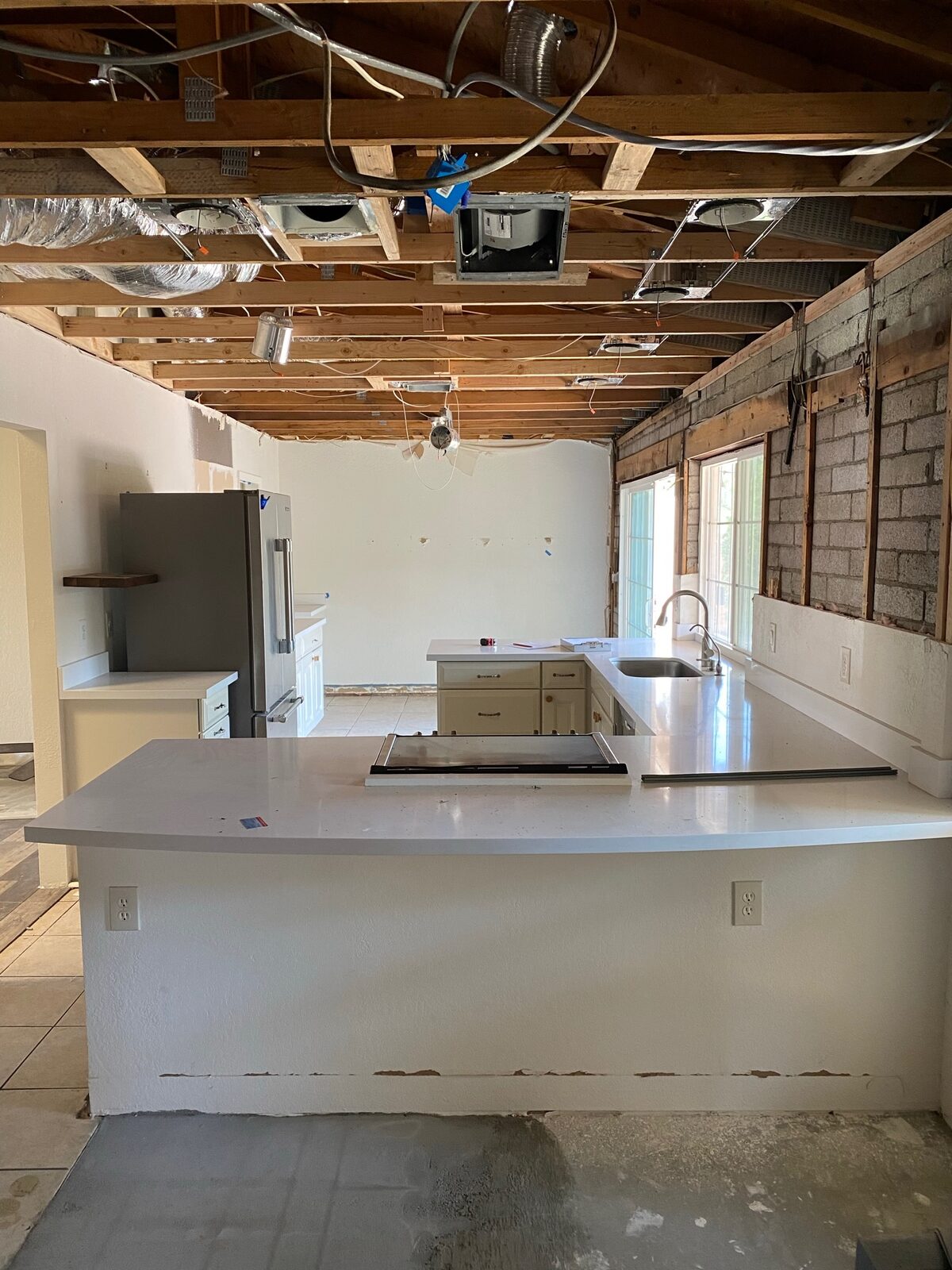
Residential reconstruction work by members of our team. See the full gallery →
More from Gold Water Fire
Abrasive Cleaning Methods for Soot on Framing and Masonry
A look at how abrasive cleaning methods remove soot from wood framing and masonry after a fire, and when each method fits the material.
AC Condensate Line Clogs & the Water Damage They Cause in Phoenix Homes
Why Phoenix AC condensate lines clog every summer, what the water damage looks like, and how to find the source before the ceiling stain spreads again.
Actual Cash Value vs Replacement Cost: Why Your Check Might Not Match the Repair Bill
Confused why your insurance check seems short after fire or water damage? Learn the difference between actual cash value and replacement cost coverage.
Not sure if it's just cosmetic?
If stucco damage keeps coming back or you suspect water behind the wall, contact Gold Water Fire at (480) 999-3339 or Help@goldwaterfire.com and we'll help you understand what's really going on before you patch it again.
Call (480) 999-3339