
Who Is Responsible for Water Damage in a Rental Property: Landlord, Tenant & Insurance Roles
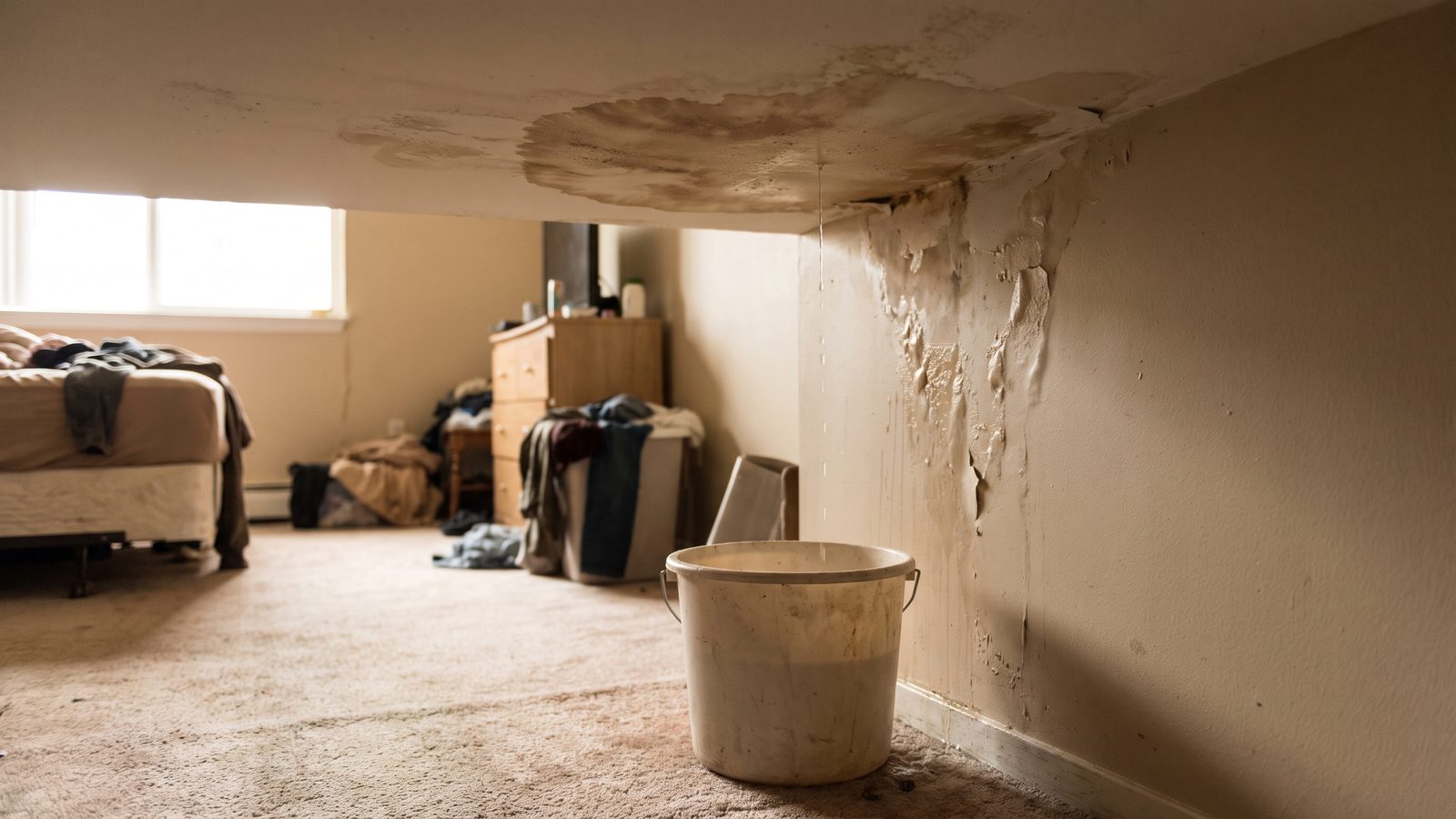
The stain came back. Or the carpet in the hall closet is damp again, three weeks after someone said it was handled. You have probably already had the conversation where the landlord says it is your fault and you say it is the building's, and neither of you has anything to point at except a wet spot that keeps returning. What makes this so tiring is not the water. It is not knowing what you are actually looking at, or who is supposed to be looking at it, or why a thing that was supposedly fixed keeps announcing itself again. Nobody teaches you where the line falls between a maintenance problem and a tenant problem, and in the middle of it, with a lease in one hand and a phone number that goes to voicemail in the other, that line can feel like something everyone else already knows and you missed.
Who Is Responsible for Water Damage in a Rental Property: Landlord, Tenant & Insurance Roles
The building versus what happens inside it
As a general rule across residential rentals, responsibility follows control. The landlord owns and controls the structure and the permanent systems: the roof, exterior walls, windows, foundation, supply lines inside the walls, the water heater, the main drain lines, and any appliance the landlord provided. Arizona's residential landlord and tenant law obligates a landlord to maintain plumbing and other facilities supplied with the unit in good and safe working order, and to make repairs needed to keep the place fit and habitable. A pinhole leak in a copper supply line behind drywall, a failed water heater, a roof leak during monsoon, a slab leak, a backed up main sewer line: those sit on the structure side. The tenant controls how the unit is used. Overflowed tubs, an unattended sink, a hose left running on a patio drain, a fish tank failure, a clog caused by wipes or grease, an ice maker line the tenant hooked up themselves, or a leak that was noticed and not reported until the ceiling below stained: those generally sit on the tenant side, in whole or in part. Arizona law also requires tenants to keep plumbing fixtures clean, use facilities reasonably, and not deliberately or negligently damage the property. The hard cases live in between, and that is where most disputes actually happen. A slow drip under a sink is a plumbing failure, but the swollen cabinet base and the mold behind it may be argued as a delay in reporting. The honest answer is that fault is frequently split, and the split is usually decided by what got written down and when.
What landlord insurance covers and what renters insurance covers
People assume there is one policy and one adjuster. There are almost always two, and they do not overlap. Landlord insurance, usually a dwelling or rental dwelling policy, covers the building itself: framing, drywall, flooring that came with the unit, cabinetry, the landlord's appliances, and often lost rent while the unit is uninhabitable. It does not cover your furniture, clothes, electronics, or the cost of a hotel for you. Renters insurance covers the tenant's personal property and, importantly, includes personal liability. That liability portion is the part most renters forget exists. If the tenant caused the loss, that liability coverage is often what responds when the landlord's insurer comes looking for reimbursement. Many renters policies also include loss of use, which pays for temporary housing when the unit cannot be lived in. A few things neither policy usually covers: gradual leaks and long term seepage, which most policies exclude specifically because the damage developed over weeks or months rather than suddenly; and groundwater or surface flooding, which requires separate flood coverage. This exclusion is exactly why a recurring stain matters so much. A sudden pipe burst is normally a covered event. The same pipe dripping quietly since spring may not be, and whoever waited to report it tends to absorb the loss. One more mechanism worth knowing by name: subrogation. If the landlord's insurer pays for the repair and believes the tenant caused it, that insurer can pursue the tenant or the tenant's insurer for the money. This can arrive months later, long after everyone thought the matter was closed.
Documenting a recurring leak so it stops being your word against theirs
When damage keeps returning, the underlying reason is almost always that the source was never found, only the surface was dried. Water travels along framing, follows electrical penetrations, wicks up drywall and sits under vinyl plank flooring where nothing looks wrong from above. A ceiling stain can be several feet from the actual leak. A repainted stain is not a repair. Build a record, and build it starting today. Photograph the affected area with something in frame for scale, and take a new photo each time it changes. Note the date and what the weather was doing, because a stain that only appears after rain points to the roof or a window flashing, while a stain that appears regardless points to plumbing. Put every maintenance request in writing, by email or through the portal, even if you also call. Save the reply, or note the absence of one. If someone comes out, write down what they did and whether they opened anything up or only looked. Ask directly whether the wall cavity was checked with a moisture meter and whether anything was cut open. Ask whether drying equipment was set and for how long. Standard practice in restoration is to verify that materials have returned to a normal moisture level before closing walls, not to assume it from the surface being dry to the touch. If nobody can answer those questions, you have found why it keeps coming back. Under Arizona law, tenants generally must give written notice of a needed repair before other remedies become available, so written notice protects you regardless of how the rest goes.
How the repair side usually gets sequenced
Once responsibility is sorted, the physical work tends to run in a set order, and knowing the order helps you tell whether a job is being done or rushed. First the source is stopped, because drying around an active leak accomplishes nothing. Then affected materials are assessed, including hidden cavities, insulation and subfloor. Materials that cannot be dried in place, such as saturated drywall, wet insulation and some flooring, are removed. Then structural drying runs with air movers and dehumidification, monitored over days rather than hours, until moisture readings match unaffected areas of the same material. Only after that does rebuild begin: drywall, texture, paint, trim, flooring, cabinetry. Skipping from step one to the last step is the pattern behind most recurring stains and most of the musty smells that arrive weeks later. Mitigation and reconstruction are two different phases with two different goals, and a unit that was painted over instead of dried is going to keep telling on itself. If you want more detail on how each phase works, there is a walkthrough of the drying and extraction side under water damage restoration, and the rebuild side, meaning drywall through finish work, is covered under reconstruction and rebuild. Gold Water Fire works throughout the Phoenix metro area, including Mesa, Chandler, Gilbert, Tempe, Scottsdale, Glendale, Peoria, Avondale, Queen Creek and San Tan Valley, and either a landlord or a tenant can call to ask what they are actually dealing with.
Questions people ask us
Can my landlord make me pay for water damage I did not cause?
Generally, a tenant is responsible for damage they caused through negligence or misuse, not for failures of the building's own plumbing or structure. Where it gets complicated is delay: if a leak was visible for weeks and never reported in writing, a landlord may argue that the additional damage was avoidable. Written maintenance requests with dates are the single most useful thing a tenant can have.
Does renters insurance pay to repair the apartment itself?
Usually not directly. Renters insurance covers your personal belongings and provides personal liability coverage, and it often pays for temporary housing if the unit becomes unlivable. The building's structure is covered by the landlord's policy. If you caused the loss, your liability coverage may end up responding to a claim from the landlord's insurer.
Why does the same water stain keep coming back after it was repaired?
Almost always because the source was never located or the wall cavity was never dried, only the visible surface. Water moves along framing and sits in insulation and under flooring where it cannot evaporate. Paint over damp drywall will stain again and can grow mold behind it. A real repair involves finding the source, opening what needs opening, and drying to verified moisture readings before anything is closed up.
Who should call a restoration company, the landlord or the tenant?
Either can call to get the situation looked at, though the landlord or property manager typically authorizes the work and coordinates with the insurer since they own the structure. If you are a tenant and cannot get a response, documenting what you see and putting the request in writing keeps your position clear. You can reach Gold Water Fire at (480) 999-3339 or Help@goldwaterfire.com.
The standard our team works to
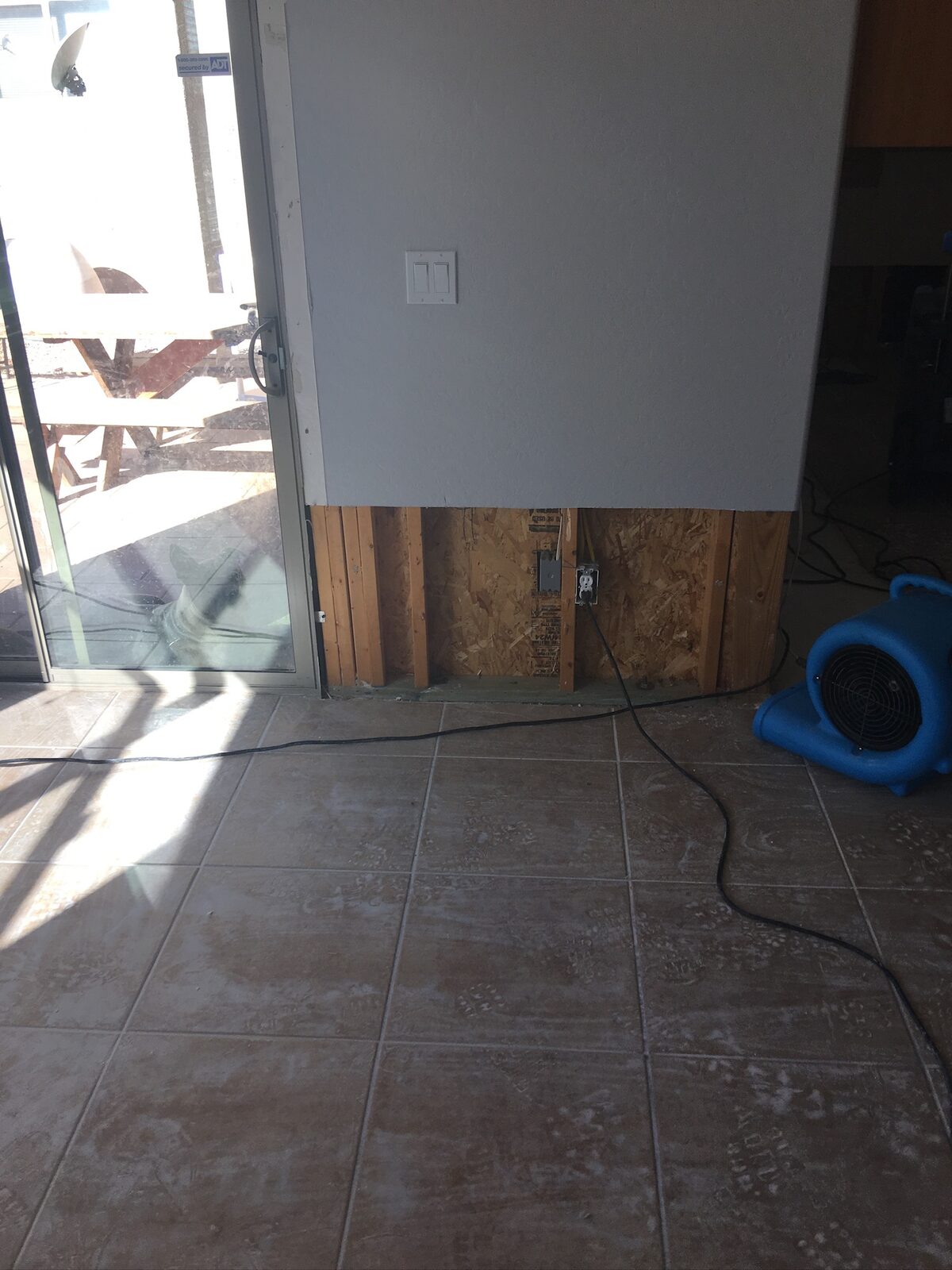
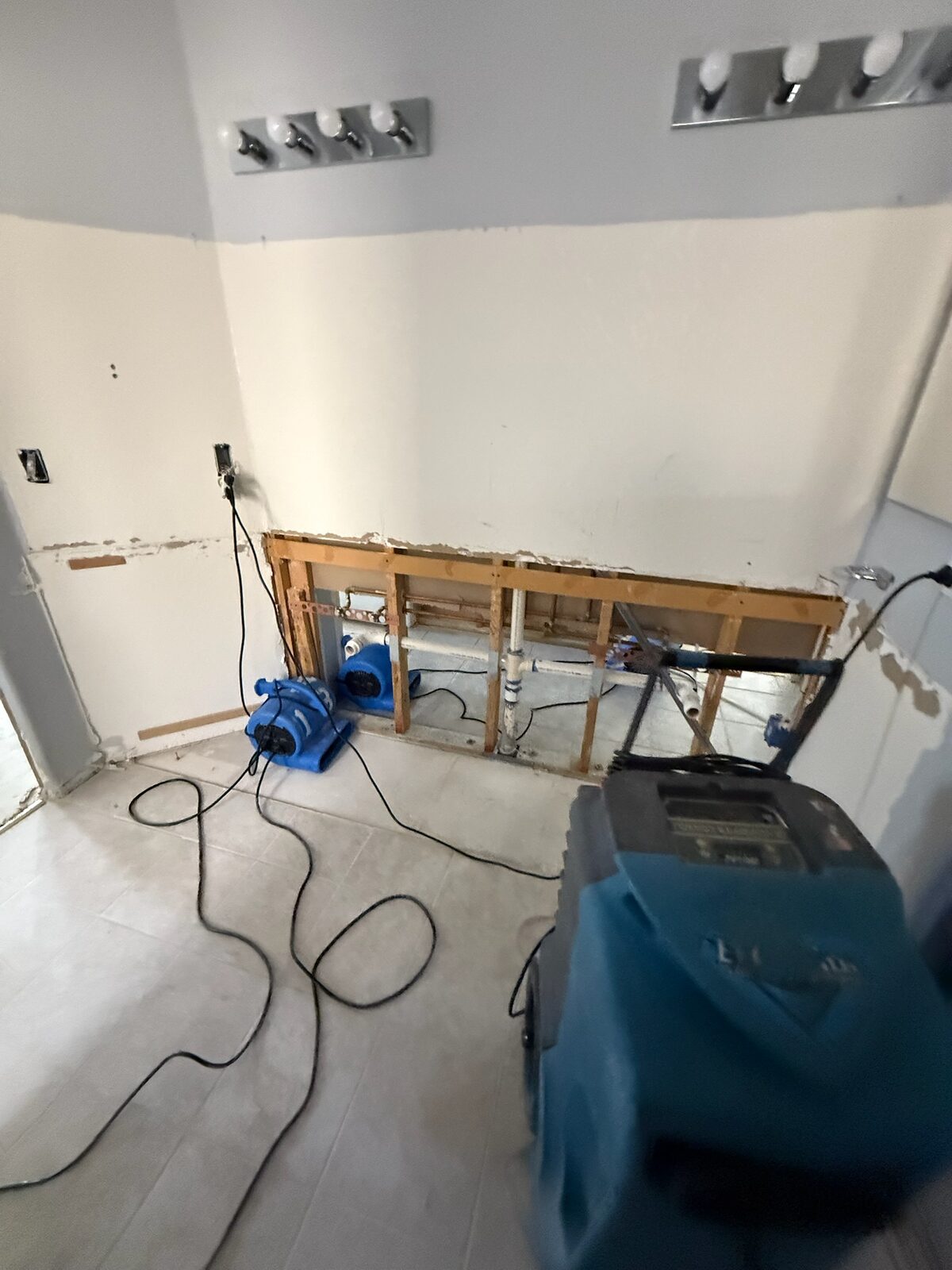
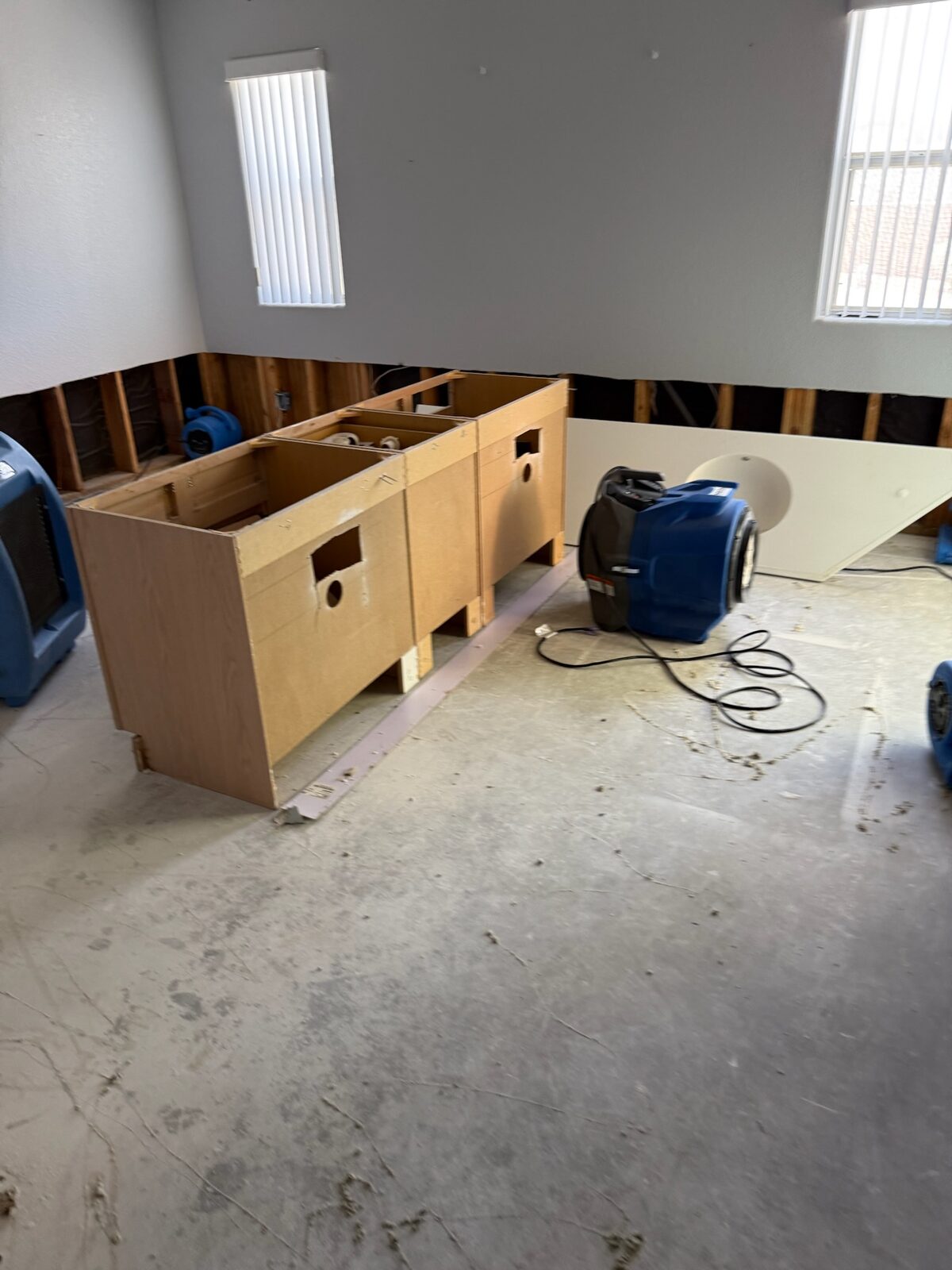
Residential reconstruction work by members of our team. See the full gallery →
More from Gold Water Fire
Abrasive Cleaning Methods for Soot on Framing and Masonry
A look at how abrasive cleaning methods remove soot from wood framing and masonry after a fire, and when each method fits the material.
AC Condensate Line Clogs & the Water Damage They Cause in Phoenix Homes
Why Phoenix AC condensate lines clog every summer, what the water damage looks like, and how to find the source before the ceiling stain spreads again.
Actual Cash Value vs Replacement Cost: Why Your Check Might Not Match the Repair Bill
Confused why your insurance check seems short after fire or water damage? Learn the difference between actual cash value and replacement cost coverage.
Not sure what you are actually looking at
If a damp spot keeps returning and nobody has given you a straight answer about where the water is coming from, it is reasonable to have someone look at the structure itself rather than the stain. Call Gold Water Fire at (480) 999-3339 or email Help@goldwaterfire.com. Landlords, tenants and property managers across the Phoenix metro area are all welcome to ask.
Call (480) 999-3339Water Damage Restoration · Reconstruction & Rebuild · Contact Gold Water Fire · About Gold Water Fire