
HOA and Owner Responsibility for Water Damage in a Condo
Water is coming through your ceiling or pooling near a shared wall, and before you can even think about drying anything out, you're stuck on a different question: whose problem is this. Is it yours, or does it belong to the HOA. That uncertainty is its own kind of stress, especially when the water isn't stopping while you sort it out. Condo ownership splits responsibility in ways that rarely feel intuitive in the moment, and it's normal to feel caught between your own unit and a building you don't fully control.
HOA and Owner Responsibility for Water Damage in a Condo
Why this question is so confusing in the first place
In a single-family home, the line is simple: you own the whole structure, so you handle the whole problem. A condo splits ownership into layers. You typically own the interior of your unit, sometimes down to the drywall, sometimes further depending on the declaration. The HOA usually owns and maintains the shared structure: the roof, the exterior walls, common plumbing risers, and shared mechanical systems. Water doesn't respect those boundaries when it's traveling. A pipe behind a wall might be a shared riser one owner never sees, or it might be a fixture line that belongs entirely to the unit. Until you know which category the source falls into, you can't know who's responsible for the repair or the loss.
Start with the source of the water, not the location of the damage
The single most useful thing you can do early on is identify where the water actually originated, not just where it showed up. Water can travel along framing, pool at a low point, and stain a ceiling several feet from the actual leak. A stain in your bathroom ceiling could come from your own upstairs neighbor's toilet supply line (their responsibility), a shared plumbing stack inside the wall cavity (often the HOA's), or a roof penetration two floors up (almost always the HOA's). Tracing the path of the water, rather than assuming based on where you see the stain, is the first real step toward figuring out responsibility.
What the governing documents actually control
The answer isn't found in general rules of thumb, it's found in your specific CC&Rs (Covenants, Conditions, and Restrictions) and the condo declaration. These documents define the boundary between 'unit' and 'common element,' and that boundary varies from one association to another. Some declarations draw the line at the unfinished interior surface of the walls, meaning drywall, paint, and flooring are the owner's, while the studs and pipes inside them are common elements. Others draw it differently. Reading the declaration, or asking the HOA management company to point you to the relevant section, matters more than any general assumption about how condos usually work.
Common scenarios and how they typically shake out
A few patterns show up often enough to be worth naming, though your own declaration is still the final word.
A shared pipe or riser fails
If the leak comes from plumbing that serves multiple units or is embedded in a common wall, it's frequently treated as a common element, putting repair and often damage liability on the HOA or its master insurance policy.
A fixture inside your unit fails
A supply line to your own dishwasher, washing machine, or toilet is usually considered part of the unit. If it fails and causes damage, that's typically on the owner and their homeowner's or condo (HO-6) policy.
The roof or exterior envelope leaks
Roof leaks, window seal failures, and exterior wall intrusion are almost always common element issues, since the HOA is generally responsible for maintaining the building's exterior.
Water travels from a neighbor's unit
If the source is inside another owner's unit, such as an overflowing tub, responsibility often falls to that neighbor and their insurance, separate from the HOA entirely, even though the damage shows up in your space.
Why documentation matters before anyone starts drying or repairing
Insurance carriers, whether it's your HO-6 policy or the HOA's master policy, will want to see when the damage was discovered, what the suspected source was, and what the property looked like before any repair work began. Photos and notes taken in the first hours matter more than most owners realize, because once drying equipment goes in or damaged materials are removed, that original evidence is gone. This is true regardless of who ultimately pays. Taking clear photos of the affected area, the suspected source, and any visible water path is worth doing before you touch anything, even if you're still unsure who's responsible.
What to do while responsibility is still being sorted out
Standing water and wet materials don't wait for a liability determination. Mold can begin developing in as little as one to two days in a warm, humid environment, and structural materials like drywall and subfloor can weaken the longer they stay saturated. It's reasonable, and often necessary, to start mitigation (extracting water, beginning to dry the space) even before the HOA and your insurance have finished determining who pays. Keep records of what you spend and why. If you want to understand what that mitigation process actually involves, our water damage restoration page walks through the stages in more detail. If the damage has progressed to the point of needing rebuilt walls, flooring, or cabinetry, our reconstruction and rebuild page covers what that process looks like.
Questions people ask us
Does the HOA's master insurance policy cover damage inside my unit?
It depends on the policy and the declaration. Many master policies cover common elements and sometimes original fixtures installed by the builder, but they often exclude personal property, upgrades, and finishes inside the unit. That's typically what an individual HO-6 condo policy is meant to cover. Check both documents rather than assuming either one fills the whole gap.
What if the HOA and my insurance company both say it's the other party's responsibility?
This happens more often than owners expect, especially when a leak source is ambiguous or affects a wall that both parties could argue is a common element or part of the unit. Getting a clear, documented assessment of the water's origin point can help resolve the disagreement, since responsibility usually turns on where the water started, not just where the damage appears.
Should I wait for the HOA to approve repairs before starting mitigation?
Generally no. Standing water and saturated materials get worse the longer they sit, and most policies and associations expect an owner to take reasonable steps to prevent further damage regardless of who ultimately pays. Document everything as you go so the cost allocation can be sorted out afterward.
How do I find out where my unit's boundary is versus the common elements?
Your condo declaration or CC&Rs define this, usually in a section describing unit boundaries. If you don't have a copy, your HOA management company can typically provide one. Some declarations draw the line at the interior drywall surface, others include certain plumbing or wiring within the unit, so it's worth reading the specific language rather than assuming.
The standard our team works to
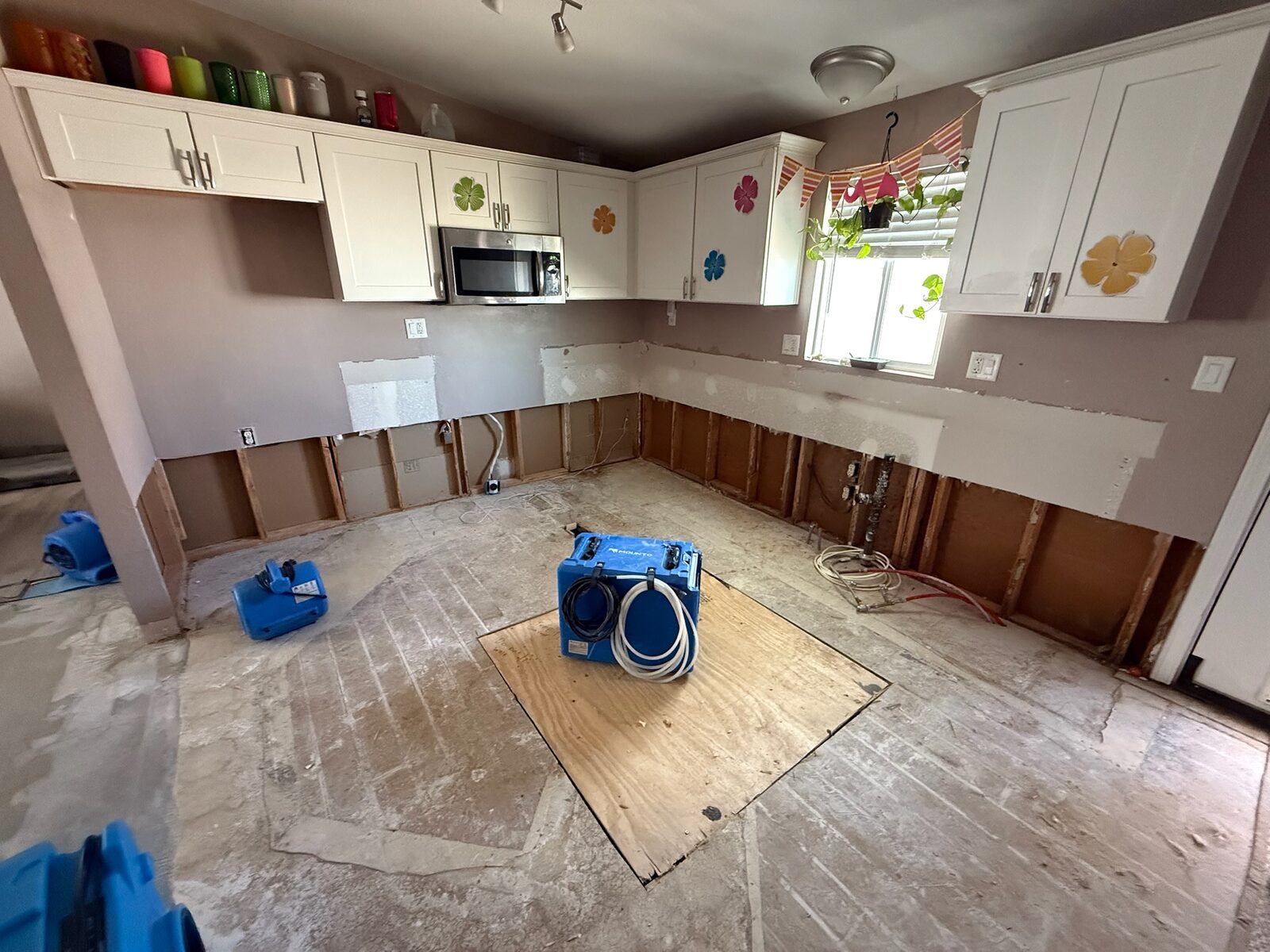
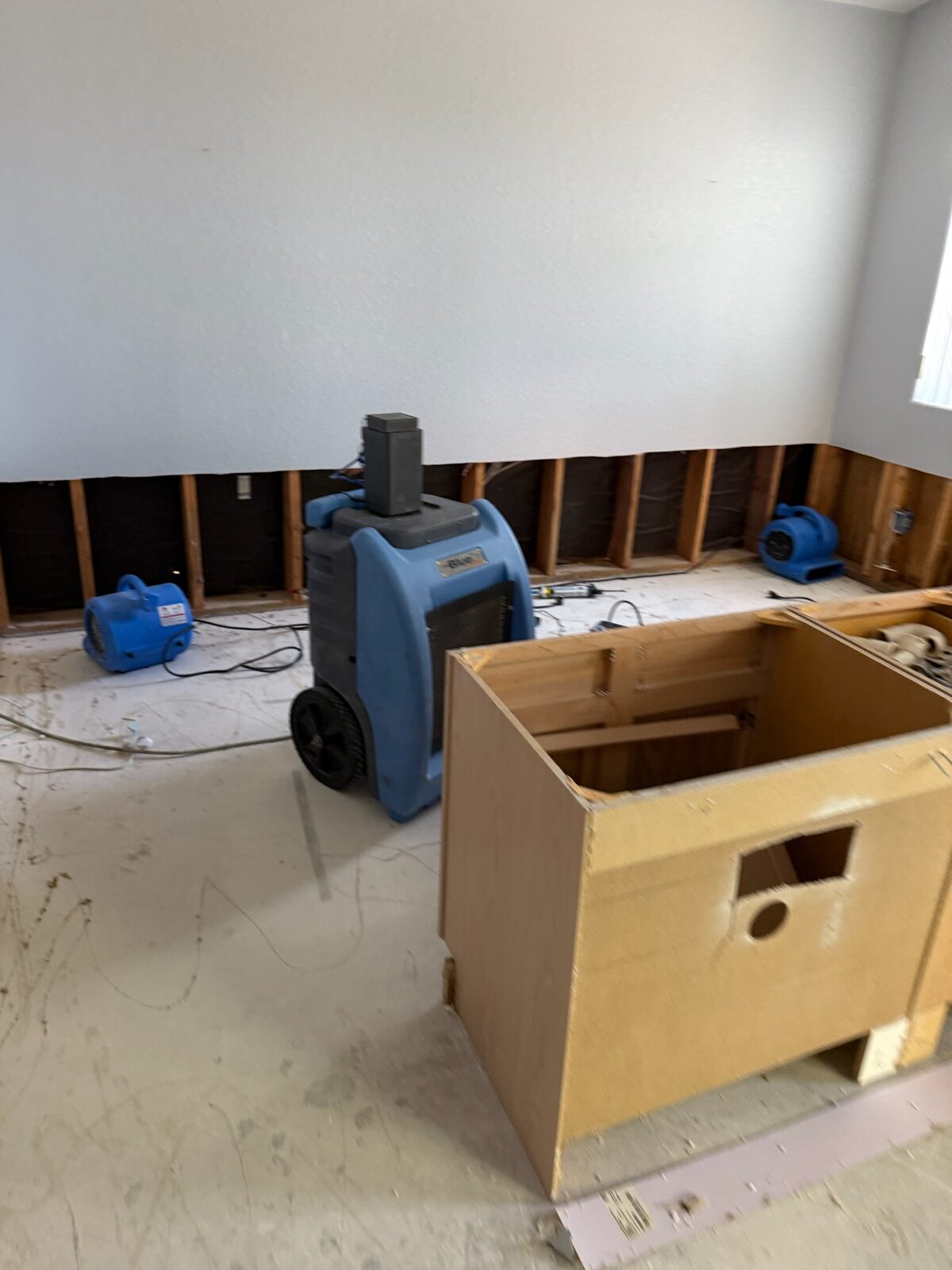
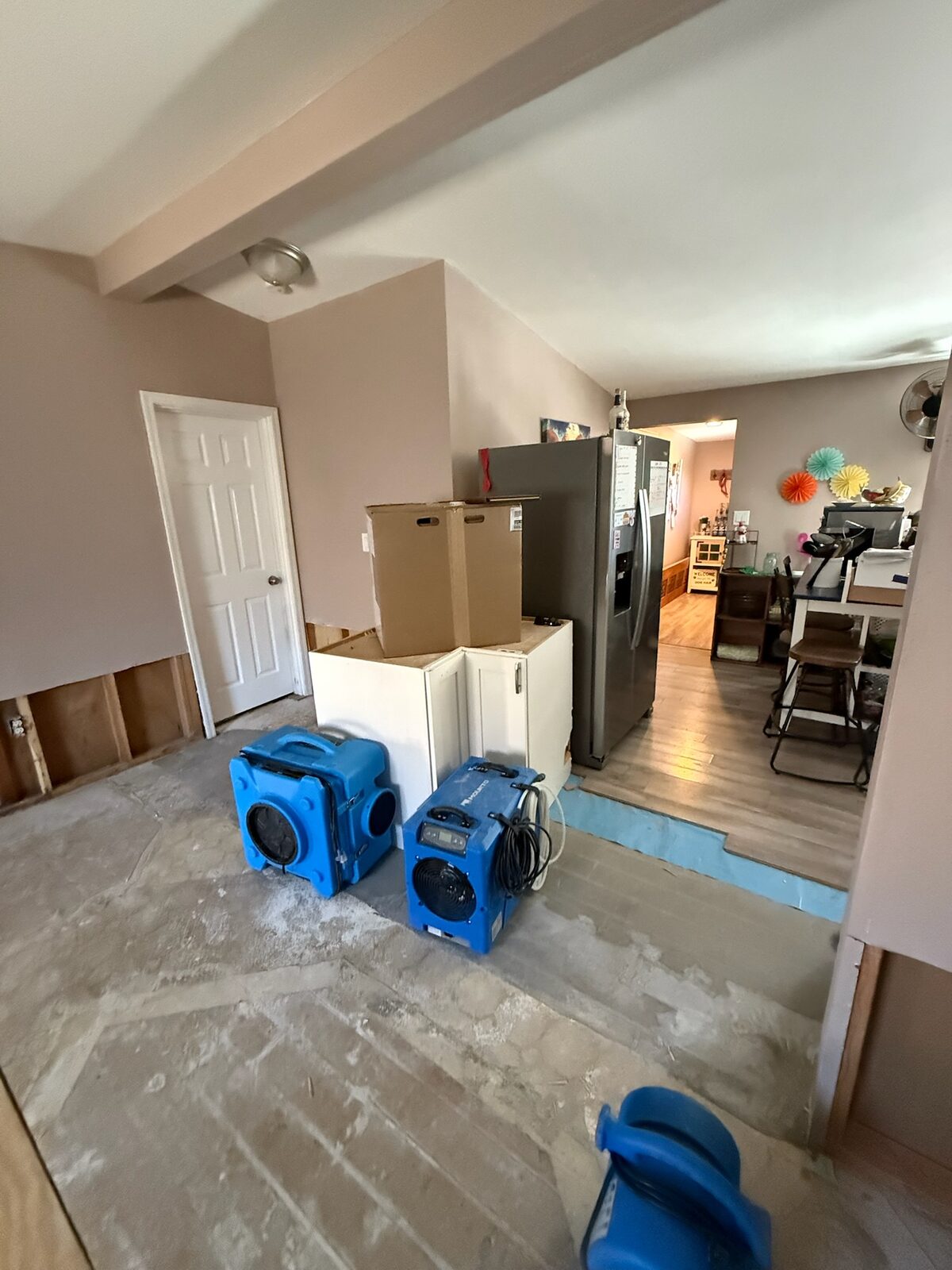
Residential reconstruction work by members of our team. See the full gallery →
More from Gold Water Fire
Abrasive Cleaning Methods for Soot on Framing and Masonry
A look at how abrasive cleaning methods remove soot from wood framing and masonry after a fire, and when each method fits the material.
AC Condensate Line Clogs & the Water Damage They Cause in Phoenix Homes
Why Phoenix AC condensate lines clog every summer, what the water damage looks like, and how to find the source before the ceiling stain spreads again.
Actual Cash Value vs Replacement Cost: Why Your Check Might Not Match the Repair Bill
Confused why your insurance check seems short after fire or water damage? Learn the difference between actual cash value and replacement cost coverage.
Not sure where the water is coming from or who's responsible?
Gold Water Fire can assess the source and extent of water damage in your condo and give you clear documentation to bring to your HOA or insurance company. Call (480) 999-3339 or reach out through our <a href="/contact.html">contact page</a> to talk through what you're seeing.
Call (480) 999-3339Water Damage Restoration · Reconstruction & Rebuild · Contact Gold Water Fire