
Living in the House During Reconstruction: What Works and What Does Not
Somewhere between the damage happening and the repairs finishing, most homeowners face a question nobody warned them about: do we leave, or do we stay? It sounds like it should have an easy answer. It doesn't. Money, kids' school schedules, pets, work-from-home setups, and just wanting to sleep in your own bed all pull in different directions, and the contractor's timeline rarely lines up neatly with any of it. If you're standing in a half-torn-apart kitchen or a bedroom with a dehumidifier running around the clock, trying to figure out if this is livable or if you're fooling yourself, you're not overthinking it. This is genuinely a hard call, and it depends on details that are easy to miss until you're already living them.
Living in the House During Reconstruction: What Works and What Does Not
Why this decision is harder than it looks
Staying home during reconstruction can save money on temporary housing and keep daily routines intact, especially for families with kids in a nearby school or someone who needs to be close to work. But it also means living with noise, dust, shifting work crews, and rooms that are unusable for stretches of time. The right call depends less on how bad the damage looks today and more on which systems in the house are affected: plumbing, electrical, HVAC, and structural framing all have different tolerances for having people underfoot while they're being worked on.
Situations where staying home is realistic
Staying tends to work when the damaged area can be sealed off from the rest of the house with plastic sheeting or temporary doors, when water and electrical service to the livable portion stay intact, and when the work is contained to one wing, one floor, or a small number of rooms. It also works better when the household can tolerate some noise during the day and doesn't need total quiet for remote work or sleep schedules. Kitchens and bathrooms are the exceptions worth flagging: losing the only working kitchen or the only bathroom changes the math even if the rest of the house is fine.
Situations where staying home causes real problems
Staying becomes difficult when dust and odor control can't be maintained, particularly after fire damage, where soot and smoke smell travel through HVAC ducts into rooms that look untouched. It also strains when the only bathroom or kitchen is part of the work zone, when structural repairs require cutting power or water to the whole house for stretches of time, or when there are small children, elderly residents, or anyone with respiratory sensitivity in the home. Multi-week reconstruction with open framing, exposed subfloor, or active mold remediation is rarely compatible with normal daily life, regardless of how the schedule is arranged.
How to make staying home more workable, if you choose it
If staying is the plan, ask for a clear containment barrier between work areas and living space, confirm which utilities will be interrupted and when, and set expectations upfront about work hours and noise. Keep an eye on air quality, especially with fire damage, since soot particles are fine enough to spread beyond the visibly damaged room. Pack a go-bag of essentials in case a night or two away becomes necessary even if the overall plan is to stay, and check in with the crew regularly about what phase of work is coming next so there are no surprises about water or power shutoffs.
Questions people ask us
Is it cheaper to stay home during reconstruction than to move out temporarily?
It can be, since temporary housing, storage, and moving costs add up quickly. But those savings need to be weighed against the real cost of disrupted sleep, work, and daily routines, plus any risk from dust or air quality issues if the damage involved fire or extensive water intrusion.
What part of the house is hardest to live around during reconstruction?
Kitchens and bathrooms cause the most disruption because losing either one affects the whole household, not just the room being repaired. Bedrooms and living rooms are usually easier to work around since their loss is less disruptive to daily function.
Does fire damage repair require leaving the house more often than water damage repair?
Often yes, mainly because of odor and soot particles that travel through ductwork and settle in rooms far from the original fire. Water damage repair is more often containable to the affected area, though mold risk can change that if it's discovered mid-project.
How do I know if my home is too damaged to live in during repairs?
Warning signs include exposed structural framing, active mold remediation, no functioning bathroom or kitchen, or any point where power or water to the whole house needs to be shut off for an extended period. If more than one of these applies, temporary relocation is usually the safer and more comfortable choice.
The standard our team works to
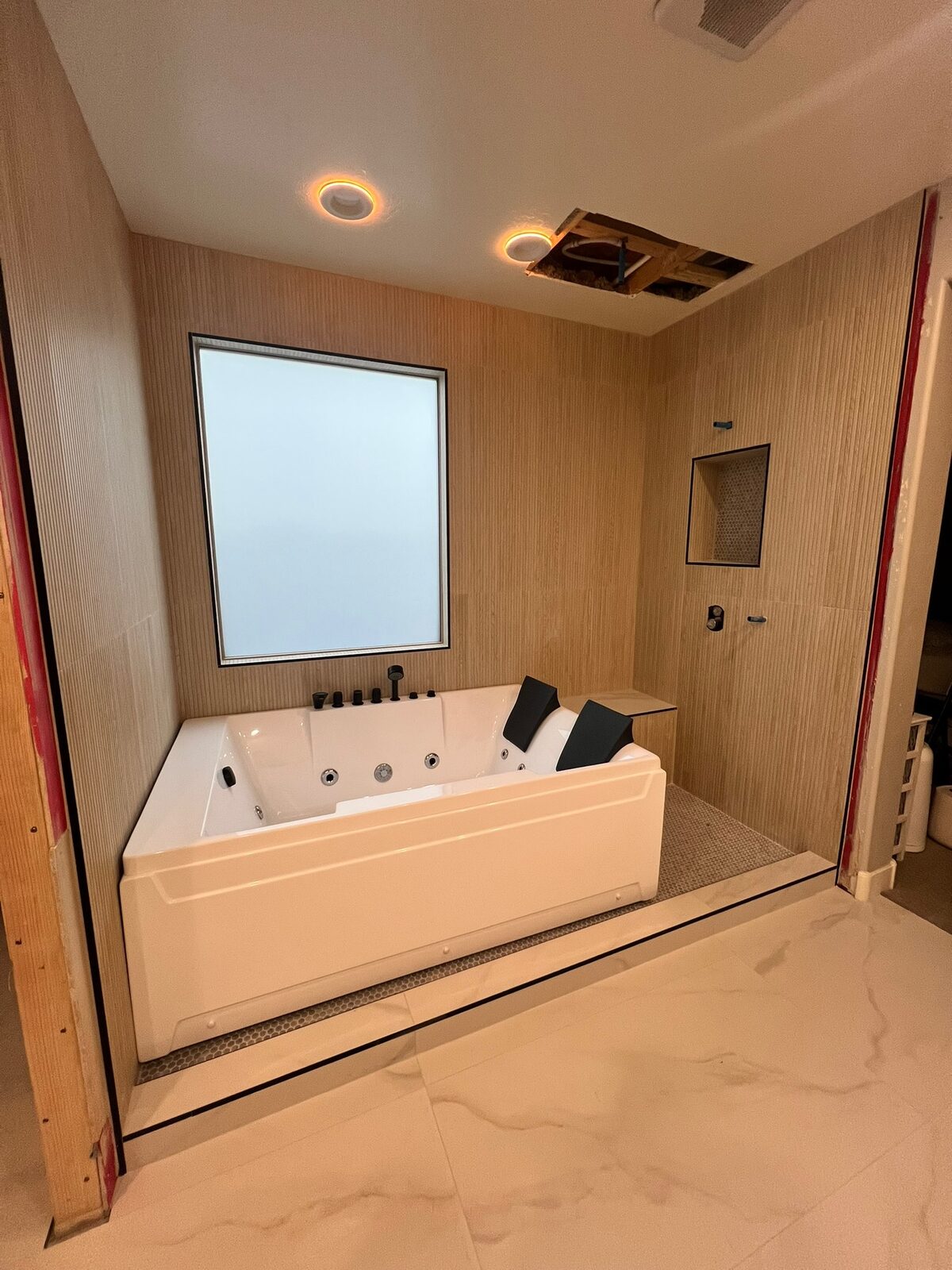

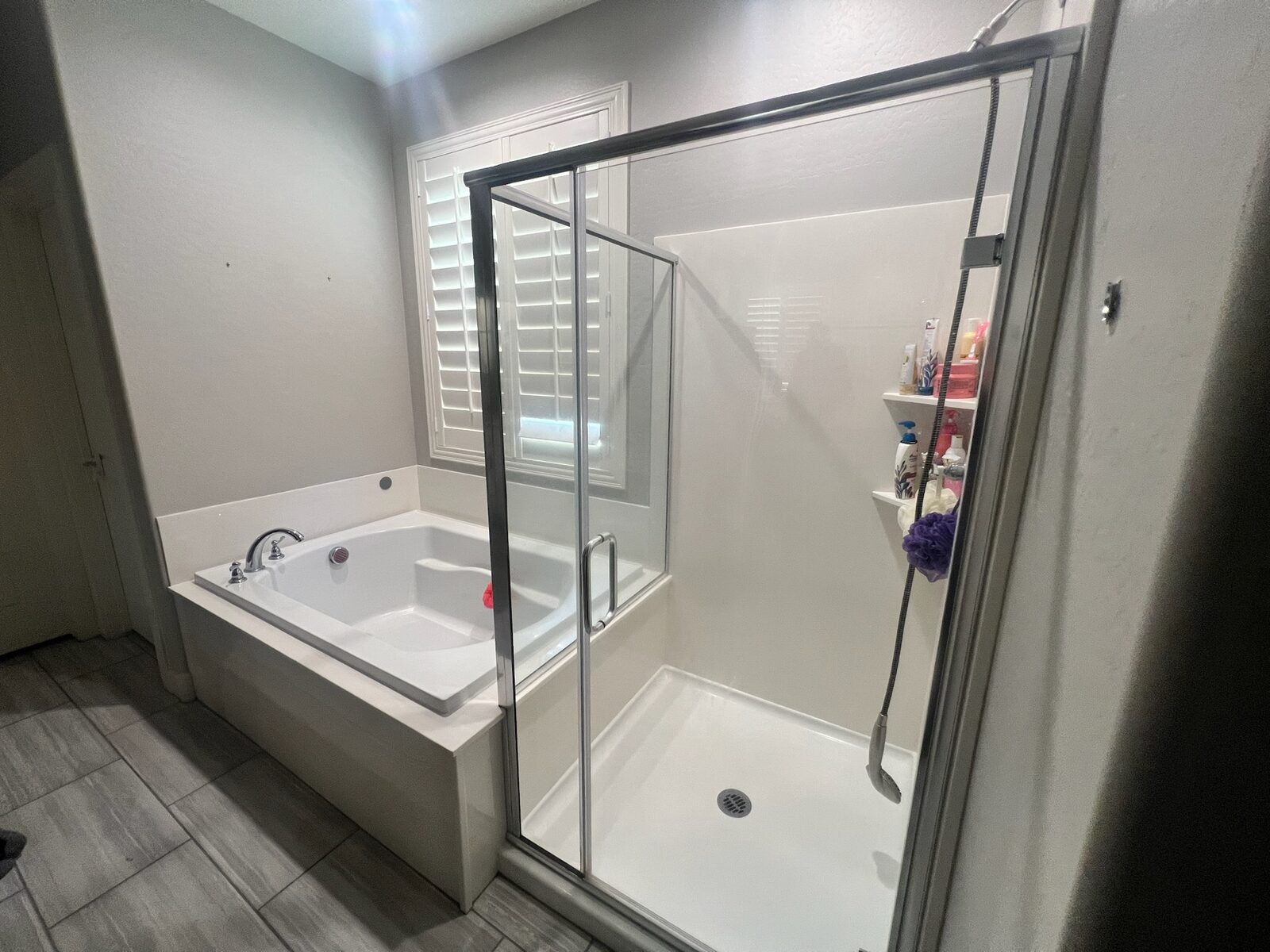
Residential reconstruction work by members of our team. See the full gallery →
More from Gold Water Fire
Abrasive Cleaning Methods for Soot on Framing and Masonry
A look at how abrasive cleaning methods remove soot from wood framing and masonry after a fire, and when each method fits the material.
AC Condensate Line Clogs & the Water Damage They Cause in Phoenix Homes
Why Phoenix AC condensate lines clog every summer, what the water damage looks like, and how to find the source before the ceiling stain spreads again.
Actual Cash Value vs Replacement Cost: Why Your Check Might Not Match the Repair Bill
Confused why your insurance check seems short after fire or water damage? Learn the difference between actual cash value and replacement cost coverage.
Weighing whether to stay or go during your repair?
Talk through your specific situation with Gold Water Fire before deciding. Reach the team at (480) 999-3339 or Help@goldwaterfire.com, or learn more about how reconstruction projects are planned on our <a href="/reconstruction.html">Reconstruction & Rebuild</a> page.
Call (480) 999-3339