
Why the Patch Never Quite Matches: Flooring & Paint After a Partial Repair
The leak is fixed. The drywall is back up. The new planks are down and the wall got a fresh coat. And yet, every time you walk into that room, your eye goes straight to the same spot. You cannot always explain it to a guest, and half the time the person who did the work tells you it looks fine, which somehow makes it worse. You start to wonder whether you are being particular, or whether you noticed something real that nobody wanted to say out loud. It is a strange kind of tired: the emergency is over, the money is spent, and the room still is not yours again.
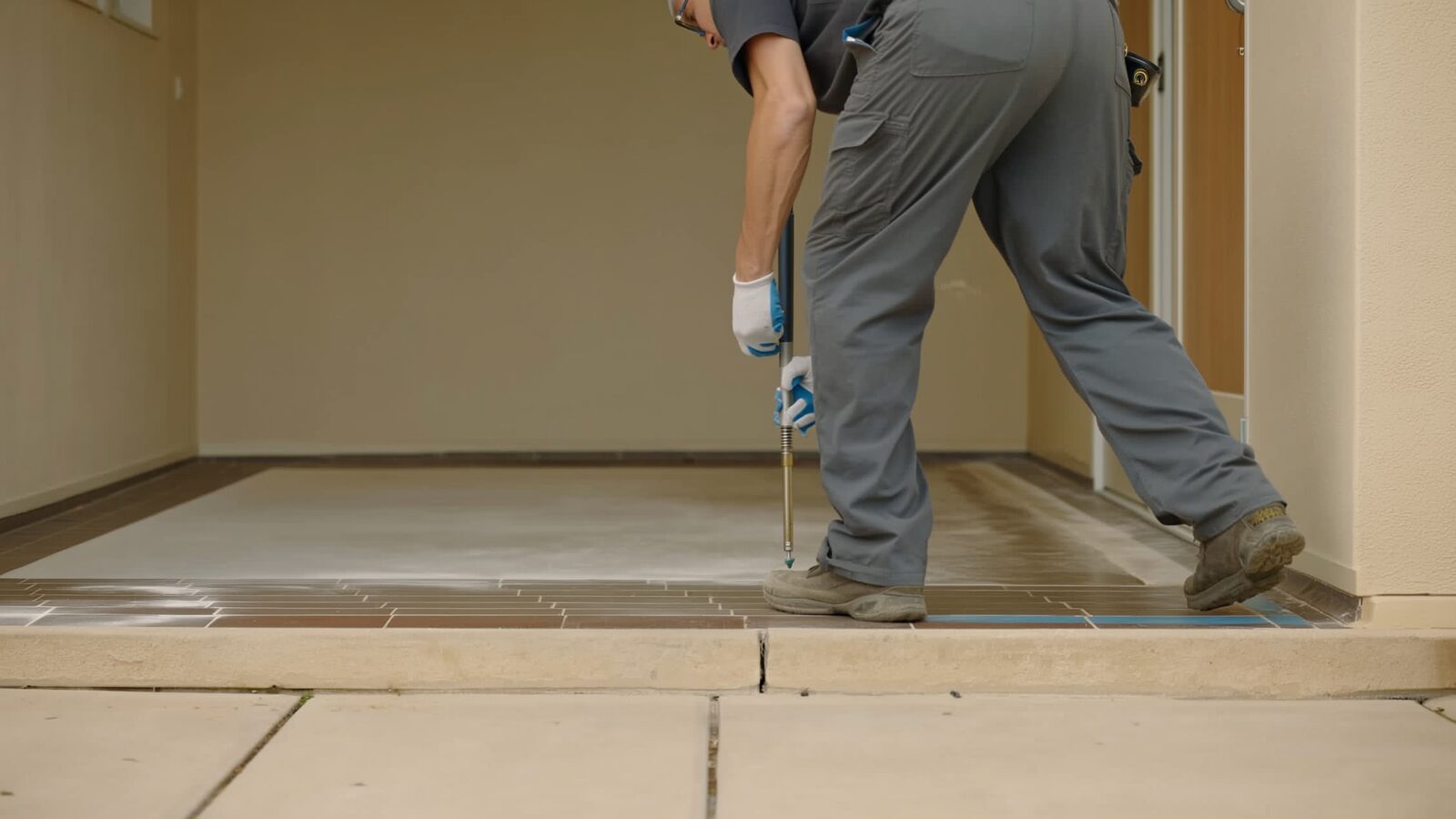
Why the Patch Never Quite Matches: Flooring & Paint After a Partial Repair
The mismatch is usually not a mistake, it is physics
Most partial-repair mismatches are not the result of carelessness. They come from the fact that the original surface has been living in your house and the new one has not. Paint changes after it goes on the wall. Pigments shift slightly with UV exposure, cooking grease, cleaning products, and time. A gallon of the exact same color code, from the same brand, opened five years later, will not read the same next to a wall that has been aging. In Arizona this is amplified: strong sun through a west window can visibly fade a wall in a way that a north wall in the same room never does, so even the same paint on the same day can end up two different colors on two different walls. Flooring has its own version of this. Hardwood and engineered wood oxidize and mellow with light exposure, so a board pulled from the same product line will typically be lighter and pinker than the floor around it. Manufacturers also run flooring in dye lots and batches, so a plank ordered today may be a slightly different shade or gloss than one made three years ago. With sheet vinyl, LVP, and tile, product lines get discontinued or quietly reformulated, and the closest available match ends up half a step off in color, texture, or sheen. And sheen is the part people miss. A repair can be the correct color and still fail, because fresh paint over a spot-primed patch reflects light differently than the surrounding wall. You are not seeing a color difference. You are seeing a shine difference, which is why the patch disappears at night and reappears when the afternoon sun rakes across the wall.
The specific failure points, and what each one looks like
Knowing which problem you have makes the fix obvious, because each one has a different solution.
Flashing (the visible patch halo)
A dull or shiny rectangle around a drywall repair, most visible in raking light. Cause: the joint compound absorbs paint differently than the old painted surface, and the patch was primed unevenly or not at all. Spot-priming with a proper drywall primer, then rolling with the same nap roller used originally, is what keeps the texture consistent.
Sheen mismatch
Correct color, wrong glow. Flat, matte, eggshell, satin, and semi-gloss all reflect light differently, and sheens vary between brands even under the same name. If you no longer have the original can, the sheen is usually the harder half of the match to recover.
Texture mismatch
Common in Phoenix homes, where knockdown, orange peel, and skip trowel textures are widespread. A hand-applied patch of knockdown almost never matches a sprayed original in splatter size or knockdown timing. Texture is matched by spraying and testing on scrap board first, not by guessing on the wall.
Flooring shade and lot variation
A newer board reads lighter, or the graining pattern repeats differently. On tile, the grout is often the giveaway before the tile is: new grout cures brighter and cleaner than grout that has been walked on and mopped for years.
The methods contractors actually use
There is no product that makes new material age instantly. Every real solution works by changing where the transition happens, or by resetting the whole surface. These are the standard approaches, roughly from least to most invasive. 1. Paint corner to corner, not patch to patch. This is the single most reliable fix for wall color, and it is why experienced crews quote full walls instead of spots. A color change stops being visible when it lands on an inside corner, where the light already changes. Blending a new color into the middle of a flat wall almost never holds up under daylight. 2. Match at the break line, not the damage line. Baseboards, chair rails, door casings, and ceiling lines all give the eye a natural place to accept a change. Good repair planning moves the boundary of new work to the nearest of these lines, even if it means redoing a bit more than the water touched. 3. Spray the texture, then paint. On textured drywall, the texture has to be matched before color is even discussed. Crews typically test spray pattern and pressure on cardboard, adjust, and only then apply to the wall, then prime the whole wall so the patch and the field absorb identically. 4. Pull replacement flooring from a hidden area. This is the classic hardwood and tile solution. Boards or tiles are taken from a closet, under an appliance, or a pantry, all of which have aged with the rest of the house, and installed in the visible repair. The brand-new material then goes into the hidden spot, where nobody will ever compare it. 5. Weave, do not block. On plank flooring, replacing a solid rectangle of boards creates an obvious patch outline. Staggering the replacement so board ends fall randomly into the existing field breaks up the seam and lets the eye read it as one floor. 6. Refinish the whole run. For solid hardwood, sanding and refinishing the entire room or the entire continuous run erases shade differences completely, because everything gets the same stain and finish on the same day. This is the most disruptive option and the most permanent one. 7. Reset the field with a threshold. Where a floor runs continuously into other rooms and matching is not realistic, a transition strip or threshold at a doorway gives a defensible stopping point. It is honest and it looks intentional, which a failed blend never does. 8. Get the paint measured, not remembered. A color-matching spectrophotometer reads a physical chip, usually cut from an inconspicuous spot such as behind a switch plate or inside a closet, and reproduces the aged color rather than the original formula. This is meaningfully better than trusting a label from years ago.
Decisions that are easier to make before demolition than after
Most of the good options above depend on choices made early, which is the part that stings when the work is already finished. If you are still at the front end of a repair, a few things are worth settling before anyone opens a wall or lifts a floor. Ask where the new material will stop, and why that line was chosen. If the answer is "where the wet part ended," ask whether it can move to a corner, a doorway, or a baseboard instead. Ask whether the existing flooring is still in production, and if not, what the plan is. Discontinued product is not a crisis, but it changes the plan from "replace the damaged area" to "decide where the transition goes." Check whether you have attic stock. A leftover box of tile or flooring in the garage, or a labeled paint can, can be the difference between a seamless repair and a visible one. It is worth looking before you assume it is gone. Ask about sheen and texture by name, not just color. "Same white" is not a specification. "Eggshell, sprayed orange peel, primed wall to wall" is. One more thing worth naming: insurance scopes are often written around the damaged area, not around the visible result. If matching across a continuous surface matters to you, it is a conversation to have while the scope is being written, not after the repair is done. If you want to talk through how a specific room would be handled, our reconstruction and rebuild work is where these decisions get made, and it usually follows water damage restoration or fire damage restoration. You can reach us through the contact page.
Questions people ask us
Can paint from the same color code be reordered and still match?
Often it will not. The formula will be identical, but the paint already on your wall has aged, faded, and picked up residue from years of living. A color-matching read taken from a physical chip of your actual wall, cut from behind a switch plate or inside a closet, gets closer to the current color than reordering the original formula does. Even then, painting the full wall corner to corner is the dependable way to make the difference disappear.
Why does my repaired spot only show up at certain times of day?
That is almost always sheen, not color. When light hits a wall at a low angle, differences in how the surface reflects become obvious, so a patch that is invisible under overhead lighting jumps out when afternoon sun rakes across it. It can also be texture, since a hand-patched area of knockdown or orange peel casts different micro-shadows than the sprayed original around it.
My flooring is discontinued. What are my options?
Generally three. Pull matching material from a hidden area such as a closet or under an appliance and put the new product there instead. Replace the full continuous run so everything matches itself. Or place a transition at a doorway and accept a deliberate change between rooms. Which one makes sense depends on how the floor runs through the house and what is behind the closest doorway.
Is it worth replacing more than was damaged just to get a match?
Sometimes, yes, and it is a reasonable question to weigh rather than an automatic answer. Extending work to the nearest corner, doorway, or baseboard often costs less than people expect, because the material and labor for a slightly larger area are marginal compared to mobilizing a crew twice. The alternative is living with a line you notice every day, which has its own cost.
The standard our team works to
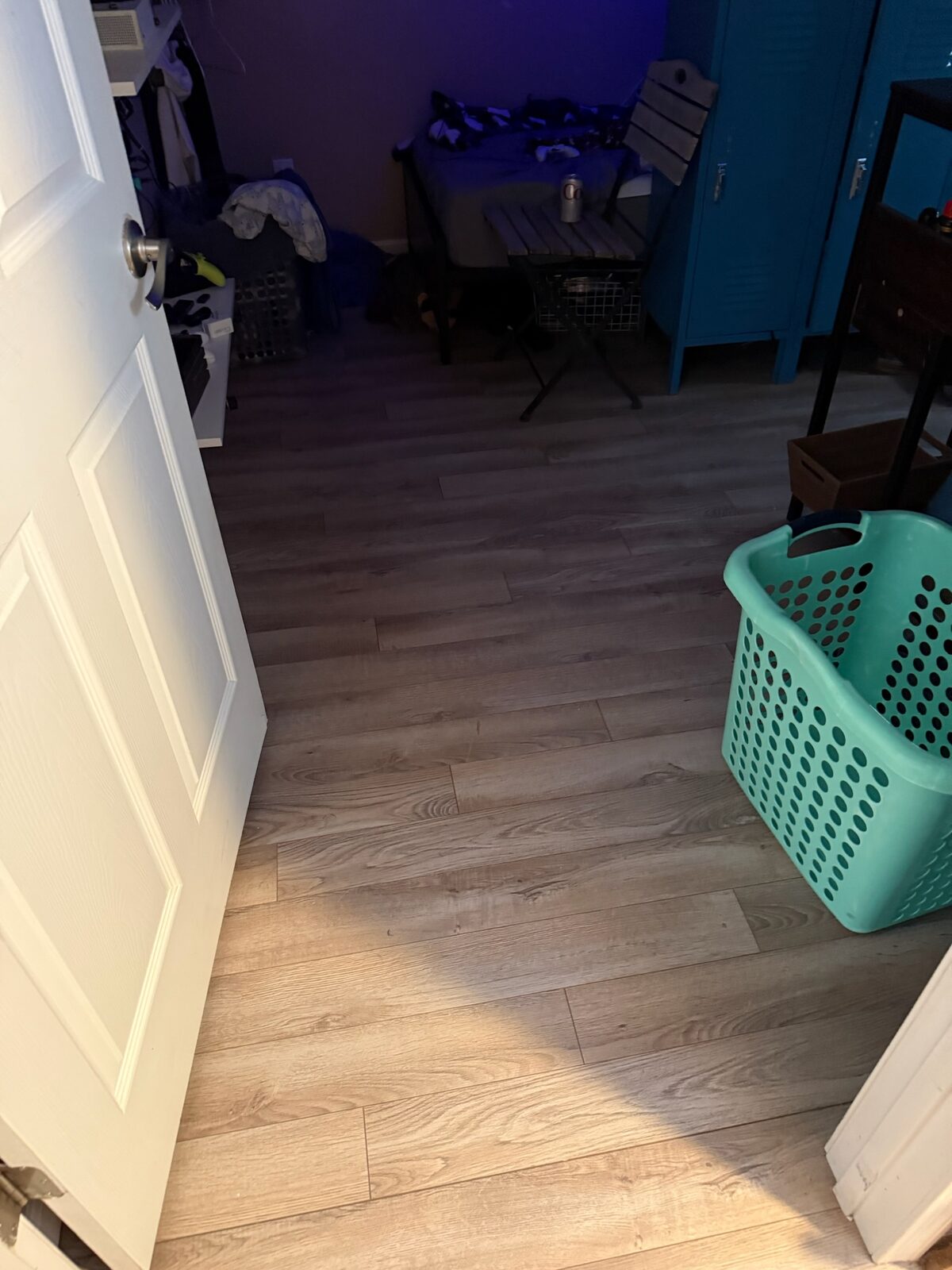
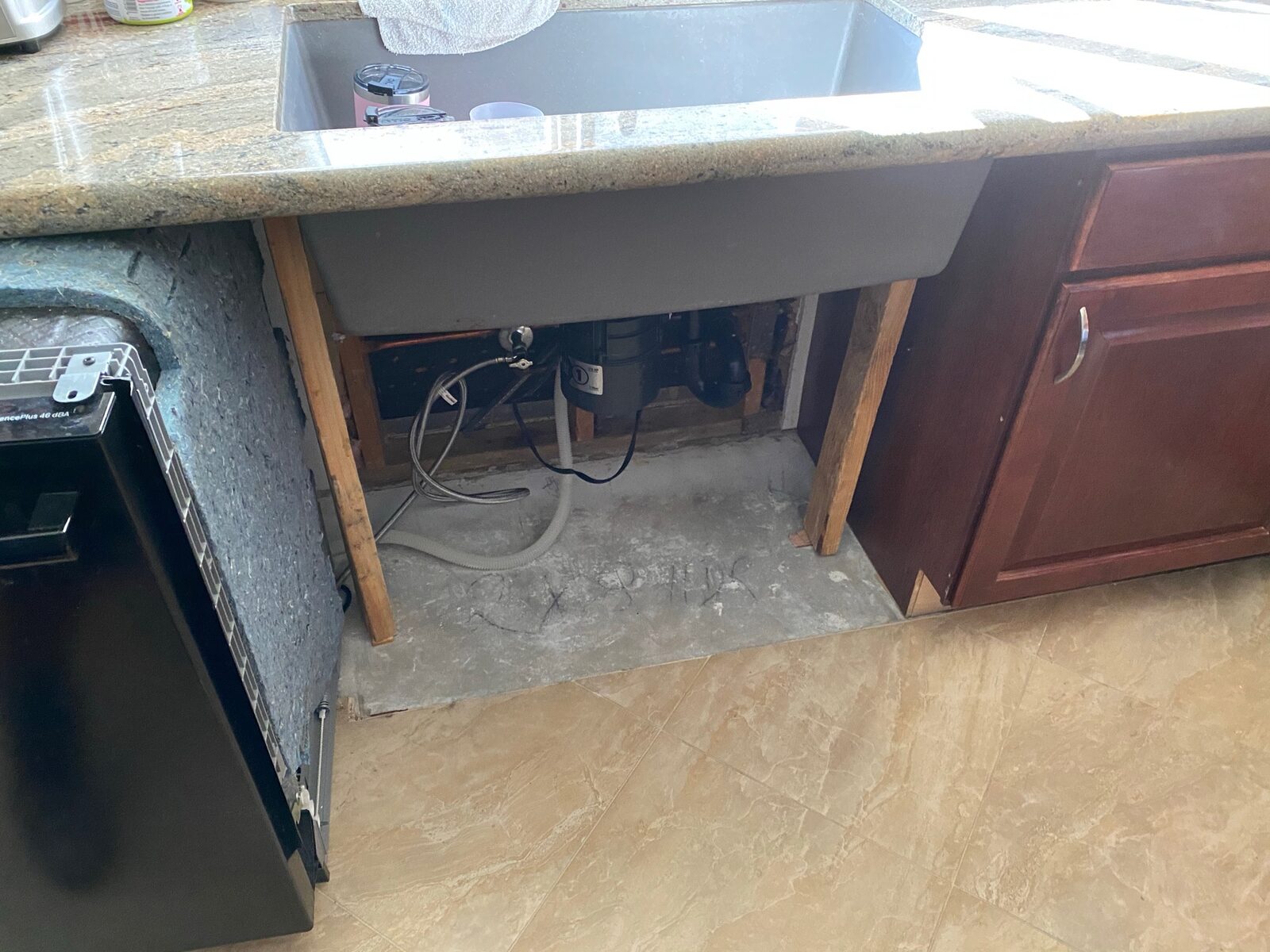
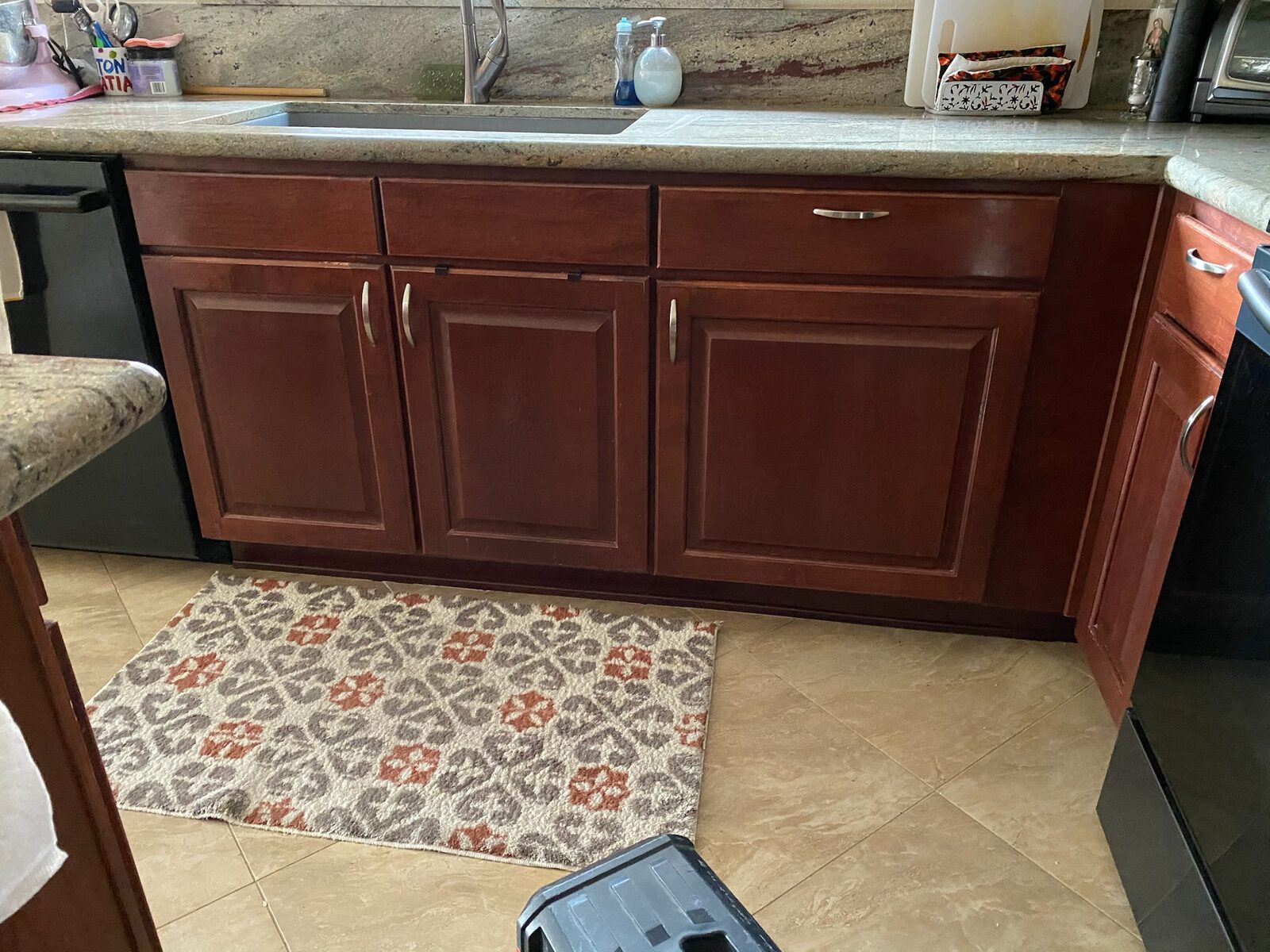
Residential reconstruction work by members of our team. See the full gallery →
More from Gold Water Fire
Abrasive Cleaning Methods for Soot on Framing and Masonry
A look at how abrasive cleaning methods remove soot from wood framing and masonry after a fire, and when each method fits the material.
AC Condensate Line Clogs & the Water Damage They Cause in Phoenix Homes
Why Phoenix AC condensate lines clog every summer, what the water damage looks like, and how to find the source before the ceiling stain spreads again.
Actual Cash Value vs Replacement Cost: Why Your Check Might Not Match the Repair Bill
Confused why your insurance check seems short after fire or water damage? Learn the difference between actual cash value and replacement cost coverage.
Talk it through before the walls close up
If you are in the Phoenix metro area and trying to decide where the new work should stop and the old work should start, we are glad to walk the room and talk about it plainly. Call Gold Water Fire at (480) 999-3339 or email Help@goldwaterfire.com. AZ ROC #264344, KB-2.
Call (480) 999-3339Reconstruction & Rebuild · Water Damage Restoration · Fire Damage Restoration · Contact Gold Water Fire · About Our Team