
Water Damage Restoration in Surprise, AZ
You have already done a lot on your own. You shut the valve off, you pulled the towels out of the linen closet, you moved the boxes off the garage floor, and you ran a box fan at the baseboard all night because it seemed like the right thing to do. And this morning the carpet in the hallway is still cool to the touch, and there is a smell that was not there yesterday. That is not a sign you did it wrong. Water in an Arizona house goes quiet fast, the surface dries in the dry air while the pad and the bottom plate of the wall hold onto it, and there is no way to talk yourself out of what you are noticing.
Water Damage Restoration in Surprise, AZ
What water damage tends to look like in Surprise homes
Surprise grew in waves, and the wave matters. West of Bell Road you have the original townsite and older ranch-era houses with cast iron and galvanized supply lines that have been in Arizona ground for decades. Then there is the Sun City Grand and Sun City West side, a huge block of 1990s and early-2000s single-story homes on slab, many built with copper supply lines run under the slab or through the attic. And then Marley Park, Asante, Sarival and the newer growth north and west of Loop 303, mostly 2000s and 2010s builds with PEX, plastic supply lines to toilets and fridges, and second-floor laundry rooms. Each era fails differently. Slab-era Sun City homes give you the classic pinhole slab leak: a warm spot on the floor, a water bill that climbs for no reason, and baseboards that swell before anyone sees standing water. Newer two-story homes off the 303 tend to fail at the upstairs water heater pan, the washing machine box, or a burst braided supply line, and gravity does the rest, running down through the ceiling into the great room. Older townsite houses fail at the sewer line and at aging water heaters in unconditioned garages. The other Surprise-specific factor is how much of the housing stock is seasonal. A lot of homes here sit empty from May through October while owners are back north. A supply line that lets go in June can run for weeks in an unoccupied house before a neighbor or a property watch service notices.
Monsoon, hard water, and the summer empty-house problem
Monsoon season, roughly July through September, is the loud version. Microbursts push rain sideways under tile, blow it through roof jacks and gable vents, and back it up at scuppers and roof drains on flat-roofed sections. On the far west side of the Valley the storms often arrive with dust first, which cakes on roofs and clogs the drainage path so the next inch of rain has nowhere to go. Water gets into the attic, soaks the insulation, and shows up two rooms away from where it actually entered. The quiet version is hard water. Groundwater in the northwest Valley is mineral heavy, and scale is rough on water heaters, angle stops, and toilet fill valves. Angle stops that have not been turned in fifteen years often will not seat again once you do turn them. Water softener systems, which are common here, add their own failure points at the bypass valve and drain line. And then there is heat. A garage in Surprise in August routinely runs well past what a rubber washing machine hose was designed for. Braided stainless lines and plastic ice maker tubing get brittle in that environment. If your house sits empty over the summer, the failure and the discovery can be months apart.
What proper drying actually involves
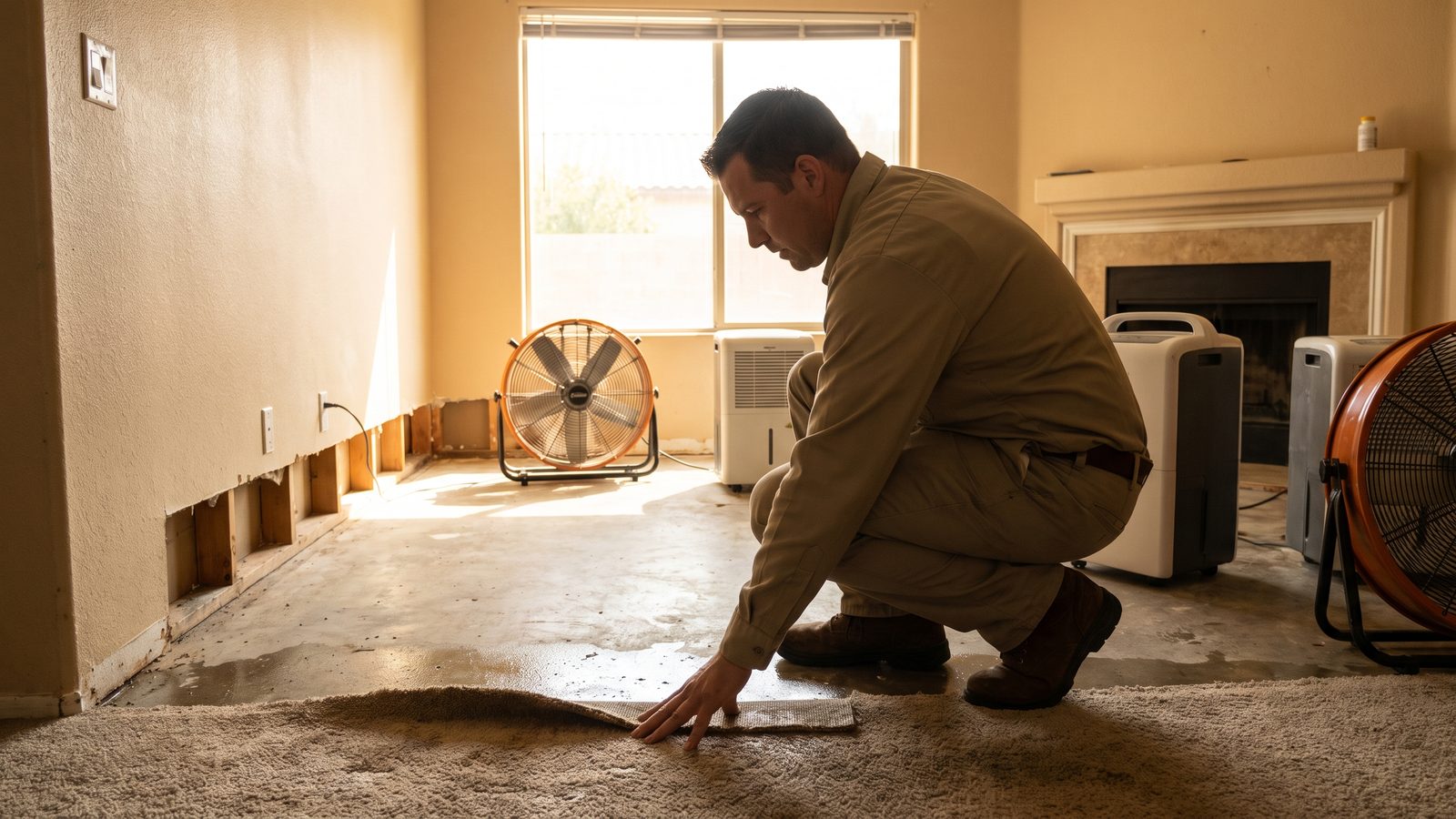
Restoration is not fans in a room. In general practice, the work runs in a sequence, and skipping steps is where jobs go wrong. First, find the water. Moisture meters and thermal imaging map how far it traveled, because water wicks up drywall and runs along framing and under cabinet toe kicks. The wet area is almost always bigger than the visible stain. Second, classify it. Clean supply water, gray water from a washing machine or dishwasher, and black water from a sewer backup call for different handling. Category three water means porous materials that absorbed it come out, they do not get dried in place. Third, extract and remove. Standing water gets pulled, and non-salvageable material goes: carpet pad, wet insulation, saturated drywall cut back above the water line. Cabinets sometimes get holes drilled in the toe kick so air can move into the void underneath. Fourth, dry with equipment sized to the space. Air movers create surface evaporation, dehumidifiers pull that moisture out of the air, and readings get logged daily until the affected materials match a dry standard rather than just feeling dry to a hand. Fifth, deal with what got left behind, then rebuild. Drywall, texture, paint, baseboard, flooring and cabinetry all have to go back. That is a different trade than drying, and it is worth asking upfront whether the company doing the drying can also do the reconstruction, or whether you will be hiring a second contractor later. More detail on the full process is on our water damage restoration page.
Why handing this one off is a reasonable call
There is a point where the honest answer is that the tools decide the outcome. You cannot see inside a wall cavity with your eyes, and a box fan does not remove moisture from a house, it just moves it around. The difference between a wall that dries and a wall that grows something is usually a few days and the right equipment, and by the time it is visible the fix is much larger. Gold Water Fire is a licensed Arizona contractor, AZ ROC #264344, KB-2. We were founded by Jim Bennett and Jake Taylor, and Brandon Gurr, our Construction Manager, leads the rebuild side, so the drying and the putting-back-together are handled by one company rather than handed off. Kristine runs the office, Brooke handles water and mitigation scheduling, and Johnny leads the reconstruction crew. We work the full Phoenix metro area, from NW Peoria and SE Avondale out to SW San Tan Valley and NW Apache Junction, and areas past that, so Surprise, Sun City West, El Mirage and the 303 corridor are squarely in what we cover. If you want to know more about who you would be dealing with, that is on our about page. If the water came with smoke or a heat source, see fire damage restoration.
Questions people ask us
My carpet feels dry now. Do I still need someone to look at it?
Possibly. Arizona's dry air pulls surface moisture off fast, which makes carpet face fibers feel dry while the pad underneath and the bottom few inches of drywall are still holding water. Moisture meters read what your hand cannot. If there is any odor, any baseboard swelling, or any staining that changed shape, it is worth having the area mapped rather than assumed.
How do I know if I have a slab leak in a Sun City area home?
Common signs in slab-on-grade homes include a warm or damp spot on the floor, the sound of running water when everything is shut off, an unexplained jump in the water bill, and baseboards or flooring lifting near one wall. Older copper supply lines run under the slab are the usual culprit in that era of construction. Confirming it takes leak detection, and the repair and the drying are two separate pieces of work.
My Surprise house is empty for the summer. What can I do?
General good practice for seasonal homes: shut the main water supply off at the street or the house valve when you leave, drain the water heater or turn it to vacation mode, and shut off the supply to the ice maker and washing machine. Have someone physically walk the house periodically, since a leak alarm only helps if a person is around to respond. Braided and plastic supply lines in a hot garage are the most common failure point in unoccupied Valley homes.
Do you handle the repairs after drying, or just the drying?
Both. Gold Water Fire does water damage restoration and reconstruction, and our Construction Manager Brandon Gurr leads the rebuild work. That means drywall, texture, paint, baseboard, flooring and cabinetry can be handled by the same company that did the mitigation. Details are on the reconstruction page.
The standard our team works to
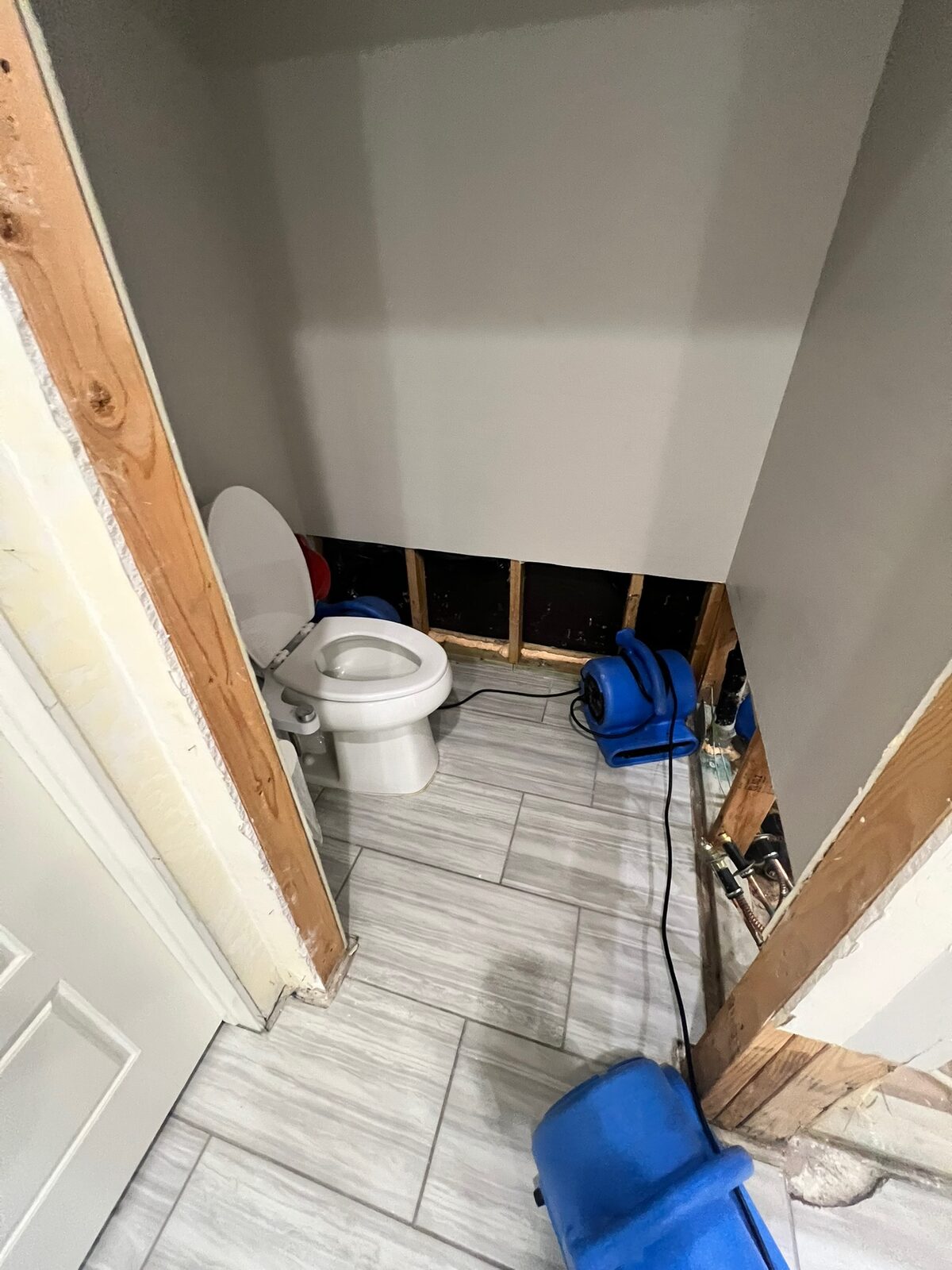
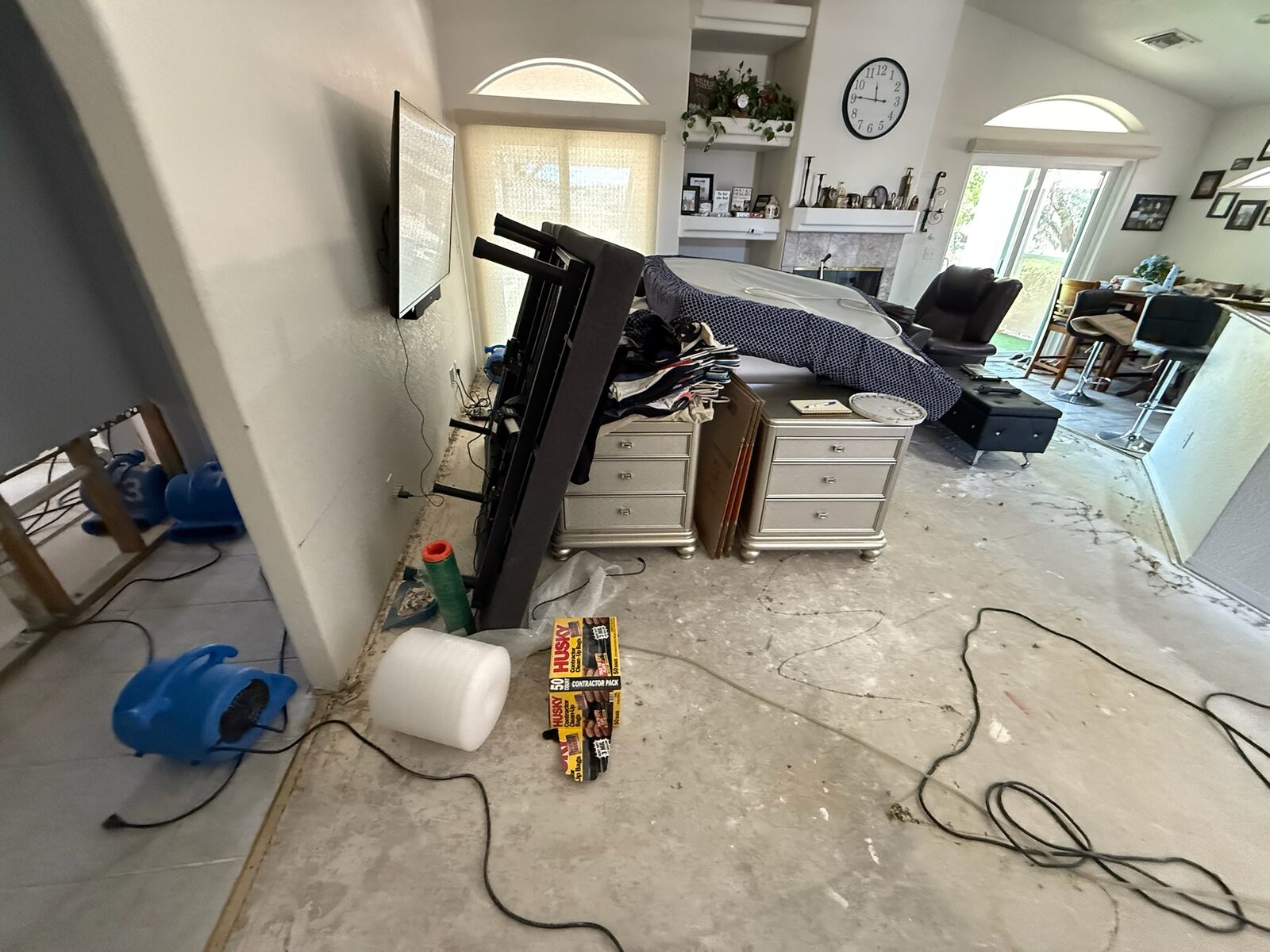
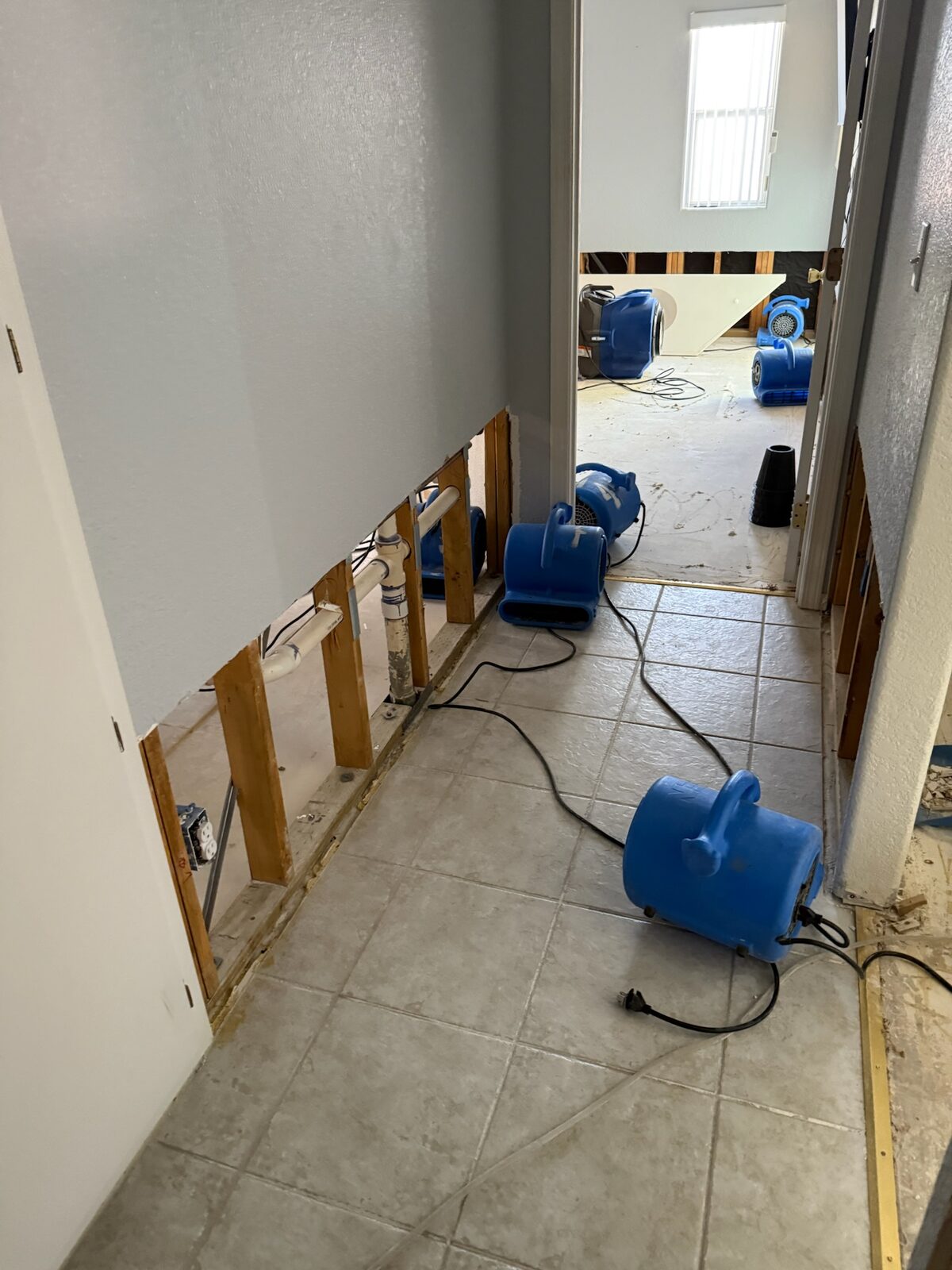
Residential reconstruction work by members of our team. See the full gallery →
More from Gold Water Fire
Fire Damage Restoration in Apache Junction, AZ
Fire and smoke damage restoration for Apache Junction homes, from board-up and soot cleanup through rebuild. Gold Water Fire, AZ ROC #264344. Call (480) 999-3339.
Reconstruction & Rebuild in Apache Junction, AZ
Rebuilding a damaged Apache Junction home after water or fire: framing, drywall, stucco, cabinets and flooring put back by Gold Water Fire. Call (480) 999-3339.
Water Damage Restoration in Apache Junction, AZ
Water damage restoration for Apache Junction homes, from slab leaks and monsoon flooding to failed water heaters. Call Gold Water Fire at (480) 999-3339.
Call when you are ready to stop guessing
If you have been watching a wet spot and hoping it resolves on its own, a call costs you nothing and settles the question. Reach Gold Water Fire at (480) 999-3339 or Help@goldwaterfire.com. We are at 221 E Willis Rd Ste 8, Chandler, AZ 85286, and we cover Surprise and the rest of the Phoenix metro area.
Call (480) 999-3339Water Damage Restoration · Reconstruction & Rebuild · Fire Damage Restoration · About Gold Water Fire · Contact