
Water Damage Restoration in Scottsdale, AZ
You have been at this a while now. Towels in the hallway, a shop vac running, fans borrowed from the garage pointed at a baseboard that still feels cool to the back of your hand. Maybe you found it fast, maybe you came home from a weekend away to a floor that had already gone soft. Either way you have been the one making every call, moving every box, and deciding on your own whether that dark line creeping up the drywall is getting worse or whether you are imagining it. That is a lot to carry while also trying to figure out what your policy covers.
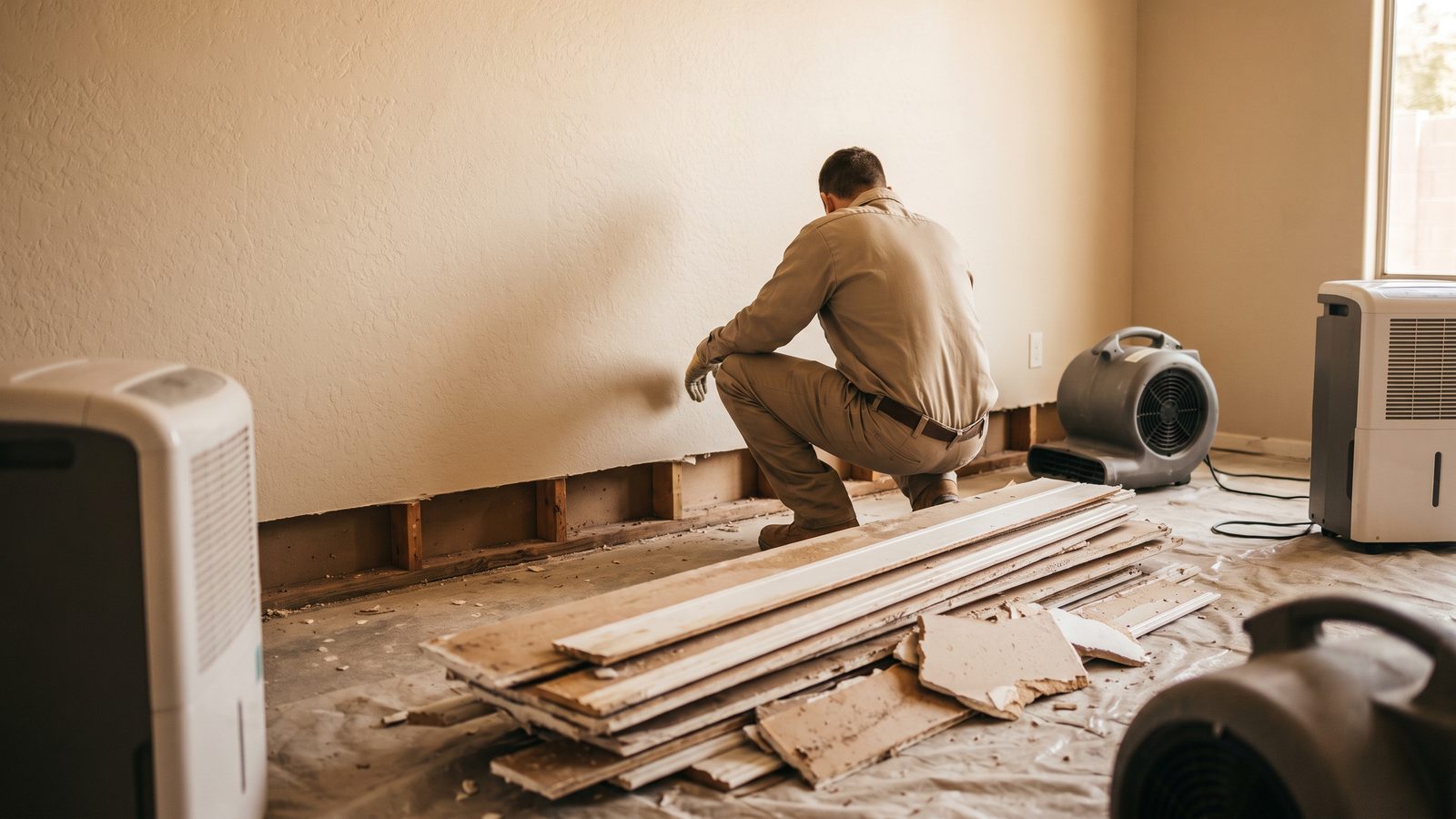
Water Damage Restoration in Scottsdale, AZ
What actually causes water damage in Scottsdale homes
Scottsdale is not one housing stock, it is several, and each one fails differently. South Scottsdale and the Old Town neighborhoods are heavy with 1950s and 1960s ranch homes, many originally plumbed in galvanized steel and later patched with copper. Copper in this valley is on a clock: the water is hard and mineral-heavy, and slab-routed copper lines eventually develop pinhole leaks that weep under the concrete for weeks before anyone notices a warm spot on the tile or an unexplained jump in the water bill. The 1980s and 1990s tracts through central and North Scottsdale brought polybutylene and early plastic supply fittings, plus the first generation of second-story laundry rooms and upstairs bathrooms, where a failed washing machine hose or toilet supply line drains through the ceiling below before it touches a floor drain. Newer North Scottsdale custom homes near the McDowell Sonoran Preserve bring their own version: long runs to detached casitas and guest wings, tankless units and water softeners in unconditioned garages, and irrigation and pool equipment on the uphill side of the house.
Monsoon season, July through September
Scottsdale sits where washes come down out of the McDowells, and an inch of rain in twenty minutes does not soak in. Water finds low patios, sunken entries, and garages that sit below grade. Flat and low-slope roofs, common on the desert-contemporary homes throughout Scottsdale, hold standing water at parapets and scuppers, and a clogged scupper is the most common way monsoon water ends up inside a ceiling.
Summer heat on hoses and fittings
Attic and garage temperatures here can far exceed the rest of the house for months at a time. Rubber washing machine hoses, water heater flex connectors, and refrigerator ice maker lines get brittle. Failures cluster in summer and cluster in homes left empty while owners are away, which in Scottsdale is a real seasonal pattern.
Landscape and pool equipment
Decomposed granite yards drain toward the house more often than people expect, especially after regrading or new hardscape. Pool backwash lines, drip irrigation manifolds, and mainline breaks push water against the stem wall, and the first sign inside is often a musty smell in a closet on that exterior wall.
Vacant and part-time homes
A leak in an occupied house is caught in hours. A leak in a home closed up for the summer runs until someone opens the door. That difference is usually the difference between drying an area and rebuilding it, which is why shutting off the main and the water heater before an extended absence matters here more than in most places.
Why drying a Scottsdale home is not just running fans
Water moves by capillary action. It climbs drywall, wicks into the paper backing of insulation, travels along the underside of subfloor, and slides between a tile setting bed and the slab where no fan will ever reach it. The surface can read dry to the touch while the material behind it is still saturated, and in a warm home that hidden moisture is what feeds microbial growth within a couple of days. Proper mitigation means finding the actual boundary of the wet area with moisture meters and thermal imaging rather than guessing, removing what cannot be dried in place, controlling humidity with dehumidification so the water leaving the materials does not simply redeposit somewhere else, and monitoring readings until the numbers match unaffected areas of the same house. Some things do not come back: wet fiberglass batt insulation, particleboard cabinet bases, laminate flooring, and drywall that has been submerged. Solid hardwood, framing, and concrete usually can be saved if the drying starts before the material breaks down. There is also the category question. Clean supply-line water, gray water from an appliance or shower drain, and sewage backup each require a different scope of work, different protective handling, and different decisions about what stays. Getting that call wrong at the beginning is what leads to a floor being replaced twice.
What it looks like to hand this off
When you call, you talk to a real person and describe what you are seeing. We ask where the water came from, how long it has been there, and what you have already done, because all three change the plan. Brooke handles water and mitigation scheduling and will tell you honestly when we can be at your Scottsdale address rather than giving you a number designed to end the call. Kristine keeps the paperwork side moving, including the documentation your insurance adjuster is going to ask for: moisture readings, photos of affected materials, and a scope that matches what was actually done. We document as we go so that you are not the one reconstructing a timeline from memory weeks later. And if the drying reveals that walls, cabinets, flooring, or ceilings have to be rebuilt, that work does not get handed to a stranger. Brandon Gurr leads our reconstruction side with Johnny running the crew, so the same company that opened your wall closes it. Gold Water Fire is licensed in Arizona under AZ ROC #264344, KB-2. Read more about how we approach water damage restoration, what is involved in reconstruction and rebuild, or who we are.
Scottsdale and the surrounding area
We work throughout Scottsdale, from the Old Town and south Scottsdale neighborhoods up through McCormick Ranch, Gainey Ranch, McDowell Mountain Ranch, DC Ranch, and the north Scottsdale communities toward the preserve, plus neighboring Paradise Valley, Fountain Hills, Cave Creek, Tempe, and Mesa. Our shop is in Chandler at 221 E Willis Rd Ste 8, and we cover the wider Phoenix metro area, roughly from northwest Peoria across to southeast Avondale and down through San Tan Valley and Apache Junction, including areas beyond that.
Questions people ask us
How soon does water damage need to be addressed?
Sooner is meaningfully better. Microbial growth on wet organic materials like drywall paper and wood generally begins within a couple of days in a warm home, and clean water that sits long enough stops being treated as clean water. Even if you cannot get a crew out immediately, stopping the source, removing standing water, and getting air moving buys you real ground. Call (480) 999-3339 and we will talk through what to do while you wait.
Will my insurance cover this?
That depends on your policy and the cause of the loss, and we are not the ones who make that determination. What we can do is document the loss the way an adjuster needs to see it, with moisture readings, photographs of affected materials, and a written scope of the work performed. That documentation is what most claim disputes come down to.
Do I have to tear out my flooring?
Not always. Solid hardwood and tile over a slab can often be dried in place if drying starts early and the setting bed can be reached. Laminate, engineered floors with swollen edges, and carpet pad that absorbed contaminated water usually cannot be saved. We take moisture readings before recommending removal rather than pulling material out by default.
Can you also repair the damage, not just dry it out?
Yes. Drywall, insulation, cabinetry, flooring, paint, and trim that come out during mitigation get put back by our own reconstruction crew, led by Brandon Gurr with Johnny as team lead. You can read more on our reconstruction page.
The standard our team works to
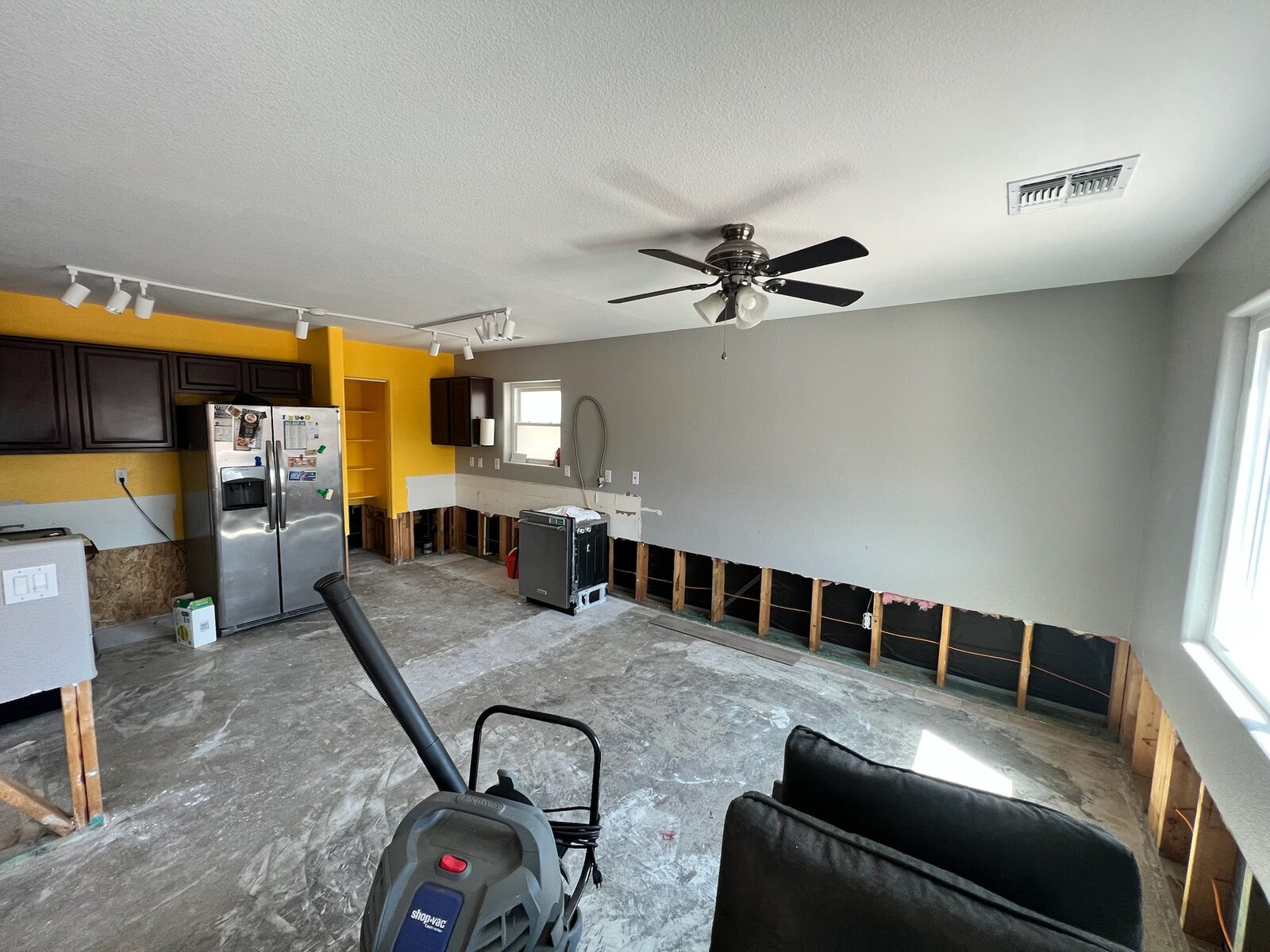
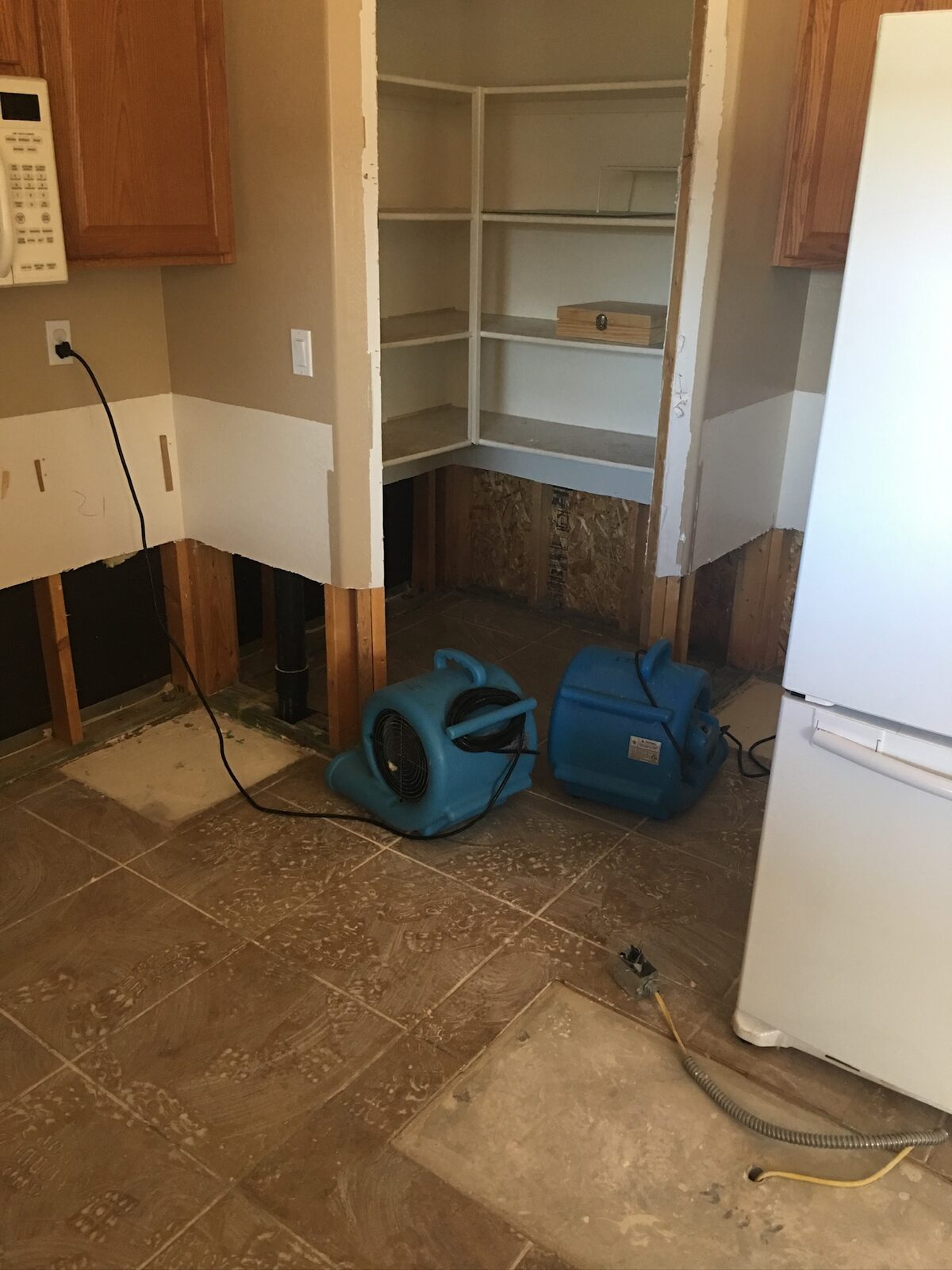
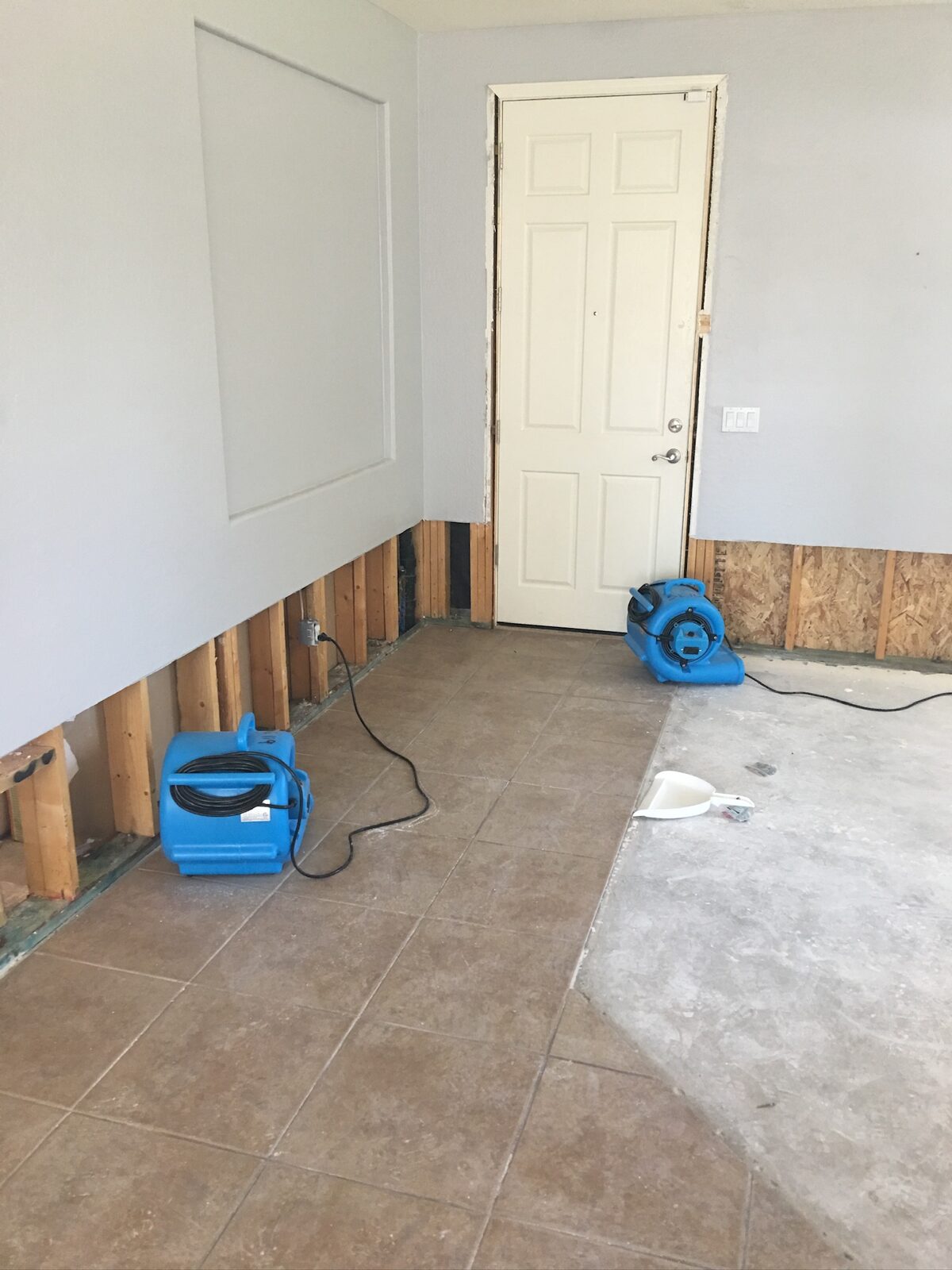
Residential reconstruction work by members of our team. See the full gallery →
More from Gold Water Fire
Fire Damage Restoration in Apache Junction, AZ
Fire and smoke damage restoration for Apache Junction homes, from board-up and soot cleanup through rebuild. Gold Water Fire, AZ ROC #264344. Call (480) 999-3339.
Reconstruction & Rebuild in Apache Junction, AZ
Rebuilding a damaged Apache Junction home after water or fire: framing, drywall, stucco, cabinets and flooring put back by Gold Water Fire. Call (480) 999-3339.
Water Damage Restoration in Apache Junction, AZ
Water damage restoration for Apache Junction homes, from slab leaks and monsoon flooding to failed water heaters. Call Gold Water Fire at (480) 999-3339.
You do not have to keep guessing at this
Tell us what you are seeing and we will tell you what it likely means and what happens next. Call (480) 999-3339 or email Help@goldwaterfire.com. Gold Water Fire, 221 E Willis Rd Ste 8, Chandler, AZ 85286. AZ ROC #264344, KB-2.
Call (480) 999-3339Water Damage Restoration · Reconstruction & Rebuild · Fire Damage Restoration · About Gold Water Fire · Contact Us