
Water Damage Restoration in Mesa, AZ
You have been down on your hands and knees with towels since sometime last night, and the carpet at the edge of the hallway is still cold and dark when you press it. Maybe you found the shutoff, maybe you didn't. Either way you have been doing math in your head about the baseboards, the insurance deductible, the closet full of things that were on the floor. It is a strange kind of tired, not just the mopping, but the part where you keep checking the same spot to see whether it is getting better or worse, and you cannot actually tell.
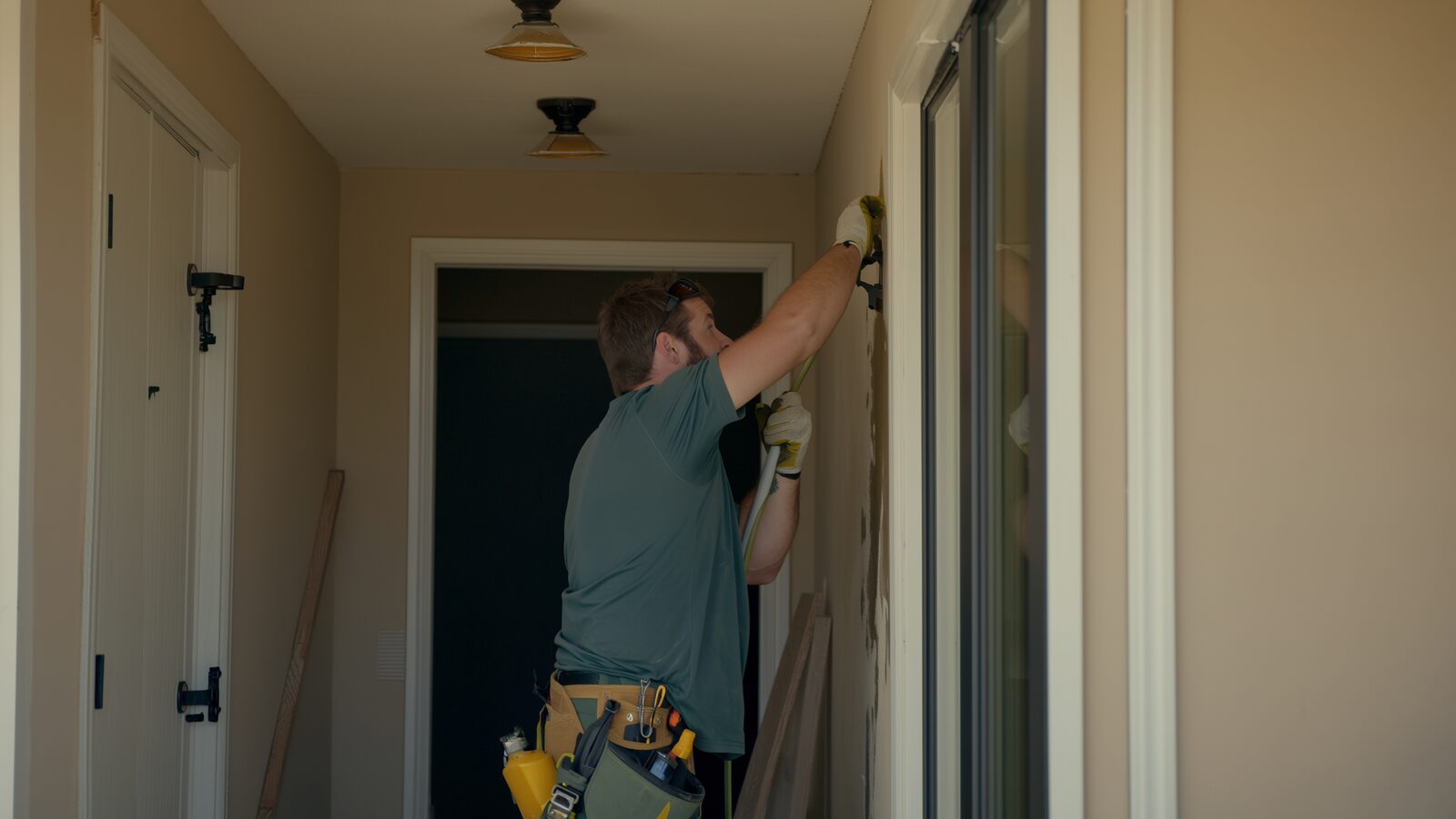
Water Damage Restoration in Mesa, AZ
Why Mesa homes take on water the way they do
Mesa's housing stock spans a wide range, and the era of a house tells you a lot about how water moves through it. Large parts of west and central Mesa near Main Street and the Mesa Grande area were built mid-century, when homes were commonly put on post-tension or standard concrete slabs with copper supply lines routed underneath. Decades of Valley water chemistry and soil movement wear pinholes in that copper, and a slab leak announces itself quietly: a warm patch of tile, a water bill that jumped for no reason, a hairline crack in grout that stays damp. East Mesa and the Red Mountain, Superstition Springs and Eastmark corridors are largely 1980s-through-recent construction, where the more common failures are angle stops under sinks, braided washing machine hoses, water heaters in garages or interior closets, and refrigerator ice-maker lines that let go behind a cabinet no one opens. Then there is monsoon season. From roughly July into September, Mesa gets storms that dump an inch of rain in twenty minutes onto flat and low-slope roofs that spent the previous four months baking at 110-plus degrees. Foam and built-up roofs on older Mesa homes crack under that heat cycle; scuppers and canales clog with palm debris and gravel; wind-driven rain finds the flashing on a patio-to-house tie-in. The water shows up on a ceiling in the middle of the house, nowhere near where it actually got in. Dust storms ahead of the rain make it worse by loading roof drains with fine silt that turns to mud the moment it's wet.
What is actually happening inside the wall right now
Drywall wicks water upward well past the visible line. A spill that looks like it stopped four inches up the baseboard has usually traveled higher inside the sheet, and the paper facing on the back side stays wet long after the painted side feels dry to your hand. Carpet is worse in a way that fools people: the face fibers dry fast in Arizona air, so the room stops feeling wet, while the pad underneath and the tack strip stay saturated for days. In a Mesa home, low indoor humidity is not the advantage it seems. Surface evaporation is quick, so the outside of everything dries and the moisture inside cabinet kick spaces, under tile with a mortar bed, and in wall cavities behind insulation just sits. That trapped moisture is where microbial growth starts, usually inside the first couple of days depending on temperature and how much material is holding water. Proper drying is not fans in a room. It is finding every wet material with meters, deciding what can be dried in place and what has to come out, and controlling the humidity in the space so the water leaving the materials actually leaves the house instead of moving into the next assembly. A few things that help before anyone arrives: shut the water off at the meter or the angle stop if you know where it is, kill power to any circuit near standing water, get contents off wet flooring, and take photos of everything as it looks right now, including the source, before anything gets moved. That documentation matters to your insurance carrier later.
What Gold Water Fire does in a Mesa house
Gold Water Fire handles the whole path: locating and stopping the source of the water, extracting it, setting up drying equipment and monitoring it until the readings say the structure is dry, and then putting the house back together. That last part matters more than people expect. Plenty of water losses end with a homeowner standing in a clean, dry, gutted room with no idea who is going to hang the drywall, match the tile, and rebuild the cabinet bank. Brandon Gurr, our Construction Manager, leads the reconstruction side, and Johnny runs our reconstruction crew, so the rebuild is not handed off to a stranger. Brooke handles water and mitigation scheduling, and Kristine keeps the paperwork and communication moving so you are not the one chasing updates. The company was founded by Jim Bennett and Jake Taylor, and we are licensed in Arizona under AZ ROC #264344 · KB-2. Read more about our water damage restoration process and the reconstruction and rebuild work that follows, or learn about the people on this team.
Mesa and the surrounding area
We work throughout Mesa, from the older neighborhoods around downtown and Mesa Grande out to Dobson Ranch, Red Mountain, Las Sendas, Superstition Springs, Eastmark and the far east side near the Apache Junction line. Our shop is in Chandler at 221 E Willis Rd Ste 8, which puts us a short run up the 101 or the 60 to most of Mesa. We cover the full Phoenix metro area: Gilbert, Tempe, Chandler, Queen Creek, San Tan Valley, Apache Junction, Scottsdale, Fountain Hills, Phoenix, Glendale, Peoria, Surprise, Avondale, Goodyear and the outlying areas beyond. If your house also has fire or smoke damage, we handle that as well.
Questions people ask us
How do I know if I have a slab leak in my Mesa home?
Common signs include a warm or unusually damp spot on tile flooring, the sound of running water when every fixture is off, a water meter that keeps turning with the house shut down, an unexplained jump in your water bill, or grout and baseboards that stay damp in one area. Older Mesa homes with copper supply lines routed under the slab are the most common candidates. A plumber locates and repairs the line; the drying and the rebuild of whatever had to be opened up is the part we handle.
My ceiling stained after a monsoon storm but it is dry now. Do I still need someone to look at it?
Usually yes. A stain means water got past the roof assembly and sat in the ceiling cavity long enough to soak through drywall and paint. The surface can feel dry while insulation above it is still holding moisture, and the leak path is often several feet from where the stain appears. Moisture meters and, when needed, thermal imaging show whether the cavity is actually dry and where the water entered.
Will my homeowners insurance cover this?
That depends on your policy and the cause of loss, and only your carrier can answer it. Generally, sudden and accidental discharge (a burst supply line, a failed water heater, an overflowing appliance) is treated differently than long-term seepage or a maintenance issue. Photograph everything before you move it, keep the failed part if you can, and report the claim promptly. We document the loss thoroughly and work directly with adjusters.
How long does drying take?
It depends on how much water there was, what materials absorbed it, and how long it sat before extraction. The honest answer is that equipment stays until moisture readings say the materials are dry, not until a set number of days has passed. We monitor the readings and tell you where things stand each time we check.
The standard our team works to
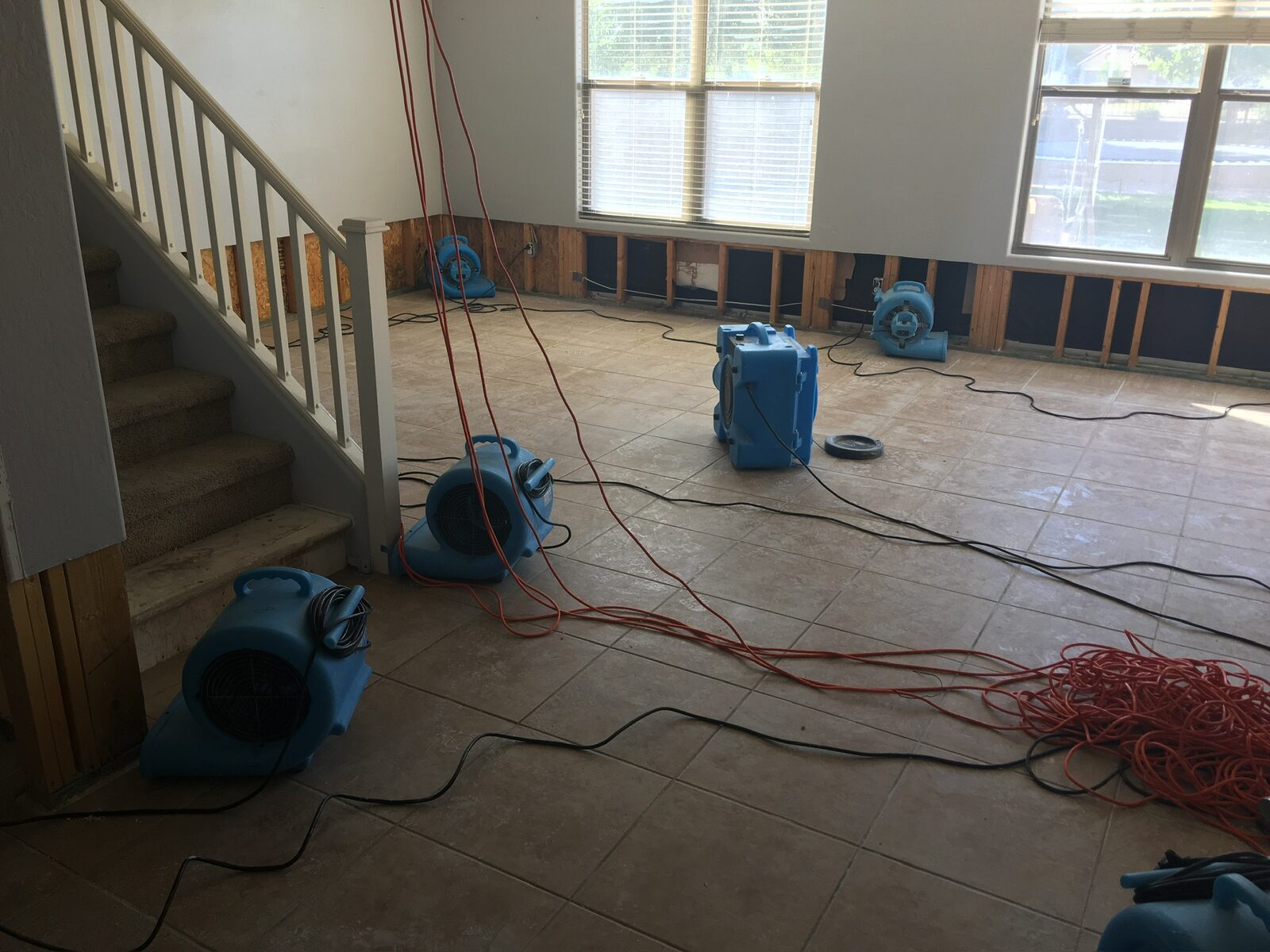
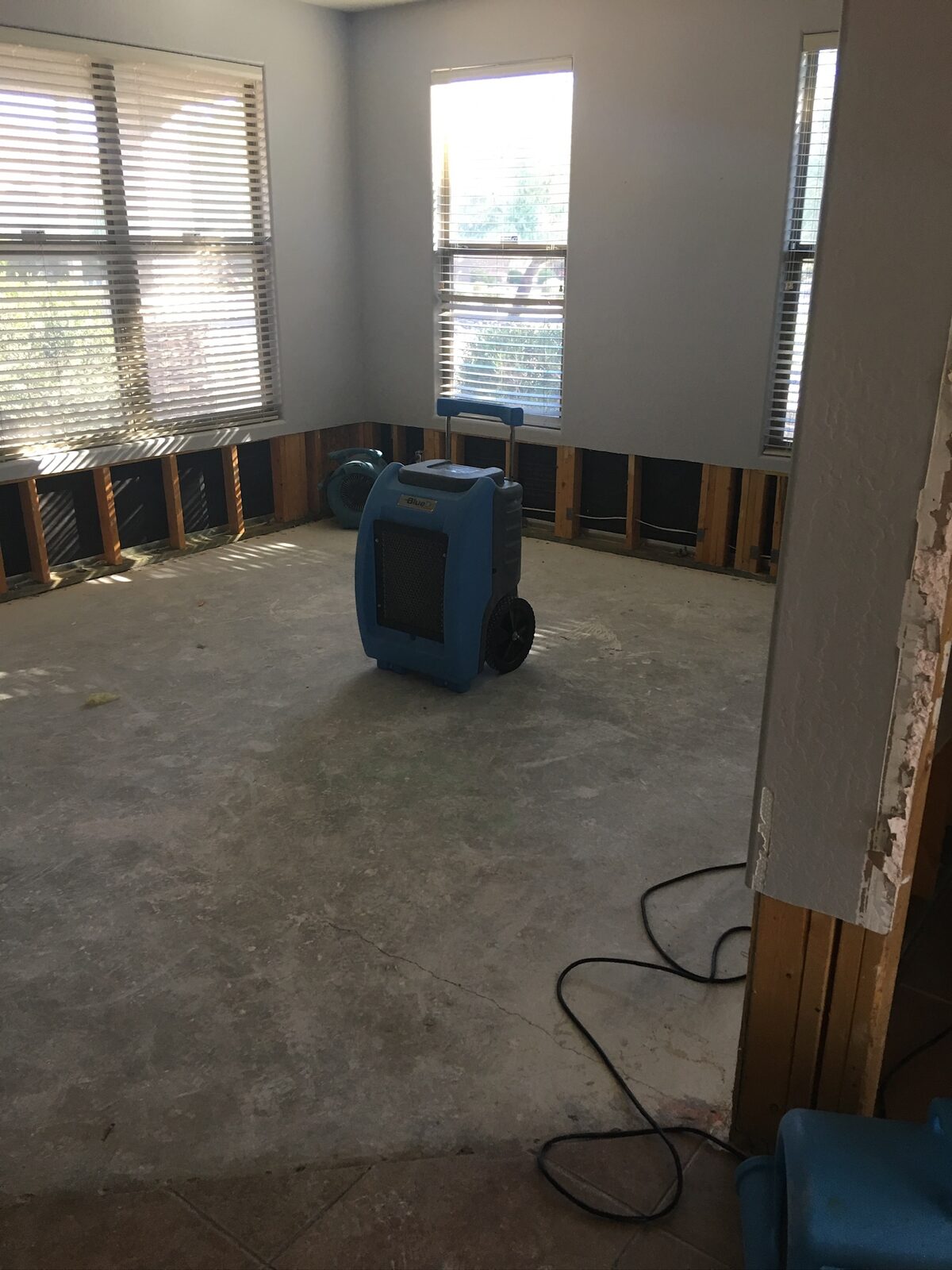
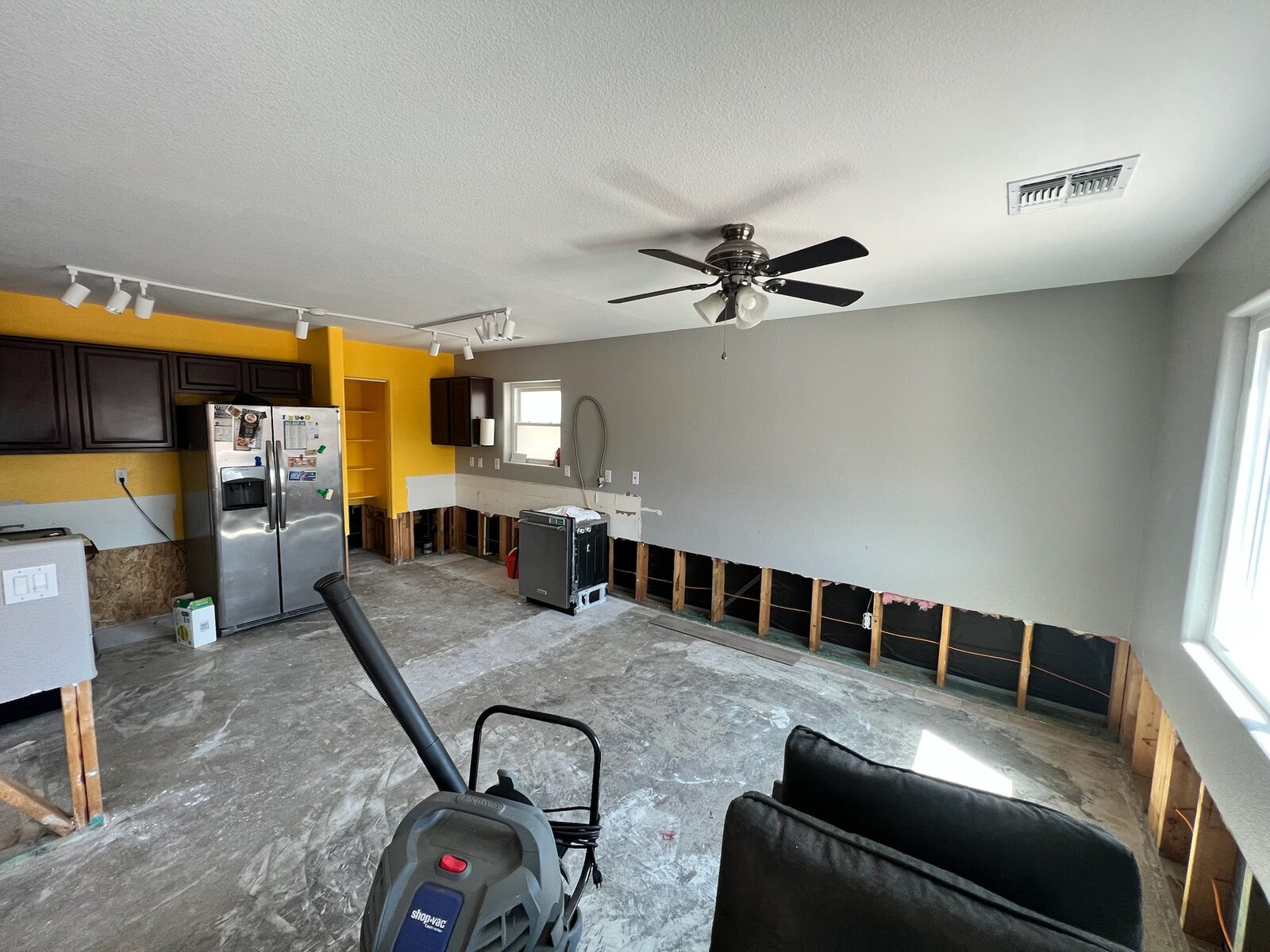
Residential reconstruction work by members of our team. See the full gallery →
More from Gold Water Fire
Fire Damage Restoration in Apache Junction, AZ
Fire and smoke damage restoration for Apache Junction homes, from board-up and soot cleanup through rebuild. Gold Water Fire, AZ ROC #264344. Call (480) 999-3339.
Reconstruction & Rebuild in Apache Junction, AZ
Rebuilding a damaged Apache Junction home after water or fire: framing, drywall, stucco, cabinets and flooring put back by Gold Water Fire. Call (480) 999-3339.
Water Damage Restoration in Apache Junction, AZ
Water damage restoration for Apache Junction homes, from slab leaks and monsoon flooding to failed water heaters. Call Gold Water Fire at (480) 999-3339.
You do not have to figure out the next step alone
Call (480) 999-3339 or email Help@goldwaterfire.com and tell us what you are looking at. We will ask a few questions, tell you what to do right now to limit the damage, and get out to your Mesa home to see it in person.
Call (480) 999-3339Water Damage Restoration · Fire Damage Restoration · Reconstruction & Rebuild · About Gold Water Fire · Contact Us