
Water Damage Restoration in Litchfield Park, AZ
You have already done the hard part alone. You found the water, you shut off the valve, you pulled up what rug you could drag out to the driveway, and you spent last night listening for whether the drip had stopped. Maybe it is a supply line behind a laundry wall, maybe it is a stain on a hallway ceiling that was not there in the spring. Either way, you are now standing in a house you know well, looking at a problem you cannot see the edges of, and the honest answer to "how bad is it" is that you do not know yet. That is not a failure on your part. Water inside a wall assembly is genuinely hard to read from the outside.
Water Damage Restoration in Litchfield Park, AZ
Why Litchfield Park homes take on water the way they do
Litchfield Park is unusual in the West Valley because its housing stock spans nearly a century. The original village core near the Wigwam, laid out in the 1910s and 1920s as a company town for Goodyear's cotton operation, includes homes with plaster over wood lath, cast iron drain lines, and additions layered on across decades. Those older assemblies hold water quietly: plaster can stay intact and look fine while the lath and framing behind it stay wet, and cast iron that has scaled or cracked at a joint tends to weep slowly rather than fail all at once. Then there is the postwar and 1970s-1980s ring, and finally the large 1990s through 2000s subdivisions out toward Dysart, Camelback, and the Palm Valley side, which are post-tension slab-on-grade with copper or PEX supply and, very commonly, a water heater in the garage and a second-floor laundry. Each era fails differently, so the first job on any Litchfield Park loss is figuring out which house you are actually in.
Monsoon, mature trees, and irrigation: the three seasonal drivers
Between roughly mid-June and late September, Phoenix-area storms arrive with wind first and rain second. That order matters. Wind lifts tile and pulls at flashing, then a short, intense downpour finds the opening, which is why so many West Valley ceiling stains show up in July but were caused by a roof detail that had been marginal since spring. Litchfield Park adds two local wrinkles. First, the mature landscape: the old village and the streets around the golf courses have large tamarisks, eucalyptus, palms, and citrus, and heavy monsoon microbursts drop limbs and shed enough debris to plug scuppers and flat-roof drains on the older flat and low-slope sections. Second, flood irrigation and heavy turf watering, still common on the larger lots, keeps soil moisture high right against the foundation, which makes slab-edge moisture and efflorescence on interior slabs easier to trigger and harder to interpret. Winter brings the other pattern: a hard January cold snap ruptures unwrapped hose bibs and exposed garage or exterior supply lines, and those leaks often run for hours before anyone notices.
What competent water mitigation actually involves
Restoration is a sequence, not a single visit. First the source gets stopped and the water gets categorized, because clean supply water, gray water from an appliance or shower drain, and sewage each carry different handling requirements. Next comes mapping: a moisture meter reading at the baseboard is not enough, so wet materials get traced with pin and non-invasive meters and, where appropriate, thermal imaging, out to where readings return to a dry standard for that same material elsewhere in the house. Water travels along the path of least resistance, which in a slab home usually means under the tack strip, along the bottom plate, and into adjacent rooms through the plate penetrations. Then extraction, then controlled drying with air movers and dehumidifiers sized to the affected volume, with cavity drying where wall bays are wet. Materials that cannot be dried in place get removed: wet carpet pad, saturated drywall bottoms, wet insulation, delaminated engineered flooring. Documentation runs alongside all of it, because daily moisture logs and photos are what an insurance adjuster needs to see. Once dry, what was opened has to be put back, and that is a separate scope from drying. You can read more about the drying phase on our water damage page and the rebuild phase under reconstruction.
Slab leaks and pressure-side failures
A hot line under a slab often announces itself as a warm floor spot, a running meter with everything off, or a hissing sound in a quiet house. Locating it before demolition saves the floor you can still keep.
Water heater and laundry failures
Garage water heaters and second-floor laundries are the two most common sources in the newer Litchfield Park subdivisions. A failed supply hose or drain pan can send water into the ceiling below and down the walls before anyone hears it.
Storm and roof intrusion
After a monsoon cell, look at ceiling seams, can-light trims, and the top of interior walls. Water entering high spreads wide before it stains, so the visible mark is usually smaller than the wet area.
Older village-core homes
Plaster, lath, and cast iron need a lighter hand than 1990s drywall. Drying and selective removal here protects original finishes that are difficult and expensive to replicate.
Why handing this off is a reasonable decision
You are not being asked to trust a stranger with your house in the abstract. Gold Water Fire is licensed in Arizona as AZ ROC #264344, KB-2, and works out of 221 E Willis Rd Ste 8 in Chandler, covering the full Phoenix metro area from NW Peoria to SE Avondale, SW San Tan Valley, NW Apache Junction, and outlying areas further than that. Litchfield Park sits well inside that. The company was founded by Jim Bennett and Jake Taylor. Brandon Gurr, our Construction Manager, came out of Gurr Brothers Construction and leads the rebuild side, which matters here because most water losses end with drywall, paint, flooring, cabinetry, or trim needing to go back in, and that work is the same crew rather than a handoff to someone new. Brooke handles water and mitigation scheduling, Kristine runs the office, and Johnny leads the reconstruction team. When you call, you are talking to people whose names you will hear again. If you want the full service detail, see water damage restoration, or read about the team on our about page.
Questions people ask us
Can I just dry it out with fans myself?
Household fans move air but do not remove moisture from the air, so in a closed room the water evaporates out of the material and then condenses back onto something else. Real drying pairs air movement with dehumidification and measures progress against a dry standard. It also matters what is wet: carpet and pad on a slab may dry, while wet drywall bottoms, wet insulation, and swollen engineered flooring usually will not recover no matter how long the fan runs.
How fast does mold become a concern in Phoenix?
Low outdoor humidity here helps, but the inside of a wet wall cavity is its own climate, and standing water plus organic material such as paper-faced drywall creates conditions for growth in a matter of days. The practical answer is that speed matters more than the exact number of hours. Getting the source stopped and the drying started early is the single biggest factor in whether a loss stays small.
Do you handle the repairs after drying, or just the drying?
Both. Mitigation stops the damage and dries the structure, and reconstruction puts the house back, including drywall, texture and paint, flooring, baseboard, and cabinetry. Brandon Gurr leads that reconstruction work. You can see the scope on our reconstruction page.
Will you work with my insurance company?
Yes. Insurers generally want documentation of the source, the affected area, moisture readings over the course of drying, and photos, and that record gets built as the work happens rather than reconstructed afterward. You still own the claim and the policy decisions, and we can talk through what your adjuster is likely to ask for.
The standard our team works to
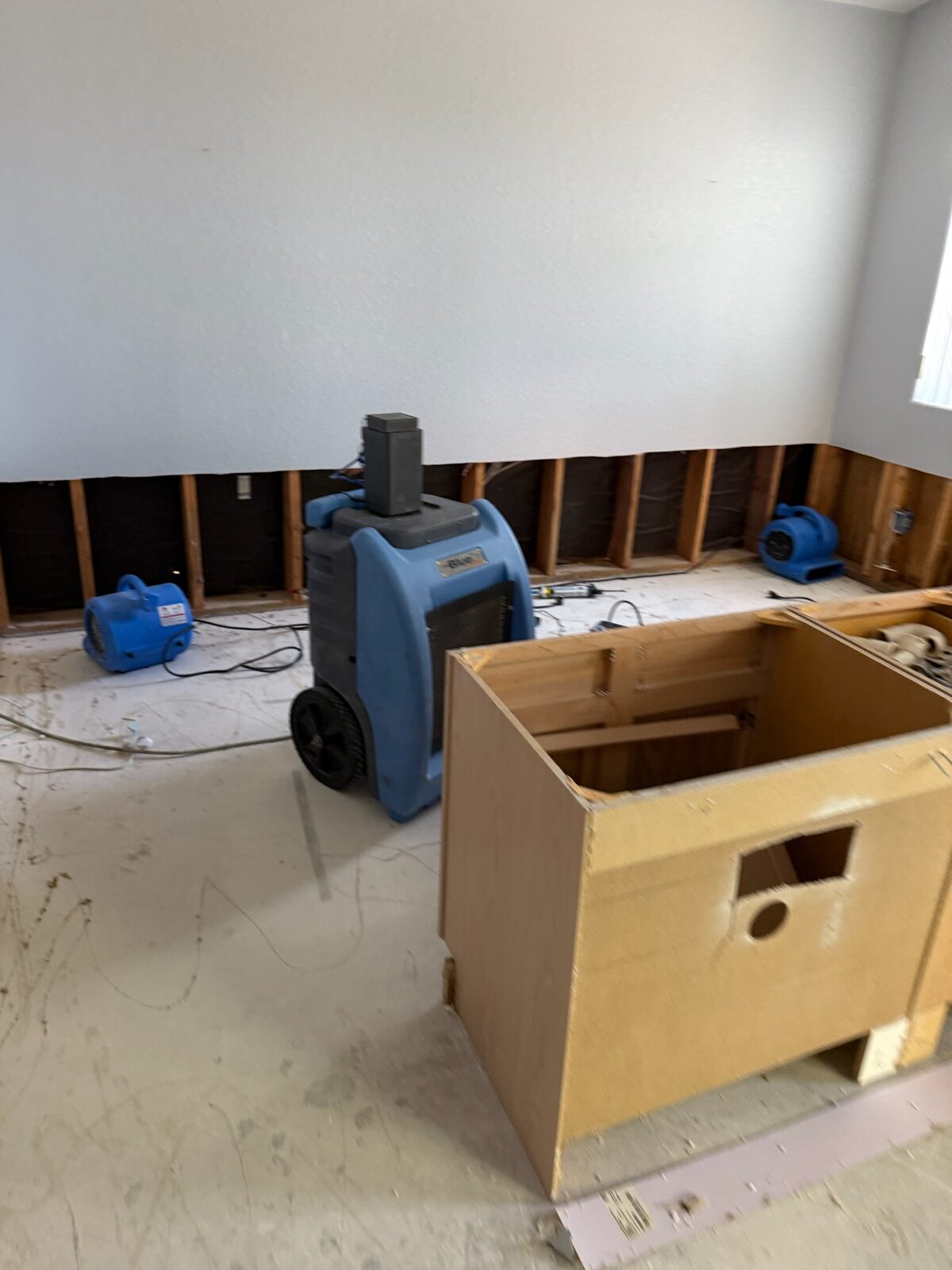
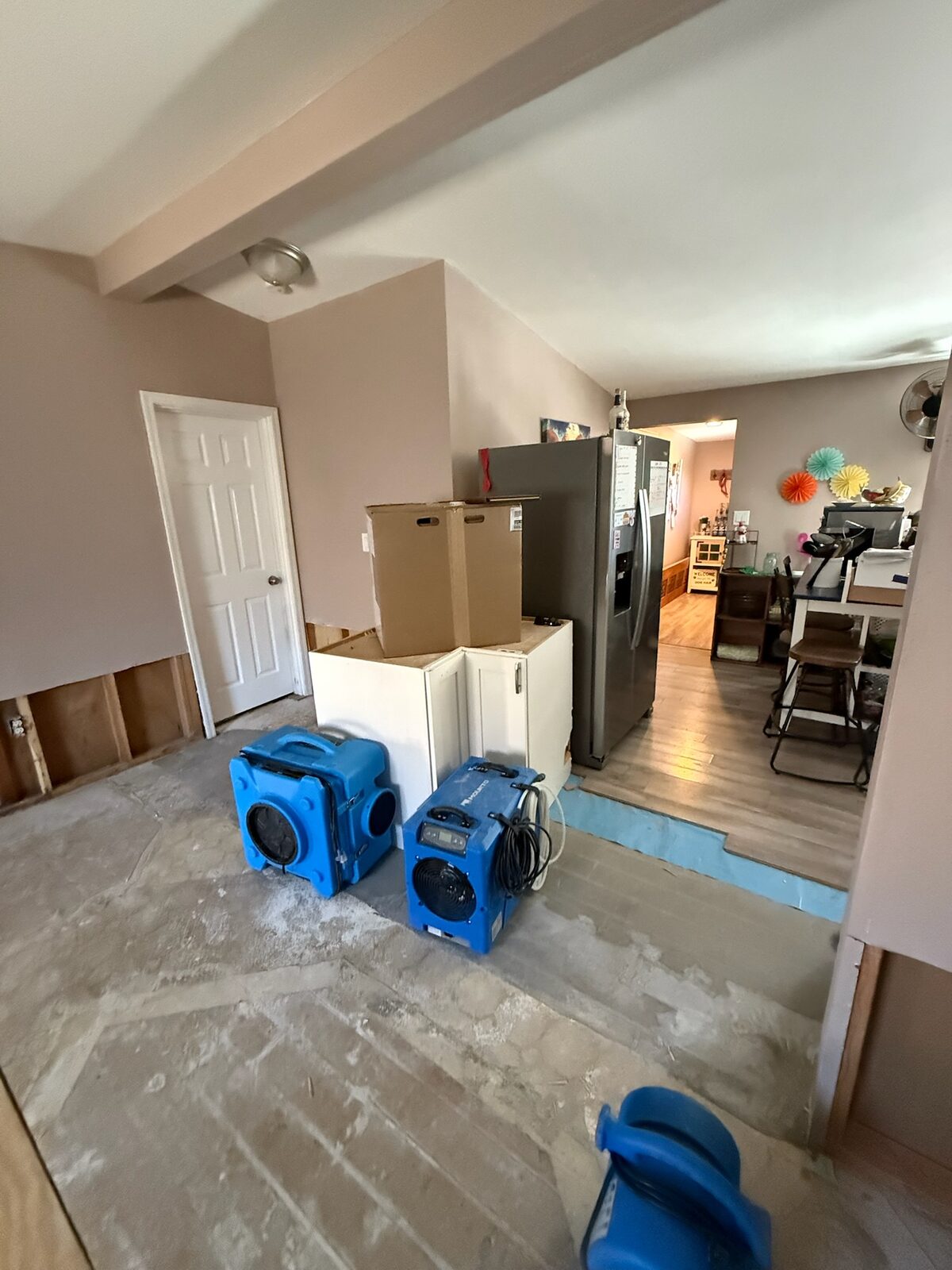
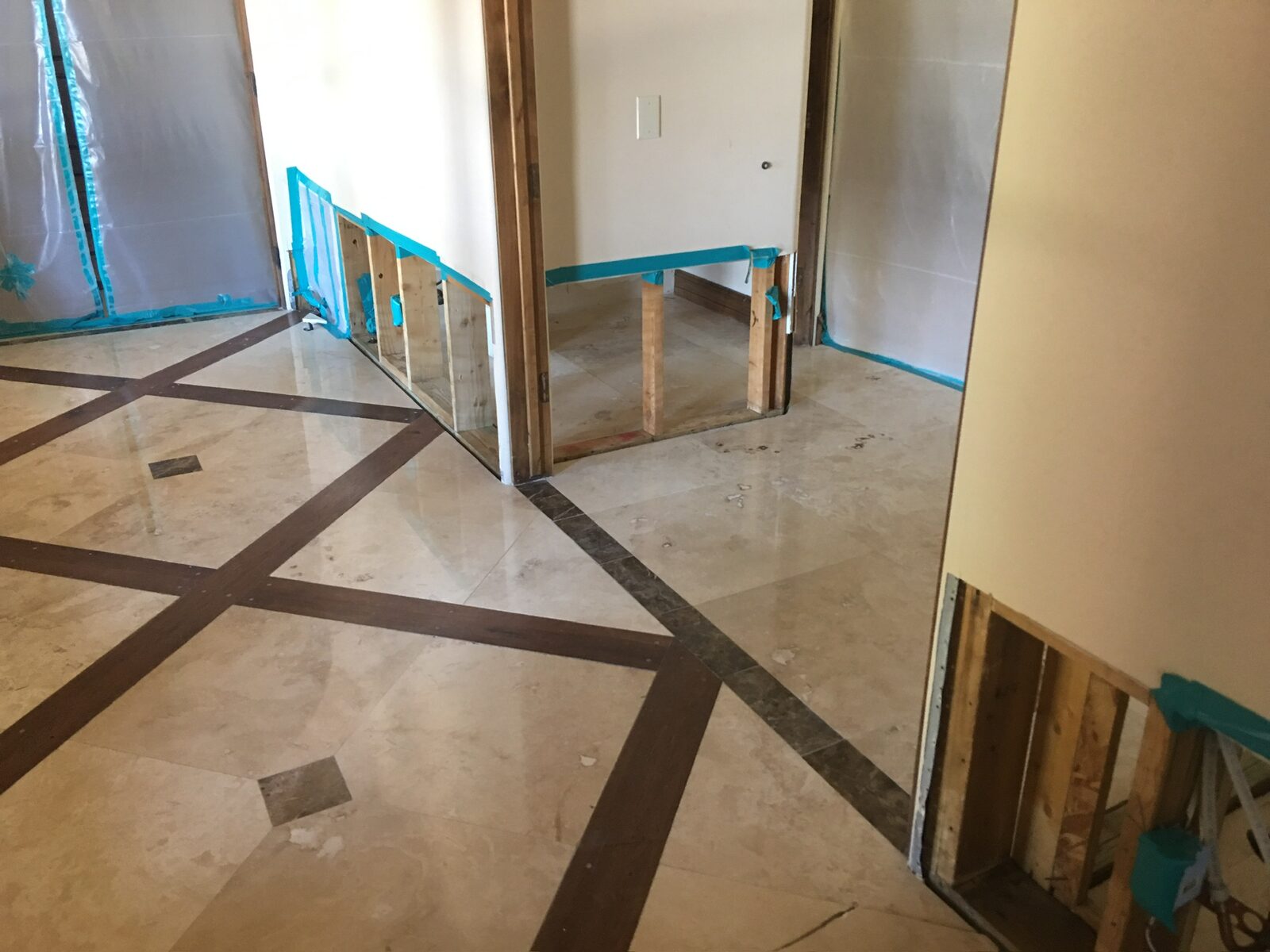
Residential reconstruction work by members of our team. See the full gallery →
More from Gold Water Fire
Fire Damage Restoration in Apache Junction, AZ
Fire and smoke damage restoration for Apache Junction homes, from board-up and soot cleanup through rebuild. Gold Water Fire, AZ ROC #264344. Call (480) 999-3339.
Reconstruction & Rebuild in Apache Junction, AZ
Rebuilding a damaged Apache Junction home after water or fire: framing, drywall, stucco, cabinets and flooring put back by Gold Water Fire. Call (480) 999-3339.
Water Damage Restoration in Apache Junction, AZ
Water damage restoration for Apache Junction homes, from slab leaks and monsoon flooding to failed water heaters. Call Gold Water Fire at (480) 999-3339.
Tell us what you are looking at
Call (480) 999-3339 or email Help@goldwaterfire.com and describe what you found, where, and when. If you already know the source, say so. If you do not, that is normal, and figuring it out is part of the job. You have carried this on your own long enough to know it needs another set of eyes.
Call (480) 999-3339Water Damage Restoration · Reconstruction & Rebuild · Fire Damage Restoration · About Gold Water Fire · Contact Us