
Water Damage Restoration in Gilbert, AZ
You have already done the hard part alone. You found the water, you shut something off, you pulled towels out of the linen closet and then ran out of towels. Maybe you moved the couch off the wet carpet by yourself at eleven at night, and now you are standing in a hallway in Gilbert listening to a house that sounds normal but does not feel dry. That worry you have that it looks better on the surface than it actually is underneath is usually correct, and it is a reasonable thing to be tired of carrying by yourself.
Water Damage Restoration in Gilbert, AZ
Slab floors, hot attics, and a monsoon that arrives all at once
Gilbert grew fast, and most of it grew flat. The overwhelming majority of homes here sit on slab-on-grade foundations with no basement and no crawlspace, which changes where water goes. Instead of draining down and away, it spreads sideways along the slab, then wicks up into the bottom plates of framed walls, into the paper facing of drywall, and under the tack strip at the edge of carpet. That is why a spill that looks like it covered one room can show up three days later as a dark line on the baseboard in the next room over. The housing stock matters too. Large parts of Gilbert were built out through the late 1990s and 2000s, when the boom pushed subdivisions south and east past Warner, Higley, and Power. Homes from that era commonly have flexible supply lines to toilets and sinks, plastic washing machine hose connections, and water heaters installed in the garage or in an interior closet. Those all age out at a similar time, which is why a whole neighborhood can start having the same failure a couple of decades later. Older pockets near the Heritage District and the original townsite are a different situation: smaller footprints, more remodel layers, and sometimes cast iron or galvanized lines that leak slowly rather than all at once. Then there is the weather. Gilbert goes months with almost no rain, then takes a monsoon cell that drops an inch in under an hour. Flat and low-slope roof sections, patio tie-ins, and parapet walls that were dry for a year get hit hard while roof drains and scuppers are still full of dust and gravel. Add irrigation, which parts of Gilbert still run through flood-irrigated lots and older laterals, and you get water arriving at the house from outside at the exact grade level of the slab.
The steps that actually change the outcome
Shut off the water at the source if you can, or at the main. In most Gilbert homes the main shutoff is at the front of the house near the hose bib or in a box near the sidewalk. Kill power to the affected rooms at the breaker if water is anywhere near outlets, cords, or a floor plug. Then document before you clean. Photos and video of standing water, wet baseboards, and the failed part itself are the record your insurance adjuster will ask about later, and once a wet carpet is pulled the evidence is gone. Keep the broken supply line or the burst fitting in a bag. After that, get the water moving and the air moving. Pull area rugs off wood or tile so they do not stain and trap moisture. Prop wet cushions on edge. Open interior doors and closet doors, because a closed closet on a shared wet wall is the most common place mold shows up first in a Phoenix-area house. Do not run your AC on full blast and assume that is drying: air conditioning removes some humidity but it does not pull bound water out of drywall, framing, or the underside of a laminate floor. What you cannot do with household equipment is measure. Drying is verified with moisture meters and thermo-hygrometer readings taken in the same spots day after day until the wet materials match the dry standard elsewhere in the house. A room can feel dry to your hand and still read wet six inches up the drywall.
Extraction, containment, controlled drying, and then rebuild
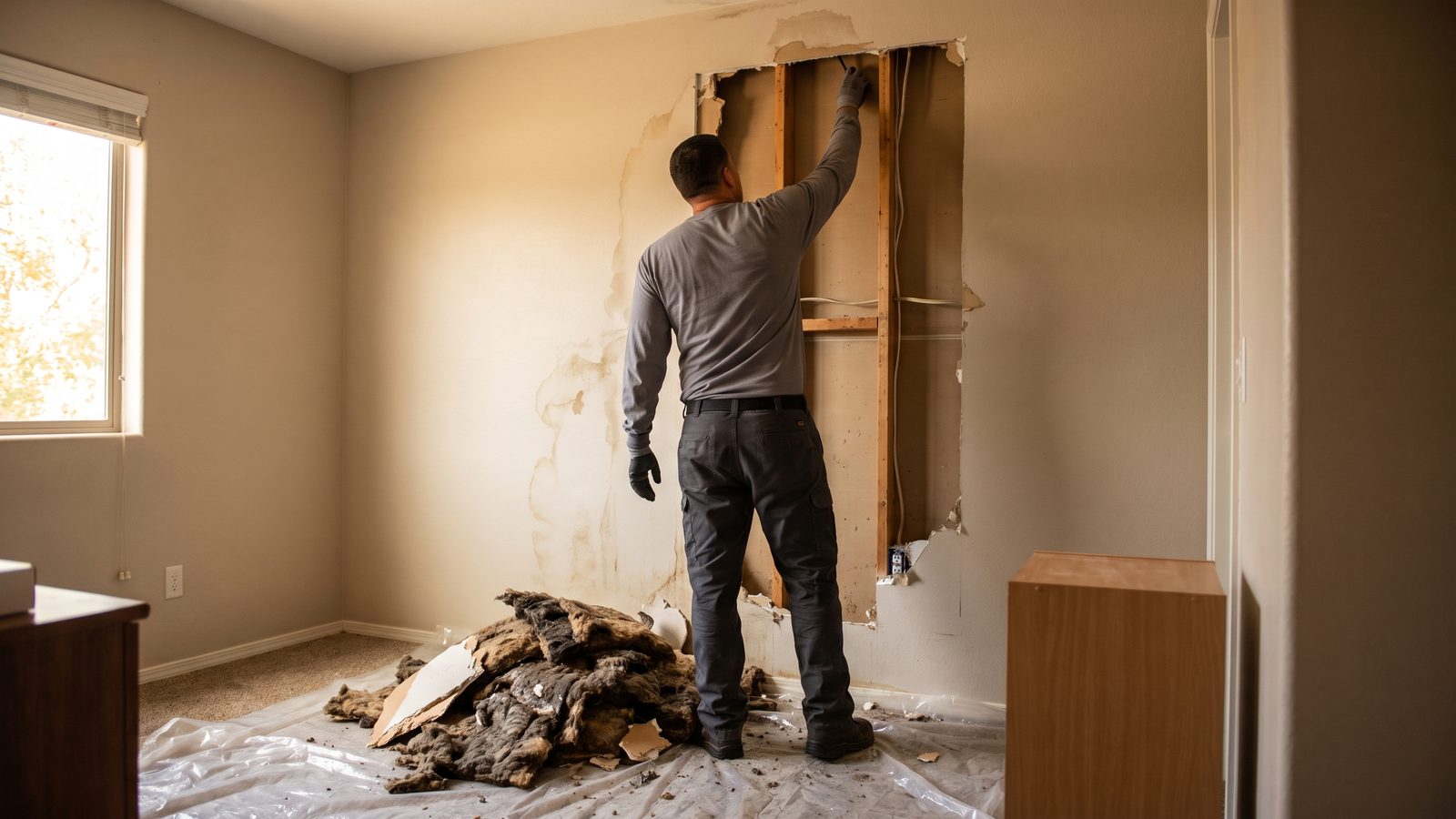
Professional water mitigation follows a sequence. First, extraction of standing water, including deep extraction through carpet and pad where the pad can be saved. Then removal of materials that cannot dry in place: carpet pad is usually the first to go, and drywall is often cut a set height above the floor so air can reach the wall cavity and the bottom plate. Cabinet toe kicks get drilled or vented for the same reason, because a sealed cabinet base is a sealed wet box. Next comes containment and controlled drying, using dehumidifiers sized to the volume of the space and air movers aimed to sweep across wet surfaces rather than just stirring the room. Readings are logged daily. When the numbers hold at dry, the drying equipment comes out, and the question shifts from mitigation to putting the house back: drywall, texture, paint, baseboard, flooring, cabinets, and trim. That second half is where a lot of homeowners get stranded, because the drying company leaves and the rebuild becomes a separate hunt for a contractor. Gold Water Fire handles both sides. Brandon Gurr, our Construction Manager, leads the reconstruction and rebuild work, so the same company that cut the drywall is the one that closes it back up and matches your texture and paint. You can read more about how the drying phase works on our water damage restoration page and about the rebuild side on our reconstruction and rebuild page.
Local, and close enough to be useful
Our office is at 221 E Willis Rd Ste 8 in Chandler, which puts Gilbert directly next door rather than across the valley. We work the full Phoenix metro area, roughly northwest to Peoria, southeast to Avondale, southwest to San Tan Valley, northwest to Apache Junction, and outlying areas further than that, so Gilbert addresses from Val Vista out to Power and from Baseline down past Chandler Heights are all within our normal working range. We are licensed in Arizona under AZ ROC #264344, KB-2. Gold Water Fire was founded by Jim Bennett and Jake Taylor. On a water loss you will most likely deal with Brooke, who handles water and mitigation scheduling, and Kristine in the office on paperwork and insurance documentation. Johnny leads the reconstruction crew once drying is finished. It is a small enough team that you will not be re-explaining your house to a new person every time you call. If what you are dealing with started with a fire, or with the water used to put one out, our fire damage restoration page covers that. You can also learn more about our team.
Questions people ask us
My Gilbert home has a slab foundation and no basement. Is water damage really that serious?
It can be more serious, not less. On slab-on-grade construction water spreads laterally instead of draining, so it moves under flooring and into the bottom of walls where you cannot see it. Wall bottom plates, drywall paper, cabinet bases, and carpet pad all hold moisture. A house with no basement simply hides the water at floor level instead of collecting it somewhere obvious.
Can I just run fans and my air conditioning instead of hiring someone?
Fans and AC help a little with surface moisture and humidity, but they do not remove water bound inside drywall, framing, subfloor, or under laminate and vinyl plank. Drying is a measured process: moisture readings are taken in the same locations daily and compared against dry areas of the house until they match. Without meters you are guessing, and the common outcome of guessing is a smell or a stain that shows up weeks later.
How does a monsoon leak in Gilbert differ from a plumbing leak?
Storm water usually enters high and travels down, showing up first at ceiling seams, can lights, and the tops of interior walls, and it often carries dust and roof debris with it. A plumbing failure starts low and spreads across the slab. The drying approach differs because of what is wet: a roof leak means wet insulation and ceiling assemblies, while a supply line failure means wet flooring, pad, and wall bases across several rooms.
Do you handle the repairs after drying, or just the water removal?
Both. Gold Water Fire does water mitigation and the reconstruction that follows, including drywall, texture, paint, trim, flooring, and cabinets. Brandon Gurr, our Construction Manager, leads that rebuild work, so you are not left finding a second contractor to close the walls back up.
The standard our team works to
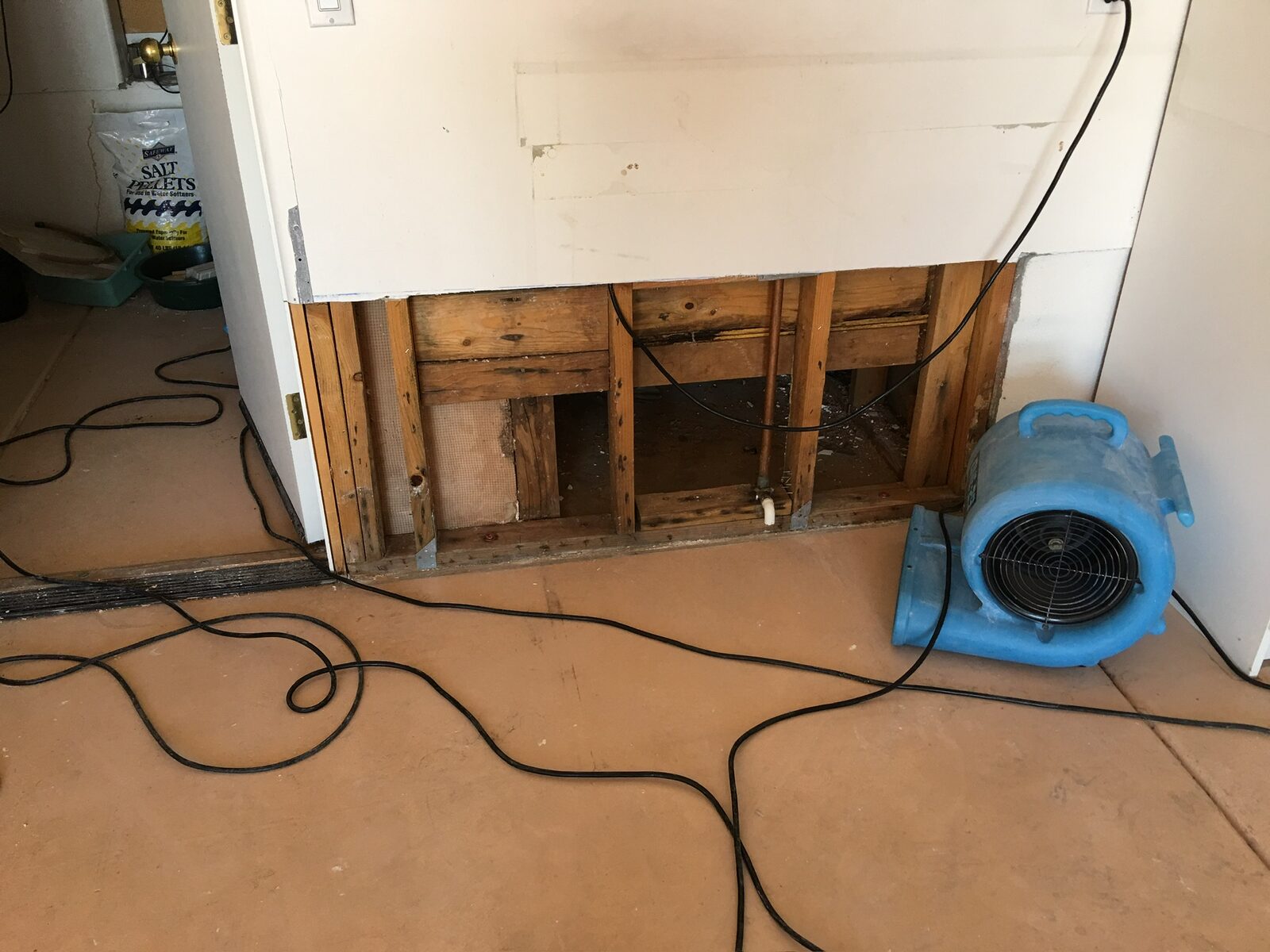
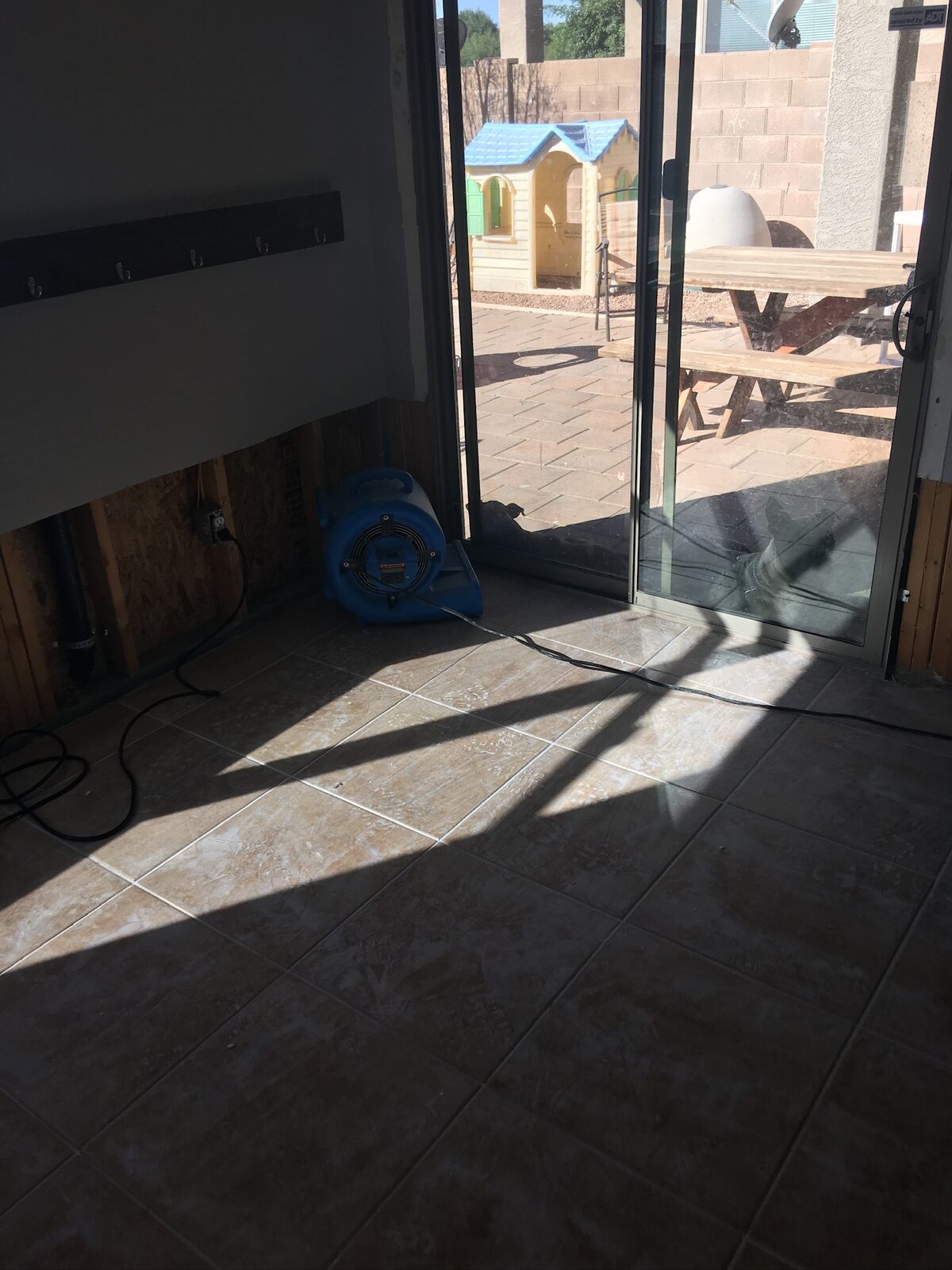
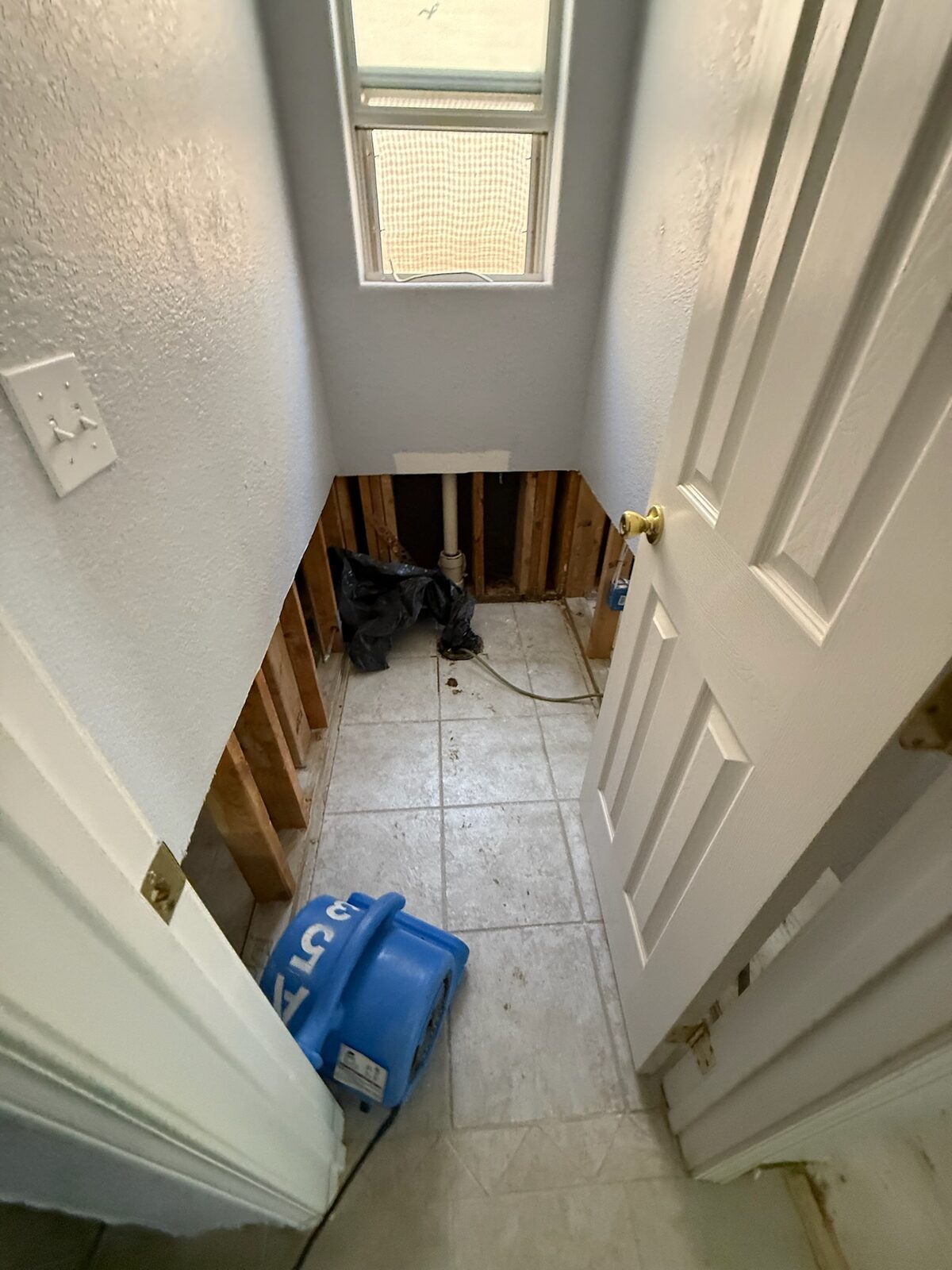
Residential reconstruction work by members of our team. See the full gallery →
More from Gold Water Fire
Fire Damage Restoration in Apache Junction, AZ
Fire and smoke damage restoration for Apache Junction homes, from board-up and soot cleanup through rebuild. Gold Water Fire, AZ ROC #264344. Call (480) 999-3339.
Reconstruction & Rebuild in Apache Junction, AZ
Rebuilding a damaged Apache Junction home after water or fire: framing, drywall, stucco, cabinets and flooring put back by Gold Water Fire. Call (480) 999-3339.
Water Damage Restoration in Apache Junction, AZ
Water damage restoration for Apache Junction homes, from slab leaks and monsoon flooding to failed water heaters. Call Gold Water Fire at (480) 999-3339.
Let someone else carry the rest of this
You have already done what you could with towels, fans, and a shutoff valve. The next part takes meters, dehumidifiers, and someone who can tell you in plain terms what is still wet behind the baseboard and what it will take to put your Gilbert home back. Call Gold Water Fire at (480) 999-3339 or email Help@goldwaterfire.com, and we will talk through what you are looking at.
Call (480) 999-3339Water Damage Restoration · Fire Damage Restoration · Reconstruction & Rebuild · About Gold Water Fire · Contact Us