
Water Damage Restoration in Buckeye, AZ
You have already moved the furniture off the wet carpet, pulled towels out of the linen closet, and stood in the hallway at two in the morning listening for whether the sound has stopped. Maybe you ran a box fan at it all day and the baseboard still feels cool and soft under your thumb. That is a lot to carry by yourself, especially when the house is quiet and everyone else is asleep and you are the only one who knows how bad it might be behind that wall.
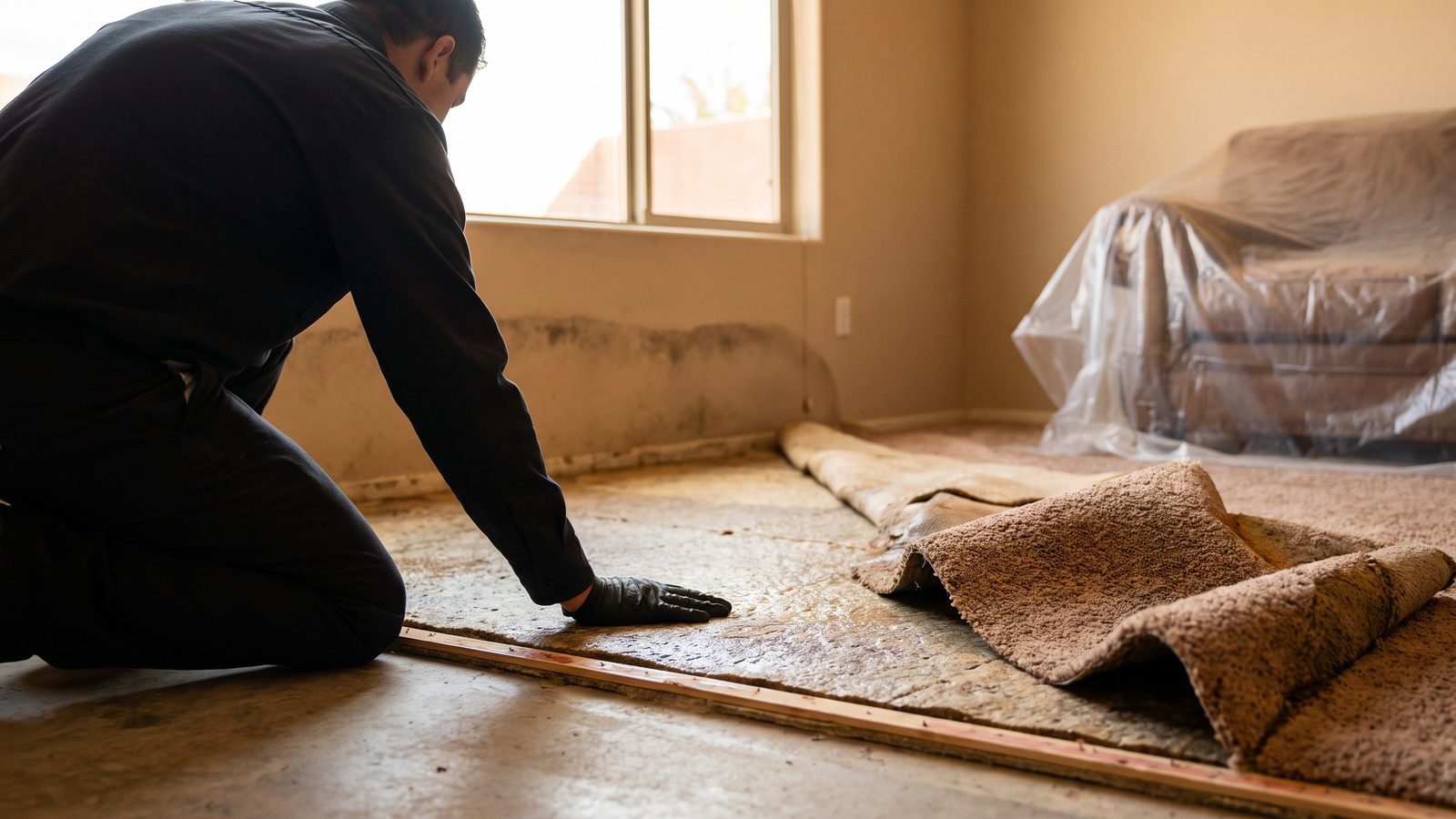
Water Damage Restoration in Buckeye, AZ
Why Buckeye homes take water damage the way they do
Buckeye grew fast. A large share of the housing out here, Verrado, Festival Ranch, Sundance, Tartesso, Watson Road corridor, went up during the building boom of the 2000s and again in the last several years. That means most of these homes sit on post-tension slabs with copper or PEX supply lines run through or under the slab, and they share a common set of failure points: water heaters in the garage reaching the end of their service life all around the same time, angle stops under bathroom sinks that get brittle, and refrigerator ice maker lines pushed against a wall behind a heavy fridge. The far West Valley also has hard, mineral heavy water. Scale builds inside supply lines, water heater tanks and the flexible connectors behind washing machines, and those braided steel hoses fail without warning. A supply line that lets go while you are at work in Goodyear or downtown Phoenix can put hundreds of gallons across a slab before anyone is home to turn the valve. Then there is the seasonal pattern. Monsoon storms roll in off the desert west of the White Tanks and drop rain faster than the ground here can take it. Buckeye's newer subdivisions sit on graded desert with shallow drainage swales, and homes near washes and retention basins see sheet flow reach the garage slab, the side gate and the back patio door. Roof and parapet issues that never leaked in nine dry months show themselves in one August evening.
Why a fan and a few days is usually not enough
Drywall, baseboard, and the underside of a laminate or engineered wood floor hold water long after the surface feels dry. Standard drying practice is to measure moisture in the actual materials rather than judging by touch, because gypsum and framing can read wet while the carpet face feels fine. Air movement alone moves surface moisture into the room air; without dehumidification that moisture just lands somewhere else in the house. A few things worth knowing while you decide what to do: Category matters. Clean water from a supply line is treated differently than water that has come through a toilet trap or in from outside across a yard, and the timeline to act is shorter for the latter. Water travels sideways. It wicks up drywall, runs along the top plate, and follows the slab under cabinets and tack strip. The wet spot you can see is often the smallest part of it. Cabinet toe kicks and tile are the usual hiding places. In a slab home, water under a tile floor or inside a kitchen island base can sit for weeks and only announce itself as an odor or a lifting grout line. Mold does not need a flood, it needs time and moisture. In Arizona, low outdoor humidity gives you an advantage in drying, but only if the wet materials are actually opened up and dried rather than sealed behind finished surfaces. More on the process is on our water damage restoration page.
What handing this off actually looks like
You call, you describe what you are seeing, and someone starts asking the questions you have been guessing at: where the water came from, whether the source is shut off, what is under and behind the wet area. Brooke handles water and mitigation scheduling, so getting a crew routed out to Buckeye is a conversation with a person, not a queue. On site, the work is inspection and moisture mapping, extraction, controlled demolition only where materials cannot be dried in place, then drying equipment set and monitored until readings say the structure is dry. We document what we find as we go, which is what an insurance adjuster asks for later. When the drying is done, the house still needs to be put back: drywall, texture, paint, baseboard, cabinets, flooring. Brandon Gurr runs our construction side and Johnny leads the reconstruction team, so the same company that dried the house can carry it through reconstruction and rebuild. You are not left holding a torn open wall and a list of subcontractors to chase. Gold Water Fire is licensed in Arizona, AZ ROC #264344, KB-2. You can read about the people who would be in your house on our about page.
Shut off the water first
The main shutoff for most Buckeye homes is at the street side of the house near the hose bib, or in a box near the property line. Water heaters and toilets each have their own valve. Stopping the source is the single most useful thing you can do before anyone arrives.
Do not pull up wet flooring yourself
Tile, laminate and engineered wood are often salvageable or need documenting before removal. Tearing it out early can complicate the insurance claim and expose you to whatever is underneath.
Photograph everything
Wide shots of each affected room, close ups of the source, and pictures of damaged contents. Take them before anything moves. Your adjuster will want them and memory is unreliable in a week like this.
Watch the electrical
Water at outlet height or standing water near a panel means stay out of the room and cut power at the breaker if you can reach it safely. Nothing in a wet room is worth a shock.
Buckeye and the rest of the West Valley
We cover the full Phoenix metro area, which for the west side means Buckeye, Goodyear, Avondale, Litchfield Park, Tolleson, Surprise and El Mirage, and we go out past that as far as the outlying areas run. If you are in Verrado, Sundance, Festival Ranch, Tartesso, Rancho Vista, Sienna Hills or on acreage further out toward the Palo Verde area, that is still our service area. Call (480) 999-3339 or email Help@goldwaterfire.com. If it is easier to write it out than to explain it on the phone, use the contact page. If the water came with a fire or a scorched appliance, we handle fire damage restoration as well, and those two often show up together after an electrical or water heater failure.
Questions people ask us
Is water damage from a monsoon storm covered by my homeowners insurance?
It depends on how the water got in. Wind driven rain through a damaged roof is generally treated differently than surface water that rose and came in at the door, which usually falls under flood coverage rather than a standard policy. We document the source and the path of the water so your adjuster has what they need to make that call, but the coverage decision is between you and your carrier.
How long does drying take?
It depends on how much water there is, what materials it reached, and how long it sat before the equipment went in. Drying is finished when moisture readings in the materials come back to normal for that house, not on a fixed schedule, so we monitor and adjust rather than quoting you a set number of days up front.
Do I need to leave my house while you dry it?
Most of the time, no. Drying equipment is loud and the affected rooms may be unusable, but people commonly stay in the home. If the water source was contaminated or the affected area includes the only bathroom or kitchen, we will talk through it with you honestly instead of making that decision for you.
Can you handle the repairs after the drying, or do I need another contractor?
We do both. Brandon Gurr runs our construction side and Johnny leads the reconstruction team, so drywall, texture, paint, baseboard, cabinets and flooring can be handled by the same company that dried the house. Gold Water Fire is licensed in Arizona under AZ ROC #264344, KB-2.
The standard our team works to
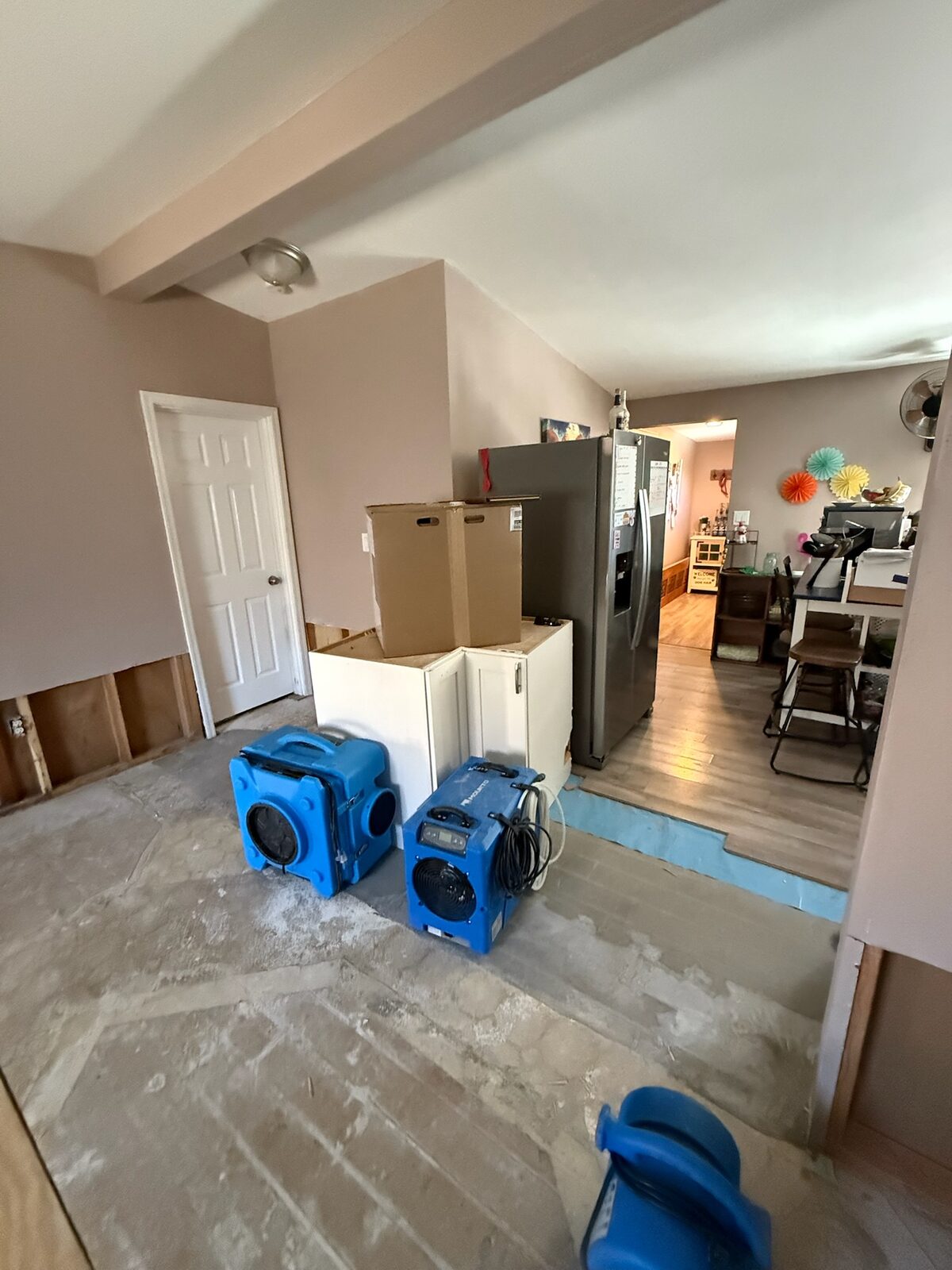
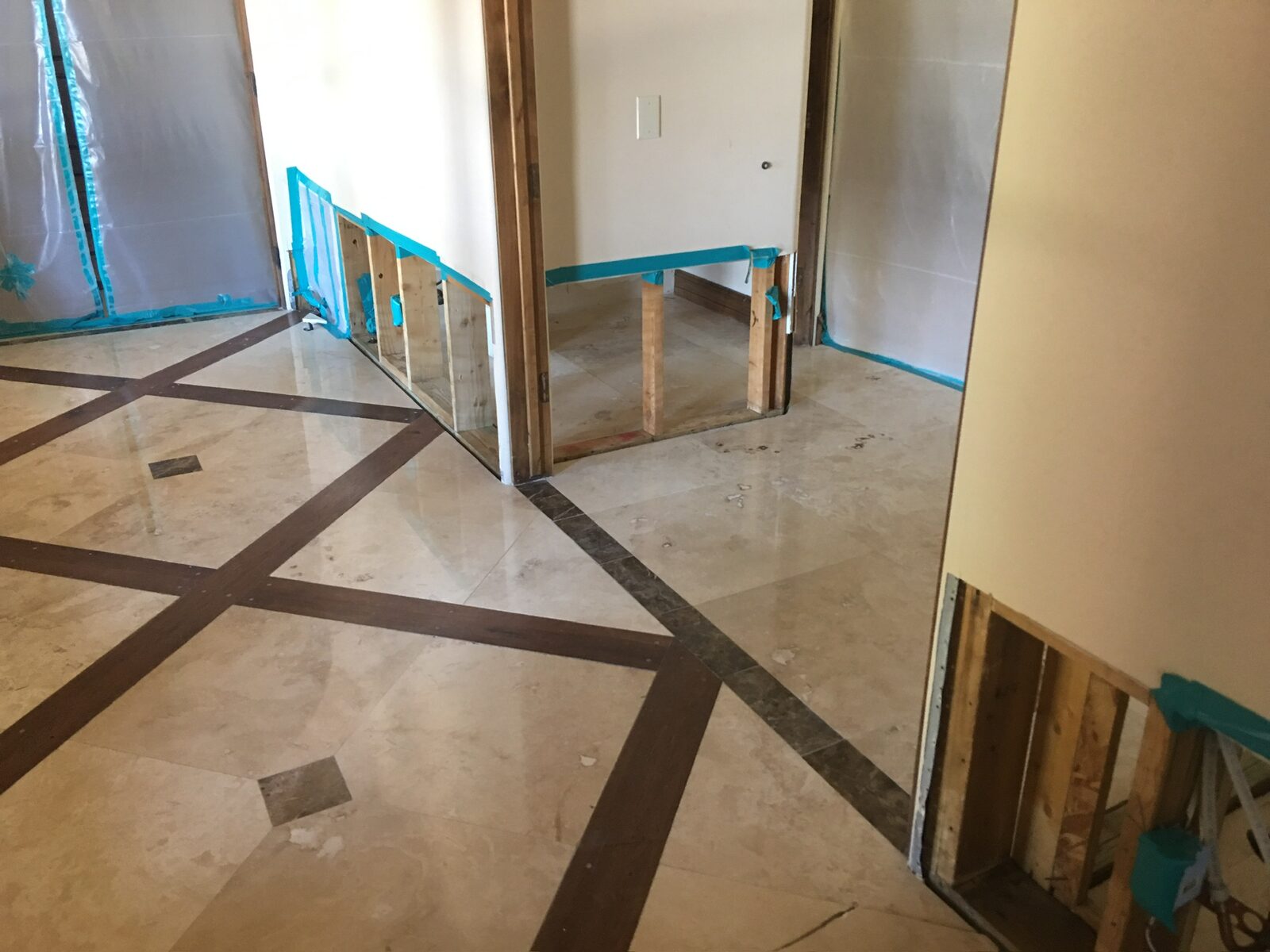
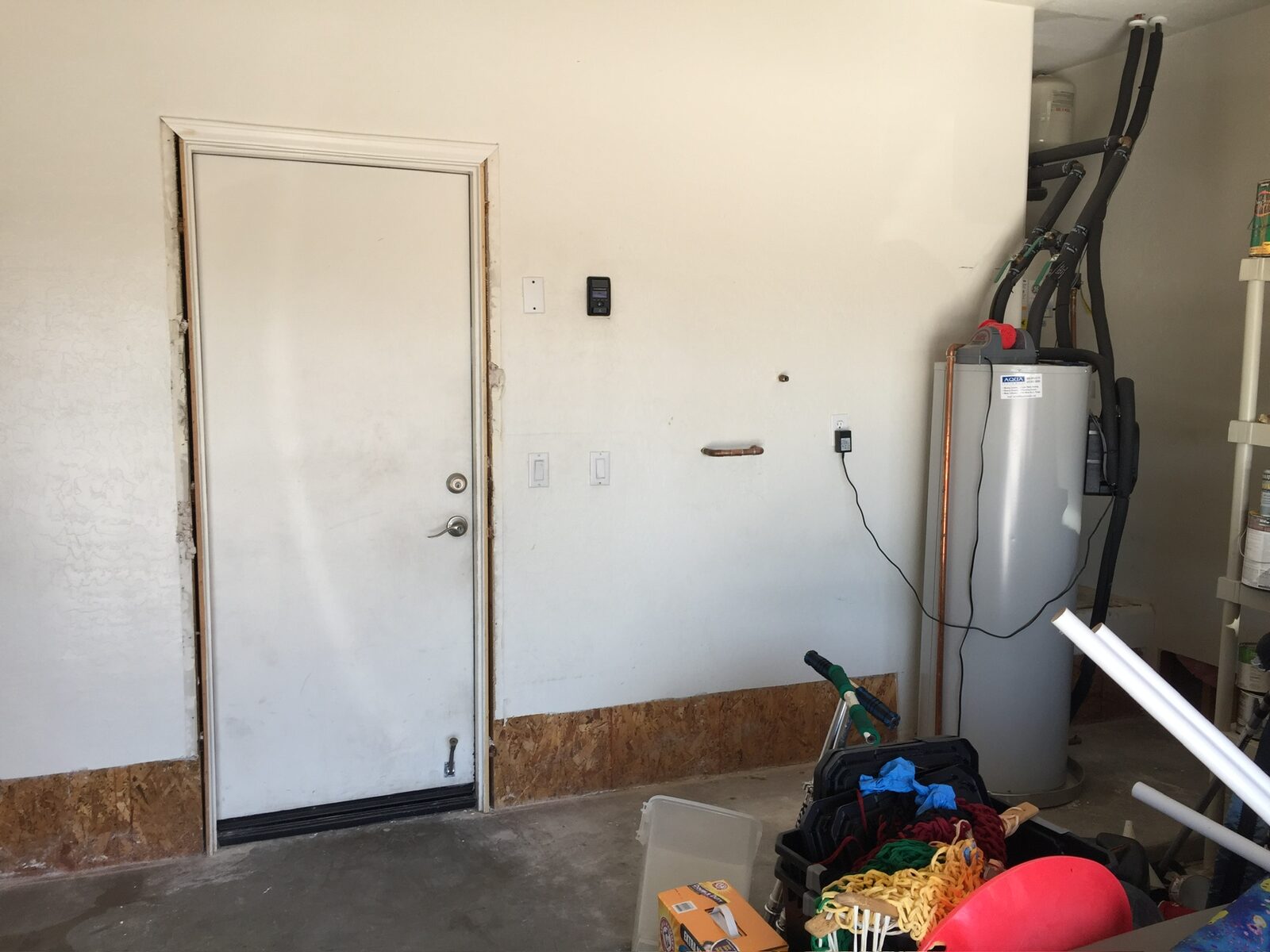
Residential reconstruction work by members of our team. See the full gallery →
More from Gold Water Fire
Fire Damage Restoration in Apache Junction, AZ
Fire and smoke damage restoration for Apache Junction homes, from board-up and soot cleanup through rebuild. Gold Water Fire, AZ ROC #264344. Call (480) 999-3339.
Reconstruction & Rebuild in Apache Junction, AZ
Rebuilding a damaged Apache Junction home after water or fire: framing, drywall, stucco, cabinets and flooring put back by Gold Water Fire. Call (480) 999-3339.
Water Damage Restoration in Apache Junction, AZ
Water damage restoration for Apache Junction homes, from slab leaks and monsoon flooding to failed water heaters. Call Gold Water Fire at (480) 999-3339.
You do not have to figure out the rest of this alone
Call (480) 999-3339 and tell us what you are looking at. If it is late, if you are not sure how bad it is, if you just want someone to tell you what the wet spot behind the baseboard actually means, that is a fine reason to call. We will tell you what we would do and what it would take, and you can decide from there.
Call (480) 999-3339Water Damage Restoration · Reconstruction & Rebuild · Fire Damage Restoration · About Gold Water Fire · Contact Us