
Water Damage Restoration in Avondale, AZ
You have already done the hard part twice over. You found the water, you shut something off, you moved what you could off the floor, and you spent the night with fans pointed at a wet spot hoping it would be smaller in the morning. It is not smaller. Now the baseboard is swelling, the tile grout on the far side of the hallway feels cool under your foot, and you are starting to wonder how much of this house the water has been under this whole time. That is an exhausting place to be standing, and it is not a sign you did anything wrong.
Water Damage Restoration in Avondale, AZ
Why Avondale homes take water damage the way they do
Avondale sits in the West Valley between the Agua Fria and the Gila, on ground that is mostly caliche and clay under a thin layer of soil. That matters for two reasons. Caliche does not absorb water quickly, so when a supply line or an irrigation valve lets go in a side yard, the water tends to travel sideways along the path of least resistance, which is often the sand bed under your slab, rather than soaking straight down. And the shrink-swell behavior of clay soils is part of why older slab plumbing in the area develops pinhole leaks and joint separations over time. The housing stock splits into roughly two groups. Old Town Avondale and the neighborhoods near Western Avenue include homes built decades earlier, often with galvanized or early copper supply lines, cast iron or clay drain lines, and evaporative coolers that were later replaced or abandoned in place. The much larger group is the 1995 to 2008 build-out: Garden Lakes, Coldwater Springs, Rancho Santa Fe, Donatela, Del Rio Ranch and the corridor along Dysart and Avondale Boulevard. Those homes are stucco over frame on a post-tension slab, with plastic supply lines, a water heater in the garage or a hall closet, and refrigerator and washer connections that are now well past the age where the rubber and plastic parts start failing. Summer here compounds all of it. Attic temperatures in an Avondale July make plastic fittings brittle and push braided washer hoses to failure, and a house sealed up against 110 degree heat with the AC running gives evaporating water almost nowhere to go except into drywall and cabinet particleboard.
Monsoon, hard water, and the leaks that show up on a schedule
From roughly July into September, monsoon storms come across the West Valley with wind ahead of the rain. That combination is what finds roofs, not the rain volume itself. On the tile roofs common in Avondale subdivisions, wind lifts and cracks tiles and drives water under them, and the underlayment on a home built in the late 90s or early 2000s is at the end of its service life. Water gets in at a valley or a penetration, runs along the top plate, and shows up as a stain in a bedroom ceiling on the opposite side of the house from where it entered. The other Avondale-specific factor is water hardness. West Valley municipal water is mineral-heavy, and scale buildup shortens the life of water heaters, angle stops under sinks, toilet fill valves and the little plastic saddle valve behind the refrigerator. A water heater in a garage that finally lets go can put its whole tank plus a continuing supply feed across the garage slab and under the shared wall into the house before anyone hears it. And because a lot of Avondale households commute east on I-10 to Phoenix or Tempe, plenty of leaks run unattended for eight or ten hours simply because nobody was home. The difference between a leak found at hour one and a leak found at hour ten is usually the difference between drying a room and replacing cabinets, flooring and lower drywall.
How drying a house actually works
There is a real order to this, and knowing it makes it easier to tell whether a job is being done right. First the source gets stopped. Then standing water gets extracted, including water pulled out of carpet pad and out of the seams of tile and laminate, because water sitting under a floor covering will not evaporate on its own at any useful speed. Next comes finding the edges of the wet area, not just the visible part. Moisture meters read the actual moisture content of drywall, framing and subfloor, and thermal imaging shows the temperature difference where evaporation is happening behind a surface. On a slab-on-grade Avondale home, water that entered a hallway commonly wicks up the bottom four to twenty inches of drywall on both sides of the wall and travels under kitchen toe kicks where nothing is visible at all. Then the structure gets dried with air movers to keep evaporating from the surfaces and dehumidifiers to pull that moisture out of the air, with readings taken daily to prove the numbers are actually falling. Insulation inside a wet wall cavity usually has to come out because it holds water and slows everything down. Materials that stayed wet long enough, particleboard cabinet bases, laminate, wet drywall, get removed rather than dried, because they do not come back. Drying is finished when the moisture readings match dry, unaffected materials in the same house, not when things feel dry to the hand. In Arizona, ambient dryness makes surfaces feel fine while the framing behind them is still saturated, which is exactly how mold problems start weeks after everyone thought it was over. You can read more about our full process on the water damage restoration page.
When drying ends and rebuilding begins
A lot of the stress in this is not the water, it is the gap afterward: the drying company leaves, the house is open, and you are supposed to find someone else to close it back up while also dealing with your insurance adjuster. Gold Water Fire handles both sides of that. Brandon Gurr, our Construction Manager, leads the reconstruction and rebuild work, so the same company that opened the wall puts the drywall, texture, paint, baseboard, cabinets and flooring back. That continuity matters on a practical level. The people who documented what was wet and why are the same people scoping the repair, so nothing gets lost in translation, and you are not explaining your house twice. Kristine in our office and Brooke, who handles water and mitigation scheduling, are the people you will actually talk to, and Johnny leads the reconstruction crew on site. We are licensed in Arizona under ROC #264344, KB-2, and we work the full Phoenix metro, from northwest Peoria to southeast Avondale, southwest San Tan Valley and northwest Apache Junction, plus outlying areas beyond that. You can learn more about the people here on our about page.
Questions people ask us
What should I do in the first hour after finding water in my Avondale home?
Shut off the water at the source if you can find it, or at the main, which on most Avondale homes is either a shutoff on the side of the house near the hose bib or the meter box at the front of the property. Kill power to any affected room at the breaker before you walk through standing water. Move furniture off wet carpet and put foil or wood blocks under legs so stain does not transfer. Take photos and short videos of everything before you move much, since your insurer will want them. Then call us at (480) 999-3339.
Can a wet slab-on-grade floor really dry on its own?
Usually not, at least not the part you care about. On a slab home, water spreads under the flooring and into the sand bed and wicks up into wall cavities where there is no airflow. Surface tile can look and feel dry while the drywall behind the baseboard and the framing bottom plate are still saturated. That trapped moisture is what produces the musty smell and the mold growth people notice a few weeks later. Drying requires directed airflow, dehumidification, and in many cases removing baseboard or drilling the wall cavity to reach the wet area.
My leak happened during a monsoon storm. Does that change anything?
It changes what has to be checked. Storm water entering through a roof means the attic insulation, the top plate of the walls, and the ceiling drywall are all in play, and water can travel a long way along framing before it appears. It also means the roof itself needs to be looked at, since drying a ceiling under a tile roof with failed underlayment just sets you up to do it again during the next storm. Rain that entered from outside can also carry contaminants, which affects how affected materials are handled.
Do you work in my part of Avondale?
Yes. We cover Avondale as a whole, including Old Town near Western Avenue, Garden Lakes, Coldwater Springs, Rancho Santa Fe, and the newer neighborhoods along Dysart and Avondale Boulevard, along with neighboring Goodyear, Litchfield Park, Tolleson and Buckeye. Southeast Avondale is one of the named corners of our service area, and we go out past it as well.
The standard our team works to
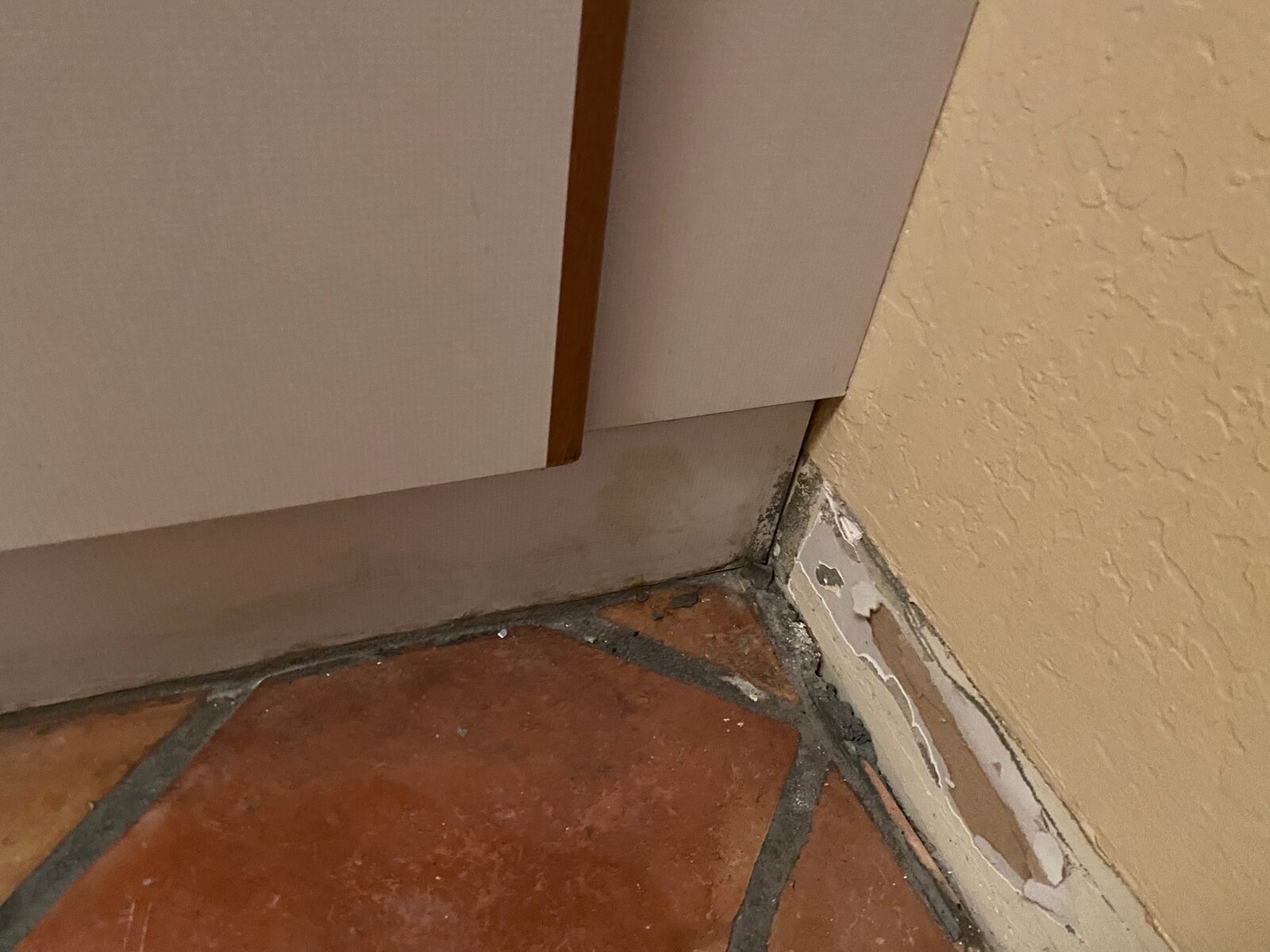
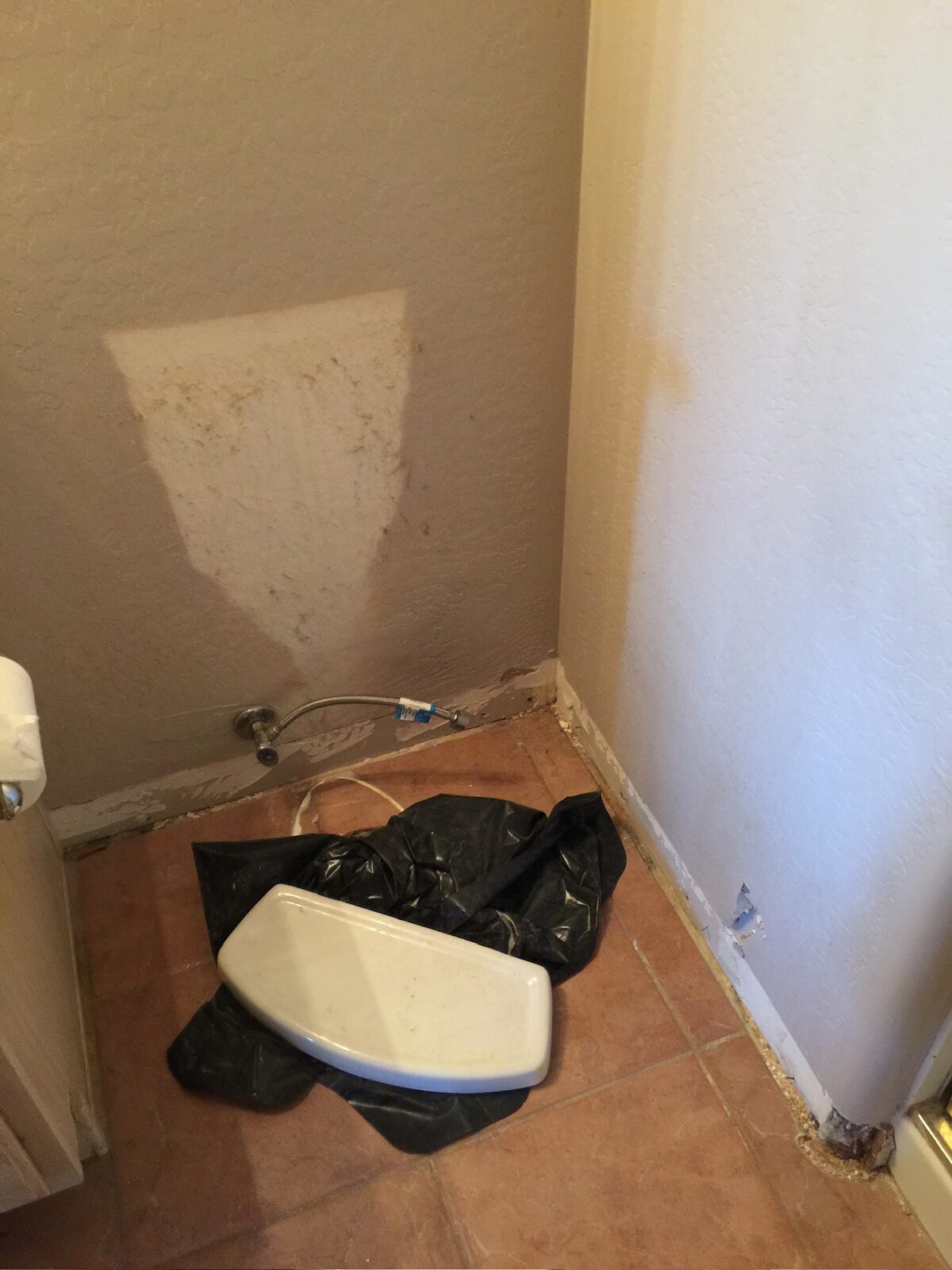
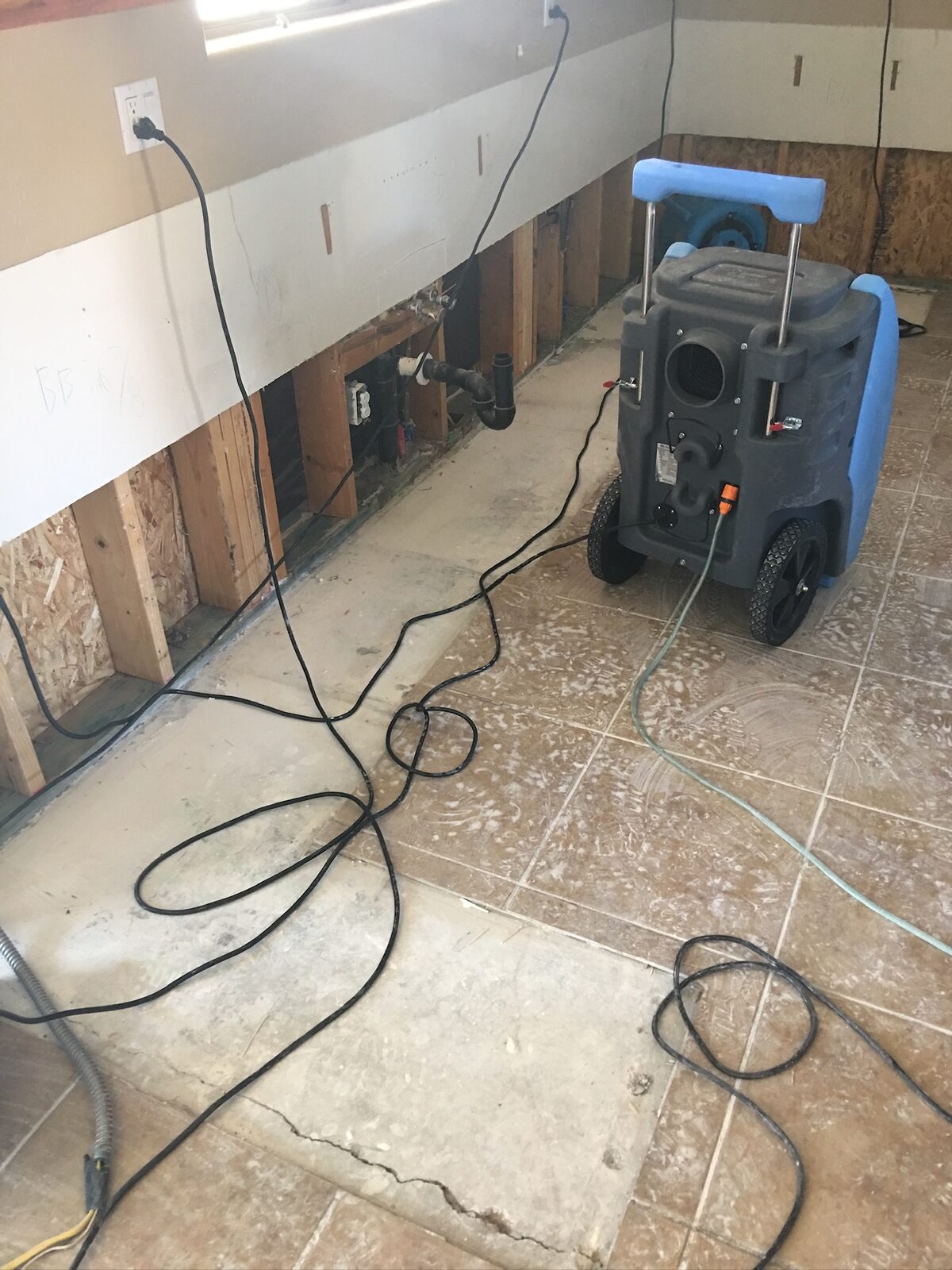
Residential reconstruction work by members of our team. See the full gallery →
More from Gold Water Fire
Fire Damage Restoration in Apache Junction, AZ
Fire and smoke damage restoration for Apache Junction homes, from board-up and soot cleanup through rebuild. Gold Water Fire, AZ ROC #264344. Call (480) 999-3339.
Reconstruction & Rebuild in Apache Junction, AZ
Rebuilding a damaged Apache Junction home after water or fire: framing, drywall, stucco, cabinets and flooring put back by Gold Water Fire. Call (480) 999-3339.
Water Damage Restoration in Apache Junction, AZ
Water damage restoration for Apache Junction homes, from slab leaks and monsoon flooding to failed water heaters. Call Gold Water Fire at (480) 999-3339.
You do not have to keep managing this by yourself
If you have been running fans and checking the same wet spot every few hours, hand it to someone whose job is reading what is actually happening inside the wall. Call (480) 999-3339 or email Help@goldwaterfire.com, tell us what you found and when, and we will tell you plainly what we would do next. We are at 221 E Willis Rd Ste 8 in Chandler, and we work Avondale and the rest of the Phoenix metro.
Call (480) 999-3339Water Damage Restoration · Reconstruction & Rebuild · Fire Damage Restoration · About Gold Water Fire · Contact Us