
Water Damage Restoration in San Tan Valley, AZ
You have already moved the furniture off the wet carpet, run the shop vac until it stopped picking anything up, and pointed every box fan in the house at the same hallway. Maybe you found the leak yourself, under the sink or behind the water heater in the garage, and shut the valve off before it got worse. And the floor still feels cool and slightly soft when you step on it, and the baseboard is starting to swell at the seam, and you are standing there at nine at night doing math about how much longer you can keep this up on your own. That is a reasonable place to be stuck. Water does not stop where you can see it.
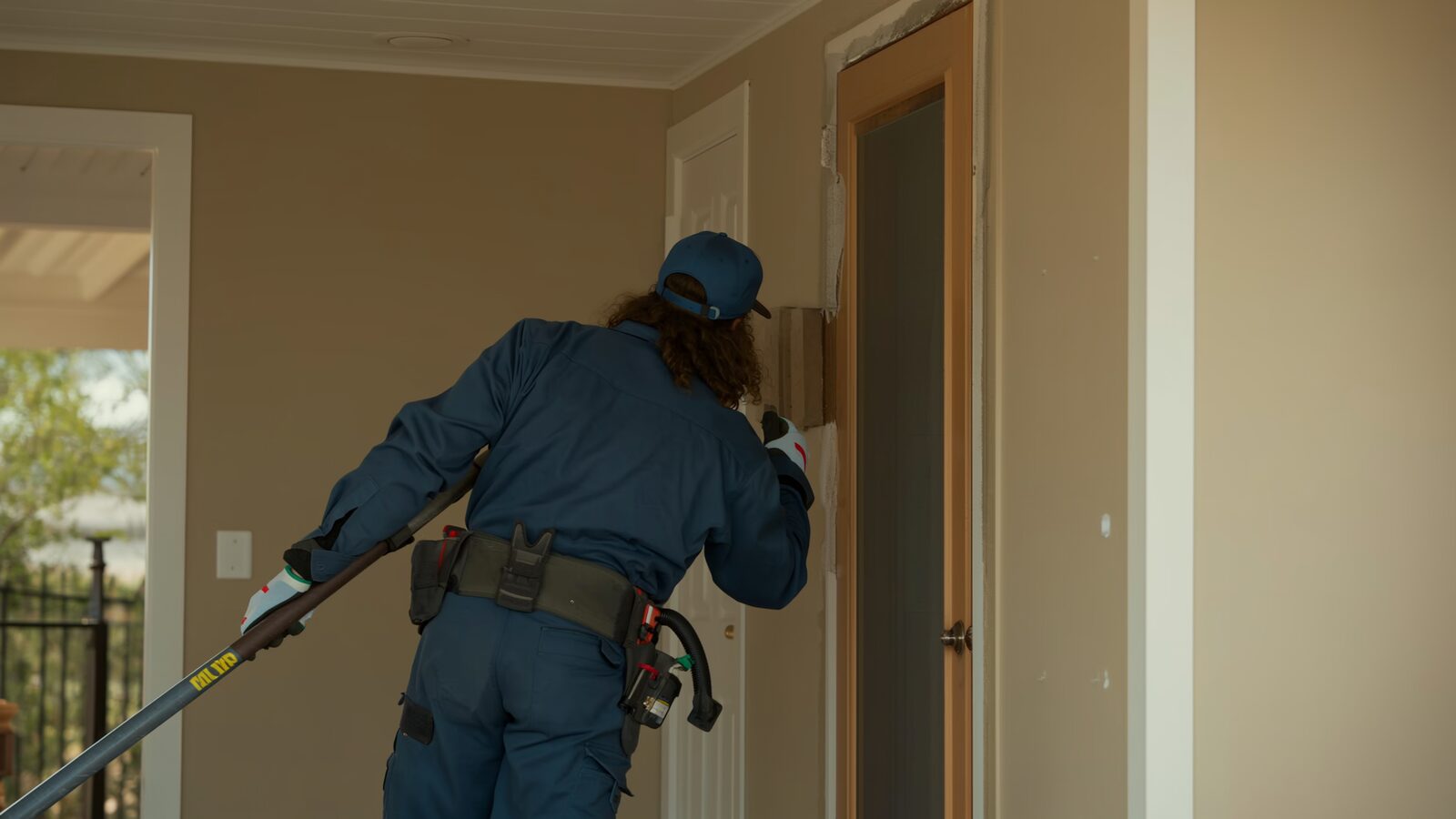
Water Damage Restoration in San Tan Valley, AZ
Why San Tan Valley homes take water damage the way they do
San Tan Valley grew fast, and most of the housing stock is post-2000 production construction on concrete slab: no basements, no crawl space, mostly single-story and two-story tract homes on the same handful of floor plans across Johnson Ranch, Circle Cross Ranch, Copper Basin, Skyline Ranch and Pecan Creek. That matters for water. On a slab there is nowhere below the living space for water to drain to, so a supply line failure at a toilet, a refrigerator ice maker line, or a corroded water heater in the garage spreads flat and fast along the slab, wicking up into the bottom of drywall and traveling under floating floors and carpet pad into rooms that look completely dry. The other San Tan Valley pattern is seasonal. Monsoon storms roll across the far southeast valley with wind-driven rain that comes in sideways, and homes here often sit exposed with little mature tree cover to break it. Tile roofs lose or crack tiles, underlayment that has been baked by desert sun for two decades gives up, and water enters at the roof-to-wall flashing or through a wind-torn seal on a flat patio roof. Then it shows up on a ceiling two rooms away from where it actually got in. Plenty of homes out here also run on wells and septic, which adds a category question to any water event: clean supply water and water that has contacted a septic system are handled very differently. And there is the heat. Attics in this part of the valley get punishing in summer, which is hard on flexible supply lines and on the plastic drain pan and fittings of an attic-mounted air handler. A blocked condensate drain in July will quietly release water into an attic for days before the ceiling below it stains and sags.
What actually has to happen for the house to dry
Drying a structure is not the same as drying a surface, and this is where a lot of homeowner effort gets spent for nothing. Air moving over a wet carpet dries the face fibers while the pad underneath and the base of the drywall stay saturated. Here is the general sequence a restoration crew works through, so you know what you are looking at. First, find the water. Moisture meters read the actual moisture content of wood and drywall, and thermal imaging shows temperature differences that point to where water traveled behind finished surfaces. The wet area is mapped, not guessed at, and unaffected dry material is used as a baseline. Second, classify it. Clean water from a supply line, gray water from a dishwasher or washing machine, and black water from a sewage backup or ground intrusion each carry different rules about what can be dried in place and what has to come out. Third, remove what cannot be saved. Carpet pad almost never dries in place. Wet insulation in a wall cavity holds water against the framing and has to go. Baseboard often comes off so the wall cavity can be opened or vented. Then the actual drying: commercial air movers set at angles that create the right airflow across surfaces, and dehumidifiers sized to the volume of the space pulling that moisture out of the air rather than just circulating it around. Readings get taken daily and logged, because the target is a documented dry standard, not a feeling. Only after the structure hits that standard does it make sense to close walls, reinstall trim, and put flooring back down. Closing a wall on trapped moisture in Arizona is how you get a mold problem in a house that otherwise dried fine. You can read more about the full process on our water damage restoration page.
Why handing this off is a reasonable decision
The part homeowners underestimate is not the drying. It is everything attached to it: the documentation your insurance carrier wants, the moisture logs, the photos taken before demolition, the scope of what gets replaced and at what quality. Getting that wrong on the front end is what turns a covered claim into an argument three weeks later. Gold Water Fire is run by co-founders Jim Bennett and Jake Taylor, and we hold AZ ROC license #264344, KB-2. That license matters more than it sounds like it does. A lot of the industry dries your house and then hands you a list of contractors to call for the rebuild, which means you manage the handoff yourself while living in a torn-up home. We do the mitigation and the reconstruction under one roof. Brandon Gurr, our Construction Manager, leads the rebuild side, and Johnny is our Reconstruction Team Lead, so the drywall, texture, paint, trim and flooring that go back in are handled by people who were there when the wall came out. On the scheduling side, Brooke coordinates water and mitigation scheduling and Kristine runs the office, so there is a person to call and get an actual answer from. We work the full Phoenix metro, and San Tan Valley sits inside our regular service footprint along with Queen Creek, Gilbert, Chandler and Apache Junction. If you want to know more about who you would be letting into your house, that is on our about page.
Questions people ask us
How fast do I need to act after finding water in my San Tan Valley home?
The clock that matters is the one on microbial growth, which can begin in wet organic material like drywall paper and carpet backing within a couple of days under the right conditions. Before anyone arrives, shut off the water source if you can find it, cut power to affected rooms at the breaker if outlets or fixtures are involved, and take photos of everything while it is still wet. Do not throw damaged items away before they are documented.
My ceiling is stained but nothing is dripping. Do I still need someone out?
Usually yes. A stain means water sat there long enough to carry minerals through the drywall, and in a slab home with an attic air handler the source is often a condensate line or an attic supply line that is still active. Insulation above the ceiling holds water long after dripping stops, so the visible stain is typically the smallest part of the wet area.
Will you handle the rebuild, or just the drying?
Both. Gold Water Fire is a licensed contractor under AZ ROC #264344, KB-2, so the same company that removes wet material and dries the structure can put the drywall, texture, paint, baseboard and flooring back. Brandon Gurr leads that reconstruction work. You can see more on our reconstruction page.
Do you serve San Tan Valley and the surrounding far southeast valley?
Yes. Our service area covers the full Phoenix metro, roughly NW Peoria, SE Avondale, SW San Tan Valley, NW Apache Junction, and outlying areas further than that. San Tan Valley, Queen Creek, Apache Junction and Gilbert are all within it.
The standard our team works to
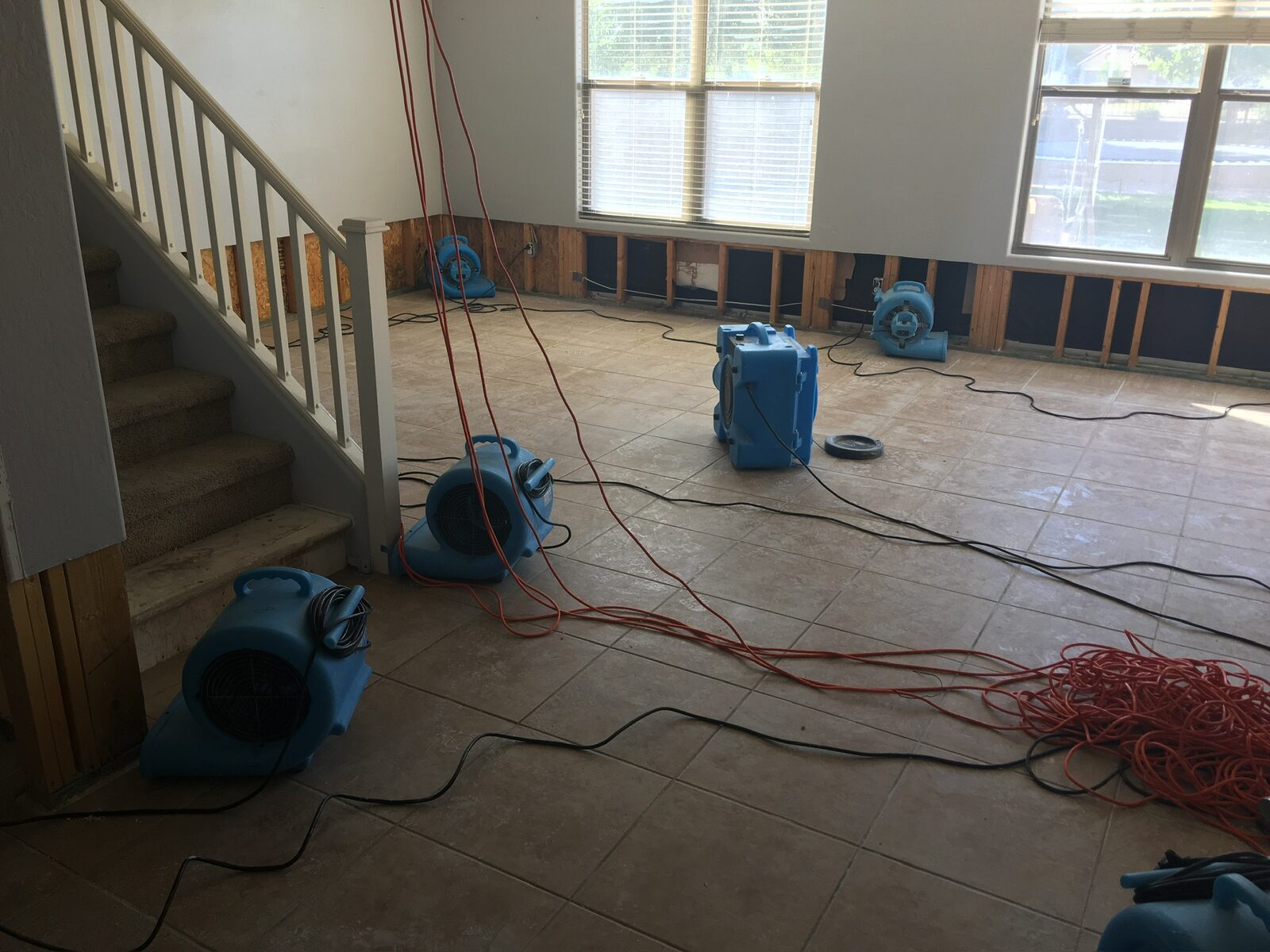
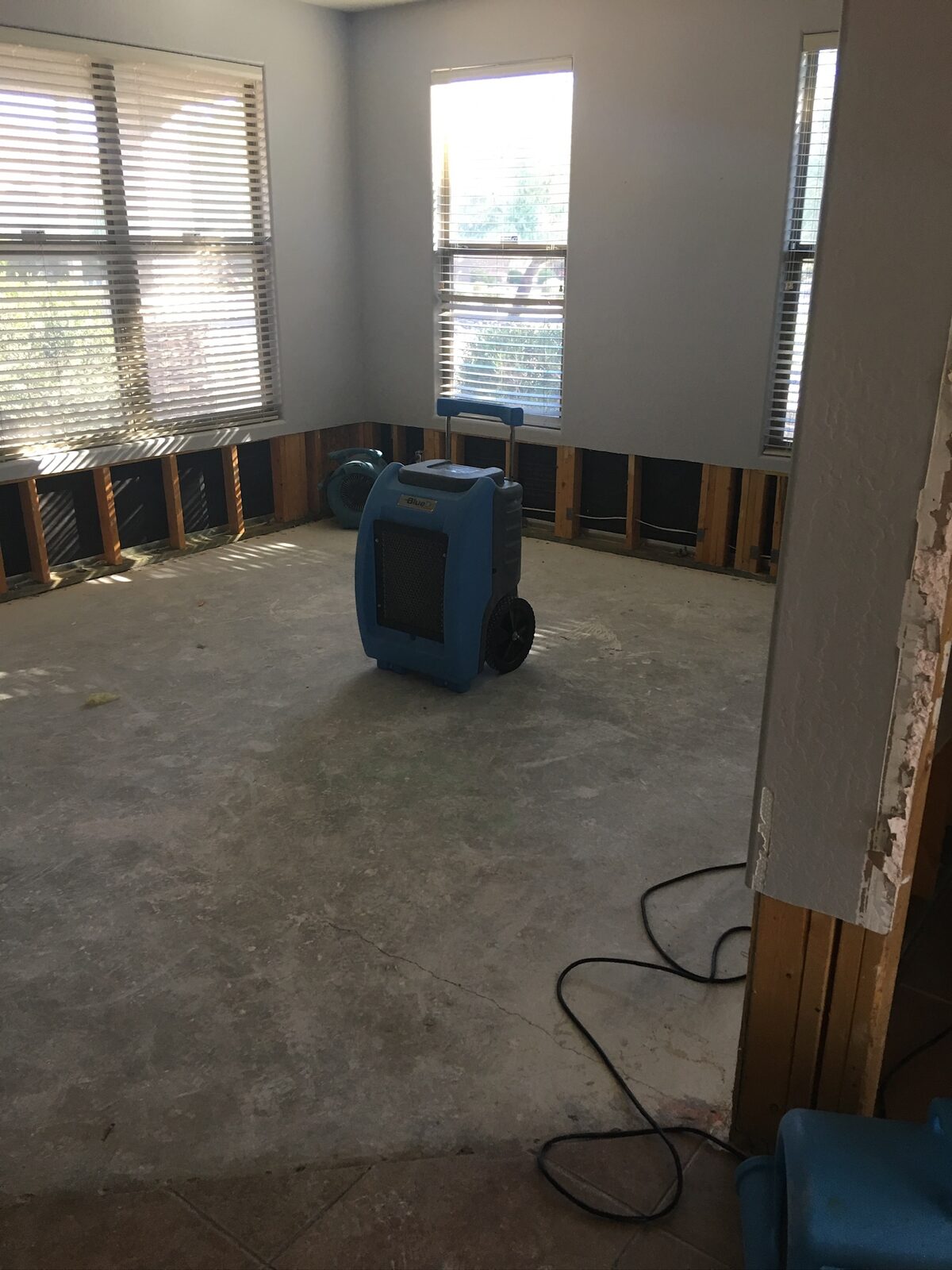
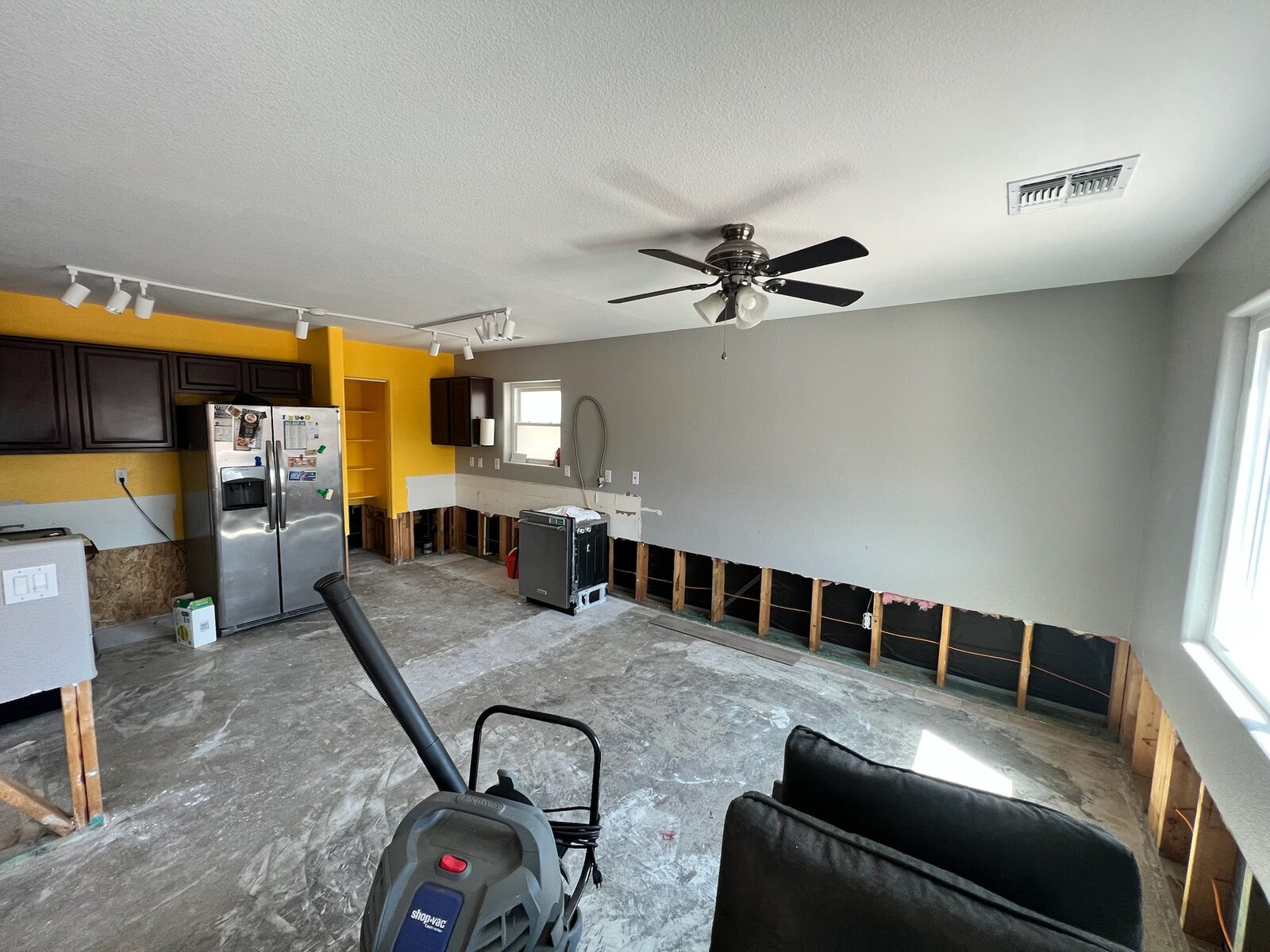
Residential reconstruction work by members of our team. See the full gallery →
More from Gold Water Fire
Fire Damage Restoration in Apache Junction, AZ
Fire and smoke damage restoration for Apache Junction homes, from board-up and soot cleanup through rebuild. Gold Water Fire, AZ ROC #264344. Call (480) 999-3339.
Reconstruction & Rebuild in Apache Junction, AZ
Rebuilding a damaged Apache Junction home after water or fire: framing, drywall, stucco, cabinets and flooring put back by Gold Water Fire. Call (480) 999-3339.
Water Damage Restoration in Apache Junction, AZ
Water damage restoration for Apache Junction homes, from slab leaks and monsoon flooding to failed water heaters. Call Gold Water Fire at (480) 999-3339.
Let someone else carry the next part
You have done what you could with fans and towels. Call Gold Water Fire at (480) 999-3339 or email Help@goldwaterfire.com, tell us what you are seeing in your San Tan Valley home, and we will take it from there.
Call (480) 999-3339Water Damage Restoration · Reconstruction & Rebuild · Fire Damage Restoration · About Gold Water Fire · Contact Us