
Water Damage Restoration in Apache Junction, AZ
You have already moved what you could off the floor, pulled up a corner of carpet to see how far it went, and pointed a box fan at the wall. Maybe it started overnight and you woke up to it. Maybe it has been slowly getting worse for a week and you kept telling yourself it was drying. Either way you are standing in a house that smells different than it did yesterday, doing math in your head about the floor, the drywall, the baseboards, and what your policy actually covers. That is an exhausting place to be, and it is not a sign you did anything wrong.
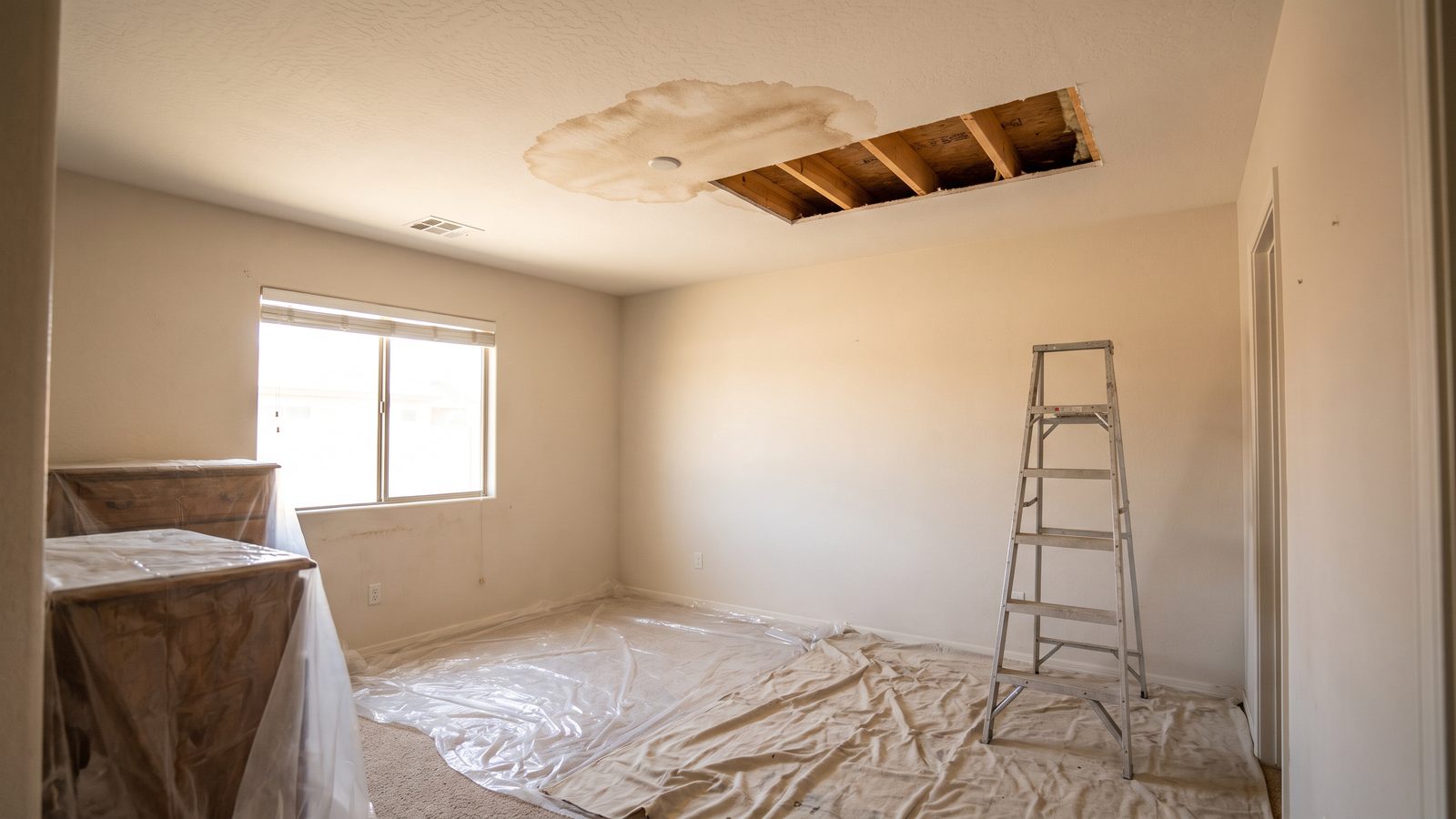
Water Damage Restoration in Apache Junction, AZ
Why Apache Junction homes take water damage the way they do
Apache Junction grew in waves, and the water problems tend to follow the era. A large share of the housing here is manufactured and park-model homes in the 55-plus communities off Apache Trail and Ironwood, where the water lines run through a belly pan under the floor. A leak there can run for weeks before anything shows up inside, and when it does show up it is usually a soft spot in the subfloor near a wall, not a visible drip. Site-built ranch homes from the 1970s and 1980s in this area were commonly plumbed with copper in the slab, and after decades in caliche-heavy soil those lines pit and fail from the outside in. The classic sign is a warm patch on a tile floor, or a water bill that jumped for no reason you can name. Then there are the newer subdivisions on the west side of town toward Gold Canyon and Superstition Freeway, where the usual culprits are the ordinary ones: a water heater that reached the end of its life, a refrigerator ice-maker line, a washer supply hose, or a toilet supply valve that let go while nobody was home.
Monsoon, dust, and the seasonal pattern out here
Apache Junction sits right up against the Superstition Mountains, and that matters when the monsoon hits. Runoff comes off the desert and the mountain fast, and streets and washes in the older, less-curbed parts of town carry it in sheets rather than draining it. Homes on low lots, and manufactured homes with skirting close to grade, can take water in from outside without anything failing inside at all. The other seasonal factor is heat. Attic and garage temperatures in July and August push flexible supply lines, washer hoses, and water heater components hard, which is why so many failures show up in the hottest stretch of the year. Winter brings the opposite risk: a hose bib or an exposed line at an unoccupied snowbird property can split on a rare freezing night, and if the house is empty until October, the water runs the whole time. If your Apache Junction property sits vacant part of the year, shutting off the main and draining the water heater before you leave is the cheapest insurance there is.
What actually has to happen after the water stops
Drying a house is not the same as drying a surface. Once the source is off, the real work is finding where the water traveled and how much of it the building materials absorbed. Water wicks up drywall and into insulation, moves under tile through the thinset, and runs along the bottom plate of a wall to show up in a room you did not expect. Moisture meters and thermal imaging are used to map that spread, because guessing leads to walls that look fine and grow mold behind the paint. Standing water gets extracted first, then wet materials that cannot be dried in place, like saturated carpet pad, laminate flooring, and the lower band of drywall, come out. Air movers and dehumidifiers are then set to pull moisture out of the remaining structure, and readings get taken over several days until the framing and subfloor are back to a normal level for the surrounding materials. In dry Arizona air it is tempting to assume evaporation will handle it. It will not handle a wet bottom plate or wet insulation inside a closed wall cavity. What gets skipped at this stage is what turns into a mold problem, or a floor that cups months later. Our team documents readings and photos as the work goes, which is the same record your insurance adjuster will want to see.
Working with Gold Water Fire
Gold Water Fire is based at 221 E Willis Rd Ste 8 in Chandler, which puts Apache Junction inside the area we cover, along with Mesa, Queen Creek, San Tan Valley, Gilbert, and the rest of the Phoenix metro. We are licensed in Arizona under AZ ROC #264344 KB-2. The part that matters for a house that has been opened up is that the same company can put it back together. Brandon Gurr, our Construction Manager, leads the reconstruction side, so drywall, texture, paint, flooring, cabinets, and trim are handled by the same people who did the drying, rather than handed off to a contractor you have to find and manage yourself. Brooke handles water and mitigation scheduling, Kristine runs the office, and Johnny leads the reconstruction crew. If you would rather read about our approach first, see water damage restoration, reconstruction and rebuild, or who we are. When you are ready to hand this off, call (480) 999-3339 or reach us through the contact page.
Questions people ask us
Do you come out to Apache Junction, or only the Chandler and Mesa side?
We cover Apache Junction and the surrounding area, including Gold Canyon-adjacent neighborhoods and out toward San Tan Valley and Queen Creek. Our office is in Chandler at 221 E Willis Rd Ste 8. Call (480) 999-3339 and we can talk through your address and what you are seeing.
My home is a manufactured home. Is the process different?
The drying principles are the same, but access is different. Water often collects in the belly pan under the floor, and insulation there can hold moisture long after the visible floor feels dry. That usually means opening the underside to remove wet insulation and dry the subfloor from below rather than only working from inside the home.
How do I know if I have a slab leak instead of something simpler?
Common signs are an unexplained jump in the water bill, a warm or damp area on a tile or concrete floor, the sound of running water when every fixture is off, or a water meter that keeps moving with the whole house shut off. Confirming it takes leak detection, and locating the line is a separate step from repairing the floor afterward.
Can you handle the repairs after the drying, or do I need another contractor?
We do both. Gold Water Fire performs the mitigation and drying, and our Construction Manager Brandon Gurr leads the reconstruction work that puts the flooring, drywall, paint, and cabinets back. You can read more on our reconstruction and rebuild page.
The standard our team works to
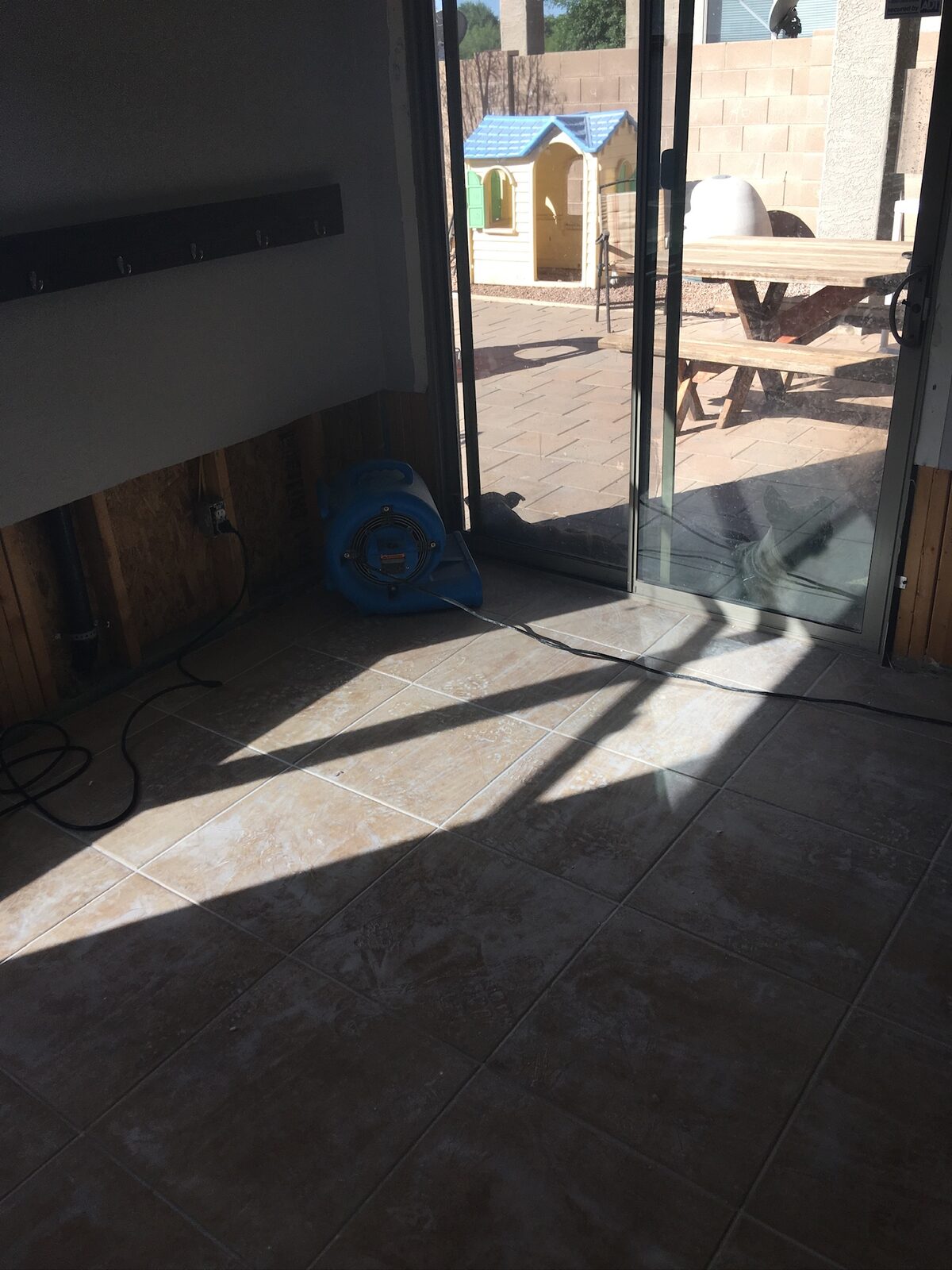
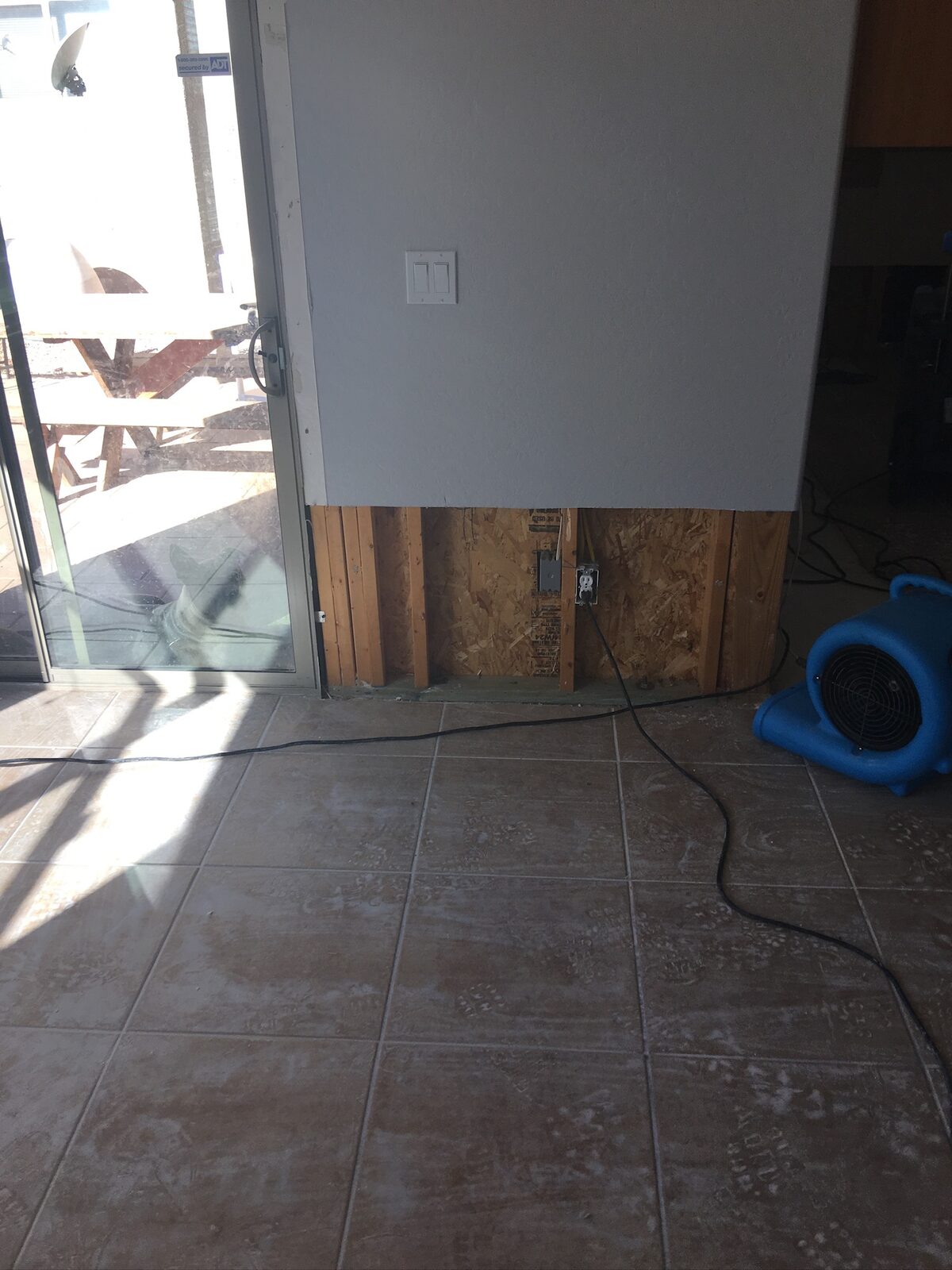
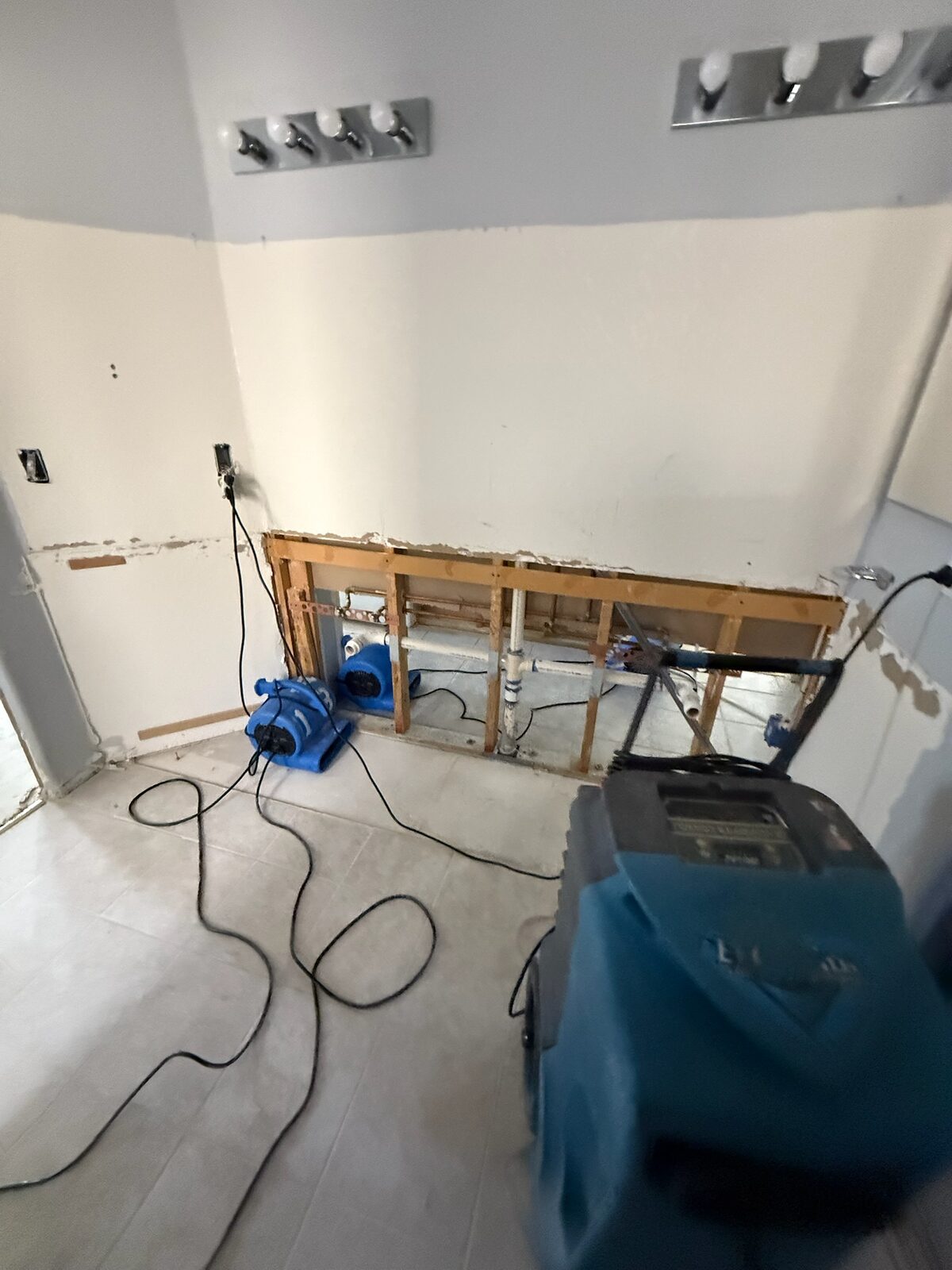
Residential reconstruction work by members of our team. See the full gallery →
More from Gold Water Fire
Fire Damage Restoration in Apache Junction, AZ
Fire and smoke damage restoration for Apache Junction homes, from board-up and soot cleanup through rebuild. Gold Water Fire, AZ ROC #264344. Call (480) 999-3339.
Reconstruction & Rebuild in Apache Junction, AZ
Rebuilding a damaged Apache Junction home after water or fire: framing, drywall, stucco, cabinets and flooring put back by Gold Water Fire. Call (480) 999-3339.
Fire Damage Restoration in Avondale, AZ
Fire and smoke damage restoration for Avondale homes, from board-up and soot cleanup through rebuild. Gold Water Fire, AZ ROC #264344. Call (480) 999-3339.
You do not have to keep managing this by yourself
Tell us what happened and what you are seeing in the house. Call (480) 999-3339 or email Help@goldwaterfire.com, and we will walk through the next step with you for your Apache Junction home.
Call (480) 999-3339Water Damage Restoration · Reconstruction & Rebuild · Fire Damage Restoration · About Gold Water Fire · Contact Us