
Fire Damage Restoration in Queen Creek, AZ
The fire is out, the trucks have pulled off Ellsworth or Ocotillo, and you are standing in a house that smells like something that will not wash off. Somebody handed you a card. Somebody else told you not to touch anything. You have been on hold with your insurance company, and you have been walking the same three rooms trying to decide what is trash and what is not, and nobody has actually told you what happens next. That part is normal, and it is not something you were supposed to already know.
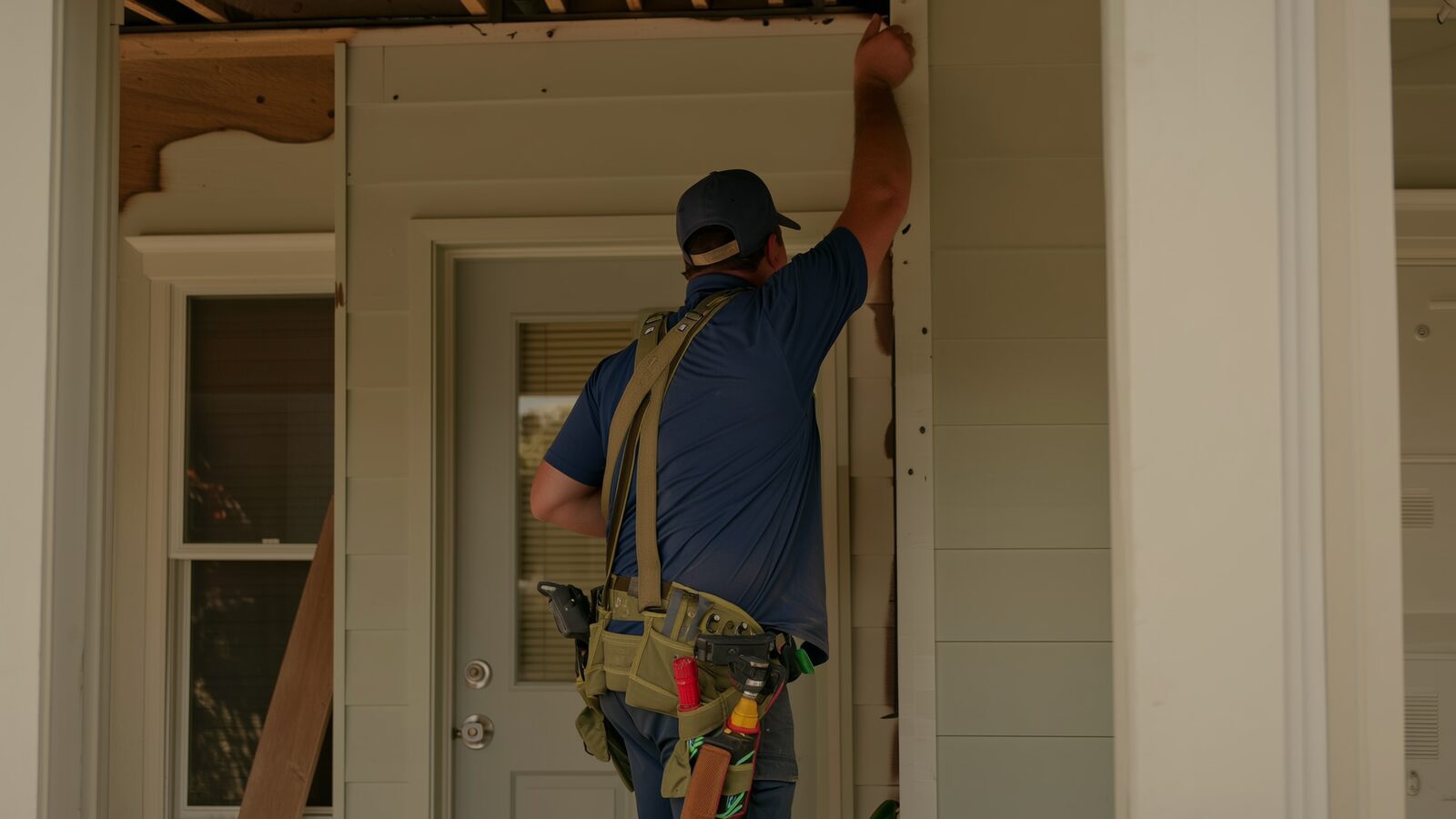
Fire Damage Restoration in Queen Creek, AZ
Smoke keeps working after the fire stops
A house fire does its worst damage in the first hour, but smoke residue keeps causing damage for days. Combustion byproducts are acidic. As they sit, they etch bare metal, pit chrome fixtures, yellow uPVC window frames, and stain grout and unsealed stone permanently rather than temporarily. That is why the first days matter more than most people expect: the difference between cleaning a surface and replacing it is often just how long the soot sat there. The type of smoke matters too. A fast, hot fire in framing and paper leaves dry, powdery soot that vacuums and dry-sponges off fairly well. A slow, smoldering fire, or anything involving plastics, foam furniture, or an electrical panel, leaves wet smoke: a sticky, tar-like film that smears if you wipe it and needs solvent-based cleaning instead. Protein smoke from a kitchen fire is worse in a different way, nearly invisible, amber-colored, and it carries an odor that comes back every time the house warms up unless the residue itself is removed. Odor is the last thing to go and the reason people call back. Smoke particles are small enough to get into the paper facing on drywall, into carpet pad, into ductwork, and into the air handler. Masking the smell with fogging alone does not solve it. Removing the source material, sealing what stays, and cleaning the HVAC system does.
Why fires here behave the way they do
Queen Creek is a young town built mostly on farmland, and the housing reflects that. Huge stretches of it went up during and after the 2000s boom: two-story stucco production homes in Cortina, Hastings Farms, Church Farm, Ironwood Crossing and the neighborhoods off Ocotillo and Riggs, plus newer builds still going in toward Meridian. That means engineered lumber, open floor plans, tall entry volumes, and vaulted great rooms. Open volume is not neutral in a fire. Smoke rises into the two-story ceiling and then rolls back down, so a contained kitchen fire on the ground floor routinely puts soot on upstairs bedroom ceilings and into the loft that never saw flame. The older side of town is different. There are still ranch properties, custom homes and horse setups on acre-plus lots east of Ellsworth and out toward the Queen Creek Wash, some predating the incorporation era, with detached shops, hay storage, tack rooms and older subpanels. Barn and outbuilding fires here tend to burn hotter and longer before anyone sees them, and they can leave a main house untouched by flame but heavily smoke-loaded through open windows and attic vents. The climate stacks the deck a few ways. Monsoon storms from July into September bring dry lightning and hard power surges, and a surge that damages an air handler or an attic-mounted unit can start a fire in the one place nobody looks. Summer roof and attic temperatures push equipment hard: attic-run ductwork, HVAC condensate systems and older aluminum-branch wiring in the few remaining pre-1980s houses. In the cool months, first use of a fireplace or a garage-mounted gas water heater after months idle is a common ignition point. And in a place where a lot of homes back onto open desert or fallow ag land, the spring bloom of buffelgrass and brittlebush dries into fuel by June, which is what makes a brush fire at the back fence line a real possibility on the Sonoran Desert edges of town.
What restoration actually involves, step by step
Fire restoration is a sequence, and the order is not arbitrary. Skipping ahead is how homes end up smelling like smoke six months later. First is making the structure safe and closed: board-up of broken openings, tarping over burn-through in the roof, and shutting off compromised utilities. In this valley, an open roof in monsoon season turns a fire loss into a fire and water loss overnight. Second is water removal, because almost every fire scene is also a water scene from suppression. Standing water and saturated pad have to come out fast, or you add microbial growth to the list of problems. That side of the work is described on our water damage restoration page. Third is demolition of what will not come back: charred framing, burned insulation, delaminated cabinetry, carpet pad, and drywall above the smoke line where residue has penetrated the paper. Fourth is cleaning and deodorization: HEPA vacuuming, dry chemical sponging on dry soot, solvent cleaning on wet smoke, contents handled item by item, duct and air handler cleaning, and sealing of framing where odor has soaked in. Fifth is the rebuild: drywall, texture and paint matched to the rest of the house, cabinets, flooring, trim, and the exterior stucco patch that has to blend with a twenty-year-old finish rather than stand out as a bright square. That is the part most homeowners underestimate, and it is handled on our reconstruction and rebuild page. Throughout, documentation matters. Photos before anything moves, a room-by-room scope, and an inventory of non-salvageable contents are what an insurance adjuster works from. Do not throw away damaged items before they are recorded.
One company through the whole thing
The reason fire claims get exhausting is that they are usually four separate jobs with four separate phone numbers: the emergency crew, the cleaner, the contents people, and finally a contractor who shows up months later and re-measures everything from scratch. Every handoff is a gap where something falls through and you are the one holding it together. Gold Water Fire handles fire damage restoration and the reconstruction that follows under one roof. Brandon Gurr, our Construction Manager, leads the rebuild side, so the person planning the demolition already knows who is putting the house back together. Johnny leads the reconstruction crew. Brooke handles water and mitigation scheduling, and Kristine runs the office, so there is a real person to call when you have a question at 8 a.m. on a Tuesday. Co-founders Jim Bennett and Jake Taylor built the company to work that way. You can read more on our about page. We are licensed in Arizona, AZ ROC #264344, KB-2, and we work the full Phoenix metro area, from northwest Peoria to southeast Avondale, southwest San Tan Valley and northwest Apache Junction, including Queen Creek, Gilbert, Chandler, Mesa and San Tan Valley. From our Chandler shop, Queen Creek is a short run down the 202 and Ellsworth. You have carried this by yourself since the night it happened. It is reasonable to let someone who does this every week carry the next part.
Questions people ask us
Can I go back into my Queen Creek home to get things out?
Only once the fire department or a qualified inspector has cleared the structure. Even then, be careful: soot is acidic and irritating, floors and stair treads can be weakened, and ceilings holding suppression water can come down. If you do go in, wear an N95 or better, gloves and closed shoes, do not run the HVAC (it spreads smoke through the whole house), and photograph rooms before you move anything so your claim record stays intact.
Should I try to clean the smoke and soot myself first?
Generally no, and wiping is the most common mistake. Dry soot smears into a permanent stain the moment you use a wet rag on it, and wet or protein smoke residue spreads under pressure. It also removes evidence your adjuster needs. The one useful thing you can do is get air moving through open windows if the weather allows and the structure is cleared, and keep the HVAC system off.
Does insurance cover smoke damage in rooms that never caught fire?
Smoke and soot damage away from the burn area is normally part of the same loss, and so is water used to put the fire out. Coverage depends on your specific policy, but you should not assume that only the burned room counts. A room-by-room scope with photos of soot lines on upstairs ceilings and inside closets is what supports that part of the claim.
Do you handle the rebuild too, or just the cleanup?
Both. Gold Water Fire does the mitigation and cleaning and the reconstruction, so drywall, texture, paint, cabinets, flooring and stucco patching are handled by the same company that opened the walls up. Call (480) 999-3339 or email Help@goldwaterfire.com to talk through your situation.
The standard our team works to
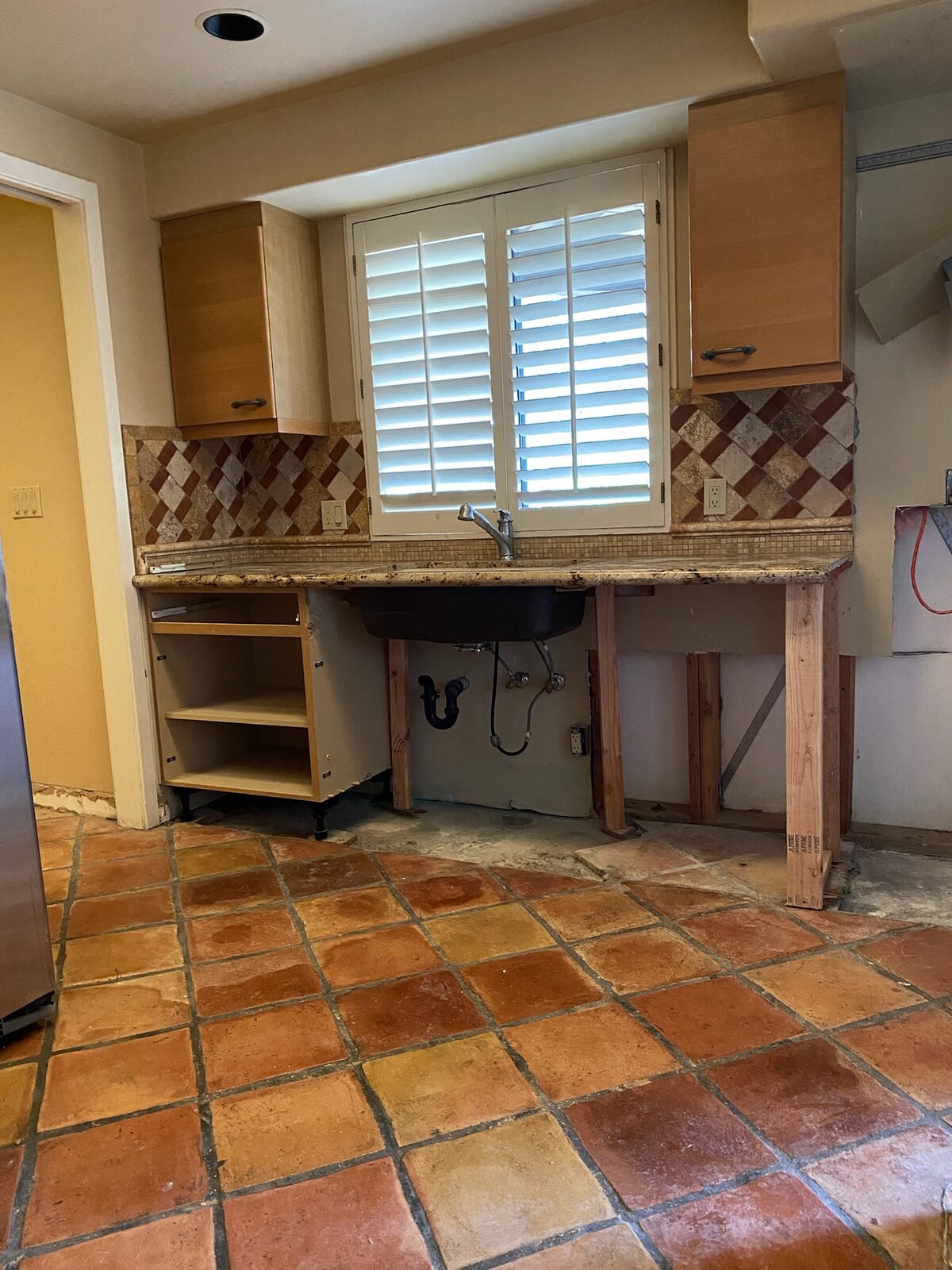
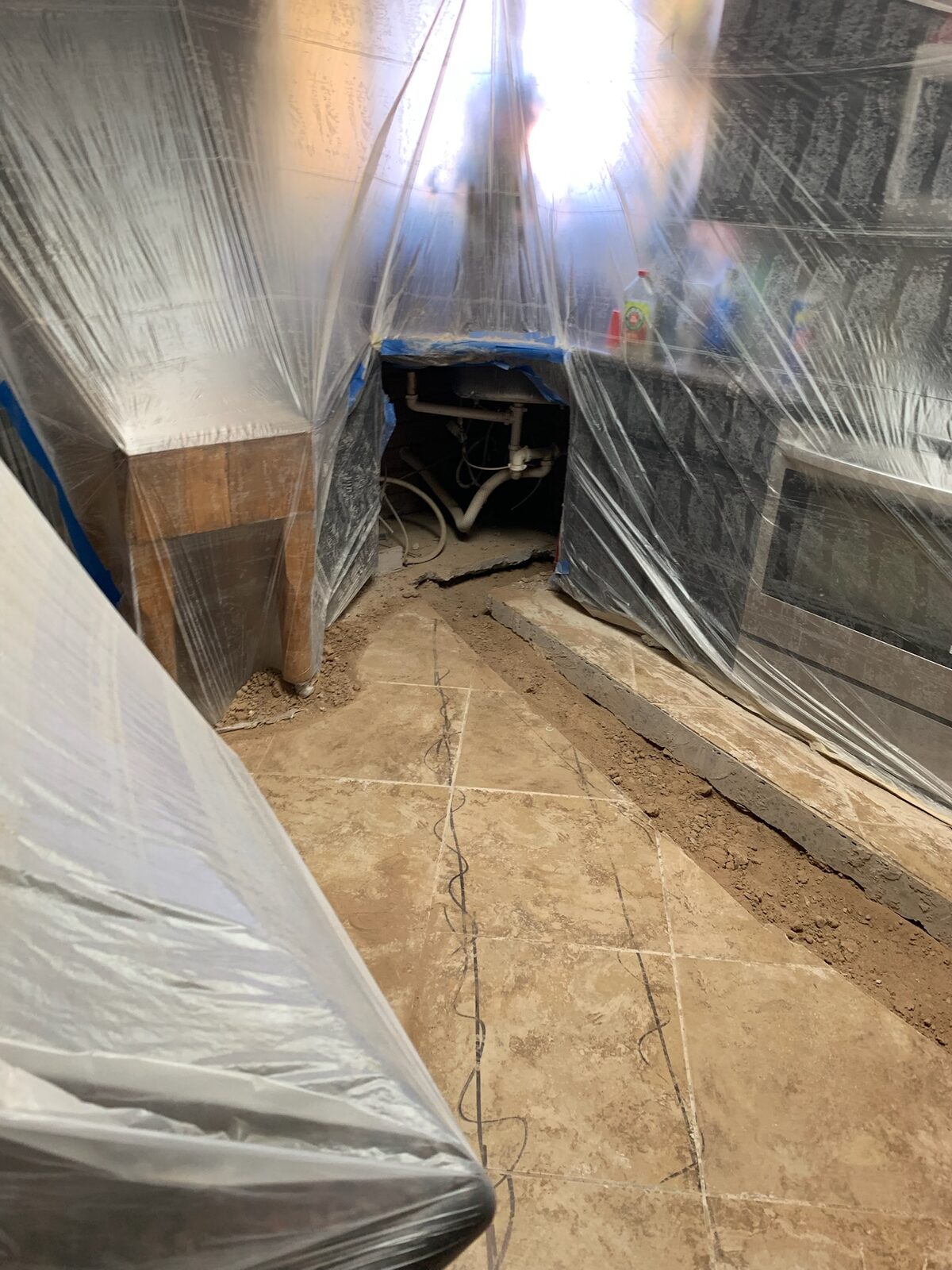
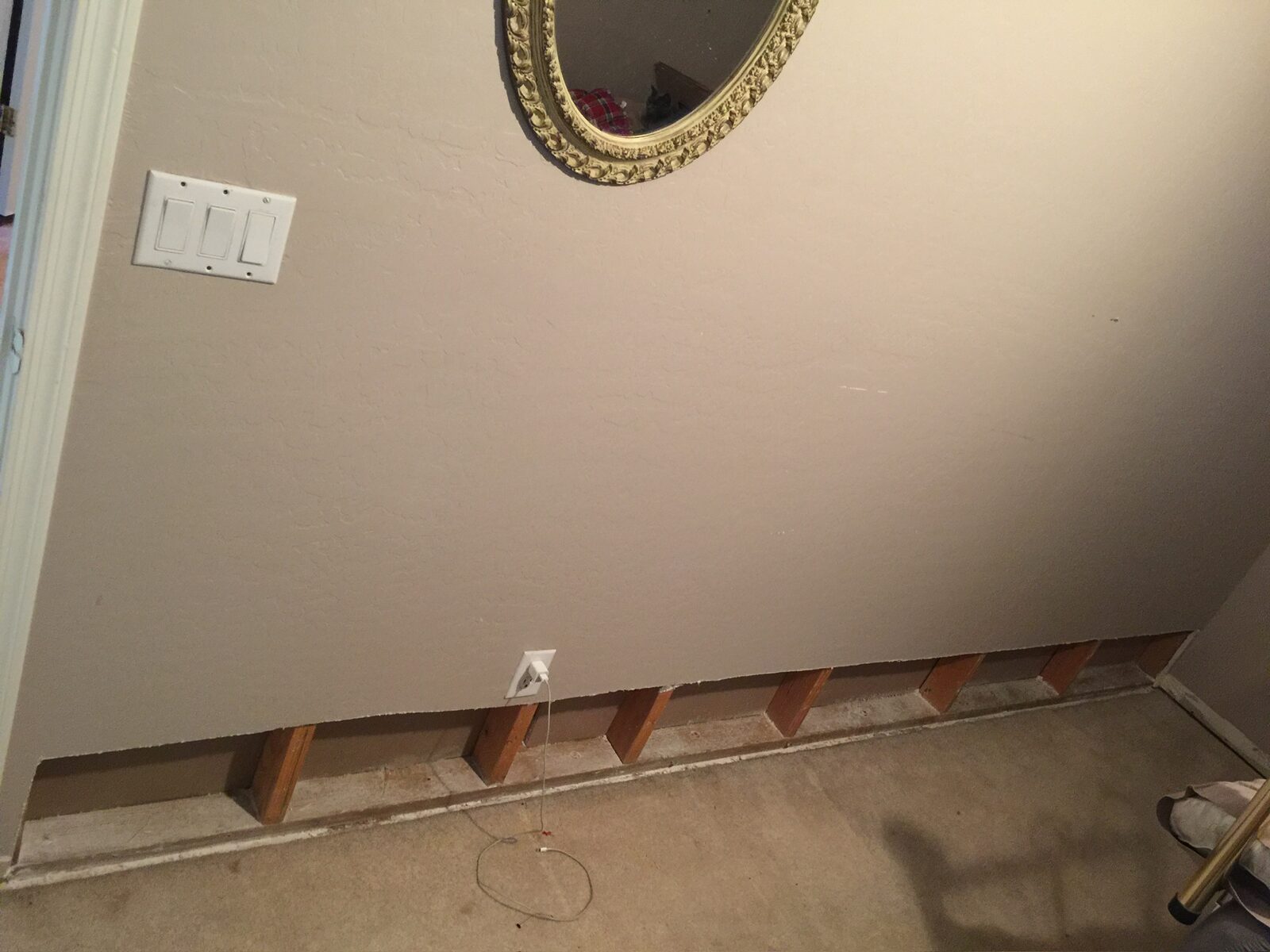
Residential reconstruction work by members of our team. See the full gallery →
More from Gold Water Fire
Fire Damage Restoration in Apache Junction, AZ
Fire and smoke damage restoration for Apache Junction homes, from board-up and soot cleanup through rebuild. Gold Water Fire, AZ ROC #264344. Call (480) 999-3339.
Reconstruction & Rebuild in Apache Junction, AZ
Rebuilding a damaged Apache Junction home after water or fire: framing, drywall, stucco, cabinets and flooring put back by Gold Water Fire. Call (480) 999-3339.
Water Damage Restoration in Apache Junction, AZ
Water damage restoration for Apache Junction homes, from slab leaks and monsoon flooding to failed water heaters. Call Gold Water Fire at (480) 999-3339.
Call when you are ready to stop doing this alone
Tell us what happened and what the house looks like right now. We will walk you through what comes next in plain language, and what we would do first. Phone (480) 999-3339, email Help@goldwaterfire.com, or reach us through our contact page. Gold Water Fire, 221 E Willis Rd Ste 8, Chandler, AZ 85286. AZ ROC #264344, KB-2.
Call (480) 999-3339Fire Damage Restoration · Water Damage Restoration · Reconstruction & Rebuild · About Gold Water Fire · Contact Us