
Water Damage Restoration in Paradise Valley, AZ
You have already done more than most people would. You shut the valve, you pulled towels off every shelf in the house, you moved the rug and the boxes off the floor, you ran the fans you had. And it is still damp under your feet, and the baseboard is still dark, and now you are standing in a hallway at an hour when nobody answers a phone, trying to decide whether this is something that dries on its own or something that quietly gets worse behind the wall. That is a hard thing to judge from the outside of a wall. Most people cannot.
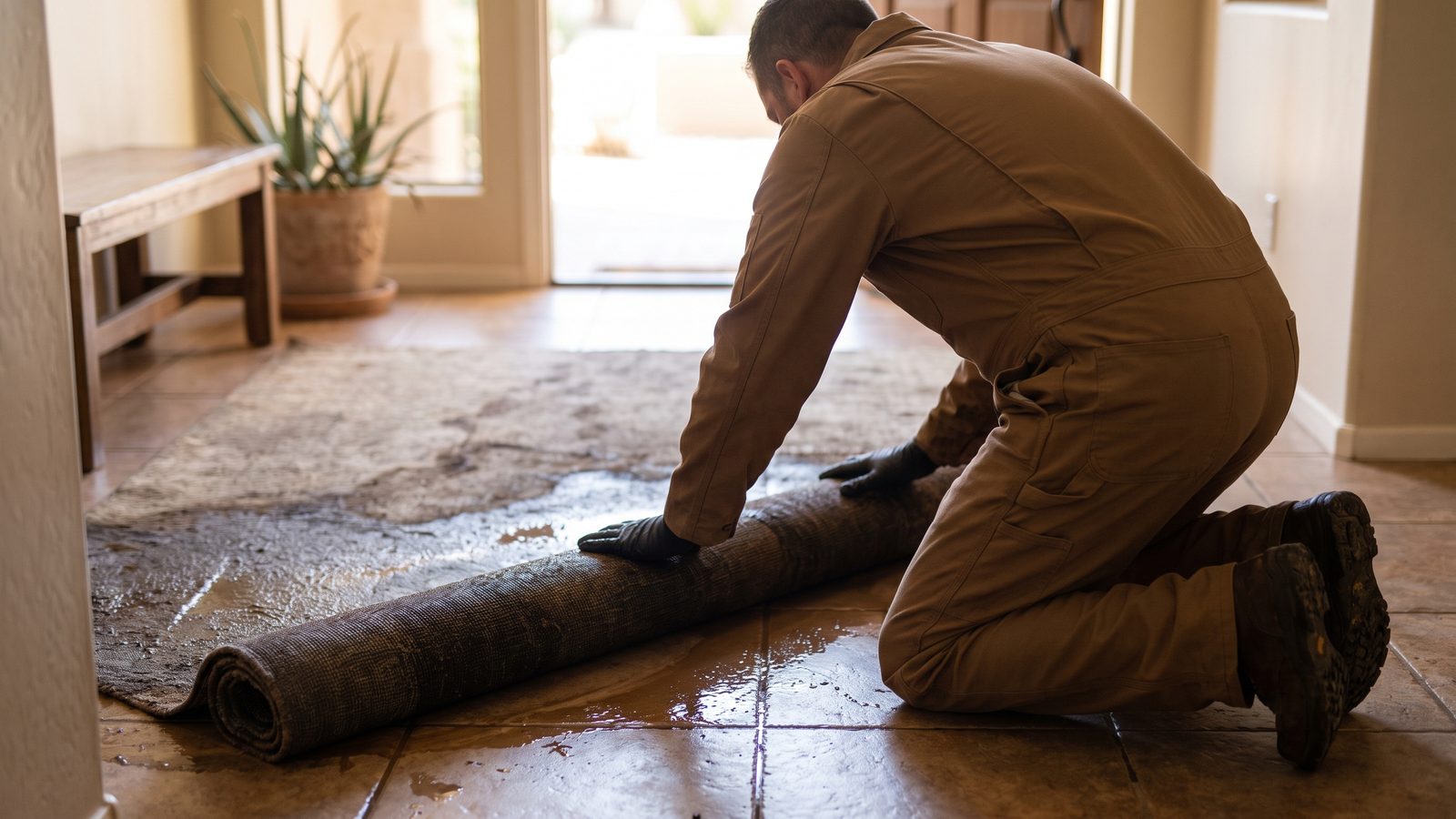
Water Damage Restoration in Paradise Valley, AZ
Why Paradise Valley homes take water damage the way they do
Paradise Valley is largely custom homes on big lots, and a lot of that housing stock went in from the 1950s through the 1970s and 1980s, with heavy custom building continuing since. That mix matters for water. Older custom builds in the Valley often ran copper supply lines that have had decades of hard Arizona water moving through them, and pinhole leaks in copper tend to weep slowly rather than burst, so the first sign is a stain or a musty smell instead of a flood. Homes built or remodeled in the late 1990s and 2000s may have polybutylene or early plastic fittings at the manifold and water heater that fail at the connection. Slab-on-grade construction is the other factor. When a line under the slab leaks, water travels along the slab and wicks up into bottom plates, drywall, and the underside of wood and stone flooring, and it can do that for weeks before it shows anywhere you would look. Add the local specifics. Many Paradise Valley lots sit against or below the flanks of Camelback Mountain and Mummy Mountain, and desert hillside ground sheds monsoon rain instead of absorbing it. A single August or September storm cell can push sheet flow and debris down a slope toward a courtyard, a garage apron, or a lower-level room, and a driveway that drains toward the house will do it every time until the grade or the drain is changed. Flat and low-slope roofs, common on the mid-century and contemporary desert architecture here, are another repeat offender: parapets, scuppers, and roof drains clog with dust and palo verde litter, water ponds, and it finds a seam. Evaporative coolers and rooftop AC units on those same roofs add condensate lines that clog with dust and overflow into ceilings.
What actually needs to happen in the first day or two
Water damage is a clock problem more than a volume problem. Category and class of water, how far it spread, and how long it sat all determine whether a wall gets dried or opened. Some general guidance that holds regardless of who you call: Moisture has to be measured, not guessed. Surfaces feel dry long before framing, insulation, and the bottom of drywall are dry. Meters and thermal imaging show where water actually traveled, which is usually farther than the visible edge of the stain. Clean water does not stay clean. Water from a supply line starts as Category 1, but sitting against dirty flooring, insulation, or organics for a day or two shifts what it takes to clean it up safely. Sewage backup and toilet overflow past the trap are a different problem from the start and need containment. Air movement alone is not drying. Fans move humid air around. Dehumidification pulls water out of it so materials can release moisture, and the two together are what dries a structure. A closed room with fans and no dehumidifier can raise humidity enough to spread the problem to dry materials. Some things get saved, some do not. Tile and hardwood can often be dried in place with mats and controlled heat. Wet fibrous insulation, saturated MDF cabinet bases, and wet carpet pad usually go. Natural stone, plaster, custom millwork, and specialty finishes common in Paradise Valley homes deserve a careful call rather than a fast demo. The humidity here helps and hurts. Low outdoor humidity most of the year is an advantage for drying. Monsoon season is not, and running an open house in August can work against you.
Stop the source
Main shutoff, angle stop, or water heater valve. If it is a roof or exterior drainage issue, get water diverted away from the wall before anything else.
Document it
Photos and video of standing water, the source, and every affected room before anything is moved. Insurance decisions get made from that record.
Do not close it up
Wet baseboard and cabinet kicks put back too early trap moisture. Leave affected areas open until readings say the structure is dry.
Watch for the smell
A musty, earthy odor after a leak usually means moisture is still in a cavity. That smell rarely goes away without the moisture going away.
Where Gold Water Fire fits, plainly
Gold Water Fire handles water damage restoration across the Phoenix metro, and Paradise Valley sits well inside our service area, which runs from northwest Peoria to southeast Avondale, southwest San Tan Valley, and northwest Apache Junction, plus outlying areas past that. The part that matters most to a homeowner in your position is that we do not hand you off at the halfway point. The same company that dries the structure also rebuilds it. Brandon Gurr is our Construction Manager and leads the reconstruction and rebuild side, and Johnny leads the reconstruction crew, so the drywall, paint, trim, tile, and cabinetry that came out to dry the house get put back by people already on the job. That is a small detail that saves a large amount of your remaining energy. The common version of this story is one company that dries and leaves, and then months of you trying to line up a contractor while your kitchen has no cabinets. On our side of the phone, Brooke handles water and mitigation scheduling, and Kristine runs the office, so you are talking to people who know your address and not a new dispatcher every time. We are licensed in Arizona under AZ ROC #264344, KB-2. Jim Bennett and Jake Taylor are our co-founders, and you can read more about the team on our about page. If the loss involved smoke or a burned appliance in addition to water from fire suppression, that is a combined job, and fire damage restoration covers how we approach that.
The paperwork side, without the runaround
Most Arizona homeowner policies treat a sudden pipe or appliance failure differently from long-term seepage and from surface water coming in from outside, which is why documentation on day one matters so much. Moisture readings, photos, a written scope of affected materials, and a daily drying log are what a carrier looks for. We keep that record as we work and share it with you and your adjuster, so decisions about what gets dried versus replaced are based on readings rather than opinions. You still own the claim and the choices in it. Our job is to make sure the file reflects what your house actually needs.
Questions people ask us
How long does drying a Paradise Valley home usually take?
There is no honest single answer, because it depends on how much material got wet, what that material is, and how long the water sat. What we can tell you is how it is decided: drying continues until moisture readings in the affected framing and finishes match unaffected areas of the same house. We take readings daily and show them to you rather than telling you it feels dry.
My leak was under the slab. Does the floor have to come out?
Not always. Slab leaks require locating and repairing the line, which usually means opening a limited area of floor, but drying the surrounding slab and wall cavities can often be done with mats, targeted airflow, and dehumidification instead of removing an entire floor. With stone, wood, or custom tile, it is worth the extra effort to try in-place drying first.
Do you cover Paradise Valley and the surrounding areas?
Yes. We serve the full Phoenix metro, from northwest Peoria to southeast Avondale, southwest San Tan Valley, and northwest Apache Junction, and outlying areas further than that. Paradise Valley, along with nearby Scottsdale and Phoenix, is well within that area.
Can you also rebuild what gets removed?
Yes. Reconstruction is one of our three services alongside water and fire damage restoration. Brandon Gurr, our Construction Manager, leads that work, so the drywall, trim, cabinetry, and flooring removed for drying are put back by the same company that dried the house.
The standard our team works to
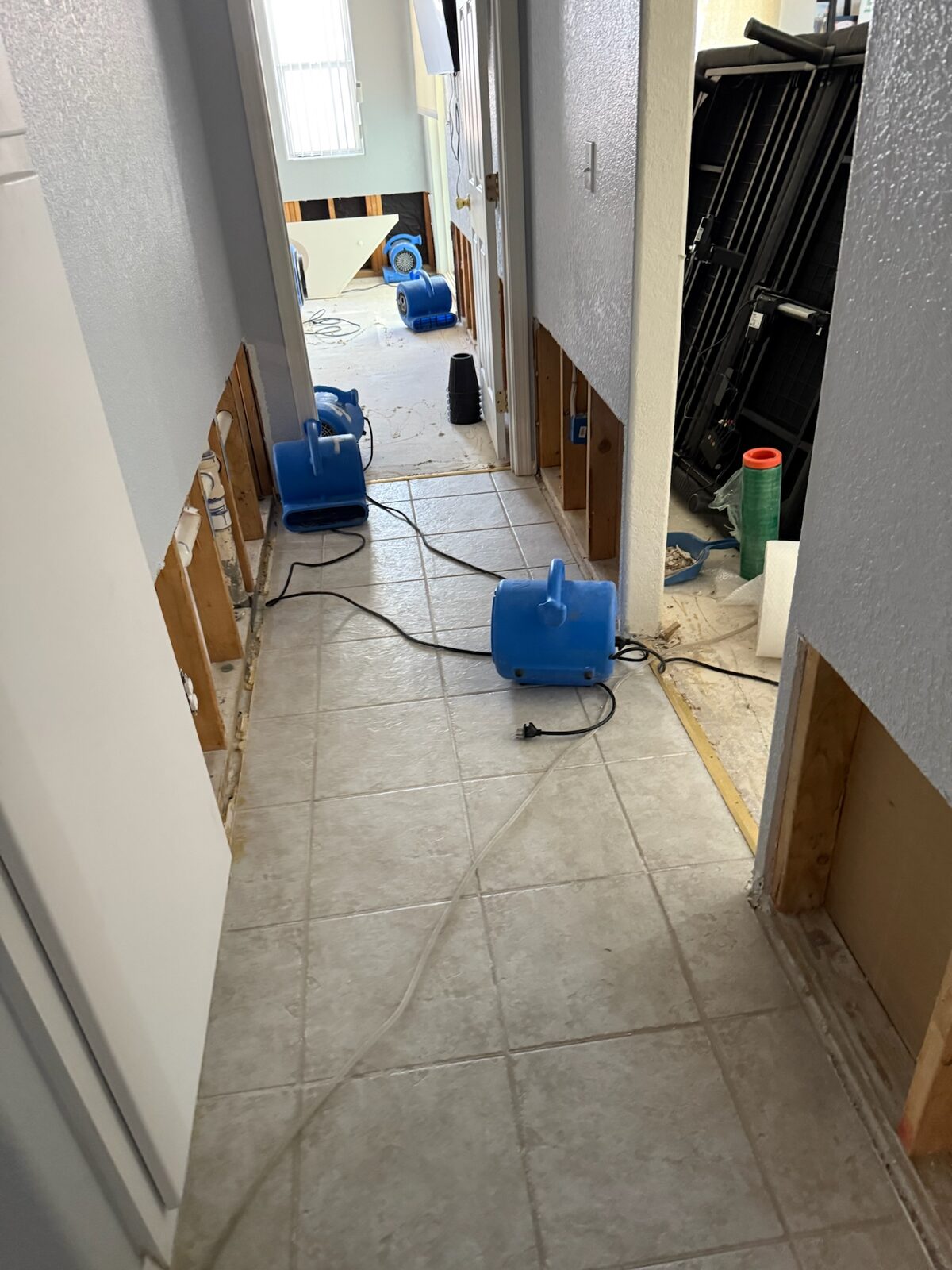
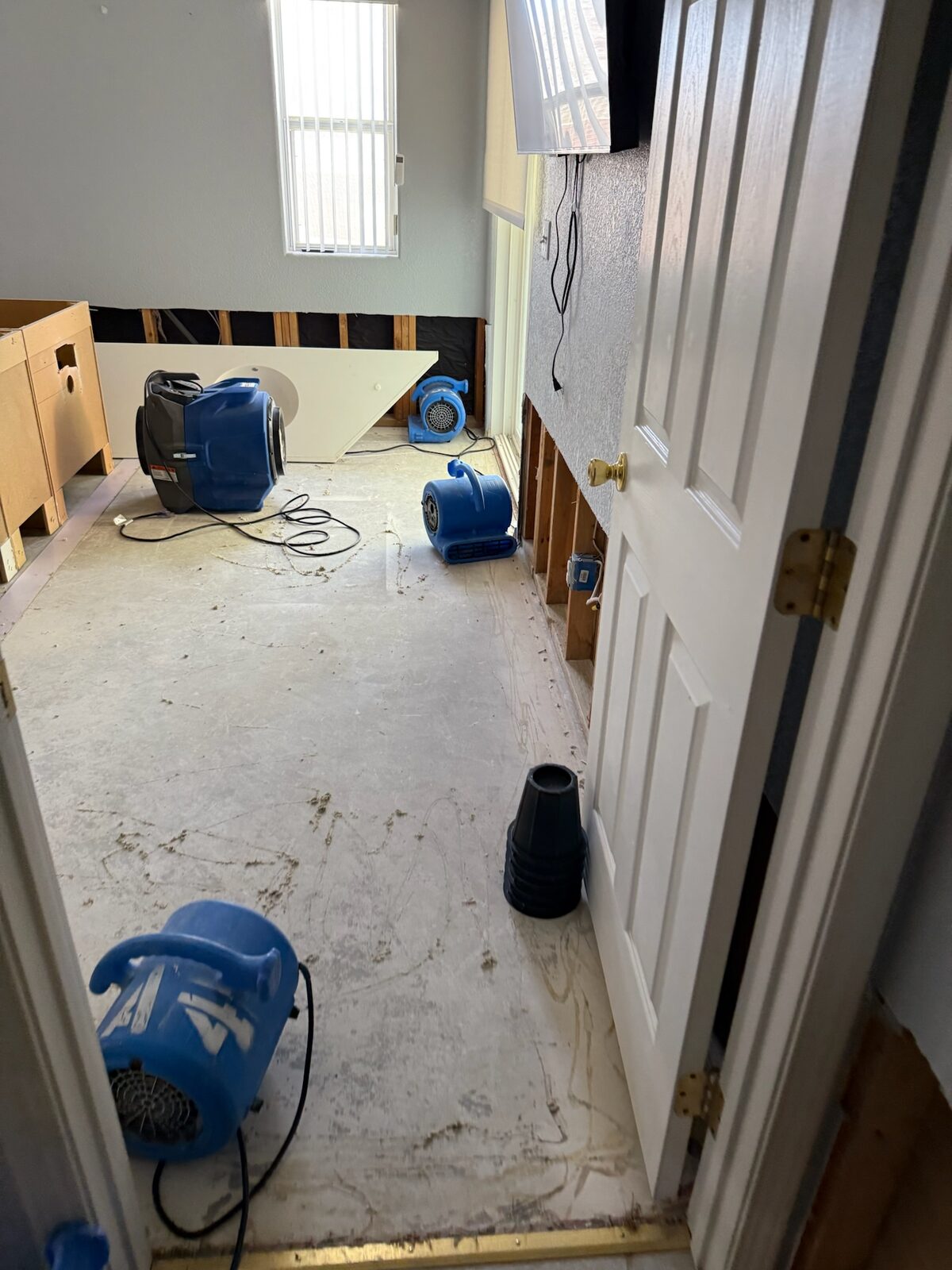
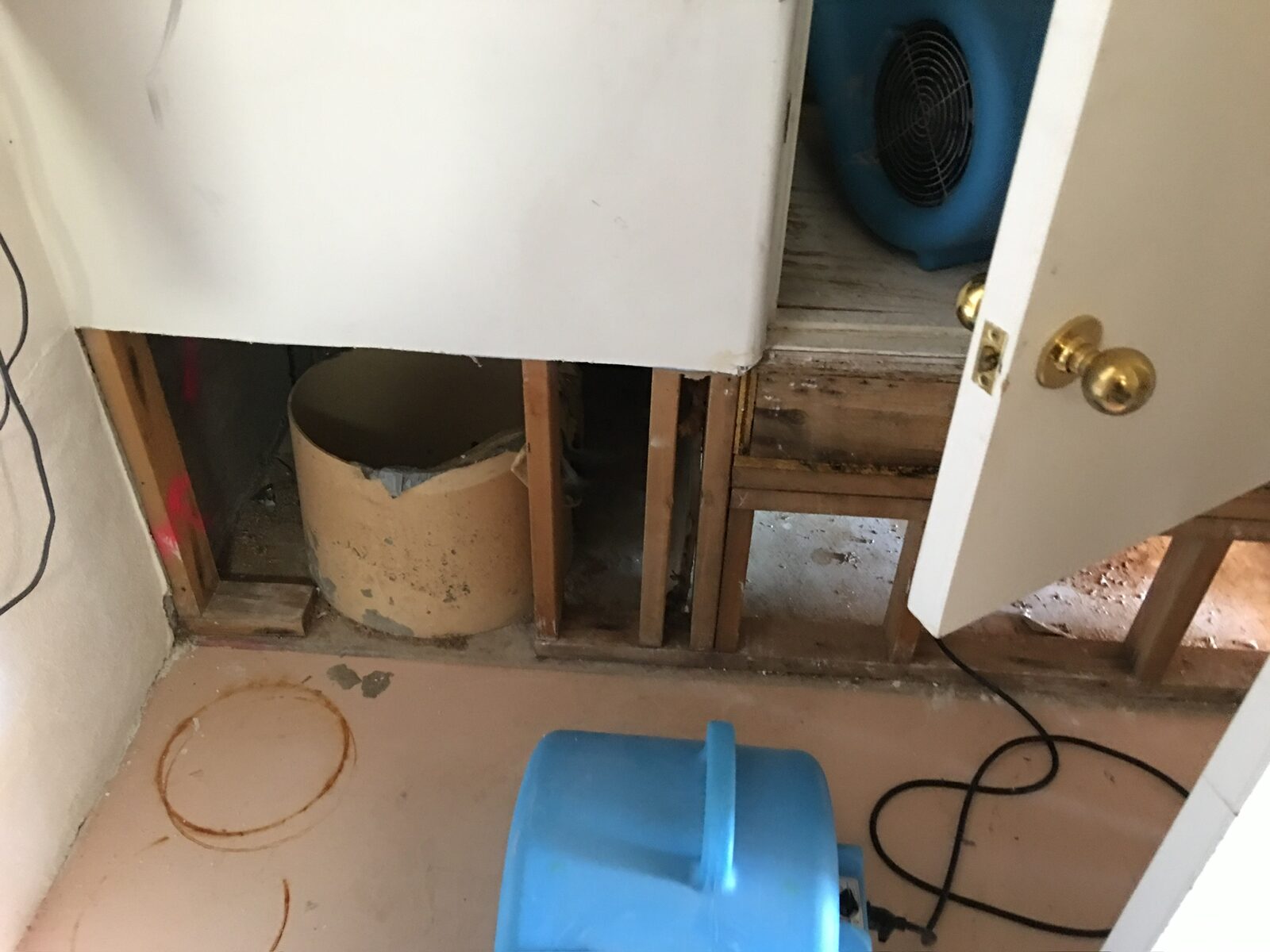
Residential reconstruction work by members of our team. See the full gallery →
More from Gold Water Fire
Fire Damage Restoration in Apache Junction, AZ
Fire and smoke damage restoration for Apache Junction homes, from board-up and soot cleanup through rebuild. Gold Water Fire, AZ ROC #264344. Call (480) 999-3339.
Reconstruction & Rebuild in Apache Junction, AZ
Rebuilding a damaged Apache Junction home after water or fire: framing, drywall, stucco, cabinets and flooring put back by Gold Water Fire. Call (480) 999-3339.
Water Damage Restoration in Apache Junction, AZ
Water damage restoration for Apache Junction homes, from slab leaks and monsoon flooding to failed water heaters. Call Gold Water Fire at (480) 999-3339.
You do not have to keep guessing at this
Call (480) 999-3339 or email Help@goldwaterfire.com and tell us what you are seeing. We will come out to your Paradise Valley home, measure what is wet, and tell you plainly what needs to happen and what does not. You can also reach us through our contact page at /contact.html.
Call (480) 999-3339Water Damage Restoration · Fire Damage Restoration · Reconstruction & Rebuild · About Gold Water Fire · Contact Us