
Water Damage Restoration in Glendale, AZ
You have been on your hands and knees with towels for a while now, and the carpet still darkens when you press it. Maybe you already pulled the baseboard off to look. Maybe you moved the couch and found the pad underneath is soaked in a shape wider than the spill you thought you had. It is late, the shop vac is full again, and somewhere in the back of your mind you know that mopping is not the same as drying. That is a hard thing to admit at the end of a long day.
Water Damage Restoration in Glendale, AZ
Why Glendale homes get wet in particular ways
Glendale is not one housing stock, it is at least three, and each one fails differently. The blocks around Catlin Court and the older downtown grid go back to the early and mid 20th century, with galvanized or early copper supply lines, cast iron drains, and in many cases wood floors over crawl or over-poured slabs. Corroded galvanized pipe tends to weep for months before it bursts, so the first sign is often a stained baseboard or a swollen door casing rather than standing water. The 1970s and 1980s tracts through central and west Glendale sit on post-tension and conventional slabs with copper running inside the concrete, which is where slab leaks show up as a warm spot on the floor, a water bill that jumped for no reason, or the sound of running water when every fixture is off. The newer north Glendale and Arrowhead Ranch builds bring their own list: braided washer hoses, plastic supply risers under sinks, refrigerator ice maker lines run through a wall, and second floor laundry rooms where a failure drops water through the ceiling of the room below. Knowing which of these you have changes where a technician looks first.
What water does after the visible part stops
Water moves by capillary action, so it climbs drywall and wicks sideways under flooring long after the surface looks dry. In Glendale, a lot of homes have carpet over pad over slab, and the pad holds many times its own weight in water while the carpet face feels only damp. Cabinet toe kicks, the underside of particleboard vanities, and the paper facing on the back side of drywall all hold moisture that a surface reading will miss. Arizona's dry outdoor air is genuinely an advantage here, but only if the wet materials are opened up and air is moved across them in a controlled way. A closed room with a box fan often just relocates humidity into the framing. The standard sequence is: stop the source, extract standing water, map how far the moisture actually traveled with meters and sometimes thermal imaging, remove materials that cannot dry in place (wet pad, saturated insulation, swollen MDF), then set air movers and dehumidifiers and take readings daily until the wet materials match the dry ones. That last part, documented daily readings, is what tells you drying finished rather than stalled.
Seasonal risk through the Glendale year
Monsoon season, roughly July into September, brings the wind-driven storms that push water in at roof penetrations, skylights, and around window flanges, and the intensity matters more than the total: a half inch in twenty minutes overwhelms a flat or low-slope roof with a clogged scupper faster than a slow all-day rain ever would. Many older Glendale homes have flat sections with parapets, and a blocked drain there means the water has nowhere to go but through. Winter has a different pattern. A cold snap in the low 30s at night finds exposed hose bibs, uninsulated pipe in an unheated garage, and irrigation backflow assemblies, and a split there often runs undetected while nobody is home. And year round there are the failures that have nothing to do with weather: a water heater at the end of its life, an angle stop that lets go, a main line that pushes water under a slab. If you have citrus and turf on a timer, a stuck valve can also saturate soil against the foundation for hours before anyone notices.
What handing it off actually looks like
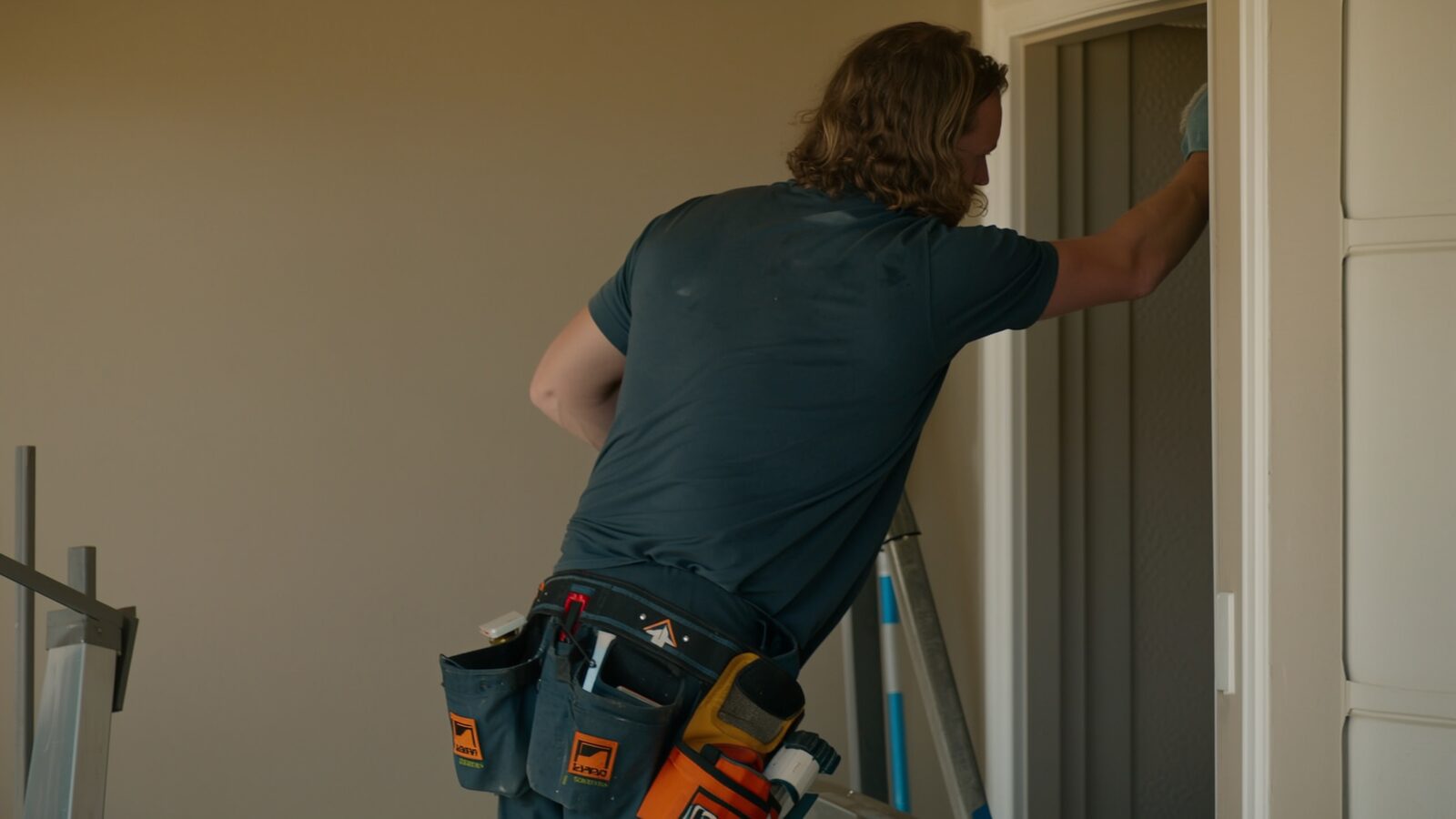
There is nothing wrong with what you have been doing. Extraction, moisture mapping, and controlled drying are just equipment and measurement problems, and the equipment involved is not something most households own. Gold Water Fire works throughout the Phoenix metro, including Glendale, Peoria, El Mirage, Surprise, and the west valley, and the same crew that handles the drying can carry the job through to putting the room back: drywall, texture, paint, cabinets, flooring. Brandon Gurr, our Construction Manager, leads the rebuild side, so you are not left with a dry but gutted room and a second contractor to find. Our AZ ROC license is #264344, KB-2. If you want to know what the repair half involves, see water damage restoration and reconstruction and rebuild, or read about the people who will show up on our team page.
Questions people ask us
How do I know if a slab leak is causing this?
Common signs include a section of floor that feels warm, a water bill that climbed without a change in use, the sound of running water with every fixture shut off, and damp carpet or dark grout lines that keep coming back near the middle of a room rather than near a fixture. Shutting off the main and watching whether the meter dial still moves is a useful first check. Confirming the exact location usually takes listening equipment or thermal imaging.
Do I have to tear out wet drywall and carpet?
Not always. Whether a material dries in place depends on how long it was wet, how contaminated the water was, and what the material is. Clean water caught early often means the drywall can stay and only the carpet pad comes out. Water that sat for days, or came from a sewer line or a washing machine drain, generally means removal because of contamination rather than moisture alone. Particleboard cabinet bases and MDF baseboard usually swell past saving.
Should I call my insurance company before or after calling a restoration company?
Either order works, but stopping the water and starting extraction should not wait on a claim decision, because ongoing damage tends to be the part policies argue about. Photograph everything before you move it, keep any failed part such as a burst hose or angle stop, and hold on to receipts. A restoration company that documents daily moisture readings gives you a record your adjuster can actually use.
Do you work in Glendale specifically?
Yes. Gold Water Fire covers the full Phoenix metro area, roughly northwest to Peoria, southeast to Avondale, southwest to San Tan Valley, northwest to Apache Junction, and outlying areas beyond that. Glendale is well inside that. Call (480) 999-3339 or email Help@goldwaterfire.com.
The standard our team works to
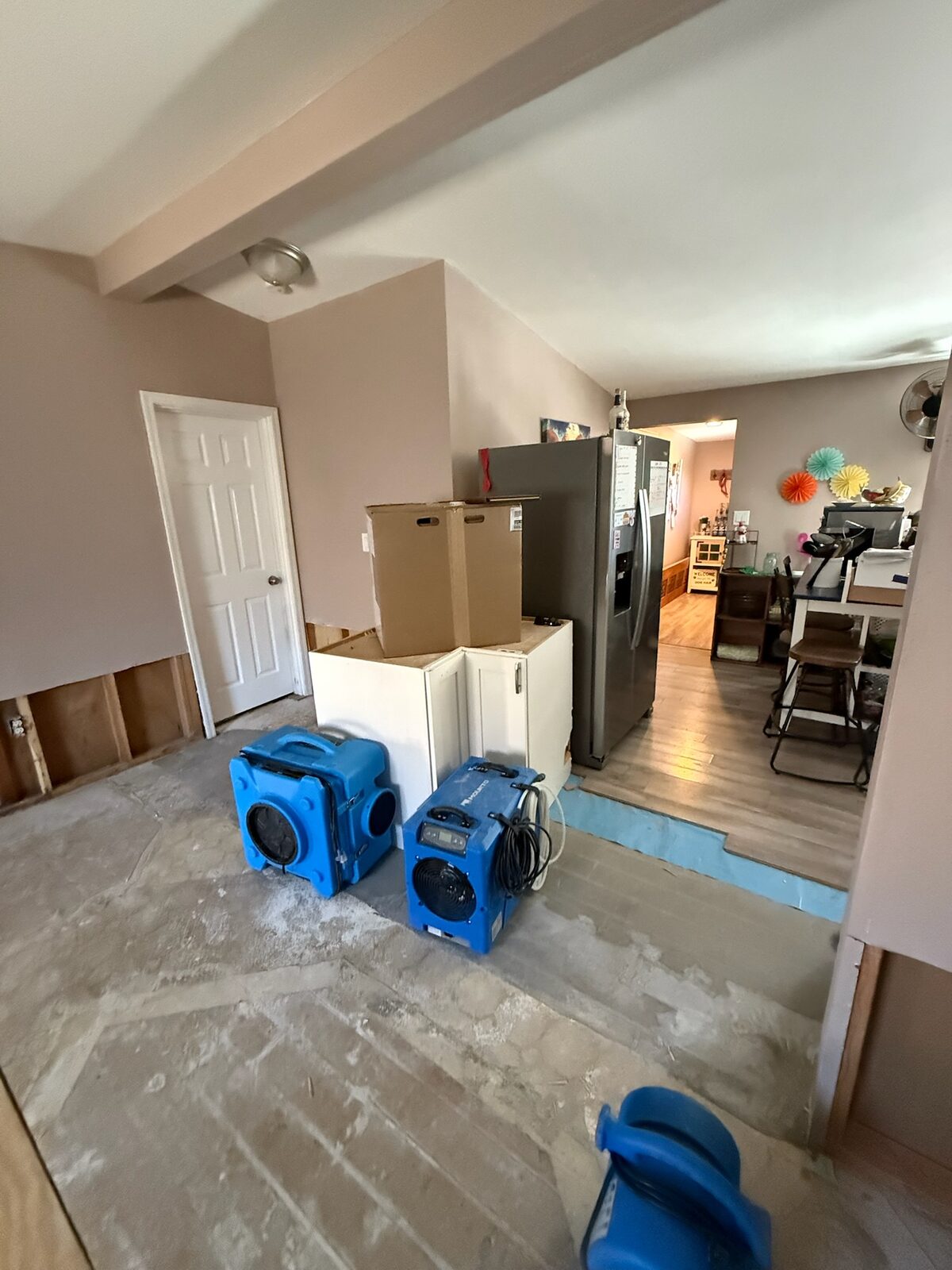
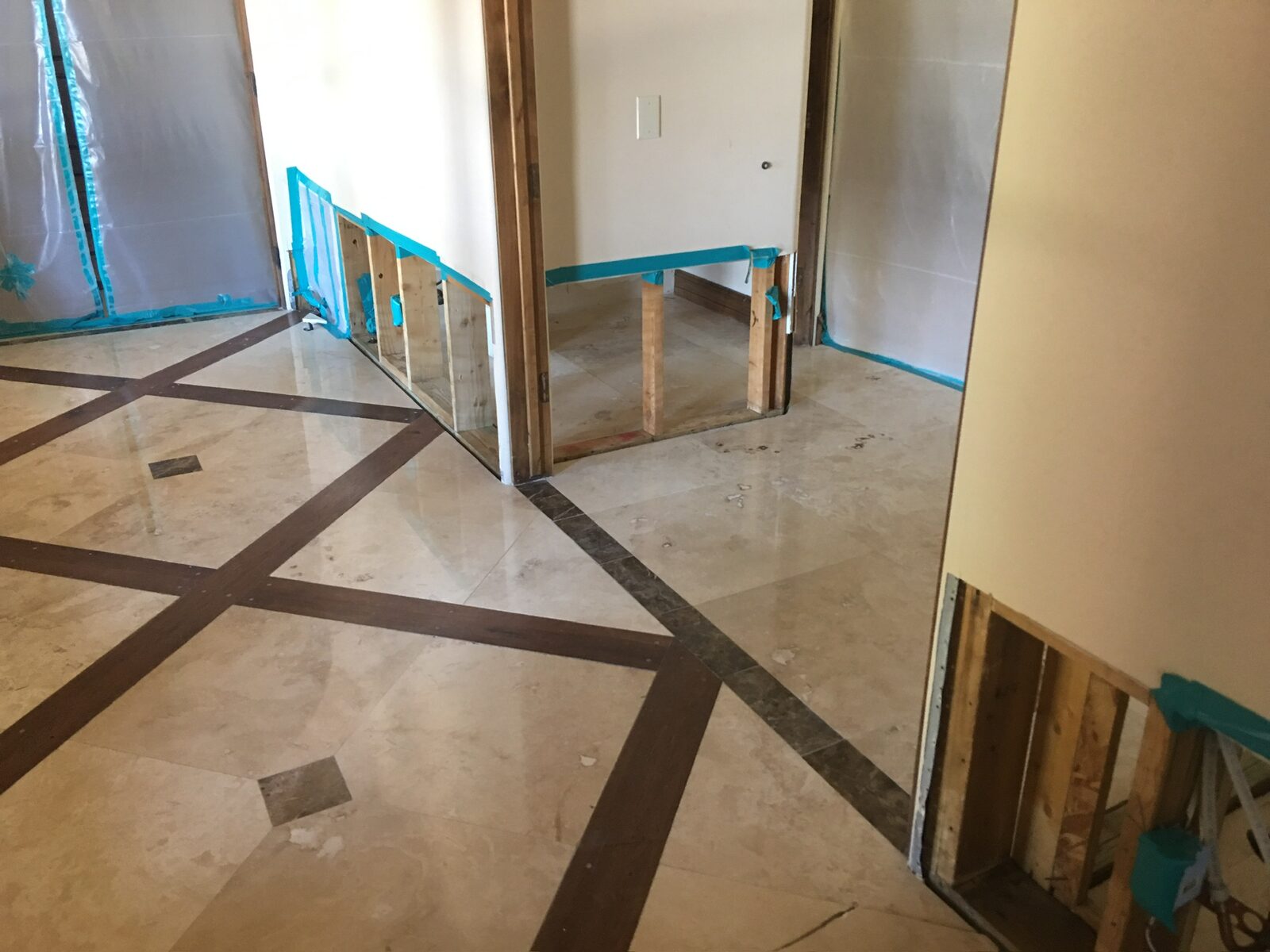
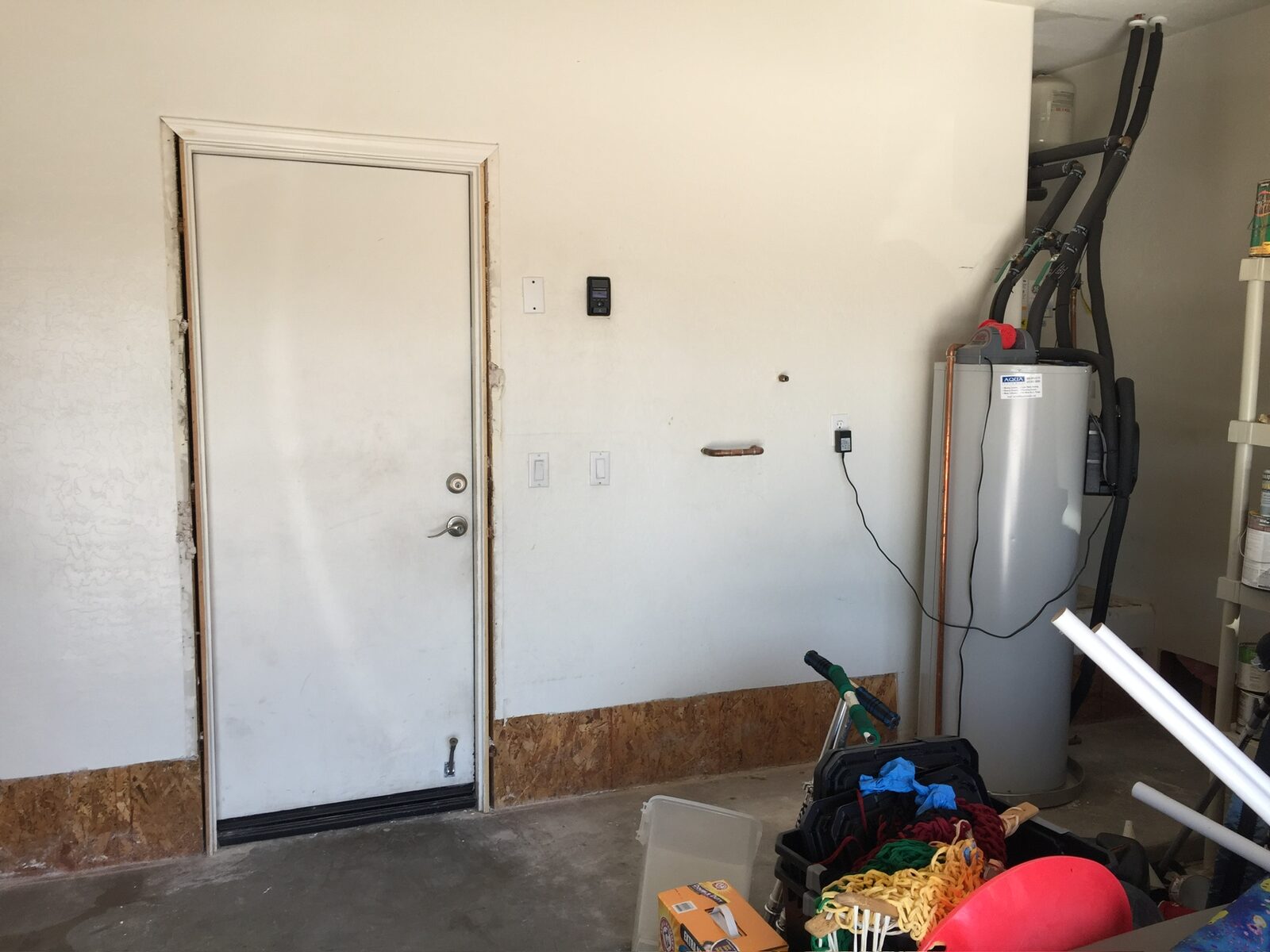
Residential reconstruction work by members of our team. See the full gallery →
More from Gold Water Fire
Fire Damage Restoration in Apache Junction, AZ
Fire and smoke damage restoration for Apache Junction homes, from board-up and soot cleanup through rebuild. Gold Water Fire, AZ ROC #264344. Call (480) 999-3339.
Reconstruction & Rebuild in Apache Junction, AZ
Rebuilding a damaged Apache Junction home after water or fire: framing, drywall, stucco, cabinets and flooring put back by Gold Water Fire. Call (480) 999-3339.
Water Damage Restoration in Apache Junction, AZ
Water damage restoration for Apache Junction homes, from slab leaks and monsoon flooding to failed water heaters. Call Gold Water Fire at (480) 999-3339.
Put the towels down and let someone else measure it
Call (480) 999-3339 or email Help@goldwaterfire.com and tell us what you are looking at in your Glendale home. We will ask where the water came from, how long it has been wet, and what materials are involved, then tell you plainly what drying it properly will take. AZ ROC #264344, KB-2.
Call (480) 999-3339Water Damage Restoration · Reconstruction & Rebuild · About Gold Water Fire · Contact Us