
Reconstruction & Rebuild in Fountain Hills, AZ
The drying equipment is gone, the smell is mostly gone, and what is left is a house with its insides opened up. Studs where a wall used to be. A hallway that ends in plastic sheeting. Half a kitchen. You have already made more decisions in the last two weeks than you make in a normal year, and now someone wants to know what tile you want and whether the cabinets should match the old ones you no longer have a sample of. It is a strange kind of tired, being surrounded by your own house and not able to live in it.
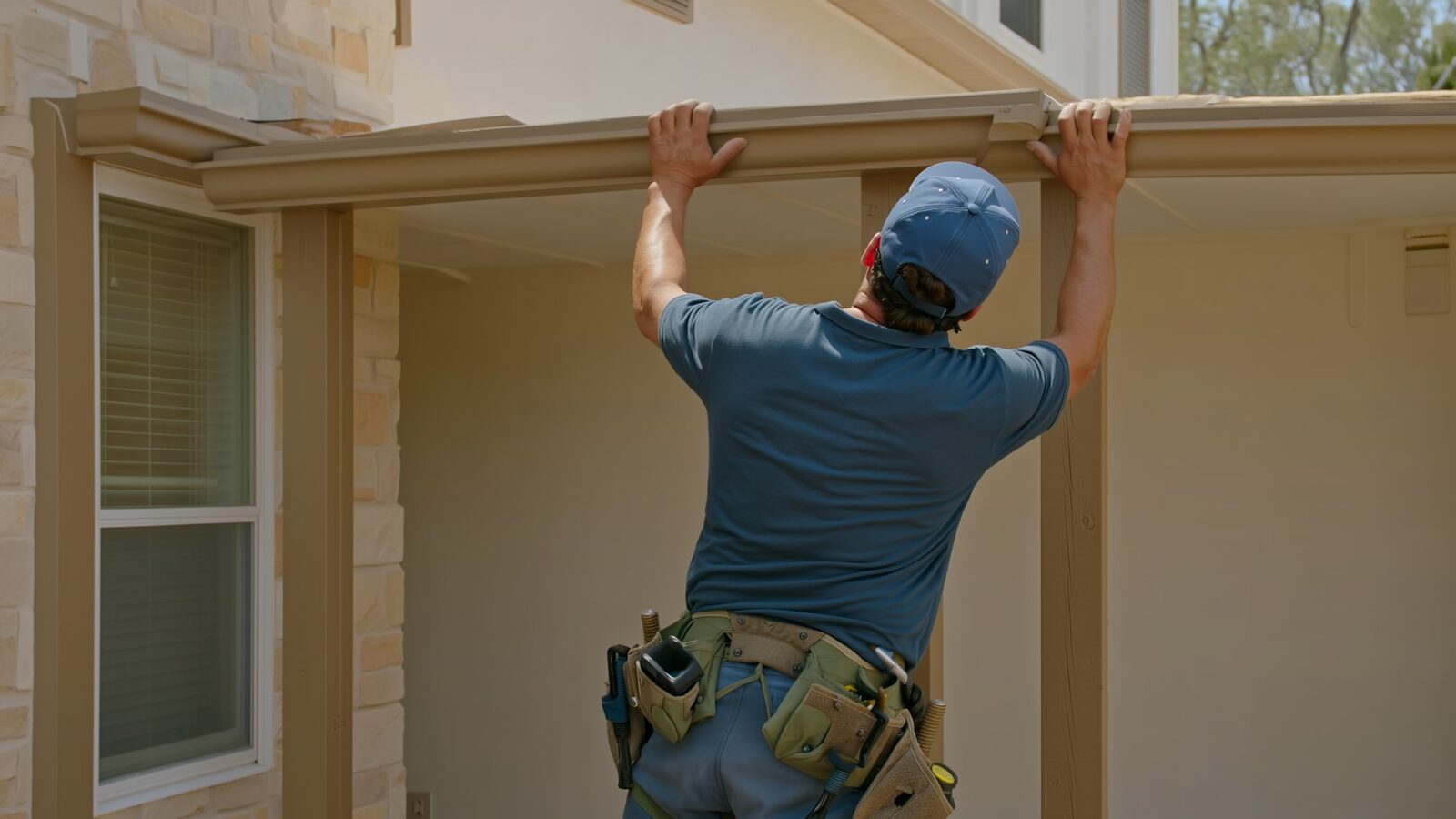
Reconstruction & Rebuild in Fountain Hills, AZ
Rebuilding on a hillside lot is not the same as rebuilding on a flat one
Fountain Hills was platted in the early 1970s as a master-planned community on the slopes below the McDowells, and the housing stock reflects three distinct waves: the original 1970s and early 1980s ranch and territorial homes, a heavy build-out through the 1990s and early 2000s, and custom hillside homes tucked into the ridgelines above Palisades. Each wave rebuilds differently. The older homes often have post-tension or slab-on-grade floors with soft copper supply lines, popcorn or heavy-texture ceilings that are difficult to blend after a partial ceiling replacement, and framing built before current insulation and egress standards. Once a wall is open, code can require more than a strict like-for-like patch. The newer custom homes bring the opposite problem: stone veneer, coffered and beamed ceilings, imported tile, and finishes that were specified once, twenty years ago, by a builder who is no longer in business. Matching those is real work, not a catalog order. Then there is the lot itself. Steep driveways, split-level entries, walk-out lower levels, and limited street parking on the hillside streets change how material gets staged and how debris gets out. A rebuild plan that ignores access on a Fountain Hills hillside lot falls apart on day one.
What tends to send Fountain Hills homes into a rebuild
Two patterns dominate here. The first is monsoon. From roughly July into September, storms coming off the McDowells drop water fast onto slopes that shed it just as fast. Homes below a wash or at the bottom of a sloped driveway take water at the garage and the lower level, and wind-driven rain finds tile roof underlayment that has baked in the sun for two decades. Roof underlayment is usually what fails first on an older Fountain Hills tile roof, not the tile. The second is the quiet one. Fountain Hills has a large share of seasonal and part-time residents, and a supply line that lets go in an empty house in August runs for days or weeks. That is the difference between drying a bathroom and rebuilding a floor system, cabinetry, drywall, and baseboard across half a level. Fire work here has its own local shape. The community backs onto desert preserve and open state land, so wildfire and brush exposure is real, and interior kitchen and electrical fires in older homes with original panels are more common than people expect. Smoke in a home with open-beam ceilings and stone travels and settles differently than smoke in a sealed stucco tract home. General guidance for any of these: photograph everything before demolition, keep a sample of any finish that is being torn out (a piece of tile, a cabinet door, a section of baseboard), and do not let the mitigation phase end without a written scope of what was removed. Those three things make the rebuild far easier.
From open framing back to a finished house
Reconstruction picks up where drying and cleaning stop. In practice that means confirming what came out and why, getting a scope and drawings that reflect it, pulling permits with the Town of Fountain Hills where the work requires them, and then running the trades in the right order: framing, rough mechanical, electrical and plumbing, inspection, insulation and drywall, texture and paint, then flooring, cabinetry, trim, and fixtures. The part homeowners feel most is sequencing and matching. Texture blending on an older ceiling, dye lots on tile, stain matching on trim, and getting a cabinet run to read as one kitchen rather than two halves. That is where a rebuild either disappears into the house or announces itself forever. Brandon Gurr leads reconstruction and rebuild work at Gold Water Fire, with Johnny as Reconstruction Team Lead running the job on site. Brandon came to this from years of construction work before Gold Water Fire, at Gurr Brothers Construction, and that is the background he brings to the finish carpentry and structural side of these jobs. Because we handle water damage restoration and fire damage restoration as well, the same company that opened the wall can be the one that closes it, which removes the handoff where scope usually gets lost.
Scope and documentation
Written scope of what was removed, what goes back, and where code requires an upgrade over like-for-like. This is also what your insurance adjuster works from.
Permits and inspections
Structural, electrical, and plumbing work in Fountain Hills is permitted through the Town. We handle the filing and schedule inspections so the trades are not sitting idle.
Matching what was there
Ceiling texture, tile, stone, cabinet profiles, and trim stain. On 1970s and 1990s Fountain Hills homes, this is usually the hardest part and the part that gets rushed elsewhere.
Site access on hillside lots
Staging material and hauling debris on a steep driveway or narrow hillside street gets planned before the first truck arrives, not improvised.
You have carried the emergency part. This part is different
The first days after a loss run on adrenaline. You shut off the water, you moved what you could, you made the calls. That was survivable because it was fast and it was obvious what to do next. A rebuild is not fast and it is not obvious. It is six trades in sequence, a permit office, an adjuster who wants line items, and a hundred small finish decisions that only matter later when you notice the seam. Coordinating that from your phone while living somewhere else is not a test of how much you love your house. It is a project management job, and it is a reasonable thing to hand to someone whose whole job is doing it. What we can tell you plainly: Gold Water Fire is licensed in Arizona, AZ ROC #264344, KB-2. Co-founders Jim Bennett and Jake Taylor built the company around doing the mitigation and the rebuild under one roof. Kristine handles the office side and Brooke handles scheduling, so there is a person to reach who knows your job. You can read more about the team on our about page, and the full scope of rebuild work on our reconstruction page.
Questions people ask us
Do I have to use my mitigation company for the rebuild?
No. You can hire whoever you want for the reconstruction phase. Keeping it with the same company usually helps, because the people who opened the walls already know what is behind them and what was removed, which means fewer surprises and less re-explaining to a new contractor and to your adjuster.
Will you work with my insurance adjuster?
Yes. Most rebuilds after fire or water damage are paid through a claim, and the adjuster needs a documented, line-item scope of what is being restored. We build that scope and communicate directly with your adjuster so you are not translating construction language back and forth.
Can you match the finishes in an older Fountain Hills home?
That is a normal part of the work. Discontinued tile, 1970s ceiling texture, and stained trim from a builder who no longer exists all come up here. Sometimes it is a direct match, sometimes it means blending to a natural break line so the repair does not read as a patch. We will tell you honestly which one your situation is before we start.
Do I need a permit for repairs after a loss?
It depends on the work. Cosmetic replacement of drywall, paint, and flooring often does not, while structural framing, electrical, plumbing, and mechanical changes generally do, and those are permitted through the Town of Fountain Hills. We determine what applies to your scope and handle the filing.
The standard our team works to
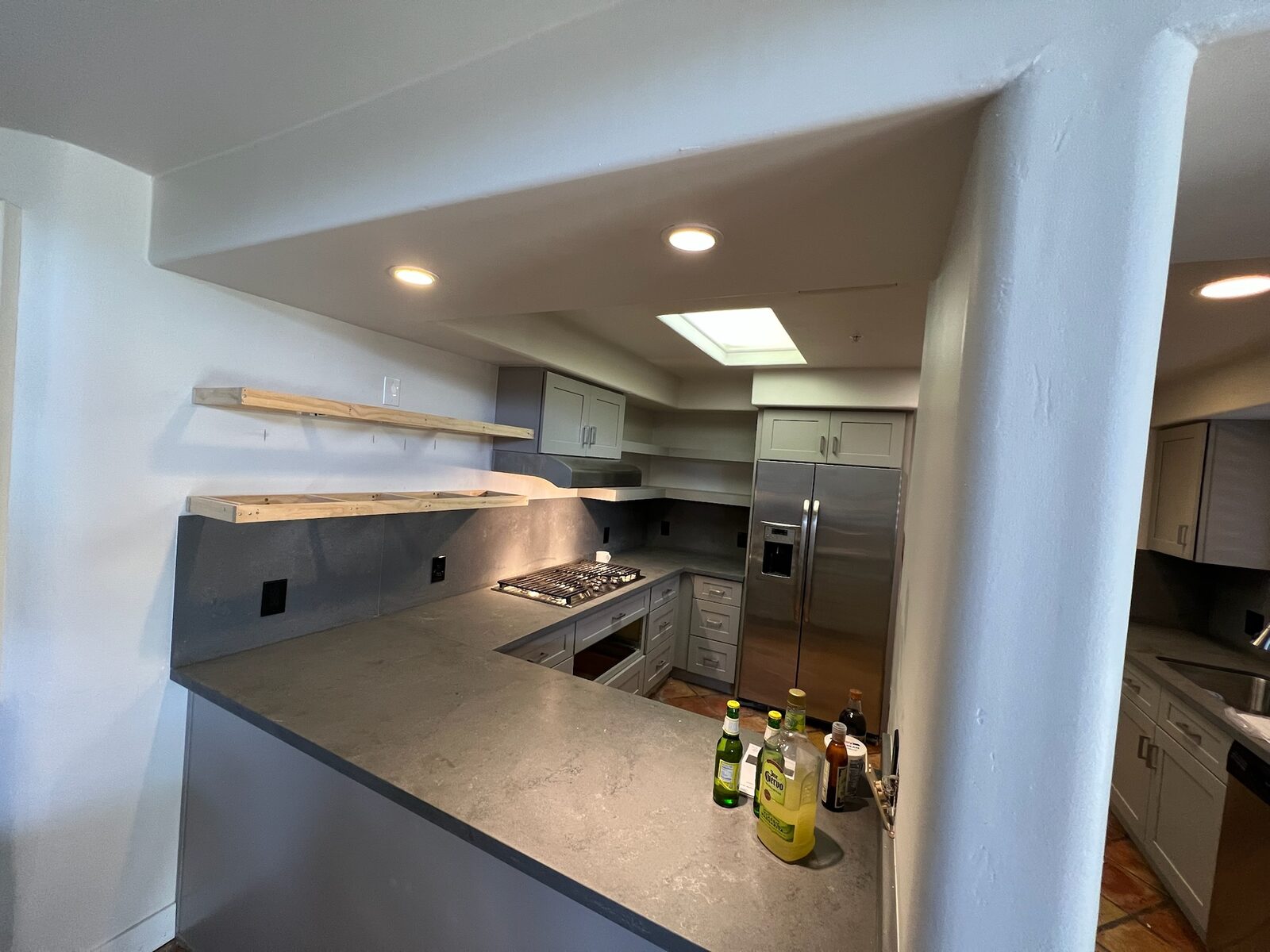
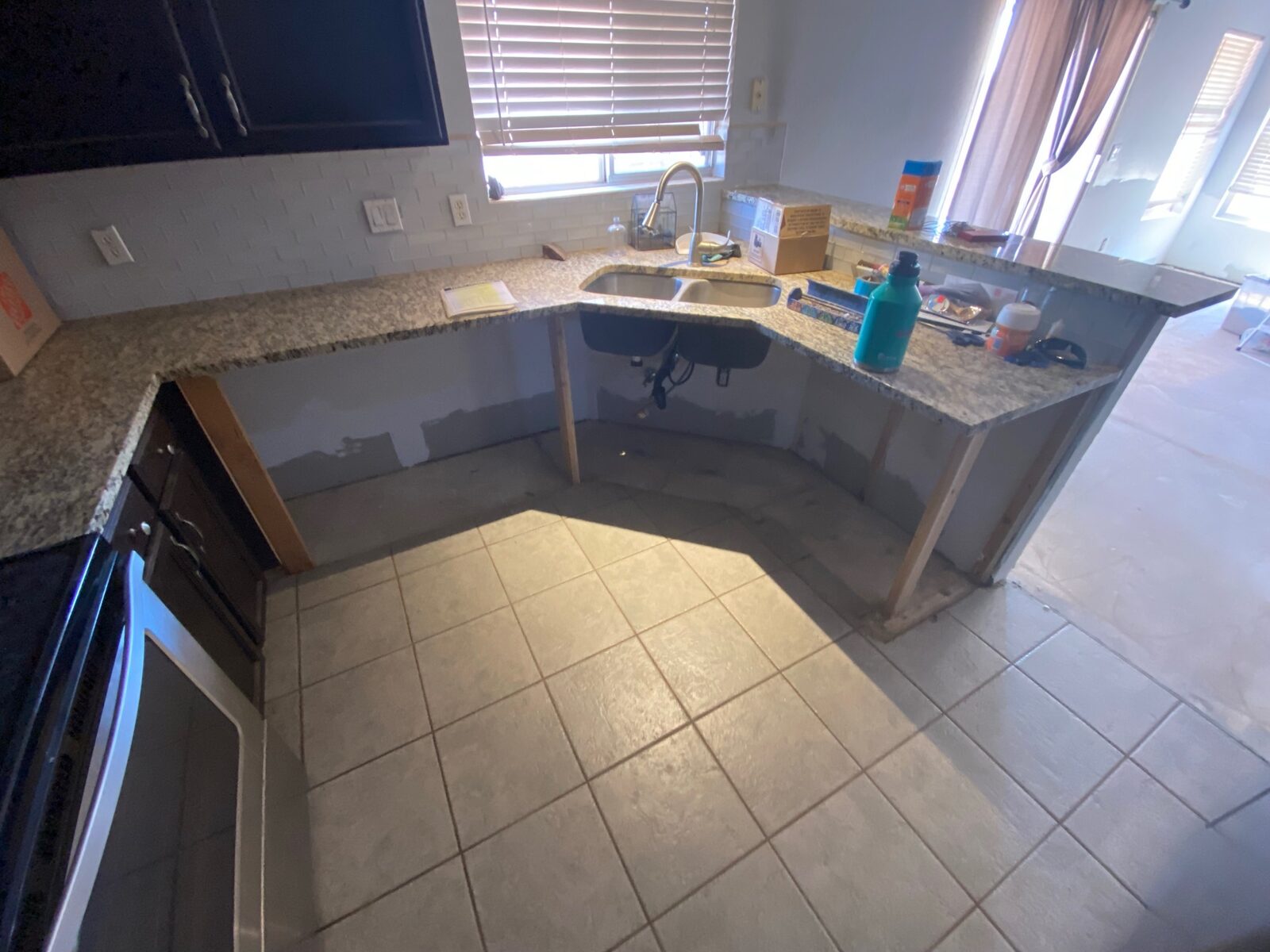
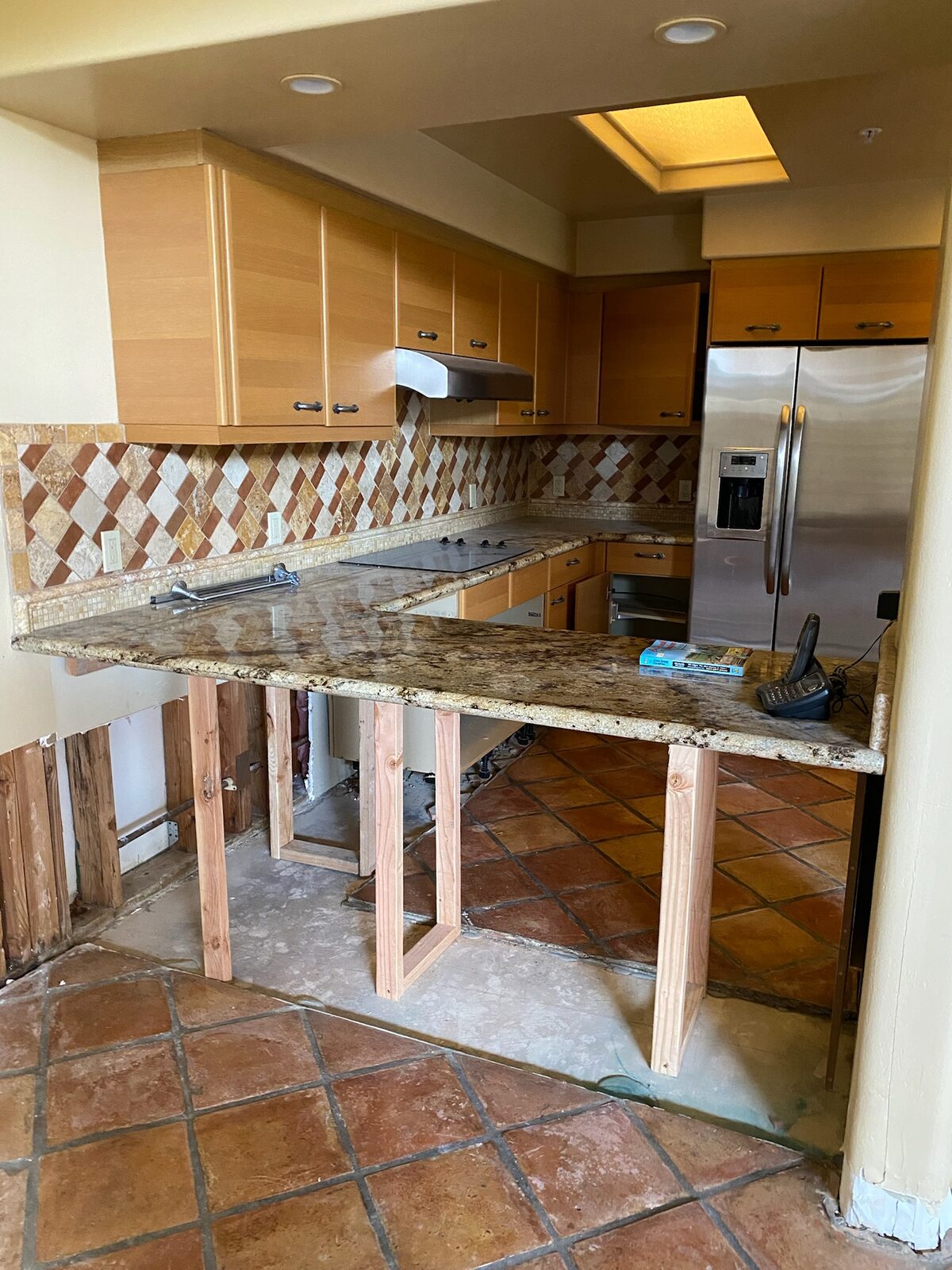
Residential reconstruction work by members of our team. See the full gallery →
More from Gold Water Fire
Fire Damage Restoration in Apache Junction, AZ
Fire and smoke damage restoration for Apache Junction homes, from board-up and soot cleanup through rebuild. Gold Water Fire, AZ ROC #264344. Call (480) 999-3339.
Reconstruction & Rebuild in Apache Junction, AZ
Rebuilding a damaged Apache Junction home after water or fire: framing, drywall, stucco, cabinets and flooring put back by Gold Water Fire. Call (480) 999-3339.
Water Damage Restoration in Apache Junction, AZ
Water damage restoration for Apache Junction homes, from slab leaks and monsoon flooding to failed water heaters. Call Gold Water Fire at (480) 999-3339.
Talk through your Fountain Hills rebuild
Call (480) 999-3339 or email Help@goldwaterfire.com. Tell us what got torn out and what your house looked like before. We will walk the property, put a real scope on paper, and give you a clear picture of how it goes back together and in what order. Gold Water Fire, 221 E Willis Rd Ste 8, Chandler, AZ 85286. AZ ROC #264344, KB-2.
Call (480) 999-3339Reconstruction & Rebuild · Water Damage Restoration · Fire Damage Restoration · About Gold Water Fire · Contact Us