
Water Damage Restoration in El Mirage, AZ
You have been standing on a wet floor for a while now, maybe with towels down, maybe with a shop vac running, telling yourself it is almost handled. Then you notice the baseboard has started to darken an inch above the tile, or the carpet is cool three feet further out than it was last night. That is the moment most El Mirage homeowners realize the part they can see is not the part that matters. It is not a failure to have tried to soak it up yourself. It just turns out the water went somewhere you cannot reach.
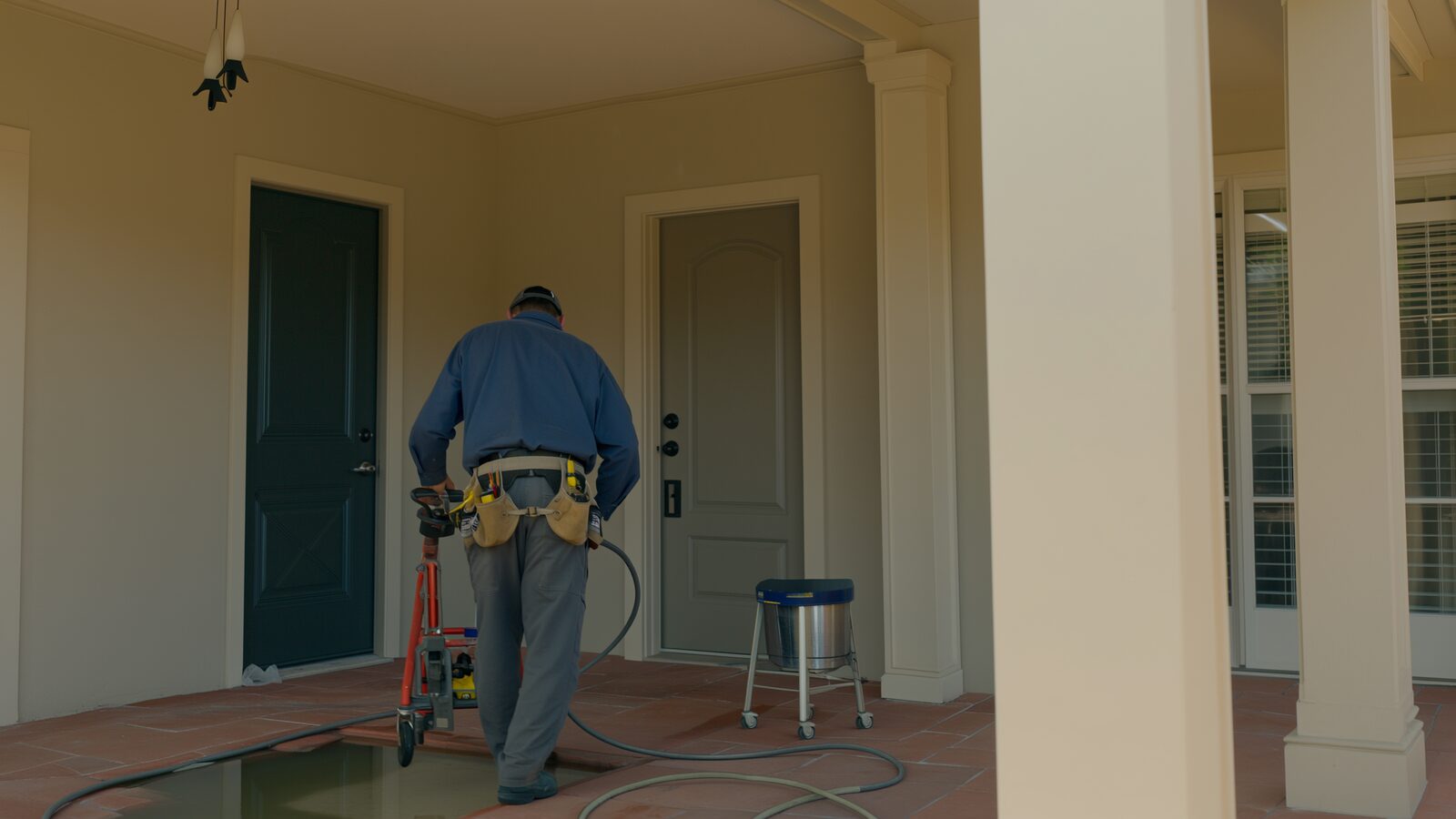
Water Damage Restoration in El Mirage, AZ
Why El Mirage homes leak the way they do
El Mirage sits on the northwest side of the Valley along Grand Avenue and the Agua Fria wash, and its housing stock comes in two distinct waves. There are the older, smaller homes near El Mirage Road and Thunderbird, many built decades ago on post-tension or older poured slabs with copper supply lines run underneath, and then there are the large tract subdivisions that filled in the north and west edges of the city during the mid-2000s boom, with PEX or CPVC, second-story laundry rooms, and multiple hose-bib and refrigerator connections. Each wave fails differently. In the older neighborhoods, the classic call is a slab leak: copper pinholes from years of hard, mineral-heavy northwest Valley water, showing up as a warm spot on the floor, a hot water line that never stops running, or an unexplained jump in the water bill before any water is ever visible. In the newer subdivisions, the failures are usually fittings and appliances, a braided washer supply line that ruptures on the second floor and drains through the ceiling into the great room below, an angle stop under a bathroom sink, or a water heater in a garage or interior closet that lets go at the bottom seam.
Slab and under-floor leaks
Common in the older core of El Mirage. Signs include a warm patch of tile, running water heard with all fixtures off, or grout lines staying damp. The water spreads laterally under the slab and wicks up into wall bottom plates and baseboards before it ever pools.
Monsoon roof and window intrusion
July through September storms hit the northwest Valley with hard, wind-driven rain from the west and blowing dust that packs into scuppers and roof drains. Low-slope roofs and parapets on some El Mirage builds hold water when the drain is plugged, and it finds the weakest flashing.
Second-floor appliance failures
In the mid-2000s subdivisions, upstairs laundry rooms and bathrooms mean a supply line break travels down through the ceiling drywall, insulation, and the top plate of the wall below. What you see on the ceiling is a fraction of what is wet inside the cavity.
Water heaters and softener loops
Hard water shortens tank life. A garage water heater that fails while nobody is home can push water under the interior door and into the hall and bedrooms, running along the base of walls where it is slow to evaporate and easy to miss.
How drying a house works, in plain terms
Restoration is not mopping faster. The goal is to get the building materials, not just the surfaces, back down to a normal moisture content before microbial growth starts, which in a warm Arizona house can begin within a couple of days. That means finding the full boundary of the water first, using moisture meters on drywall and framing and often a thermal camera to see the cool footprint of evaporation, then marking where wet stops. Standing water gets extracted. Then air movers are placed to break the humid boundary layer sitting against wet materials, and dehumidifiers pull that evaporated moisture out of the air so it does not just resettle somewhere else in the house. Some materials dry in place. Others do not: wet carpet pad, laminate flooring, and saturated MDF baseboard usually have to come out, and drywall that stayed wet at the bottom of a wall is often cut a foot or two up so the cavity and bottom plate can be dried directly instead of sealed in. Readings get taken daily, because the number is the only honest way to know whether the wall is dry or just dry on the outside. Arizona's low outdoor humidity helps once the equipment is running, but it also fools people into thinking a closed-up wall cavity dried on its own. It usually did not.
Category matters
Clean supply water is treated differently than a drain line or sewage backup. Contaminated water changes what can be saved and what has to be removed and disinfected, so it is worth telling us what line failed when you call.
Documentation for insurance
Moisture readings, photos, affected room measurements, and a written scope are what an adjuster works from. Keeping that record from day one tends to make the claim conversation shorter and less adversarial.
Drying then rebuilding
Once the structure is dry, the flooring, drywall, paint, cabinets, and trim still have to go back. Our Construction Manager, Brandon Gurr, leads that side of the work with our Reconstruction Team Lead, Johnny, so the repair is planned before demolition starts.
What you can do right now
Shut the water off at the main if the source is a supply line; in most El Mirage homes the valve is at the front of the house near the hose bib or in a box near the sidewalk. If the water is near outlets, panels, or a wet ceiling with a light fixture in it, leave that circuit off. Move furniture legs off wet carpet and put foil or wood blocks under them so finishes do not bleed. Take photos of everything before you move it or throw it away, including the failed part itself, and keep it in a bag. Do not pull up wet flooring or start cutting drywall yet, because what gets removed should follow the moisture readings rather than guesswork, and an intact scope is easier to document for a claim. If you have a shop vac, pulling the standing water off hard surfaces genuinely helps and costs you nothing.
Handing it off
Gold Water Fire is a licensed Arizona contractor (AZ ROC #264344, KB-2), founded by Jim Bennett and Jake Taylor, and we cover the full Phoenix metro area: NW Peoria, SE Avondale, SW San Tan Valley, NW Apache Junction, and outlying areas further than that. El Mirage sits well inside that, a short run from the Peoria and Surprise corridor. When you call, you will reach real people, Kristine in our office or Brooke, who handles water and mitigation scheduling, and they will get the details of what failed and when so the crew shows up with the right equipment instead of a second visit. The reason to hand this off is simple: the wet part of your house is inside the walls and under the floor, and reading it takes meters and a plan, and putting it back takes a licensed builder. You have already done the part you could do. Reach us at (480) 999-3339 or Help@goldwaterfire.com, or see how we approach water damage restoration, what the rebuild involves, and who you would be working with.
Questions people ask us
How do I know if I have a slab leak in an older El Mirage home?
The usual signs are a section of floor that feels warm underfoot, the sound of running water when every fixture is off, a water bill that climbs with no change in habits, or baseboards and grout lines that stay damp. Hard northwest Valley water and decades-old copper under the slab are a common combination. Confirming it takes leak detection, and the plumbing repair and the drying and rebuild are two separate pieces of work.
My ceiling is stained from an upstairs bathroom but it looks dry now. Do I still need someone?
Probably yes. A stain means water sat in that assembly, and the drywall, insulation, and framing above it can hold moisture long after the surface looks dry, especially in a closed cavity. A moisture meter reading answers it in a few minutes and tells you whether anything needs to be opened up.
Does the drying equipment have to run in my house for days?
Air movers and dehumidifiers generally stay in place until readings show materials are back to normal moisture content, and readings are checked as the work goes. The equipment is noisy and warm, which is unpleasant, but pulling it early is how walls end up with hidden growth behind new paint.
Can you also repair the damage, not just dry it out?
Yes. We handle drying and the rebuild that follows, flooring, drywall, texture, paint, trim, and cabinets, under our AZ ROC license #264344, KB-2. Brandon Gurr, our Construction Manager, leads the reconstruction side, so the repair plan is set before anything is removed.
The standard our team works to
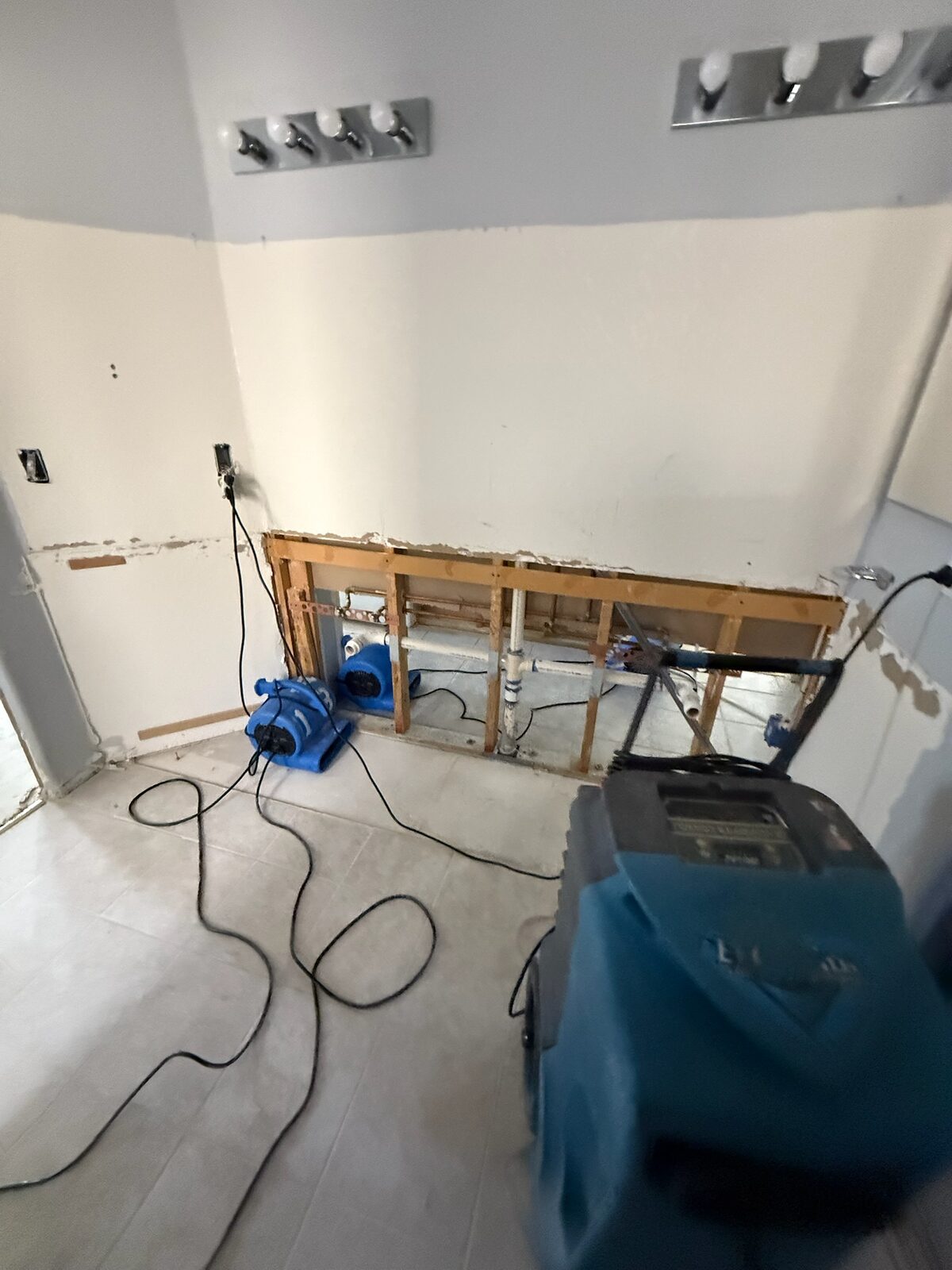
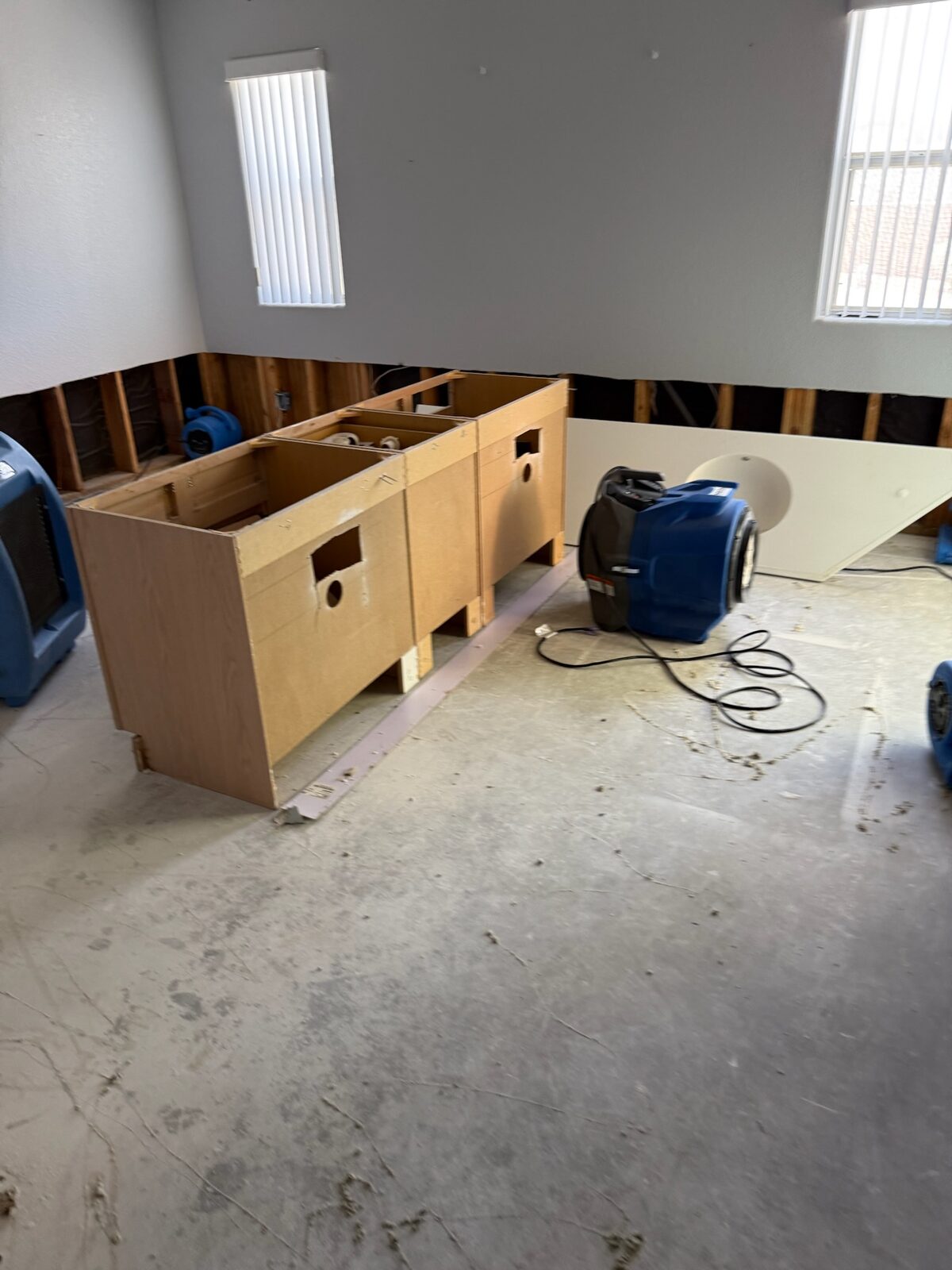
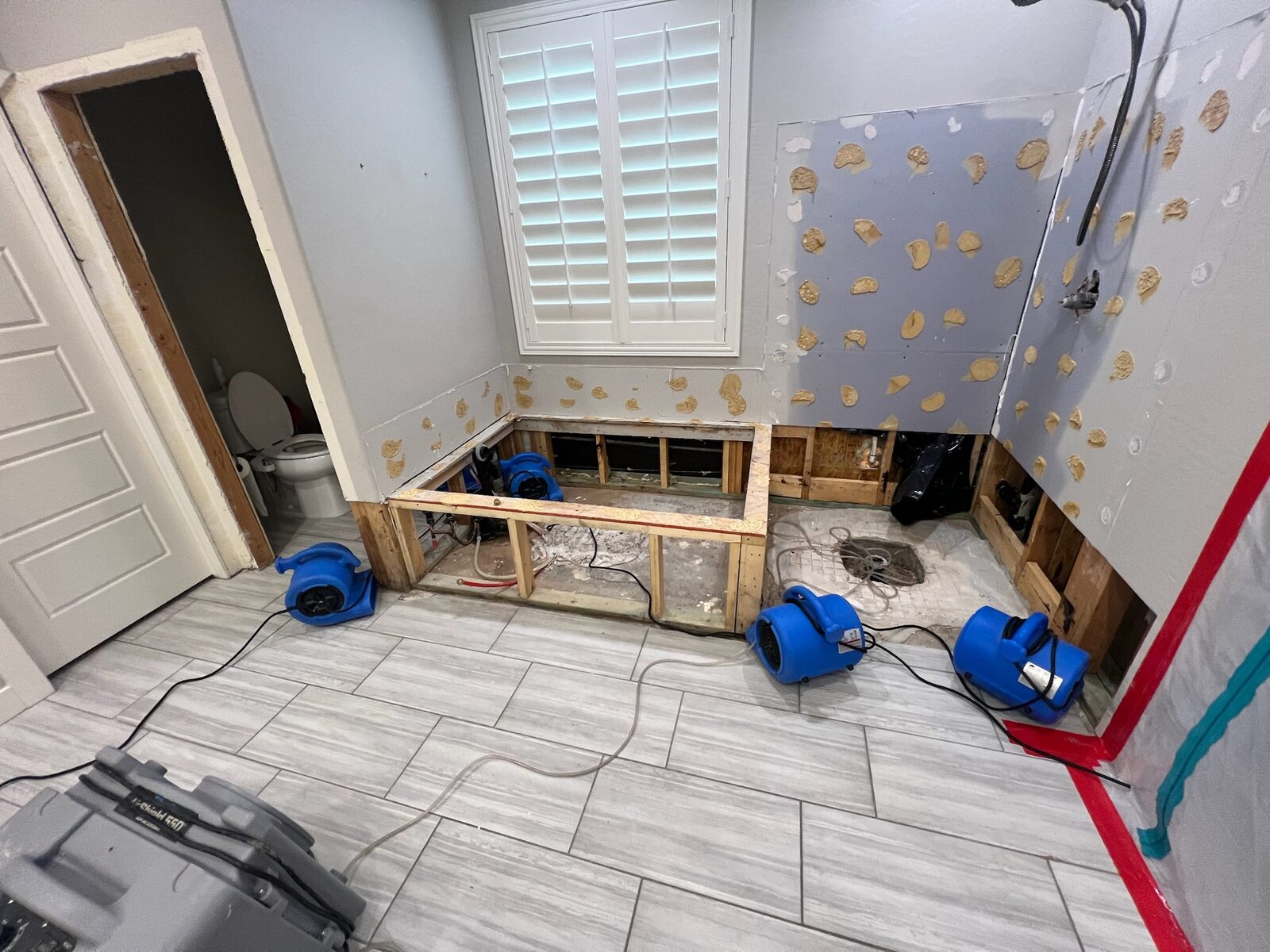
Residential reconstruction work by members of our team. See the full gallery →
More from Gold Water Fire
Fire Damage Restoration in Apache Junction, AZ
Fire and smoke damage restoration for Apache Junction homes, from board-up and soot cleanup through rebuild. Gold Water Fire, AZ ROC #264344. Call (480) 999-3339.
Reconstruction & Rebuild in Apache Junction, AZ
Rebuilding a damaged Apache Junction home after water or fire: framing, drywall, stucco, cabinets and flooring put back by Gold Water Fire. Call (480) 999-3339.
Water Damage Restoration in Apache Junction, AZ
Water damage restoration for Apache Junction homes, from slab leaks and monsoon flooding to failed water heaters. Call Gold Water Fire at (480) 999-3339.
Call us and let someone else carry the next part
Tell us what failed, where the water went, and what you have already done. We will take it from there. Gold Water Fire, (480) 999-3339 or Help@goldwaterfire.com. You can also reach us through our contact page.
Call (480) 999-3339Water Damage Restoration · Reconstruction & Rebuild · Fire Damage Restoration · About Gold Water Fire · Contact Us