
Water Damage Restoration in Chandler, AZ
You have probably already moved the furniture, pulled up what you could, and pointed every fan in the house at the wet spot. Maybe you have been checking the baseboard with your hand every hour to see if it feels any drier than it did last night. It is a strange kind of tired, not the work itself so much as the not knowing whether the work is doing anything. Water in a house does not announce how far it went. It goes under the tile, into the wall cavity, along the bottom plate, and the part you can see is rarely the part that matters most.
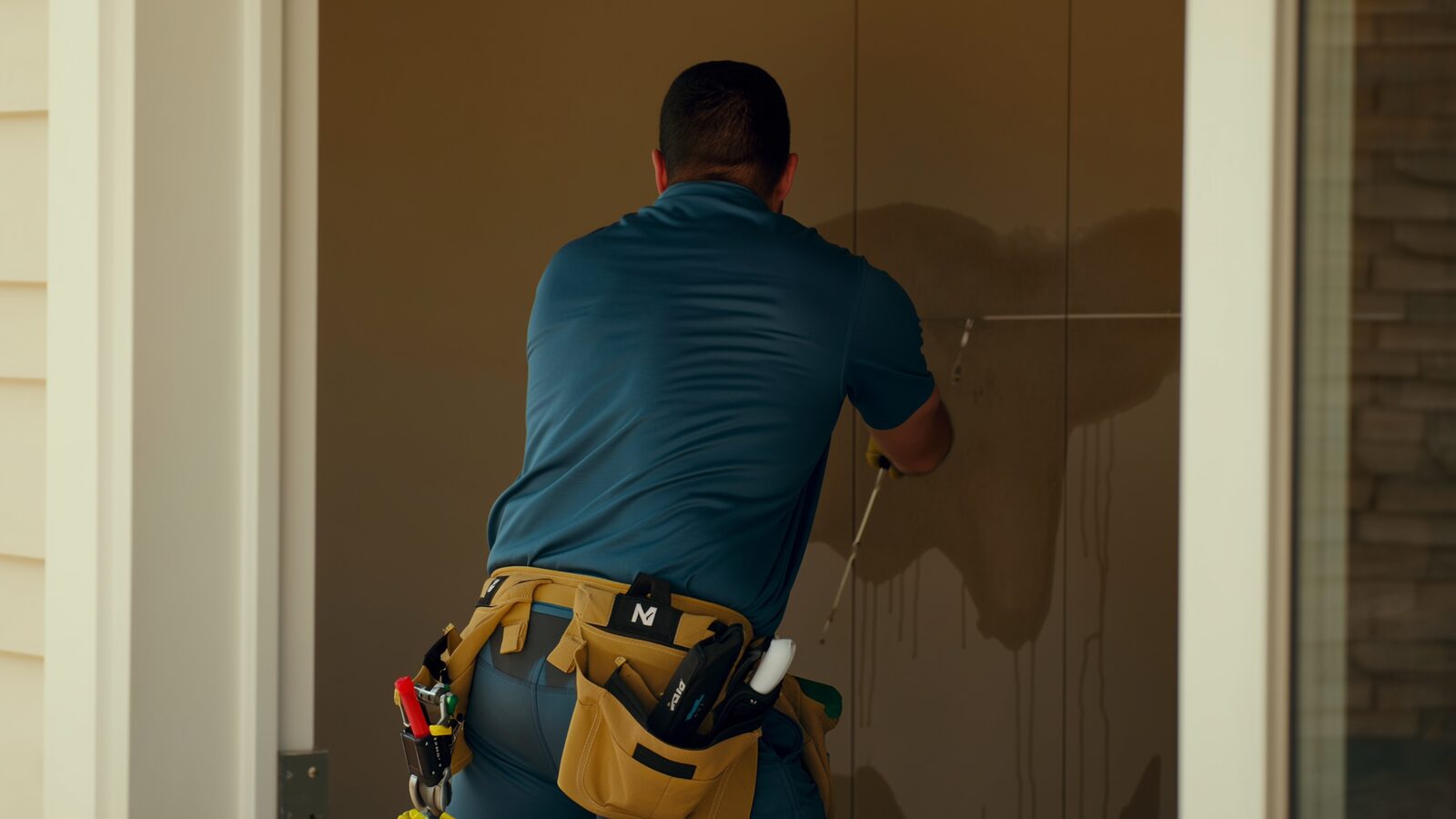
Water Damage Restoration in Chandler, AZ
Why Chandler homes fail the way they do
Chandler grew in distinct waves, and the water problems track the waves. The older core near downtown and around Arizona Avenue includes homes built well before the current era of plumbing materials, where galvanized supply lines and cast iron drains have had decades to corrode from the inside. The enormous build-out south and east of Ray Road through Ocotillo, Fulton Ranch, and the Price Corridor neighborhoods produced a lot of homes now well past the age where a water heater, a washing machine supply hose, or a refrigerator ice maker line is considered young. Those are the three leaks we talk about most with Chandler homeowners, and the water heater is usually the worst of them, because so many Chandler garages sit at the same slab level as the interior and the water walks straight into the house instead of out the garage door. The other Chandler-specific factor is the slab. Almost everything here is post-tension slab-on-grade with no basement and no crawlspace, so a supply line under the concrete has nowhere to go but up through the slab and out along the tile grout or the carpet tack strip. A slab leak in Chandler often shows up as a warm spot on the floor, an unexplained jump on a City of Chandler water bill, or the water heater running more than it should, days or weeks before you see standing water anywhere.
The Chandler drying problem nobody warns you about
Low desert humidity makes people assume a wet house here dries itself. Surface water does. Water inside a wall assembly does not, and Chandler's climate actually works against you twice a year. During monsoon season, roughly July through September, outdoor dew points climb and haboob-driven storms push wind-driven rain into places that never see water the rest of the year: roof penetrations, scuppers on flat-roofed sections, and the sliding door thresholds common on Chandler patio builds. Opening the windows during those weeks pulls humid air into a building you are trying to dry. And in summer generally, running the air conditioning hard drops interior surface temperatures, which means moisture that migrated into a wall can condense there rather than evaporate out. Then in winter, cool nights and closed-up houses mean very little air exchange, so a damp cabinet kick space just sits. General practice on any water loss is to identify how far the moisture actually traveled using moisture meters and thermal imaging, remove the materials that will not dry in place, and then create controlled conditions (dehumidification plus directed airflow) rather than relying on the ambient air. Drywall, insulation, and the underside of engineered flooring hold water long after the surface reads dry to a hand.
The first day decides most of the cost
Category matters. Clean water from a supply line, a water heater, or a fill line is the best case, and much of the affected material can often be dried and kept. Water from a dishwasher, washing machine, or a sink that sat has different handling. Sewage backup from a main line is a different job entirely and is never a homeowner cleanup. Clean water does not stay clean indefinitely once it is sitting in building materials, which is the practical reason speed matters more than any other single factor. Useful things to do before anyone arrives: shut off the water at the main if the source is still active, cut power to affected rooms at the breaker if outlets or fixtures got wet, photograph everything before you move it, and keep the receipts for anything you buy. Do not pull up tile or cut drywall yet. Where and how much comes out should follow the moisture readings, not a guess. Do not run a household fan over water that may be contaminated. If you want the full picture of how a mitigation job is sequenced, read our water damage restoration page.
Getting the house back, not just dried out
A lot of homeowners find out the hard way that mitigation and rebuild are two different scopes. The drying company leaves and the house is stable but open: no baseboard, a section of drywall gone, half a kitchen without cabinets. Then the search starts over for someone to close it back up, and the insurance file gets handed between two companies that never spoke to each other. Gold Water Fire handles both sides. Brandon Gurr, our Construction Manager, leads the reconstruction and rebuild work, so the same company that documented the moisture is the one putting the drywall, tile, cabinets, and paint back. Johnny leads the reconstruction crew on site. Brooke handles water and mitigation scheduling, and Kristine keeps the paperwork and documentation moving in the office. We are licensed in Arizona under AZ ROC #264344 · KB-2, and our own shop is at 221 E Willis Rd Ste 8 in Chandler, the same city, not a dispatch from across the valley. Co-founders Jim Bennett and Jake Taylor built the company to work that way; you can read more about us.
Questions people ask us
How do I know if I have a slab leak in my Chandler home?
Common signs include a warm or unusually damp spot on the floor, the sound of running water when every fixture is off, a water bill that jumped with no change in usage, or a water heater cycling more than normal. Because Chandler homes are almost all slab-on-grade with no crawlspace, there is no easy way to look underneath. The leak has to be located with equipment. A licensed plumber locates and repairs the line; a restoration contractor handles the drying and the concrete, flooring, and drywall repair afterward.
Should I just rent fans and dry it myself?
Rental air movers push air across surfaces, which helps with visible water on hard flooring. What they usually do not do is remove moisture from the air or reach water inside a wall cavity, under cabinet kick spaces, or beneath the pad. In monsoon season, running fans with windows open can move humid outdoor air into the house. The main risk of a partial dry-out is that it looks fine and the problem shows up later as buckled trim, staining, or odor.
Do you work with my insurance company?
Yes. Documentation is a large part of the job: moisture readings, photos, and scope notes recorded as the work happens rather than reconstructed afterward. Kristine in our office handles that paperwork. Every policy is different, so coverage questions have to be answered by your carrier, but we will give your adjuster what they need.
What parts of the Phoenix area do you cover besides Chandler?
The full Phoenix metro area, roughly bounded by northwest Peoria, southeast Avondale, southwest San Tan Valley, and northwest Apache Junction, plus outlying areas past that. That includes Gilbert, Mesa, Tempe, Queen Creek, Scottsdale, Phoenix, Glendale, Goodyear, and the surrounding communities.
The standard our team works to
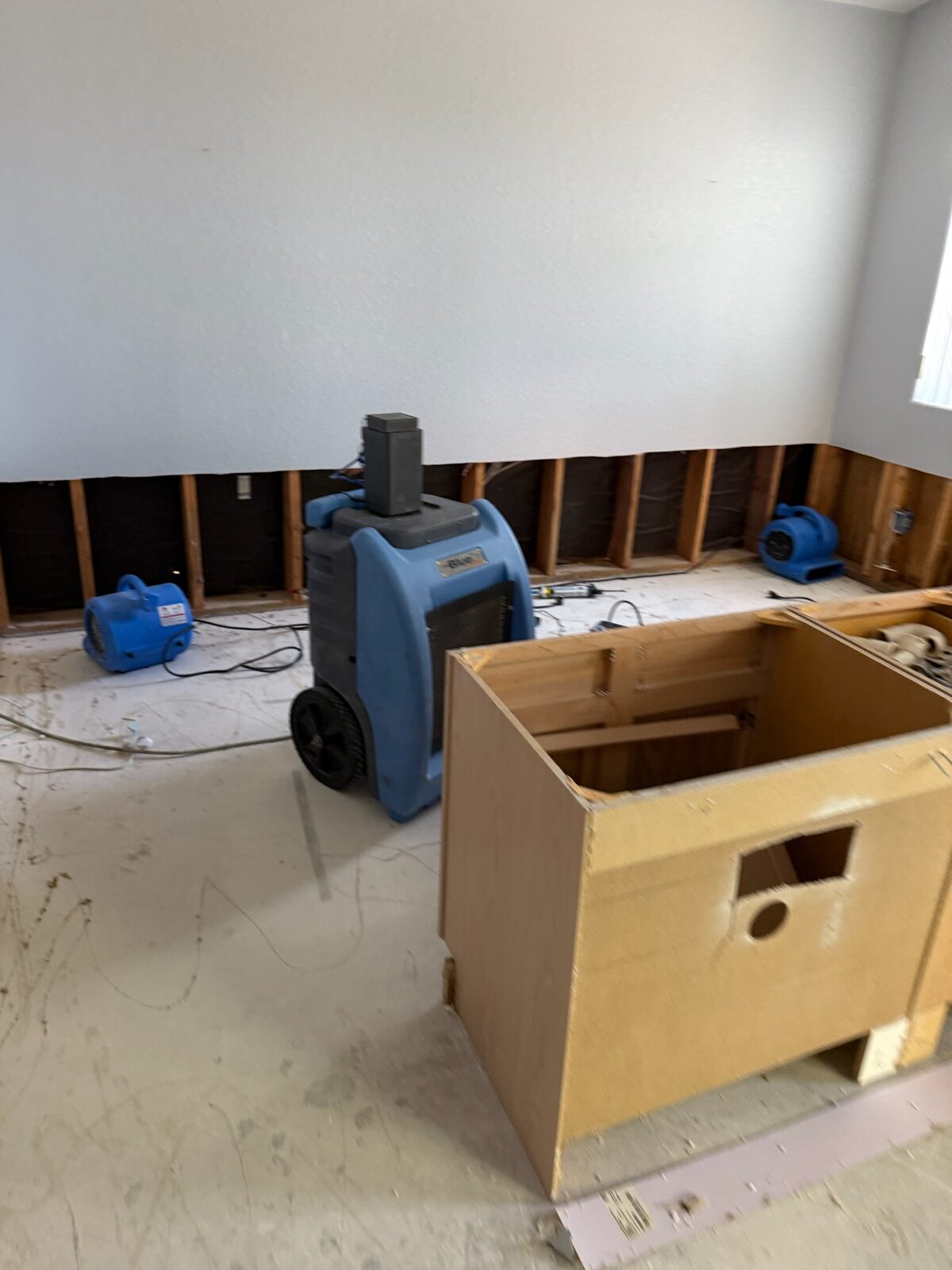
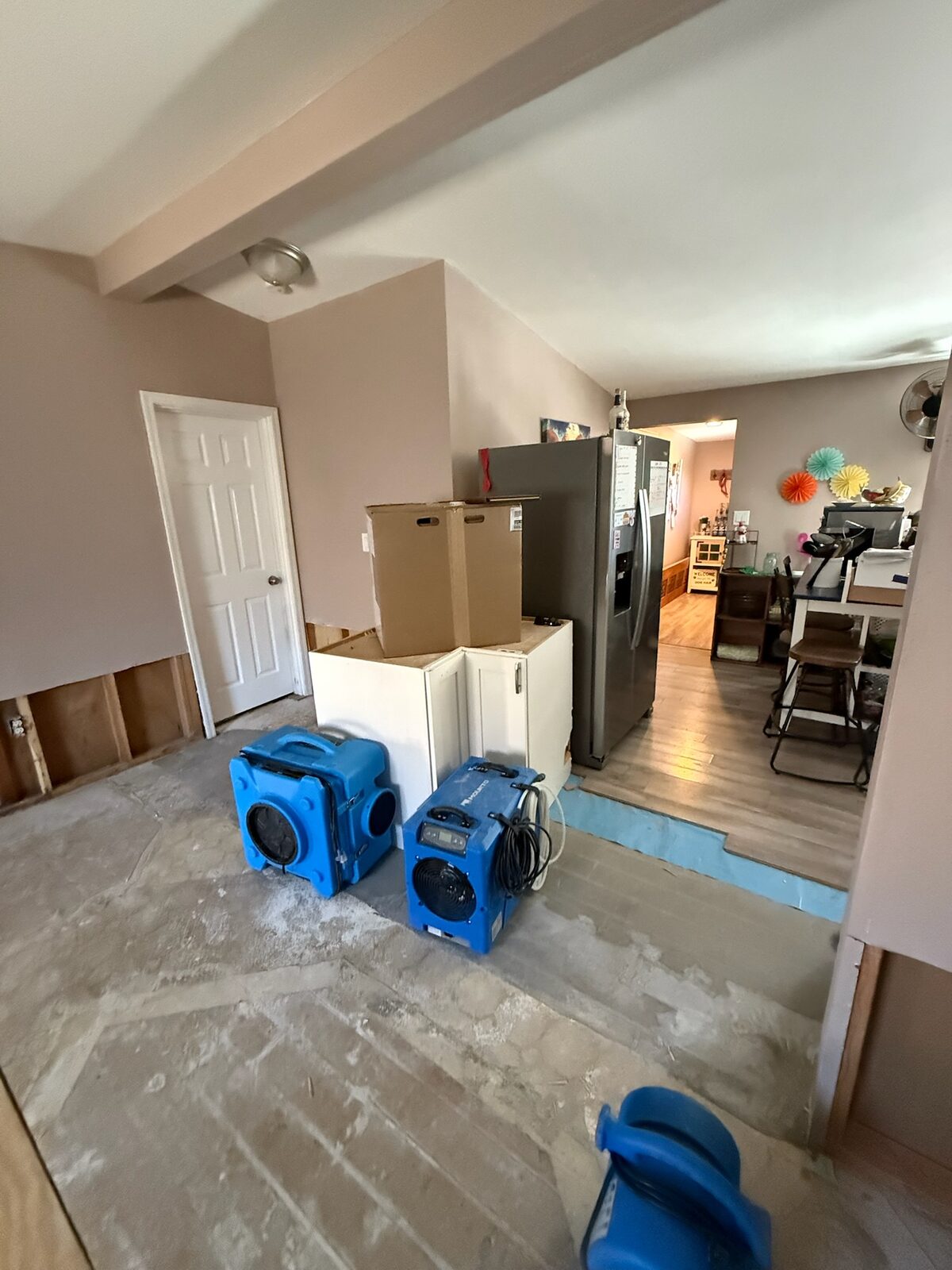
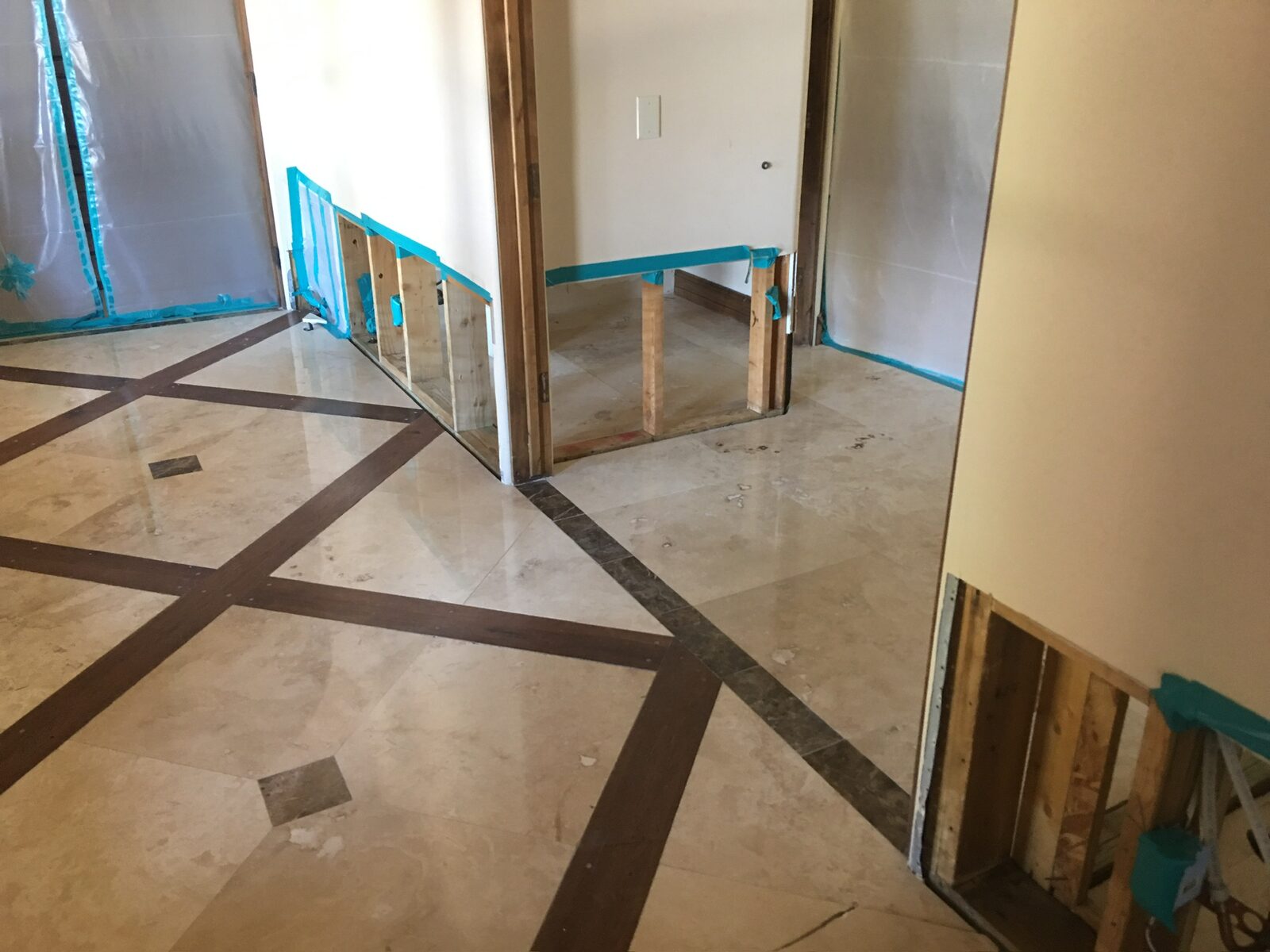
Residential reconstruction work by members of our team. See the full gallery →
More from Gold Water Fire
Fire Damage Restoration in Apache Junction, AZ
Fire and smoke damage restoration for Apache Junction homes, from board-up and soot cleanup through rebuild. Gold Water Fire, AZ ROC #264344. Call (480) 999-3339.
Reconstruction & Rebuild in Apache Junction, AZ
Rebuilding a damaged Apache Junction home after water or fire: framing, drywall, stucco, cabinets and flooring put back by Gold Water Fire. Call (480) 999-3339.
Water Damage Restoration in Apache Junction, AZ
Water damage restoration for Apache Junction homes, from slab leaks and monsoon flooding to failed water heaters. Call Gold Water Fire at (480) 999-3339.
Call and let someone else carry the next part
You have done what you can with what you had. The next step needs meters, dehumidifiers, and someone who has opened enough Chandler walls to know where the water went. Call Gold Water Fire at (480) 999-3339 or email Help@goldwaterfire.com and we will tell you plainly what we see and what it will take.
Call (480) 999-3339Water Damage Restoration · Fire Damage Restoration · Reconstruction & Rebuild · About Gold Water Fire · Contact Us